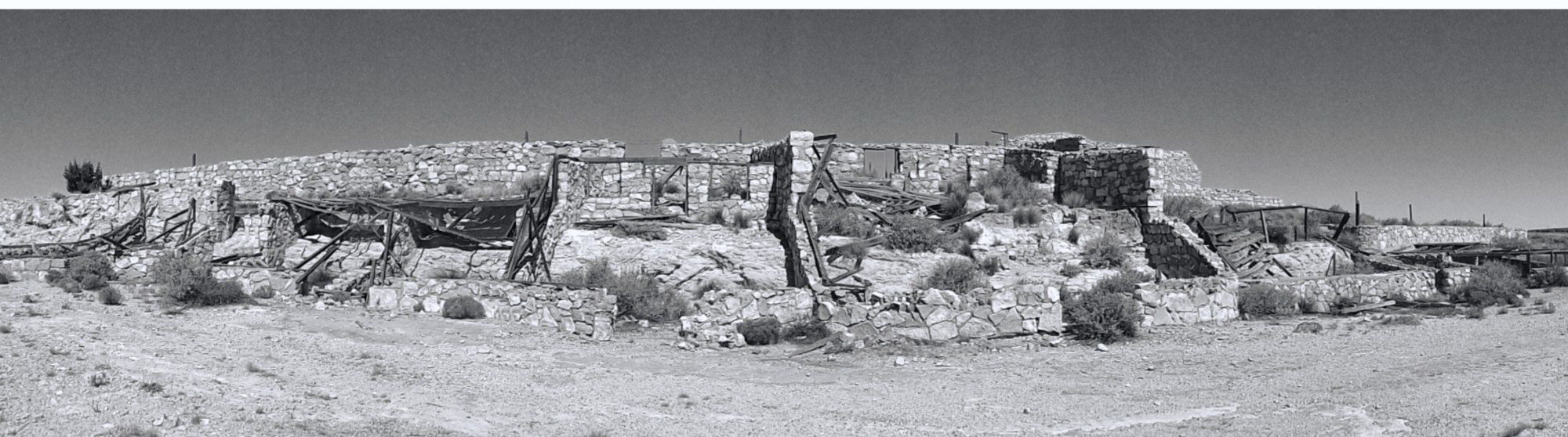
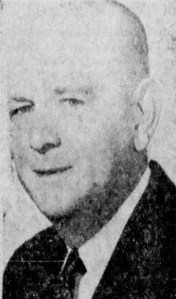
Mention Budville, New Mexico, and anyone with an interest in Route 66 will probably think of the murders of Howard ‘Bud’ Rice and Blanche Brown at the Budville trading post in 1967. Some might even recall the murder four years later of Philip Atkinson outside the building, but few will have heard of Ralph Henderson Rainey.
In 1956 Ralph Rainey was a 48-year-old butcher, working as a meat cutter in a retail store in Santa Monica, California. Born in Kansas in 1907, he had married young when he was 21 and his bride, Bertha Lucille Hilliard, just 16 years old. They had a son Jack, in 1930, followed by twins, Jerry and Jean, three years later. But by the early 1940s the marriage had broken down; In 1946 Bertha married Merle James Ranson in Winnemucca, Nevada, while Ralph remarried the following year to Genevieve Johnson in Carson City, Nevada. That marriage also failed and by the end of 1955, with Genevieve living in Northridge, north Los Angeles and Ralph renting a room in Santa Monica, he had decided to return to Colorado where he had previously lived and where his sons still made their home.
On the afternoon of January 8, 1956, Ralph rang his son Jack, who he had not seen in two years, and told him that he was leaving immediately for Arvada, Colorado. His landlady watched him drive off in his 1955 two-door Pontiac Tudor with some $300 in cash and traveller’s cheques in his pocket.
Travel in the 1950s could be slow and arduous and drivers frequently picked up hitchhikers to stave off the boredom – Genevieve later said that Ralph was in the habit of doing just that. On the day that Ralph left Santa Monica, one Noel Adams had picked up a stocky man at Needles, California, and dropped him in Kingman, Arizona, where Adams was spending the night. The next morning Adams spotted the same hitchhiker by the side of the road but didn’t pick him up again because, he would say, “he made me uneasy”. In light of subsequent events, Noel Adams had reason to thank his instincts. Shortly afterwards, patrolmen Billie Baxter and Alex R Linquist of the Kingman Police Department picked up the hitchhiker and as was their custom, after checking his details and ascertaining he was a transient, escorted a man whose ID said he was Donald Gilray to the edge of town.
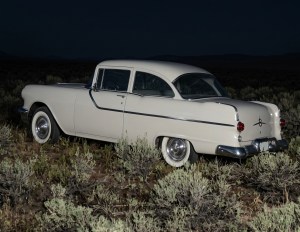
Somehow the hitchhiker made it to Flagstaff where he was picked up by Ralph Henderson Rainey. And that was the last time Ralph was seen alive. One January 10, 1956, State Patrolman Edgar C Bell found the body of man in a deep arroyo on the side of Route 66 near Budville. The man had been dead only a few hours, but two bullet holes in his head made it clear that he had been murdered.
Ironically, the recent World War 2 had made it easier to identify bodies such as the one in the arroyo. Ralph Henderson Rainey had been fingerprinted for the Navy in August 1942 and again when he had applied for a job at the Denver Ordinance Plant in June 1943. Within a couple of days of finding his body, police and the FBI knew who he was – but where was his car?
That puzzled was solved a week later when an identical car was found abandoned 65 miles west of Salt Lake City, Utah, near the tiny town of Low. The front right seat was soaked in blood and had a bullet hole in it and, although the license plates had been removed, it would be identified as Ralph’s Pontiac through a lubrication sticker in the door shut and a card with the dead man’s name and address found in the pocket of a suit in the car. The Pontiac had actually been spotted on Friday January 13, just three days after the murder, when passing tourists had seen a man leaving the car and walking towards the highway where he hitched a ride with a service station attendant.
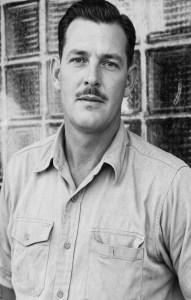
Meanwhile, New Mexico police had more problems on their hands with the disappearance of electronics engineer Kenneth Short who, after buying a car in Flint, Michigan, had set out to drive home to California and who had last been seen in Tucumcari. While they were searching for both Kenneth’s Buick and the owner himself, in Nevada officers were stopping a Buick for speeding. When the driver’s identification papers failed to tally with his description, he was ordered to drive to the police station. Instead, the driver sped off before wrecking the car and running into the desert. The man then broke into Loren Tracy’s home and held the family at gunpoint; deputies did knock at the home’s door, but Loren was forced to say that he hadn’t seen anyone suspicious before driving the stranger to North Las Vegas.
It didn’t take police long to identify the car as belonging to Kenneth Short. Kenneth had been heading to California to meet his second wife, Mira, and daughter Carol. (He had divorced his first wife, Leola, in 1941, when his son Wayne was 4 and his daughter Myrna just 2 years old, and married Mira in Shanghai in 1946 when he was serving as an electronic engineer with the Navy.) At first, police thought that they were looking for a murderer who had escaped from an Indiana prison, but said escapee wrote to his lawyer to say it wasn’t him, nor was it his fingerprints found in the Short car.

Then, on January 24, in the small town of Caliente north of Las Vegas, Town Marshal Claud Davis and Highway Patrolman Duke Hill arrested a man as he ate breakfast. They said it was on the strength of the description given of the man who had kidnapped Loren Tracy, but Samuel Stewart – as he called himself – denied the accusation, saying he was a hitchhiker from Twin Falls, Idaho. He was held, nonetheless, on a kidnapping charge and soon the FBI identified him from his fingerprints as David Cooper Nelson, a 35-year-old unemployed sheet metal worker from Las Vegas.
Nelson had been born in 1920 in Great Falls, Montana, the fourth son of Levi and Florence Nelson, and life hadn’t been kind to the family. Twin sons, Peter and John, had died at birth in 1912, while Levi passed away in 1928, leaving his widow with eight children, six of whom were under ten. Nelson’s younger brother, Donald, was accidentally shot dead at the age of 15 by a friend, while three years later his older sister Mary Jeanette would die of peritonitis when she was only 24.
By the age of ten, Nelson was in reform school; by 20 he was in a federal road camp in Washington. Two years later he was in Deer Lodge state prison in Montana after being convicted of forgery until December of 1943 when he escaped, only to be arrested in Reno when he cashed a number of cheques that he’d stolen from the prison, representing himself as the chief clerk of the Montana penal institution.
Upon release, Nelson moved from forgery to assault. In August 1947 he pulled a gun on Leroy Larson, the night clerk of the Baxter Hotel in Bozeman, Montana. Larson said at the time; “He pulled a gun. He asked me if I’d split the money with him and he’d tie me up to make the robbery look real. When I said no, he told me to turn my head, then he slugged me.” (Interestingly, he would later omit the offer to split the proceeds and say that Nelson just hit him.) Nelson didn’t even get out of town; he was arrested almost immediately at the Bozeman bus depot. On September 3, 1947, he was sentenced to 12 years in Deer Lodge. Had he served the full term, two and possibly three lives might have been saved.
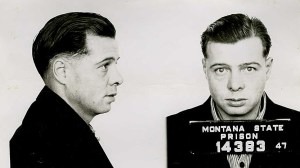
Despite initially pleading amnesia, ‘Samuel Stewart’ soon admitted to police that he was David Cooper Nelson. Furthermore he admitted to the killing of Ralph Henderson Rainey and also that of bartender John Valenti in Nevada but denied murdering Kenneth Short, despite overwhelming evidence which included his fingerprints all over Short’s car, being in possession of Short’s clothes and wristwatch and having cashed travellers cheques made out to Short in Holbrook, Santa Rosa and Amarillo.
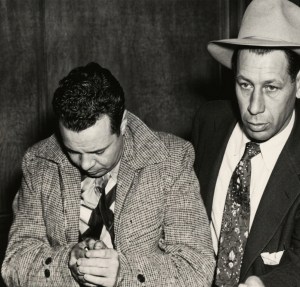
Nelson told officers that Rainey had picked him up hitchhiking near Flagstaff. When they neared Albuquerque, Rainey pulled over and asked Nelson to drive. Nelson said an argument ensued when he refused and he pulled a 38-calibre pistol out of his bag and shot Rainey. Then, he said, Rainey “was in convulsions and withering with pain as he laid in the front seat. When he appeared to be in great pain, I shot him again.”
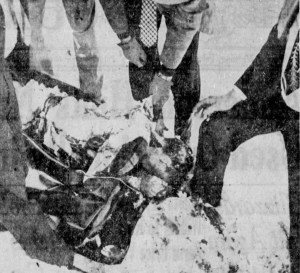
Eventually Nelson admitted to the murder of Short and drew police a sketch of a site near Vega, Texas, where they found the body in an arroyo under eight feet of snow. Like Rainey, he had been shot in the head with a 38-calibre revolver.
In April 1956 he was charged with the murder of Ralph Henderson Rainey to which he pled innocent on the grounds of insanity – he had acted like a madman in jail, screaming, shouting and punching a sheriff, which only served to put him in a straightjacket and on bread and water rations. No one believed his act.
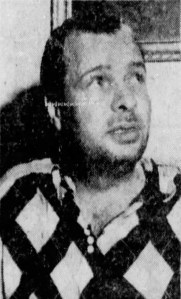
After a week long trial, the jury took nine hours to declare him guilty of first degree murder and the judge sentenced him to death. The trial transcript weighed 15lbs and the proceedings almost bankrupted Valencia County which had to postpone all jury trials for the next three months.
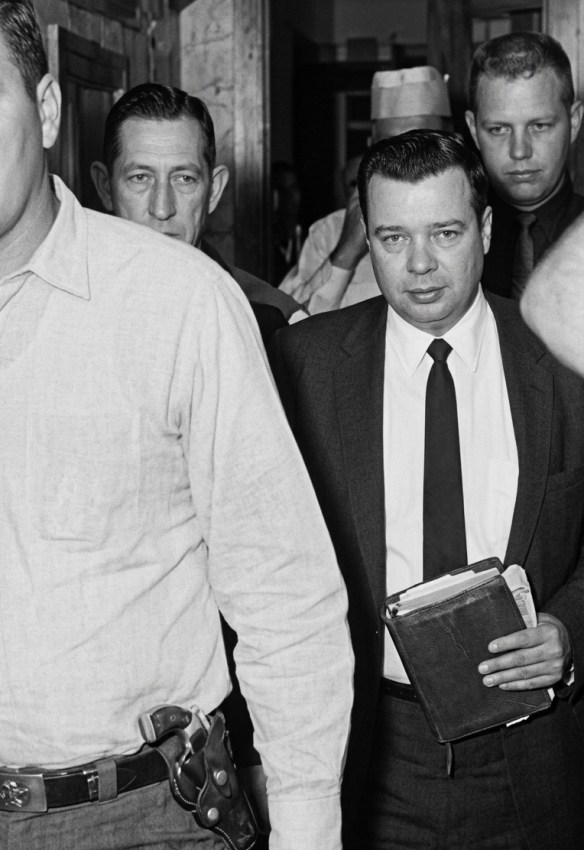
Nelson filed an appeal against his death sentence, claiming that he had been promised leniency in exchange for a confession. The Supreme Court granted him a new trial which opened on May 19, 1958, with Nelson representing himself. This time it took the jury less than two and a half hours to convict him of murder.
Nelson finally exhausted his appeals and the night before his execution claimed that a friend had shot Rainey but he couldn’t reveal his name. But after a last meal of oyster stew and strawberry shortcake, and telling reporters, “I hope and pray that I am on my way home”, he went to the gas chamber just after midnight on January 8, 1960. It was the one and only time that New Mexico used the gas chamber.


Thank you. Such were stories that scared the population half-to-death. Even though hitch-hiking occurred through the 1970s across the southwest, enough bad actors scared the public from being good Samaritans. By July 1976 on the freeway across the Mohave to Bakersfield, with a U-Haul trailer in tow, my car dumped all its transmission fluid. Sitting dead on the side of the road at noon in the desert, even waving a sign, no one stopped …. the era of helping fellow motorists dropped off as well. (A special angel of a driver stopped when he saw my legs sticking out while I checked the drain plug beneath the car.)
LikeLiked by 1 person