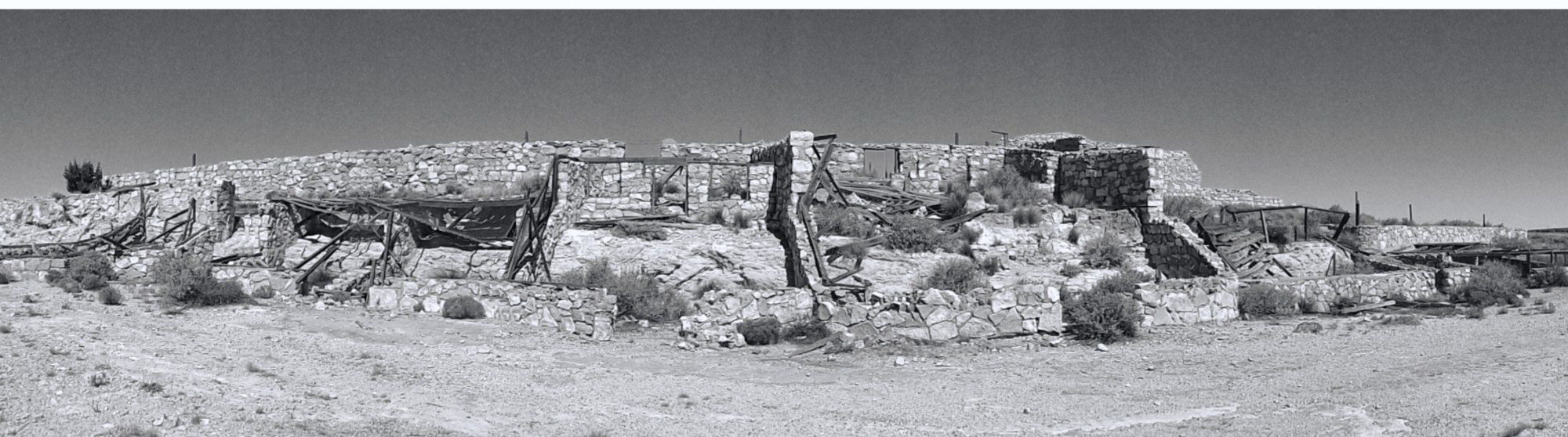
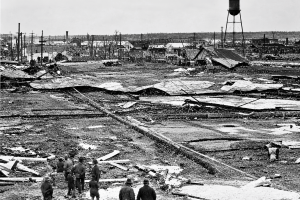
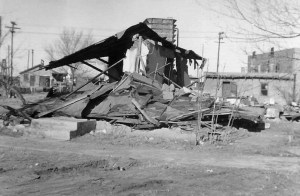
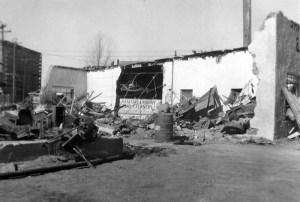
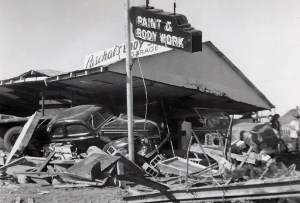
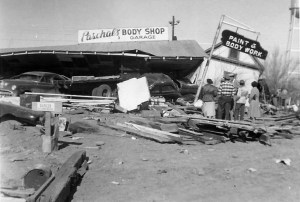
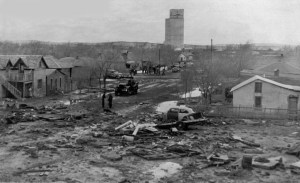
Tucumcari’s business district in ruins after the flood. [Photo: AP]
At 4.10am on December 13, 1951, Henry Fulkes, working in the Southern Pacific railroad yard in Tucumcari heard a slight rumble. Mrs Claude Moncus, wife of the city’s sheriff, thought a jet plane was flying low over the apartment in the courthouse where she was staying. Early riser Lorenzo Gutierrez believed he saw a fireball from his front window. And then all hell broke loose.
Over $500,000 of damage was done to property. That would be around $6.5 million today.
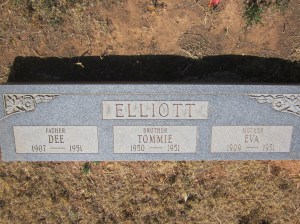
One and a quarter million gallons of water suddenly cascaded down on Tucumcari’s business district, destroying life and property alike. Water was waist deep for three blocks and one of the city’s three municipal water tanks lay in pieces. Just before dawn on that Thursday morning, the water tank, 30 feet high and a hundred feet high, had rolled over and snapped its ground mooring. It was full to capacity and within seconds it had flooded the area. Even worse, the cap of the tank had landed on a house. The occupants, Dee Elliott, 44, his wife Eva, 43 and their 18-month-old son Tommie, were killed. His twin, Tony, asleep in another room with his 5-year-old sister survived. Their neighbour Steve Gallegos, 13, wasn’t so lucky. While his mother and sister were trapped by debris and pieces of metal in their house, Steve was thrown 100 feet and his body found in the street.
The side of the Sanitary Laundry was torn out. [Photo: AP]
The chaos was widespread. 15 houses, made of adobe, literally dissolved in the torrent. A city warehouse containing two and three-ton tractors was shifted 175 feet off its foundation. A laundry, wedding shop, welding shop, used car lot and the Mason Motor Co were badly damaged. The only saving grace was that if it had happened during business hours the death toll would have undoubtedly been higher.
No sooner had the Paschal Body Shop recovered from the flood then it was destroyed by fire in 1954. [Photo: AP]
In the aftermath a number of theories were advanced for the disaster from a meteor strike to sabotage, but a report by the New Mexico Society of Professional Engineers discovered a more prosaic reason. It found that a faulty weld in the lower section of the tank wall had given way with catastrophic effect; the tragedy is that this was entirely avoidable. The City had purchased the tank from the government after it had been used during the construction of the nearby Conchas Dam and had erected it in around 1940. The tank was not built to the standards of the American Water Works Association; it had never been intended to hold water and was made of lightweight steel, designed to store oil. The surprise was that it had held millions of gallons of water for eleven years before effectively imploding.
Customers cars lie in the wreckage of Paschal’s Body Shop. [Photo: AP]
The grave of the Elliotts and their little son in the Tucumcari cemetery.
Snow hampered the clean up and many residents were inoculated against typhoid because of the danger of contaminated water. [Photo: AP]
Mention Budville, New Mexico, and anyone with an interest in Route 66 will probably think of the murders of Howard ‘Bud’ Rice and Blanche Brown at the Budville trading post in 1967. Some might even recall the murder four years later of Philip Atkinson outside the building, but few will have heard of Ralph Henderson Rainey.
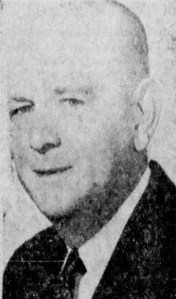
In 1956 Ralph Rainey was a 48-year-old butcher, working as a meat cutter in a retail store in Santa Monica, California. Born in Kansas in 1907, he had married young when he was 21 and his bride, Bertha Lucille Hilliard, just 16 years old. They had a son Jack, in 1930, followed by twins, Jerry and Jean, three years later. But by the early 1940s the marriage had broken down; In 1946 Bertha married Merle James Ranson in Winnemucca, Nevada, while Ralph remarried the following year to Genevieve Johnson in Carson City, Nevada. That marriage also failed and by the end of 1955, with Genevieve living in Northridge, north Los Angeles and Ralph renting a room in Santa Monica, he had decided to return to Colorado where he had previously lived and where his sons still made their home.
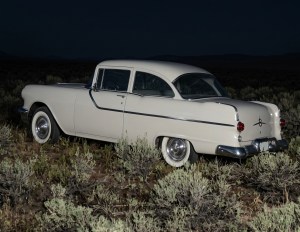
On the afternoon of January 8, 1956, Ralph rang his son Jack, who he had not seen in two years, and told him that he was leaving immediately for Arvada, Colorado. His landlady watched him drive off in his 1955 two-door Pontiac Tudor with some $300 in cash and traveller’s cheques in his pocket.
Travel in the 1950s could be slow and arduous and drivers frequently picked up hitchhikers to stave off the boredom – Genevieve later said that Ralph was in the habit of doing just that. On the day that Ralph left Santa Monica, one Noel Adams had picked up a stocky man at Needles, California, and dropped him in Kingman, Arizona, where Adams was spending the night. The next morning Adams spotted the same hitchhiker by the side of the road but didn’t pick him up again because, he would say, “he made me uneasy”. In light of subsequent events, Noel Adams had reason to thank his instincts. Shortly afterwards, patrolmen Billie Baxter and Alex R Linquist of the Kingman Police Department picked up the hitchhiker and as was their custom, after checking his details and ascertaining he was a transient, escorted a man whose ID said he was Donald Gilray to the edge of town.
Rainey’s car, found abandoned in Utah.
Somehow the hitchhiker made it to Flagstaff where he was picked up by Ralph Henderson Rainey. And that was the last time Ralph was seen alive. One January 10, 1956, State Patrolman Edgar C Bell found the body of man in a deep arroyo on the side of Route 66 near Budville. The man had been dead only a few hours, but two bullet holes in his head made it clear that he had been murdered.
Ironically, the recent World War 2 had made it easier to identify bodies such as the one in the arroyo. Ralph Henderson Rainey had been fingerprinted for the Navy in August 1942 and again when he had applied for a job at the Denver Ordinance Plant in June 1943. Within a couple of days of finding his body, police and the FBI knew who he was – but where was his car?
That puzzled was solved a week later when an identical car was found abandoned 65 miles west of Salt Lake City, Utah, near the tiny town of Low. The front right seat was soaked in blood and had a bullet hole in it and, although the license plates had been removed, it would be identified as Ralph’s Pontiac through a lubrication sticker in the door shut and a card with the dead man’s name and address found in the pocket of a suit in the car. The Pontiac had actually been spotted on Friday January 13, just three days after the murder, when passing tourists had seen a man leaving the car and walking towards the highway where he hitched a ride with a service station attendant.
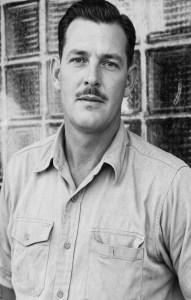
Kenneth Short who disappeared on his way from Michigan to California.
Meanwhile, New Mexico police had more problems on their hands with the disappearance of electronics engineer Kenneth Short who, after buying a car in Flint, Michigan, had set out to drive home to California and who had last been seen in Tucumcari. While they were searching for both Kenneth’s Buick and the owner himself, in Nevada officers were stopping a Buick for speeding. When the driver’s identification papers failed to tally with his description, he was ordered to drive to the police station. Instead, the driver sped off before wrecking the car and running into the desert. The man then broke into Loren Tracy’s home and held the family at gunpoint; deputies did knock at the home’s door, but Loren was forced to say that he hadn’t seen anyone suspicious before driving the stranger to North Las Vegas.
It didn’t take police long to identify the car as belonging to Kenneth Short. Kenneth had been heading to California to meet his second wife, Mira, and daughter Carol. (He had divorced his first wife, Leola, in 1941, when his son Wayne was 4 and his daughter Myrna just 2 years old, and married Mira in Shanghai in 1946 when he was serving as an electronic engineer with the Navy.) At first, police thought that they were looking for a murderer who had escaped from an Indiana prison, but said escapee wrote to his lawyer to say it wasn’t him, nor was it his fingerprints found in the Short car.
Kenneth Short’s wife Mira and daughter Carol wait for news.
Then, on January 24, in the small town of Caliente north of Las Vegas, Town Marshal Claud Davis and Highway Patrolman Duke Hill arrested a man as he ate breakfast. They said it was on the strength of the description given of the man who had kidnapped Loren Tracy, but Samuel Stewart – as he called himself – denied the accusation, saying he was a hitchhiker from Twin Falls, Idaho. He was held, nonetheless, on a kidnapping charge and soon the FBI identified him from his fingerprints as David Cooper Nelson, a 35-year-old unemployed sheet metal worker from Las Vegas.
Nelson had been born in 1920 in Great Falls, Montana, the fourth son of Levi and Florence Nelson, and life hadn’t been kind to the family. Twin sons, Peter and John, had died at birth in 1912, while Levi passed away in 1928, leaving his widow with eight children, six of whom were under ten. Nelson’s younger brother, Donald, was accidentally shot dead at the age of 15 by a friend, while three years later his older sister Mary Jeanette would die of peritonitis when she was only 24.
By the age of ten, Nelson was in reform school; by 20 he was in a federal road camp in Washington. Two years later he was in Deer Lodge state prison in Montana after being convicted of forgery until December of 1943 when he escaped, only to be arrested in Reno when he cashed a number of cheques that he’d stolen from the prison, representing himself as the chief clerk of the Montana penal institution.
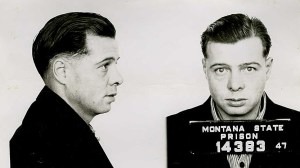
Upon release, Nelson moved from forgery to assault. In August 1947 he pulled a gun on Leroy Larson, the night clerk of the Baxter Hotel in Bozeman, Montana. Larson said at the time; “He pulled a gun. He asked me if I’d split the money with him and he’d tie me up to make the robbery look real. When I said no, he told me to turn my head, then he slugged me.” (Interestingly, he would later omit the offer to split the proceeds and say that Nelson just hit him.) Nelson didn’t even get out of town; he was arrested almost immediately at the Bozeman bus depot. On September 3, 1947, he was sentenced to 12 years in Deer Lodge. Had he served the full term, two and possibly three lives might have been saved.
David Cooper Nelson was sentenced to 12 years in 1947. He served just a third of that term.
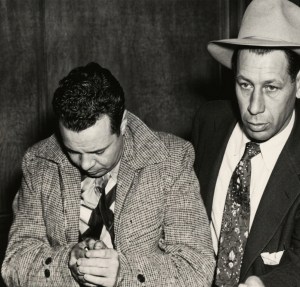
Despite initially pleading amnesia, ‘Samuel Stewart’ soon admitted to police that he was David Cooper Nelson. Furthermore he admitted to the killing of Ralph Henderson Rainey and also that of bartender John Valenti in Nevada but denied murdering Kenneth Short, despite overwhelming evidence which included his fingerprints all over Short’s car, being in possession of Short’s clothes and wristwatch and having cashed travellers cheques made out to Short in Holbrook, Santa Rosa and Amarillo.
David Cooper Nelson is arrested.
Nelson told officers that Rainey had picked him up hitchhiking near Flagstaff. When they neared Albuquerque, Rainey pulled over and asked Nelson to drive. Nelson said an argument ensued when he refused and he pulled a 38-calibre pistol out of his bag and shot Rainey. Then, he said, Rainey “was in convulsions and withering with pain as he laid in the front seat. When he appeared to be in great pain, I shot him again.”
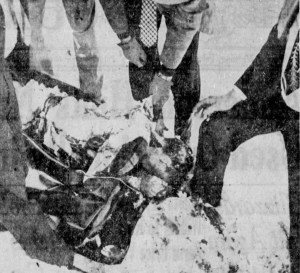
Eventually Nelson admitted to the murder of Short and drew police a sketch of a site near Vega, Texas, where they found the body in an arroyo under eight feet of snow. Like Rainey, he had been shot in the head with a 38-calibre revolver.
Police find the body of Kenneth Short.
In April 1956 he was charged with the murder of Ralph Henderson Rainey to which he pled innocent on the grounds of insanity – he had acted like a madman in jail, screaming, shouting and punching a sheriff, which only served to put him in a straightjacket and on bread and water rations. No one believed his act.
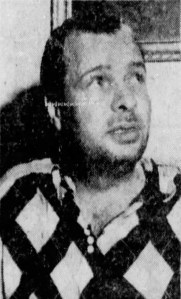
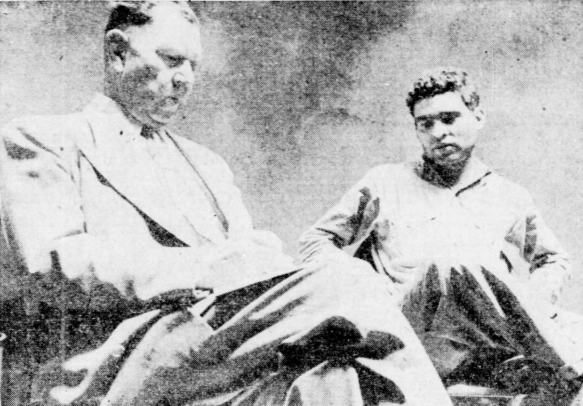
At his first trial Nelson appeared unkempt and unshaven as part of his insanity act.
After a week long trial, the jury took nine hours to declare him guilty of first degree murder and the judge sentenced him to death. The trial transcript weighed 15lbs and the proceedings almost bankrupted Valencia County which had to postpone all jury trials for the next three months.
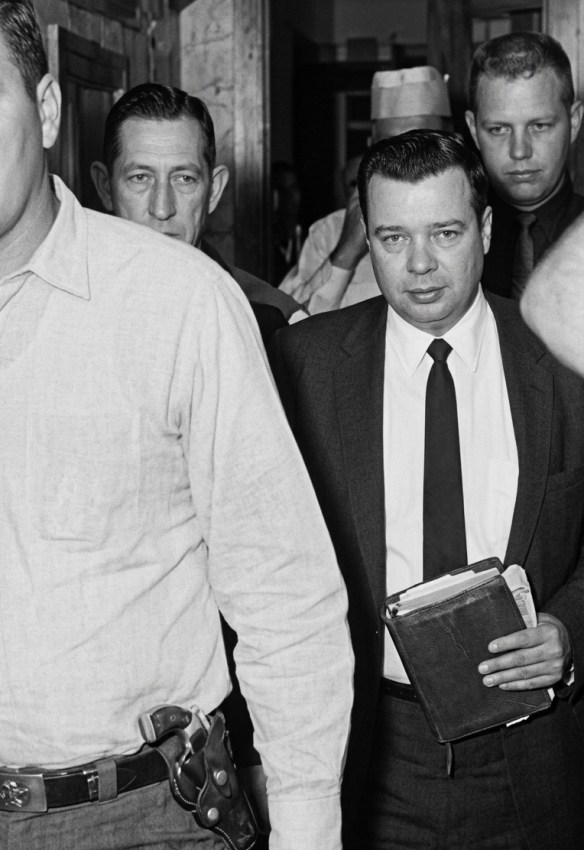
Nelson filed an appeal against his death sentence, claiming that he had been promised leniency in exchange for a confession. The Supreme Court granted him a new trial which opened on May 19, 1958, with Nelson representing himself. This time it took the jury less than two and a half hours to convict him of murder.
Nelson finally exhausted his appeals and the night before his execution claimed that a friend had shot Rainey but he couldn’t reveal his name. But after a last meal of oyster stew and strawberry shortcake, and telling reporters, “I hope and pray that I am on my way home”, he went to the gas chamber just after midnight on January 8, 1960. It was the one and only time that New Mexico used the gas chamber.
A clean-shaven smartly dressed Nelson, complete with Bible, at his second trial.
The New Mexico gas chamber. It was only ever used once.
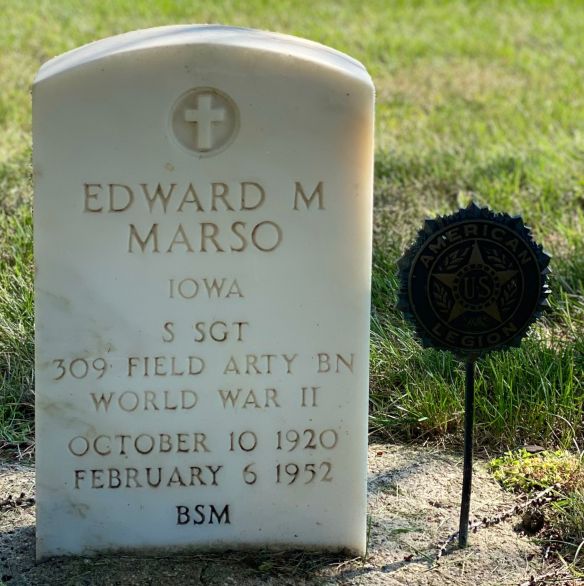
It was midnight on Route 66 on February 5, 1952, and a slow night for state policeman Nash Garcia who was patrolling the road in Grants. Then a dark green 1949 Lincoln Cosmopolitan barrelled towards him at a rapid rate of knots. Patrolman Garcia stopped the car and the driver identified himself as Edward Marso, a 31-year-old Iowan who was returning to Le Mars, Iowa, after visiting friends in California. Having telephoned his employer to say he was driving straight through to get back to Iowa where his father Nick, was seriously ill, he was a hurry, as he explained. Garcia gave him a warning, told him to slow down and let him go.
Edward Marso never made it to Iowa.
Around 18 hours later his Lincoln was found on fire just south of Tijeras but there was no sign of Marso, nor of his luggage, tools or the $300 and travellers cheques he had been carrying when he left California.
Born on October 10, 1930, to Elizabeth and Nick Marso, Edward Marso lost his mother when he was just 17. Shortly after he became engaged to Dorothy Luschen, a pretty young woman from Brunsville, Iowa. Two weeks before Christmas 1942, he, Dorothy, Dorothy’s brother Leonard and a 16-year-old girl called Clara Sawin were riding in a car driven by CJ Noonan. It seems that Noonan failed to see a railroad crossing just as a train was coming. The car struck the centre of the train and was dragged along, catching fire. Dorothy and Ed were in the rear seat and the back doors jammed. While Ed broke a window and escaped, he was unable to rescue Dorothy. She and her brother both died in the blaze, Clara suffered terrible burns to which she would succumb three days later while both Noonan and Ed escaped with minor injuries. Friends reported that he never really recovered from not being able to save Dorothy and he would remain single for the rest of his life.
Ed’s fiancee Dorothy Luschen who perished in a blazing car
Because of this tragedy, some surmised that he had either chosen to disappear in New Mexico or was suffering from amnesia. An Albuquerque insurance agent claimed he had seen the 6ft, 180lb black-haired Marso days after the car was found at a Salvation Army service. But by now both the police and Ed’s older brother Paul suspected foul play, a theory given weight when police discovered a bullet hole in the front bumper of the Lincoln.
A further check of the ashes in the car found what was thought to be human remains. Was it a simple case of Ed failing asleep and running off the road and then, like his fiancée, burning to death in the car? Results were delayed by the scientist responsible for testing the ashes having broken his leg but finally he concluded that they were not human. By the end of February little more could be done until the snow in the area melted.
Jess Mann of the Oden Motor Co which recovered the Lincoln points to a bullet hole in the front bumper
Then, on April 13, 1952, two 12-year-old boys found a body hidden under brush in an arroyo five miles from where the car had burned. It was Ed Marso; he had been beaten, strangled, shot and robbed. All his possessions, with the exception of two cigarette lighters and a pack of cigarettes, were missing. (Tragically the day after Ed’s body was found, Nash Garcia, the last witness to see him alive, was found shot dead in similar circumstances, but that’s a story for a future post.)
State Police Sergeant Lonnie Dennis theorised that, feeling sleepy, Ed had stopped by the side of the road where he had been robbed and killed, but the truth was even more terrifying.
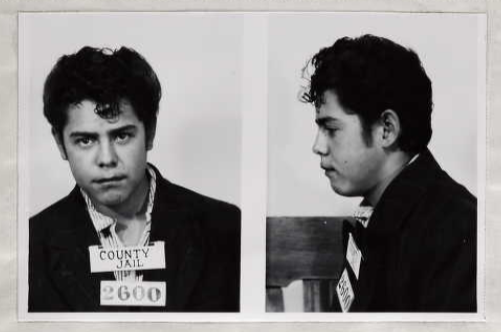
Within two weeks of the discovery of Ed’s body, three men had been arrested, Francisco ‘Frank’ Francia, 22, Nasareno Paz, 17, and his cousin Juanito ‘Johnny’ who was also 17. The arrests followed a report by tourists from Oklahoma of being fired upon while driving through Tijeras Canyon on Route 66, They managed to get a description and the license plate of the gunmen’s car and it tracked straight back to one of the Paz boys. Nasareno and Johnny confessed immediately and when police searched Nasareno Paz’s house they found tools and a wristwatch belonging to Ed Marso.
Chief Deputy Sheriff Ed Jackson interviewing Francisco Francia
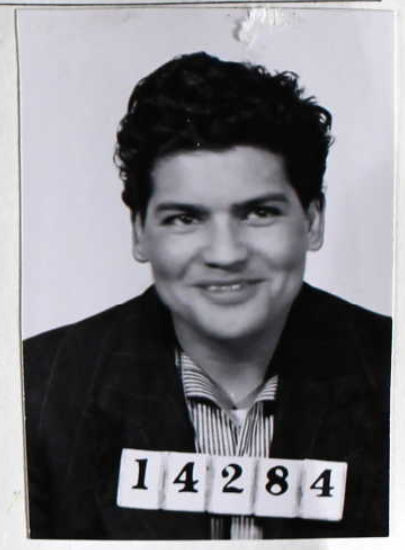
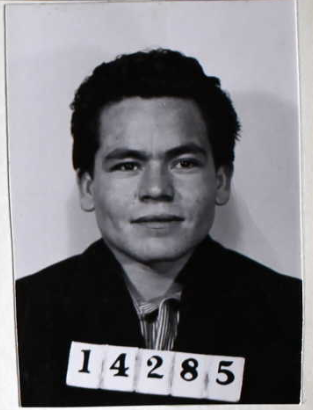
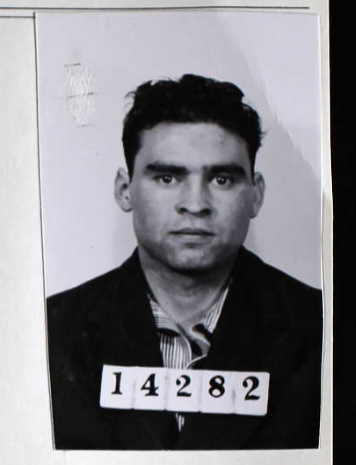
The trio soon gave up another name and 16-year-old Antonio ‘Tony’ Riboni was extradited from Washington where he had fled. All four pled guilty. They had lain in wait in a car along Route 66 in Tijeras Canyon, close to their homes, and ambushed Ed’s car by shooting out his tyres. When Ed stopped, the quartet beat him and then shot him, before putting his body in the Lincoln and driving to where they dumped the body and set fire to the car five miles away. They’d done it for the money and for the thrill and if the Oklahoma tourists hadn’t had the presence of mind to note their license plate they would probably have killed again – right on their doorstep. But they were allowed to plead guilty to second degree murder; Tony Riboni and Nazareno Paz received a sentence of 50-70 years, Johnny Paz got 60-70 and Frank Francia who had admitted firing three bullets into Ed Marso was sentenced to 90-99 years.
Juanito Paz
Nasareno Paz
The oldest at 22, Francisco Francia confessed to shooting Ed Marso
Effectively this should have meant life in prison. It was nowhere near that. Tony Riboni was paroled in 1961 having served less than nine years (he and the Paz pair had actually appeared before a parole board less than two years after starting their sentences). The Paz cousins were incarcerated a little longer but were still free by 1964. At the time they were released three were still younger than Ed Marso had been when they killed him. Francisco Francia served 17 years of his 90 to 99-sentence and was paroled in August 1969.
The youngest of the four, Antonio Riboni served less than 10 years and died in 1992
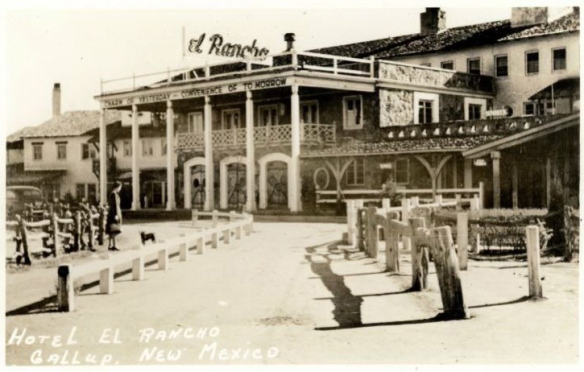
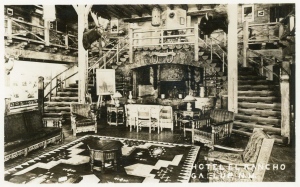
Hotel El Rancho as it looked when it opened in 1936.
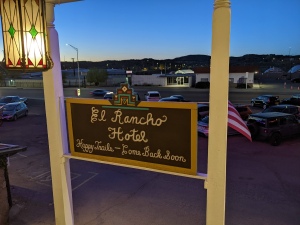
Hotel El Rancho in Gallup, New Mexico, is as much a draw for tourists as it was when it opened in 1937 and one of the first things anyone is told about the hotel is that it was owned by the brother of the most famous film director of the early 20th century, David Wark ‘DW’ Griffith. Given its history as home to the stars, commemorated today by named rooms and copious photographs through the hotel, it’s easy to see why the idea that RE Griffith was related to such a movie legend has been repeated over and over again, by everyone from the National Parks Service to Wikipedia.
There’s one problem; it isn’t true.
There has always been something that has troubled me about the Griffith connection; I have a degree in film and have researched DW Griffith and I knew that, of his siblings, not one had a name beginning with R. So down the rabbit hole I went.
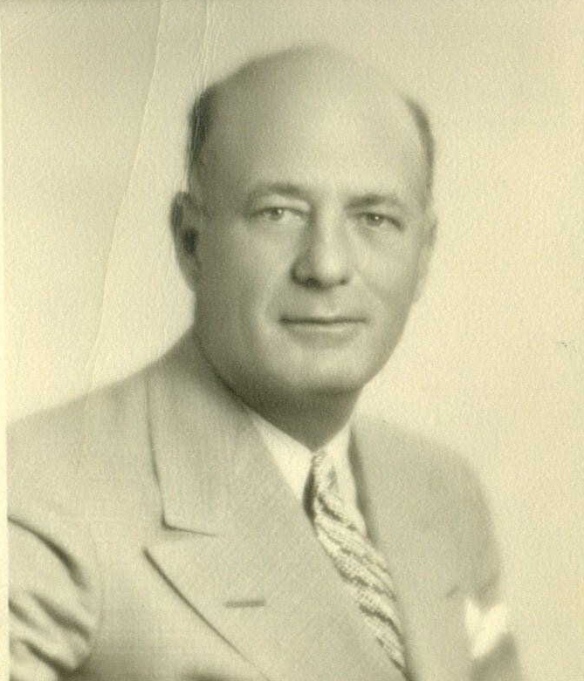
Rupert Earl Griffith, movie theatre mogul but no relation to DW.
Rupert Earl Griffith was born in 1893 in Hallettville, Texas, the second son of Henry and Minnie Griffith. He had two brothers neither of which were David Wark and his only relationship with DW was that they shared a surname. In 1920, putting a spell as a grocery salesman and one marriage behind him, RE Griffith – as he would be known for most of his life – found a job working as a commercial salesman in the motion picture industry selling film. He then opened his own theatre before moving to Oklahoma in 1931. From there he began the Griffith Amusement Company with his brothers Louis Clyde and Henry Jefferson, known in the family tradition as ‘LC’ and ‘HJ’.
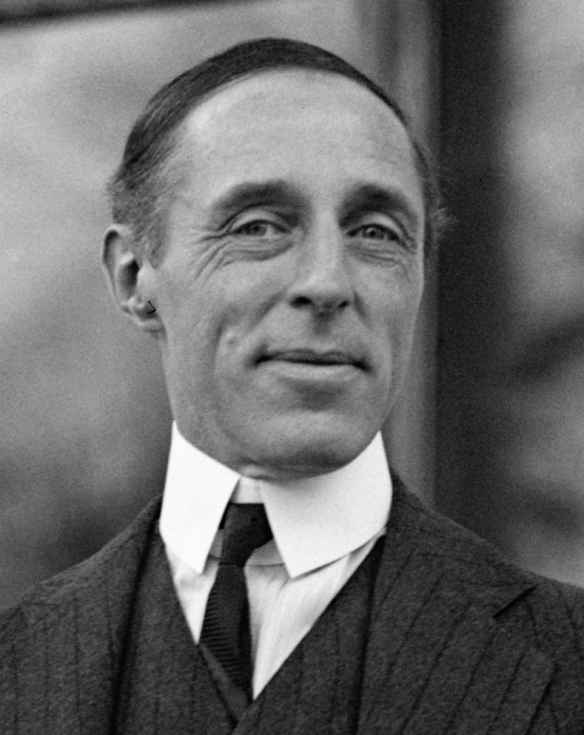
David Wark Griffith, legendary movie director, but no relation to RE…
Despite the Great Depression, the movie industry – and the Griffith brothers – prospered. By the early 1940s they were the operators of the largest independent chain of theatres in America, owning some 290 picture houses. In 1936 RE had come to Gallup to build the Chief and Navaho theatres; New Mexico was, at that time, very popular with Hollywood filmmakers and Griffith, who adored all things Old West, decided what Gallup needed was a top-notch hotel.
He was right. Hotel El Rancho opened in 1936 and, over the next two or three decades would play host to countless stars. Did DW Griffith ever stay there? It’s quite likely he didn’t, for he had made his last film, the unsuccessful ‘The Struggle’, in 1932, five years before the hotel opened.
RE Griffith also went on to open The Last Frontier hotel in Las Vegas, Nevada (it would be renamed the New Frontier in 1955 and was where Elvis Presley made his Las Vegas debut the following year) which was designed by his nephew William J Moore who owned the El Cortez and Showboat hotels in Vegas. Incidentally, The Last Frontier had originally been planned to be built in Deming, New Mexico, but on a buying trip for the new venture, Griffith and Moore stopped in Las Vegas and realised the potential of the growing city.
The interior of Hotel El Rancho in the 1940s, still instantly recognisable today.
The Last Frontier, Vegas’ first themed hotel, opened its doors in 1942, but RE Griffith would have only months to enjoy its success. On November 24, he died of a second heart attack, days after he had suffered the first at the Beverly Hills Hotel while on a business trip to California. It was just five miles from where DW Griffith would also die of a coronary at the Knickerbocker Hotel in 1948. And the myth continues to persist that they were brothers.
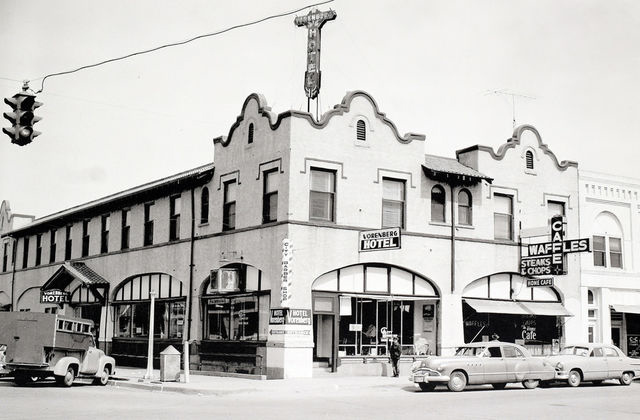
18 December 1947 was a cold winter’s morning like any other in Tucumcari. Bertha Eugene Wagnon Kappel had got up at 4.45am to prepare for her shift at the Home Café in the Vorenberg Hotel. (The Vorenberg was a grand hotel in downtown Tucumcari which boasted suites with private baths, a large lobby, dining room and barber shop as well as the Home Café. After the First World War it was owned by Floyd B Redman who built quite a property portfolio over the years. In the 1950s he bought another motel which was managed by a lady called Lillian Leigon; romance blossomed and he presented the motel to her as an engagement present. The motel was the famous Blue Swallow.)
The Vorenberg Hotel. The Home Cafe where Bertha Kappel was employed can be seen at the right.
Bertha had only been working at the Home Café for a couple of months while her husband Gus Adolph did various odd jobs. They had been married in Oklahoma in 1938 but several of the family – Bertha was one of 13 children – had moved to Tucumcari where Adolph also had links. They and their daughter were staying with Bertha’s brother, Roy, and his wife Catalina, in Roy’s home on North 1st Street, although the Kappels had purchased a lot nearby on which they intended to build a rudimentary house. To this end, Bertha had bought some lumber and, after finishing work on 17 December, she visited the lot to inspect progress. She found that the lumber was missing and this set into inexorable motion the events of the next few hours.
Bertha returned to her brother’s house and accused Adolph of selling the materials. He denied it but she discovered that he had, in fact, sold the lumber to a neighbour and, even worse, he hadn’t been paid for it. Bertha told him to get the lumber back within three days or “she would turn him in”. Now, the lumber may have been from a dubious source and Kappel did have a prior conviction for theft, so it might have been a well-aimed threat on her part. The quarrel continued into the evening although Adolph would later claim that the couple had been made up by the time they went to bed.
Even before the lumber incident it doesn’t appear to have been a happy marriage. Bertha had moved to Tucumcari some eight months before while her husband tried to find work in Oregon. When he returned to New Mexico she had sworn out a warrant on him for non-support of their 12-year-old daughter, Mary Frances.
Unsurprisingly next morning, the arguing flared up again when Adolph was slow to accompany Bertha on her walk to work. She left the house without him and when he called out to her to wait, she replied; “You dirty son-of-a-bitch, if you are going with me, come on.” It was an unfortunate choice of words and Bertha probably knew that it was a term that particularly offended her husband.
At around 6am, near an overpass, the body of Bertha Kappel was discovered just three blocks from her brother’s house. She lay in a pool of blood, her head cracked open by three blows from an axe and her left ear almost severed. When she was found, Kappel was taking a nap, having returned home, vomited and then taken two aspirins for a headache and then slept for an hour. When he woke up, he had a hearty breakfast and then went to the Home Café to say that his wife wouldn’t be coming to work that day. He was then arrested close to where Bertha’s body lay.
Adolph Kappel had a limited mental capacity but he knew enough to get rid of the axe, tossing it onto the roof of a neighbour’s house where it was later found. He signed a confession, saying that he had no recollection of killing his wife but remembered “I was standing over her and I struck a match and seen what I had done.” At his trial, he was charged with first degree murder and the jury took less than an hour to find him guilty. He was sentenced to be executed in New Mexico’s electric chair.
Kappel appealed and was granted a second trial on the grounds that the jury had not been given the option of convicting him of second degree murder. This jury decided that the murder had been conducted in the heat of the moment and was not planned or deliberate. He was once again found guilty but this time the sentence was 90-99 years rather than death. Kappel proved to be a model prisoner – for at least a year…
Gus Adolph Kappel
Assigned to a prison work gang at the penitentiary’s clay pits, on the last day of October 1950, Adolph Kappel made his escape aboard a black mule called Pete (one newspaper reported the beast was called Pegasus which seems a little fanciful). For five days he managed to stay ahead of police and prison guards in freezing cold weather until he was finally captured 35 miles south east of Las Vegas, New Mexico. He gave various reasons for his escape, saying that he had wanted to find out why he hadn’t heard from his daughter and believed that his brother was preventing her from writing to him. He also said he wanted to see his sister-in-law who had been involved in a road accident and then intended on going to Oklahoma to visit his mother and other relatives. But he also told reporters that “I am not the man who killed my wife” and that had he been able to get to Tucumcari he “could have cleaned up the whole mess”. Given that he had signed a confession which formed the basis of his first trial and pleaded guilty to second degree murder at the second trial it’s difficult to see how anyone else might have killed Bertha.
In 1953, Governor Edwin Mechem commuted Kappel’s sentence to a flat 70 years while the Warden commented, perhaps a little tongue in cheek, that Kappel was “now a plumber. He does not have access to a mule”.
Governor Erwin L Mechem who commuted Adolph Kappel’s 90-99 sentence to 70 years.
Adolph Kappel applied for parole at every chance and was denied for many years. When was he released? The short answer; I don’t know. He died in 1978 at the age of 63 and is buried in the Santa Fe National Cemetery. However, he was also incarcerated in the Penitentiary of New Mexico which is just 15 miles from Santa Fe but I found that he had won a newspaper competition in 1976 when living in Ojo Caliente near Taos so it appeared he stayed in the area after his release. Perhaps he just had nowhere else to go.
John Frederick Kappel whose bound body was found in a Sayre lake in an unsolved homicide.
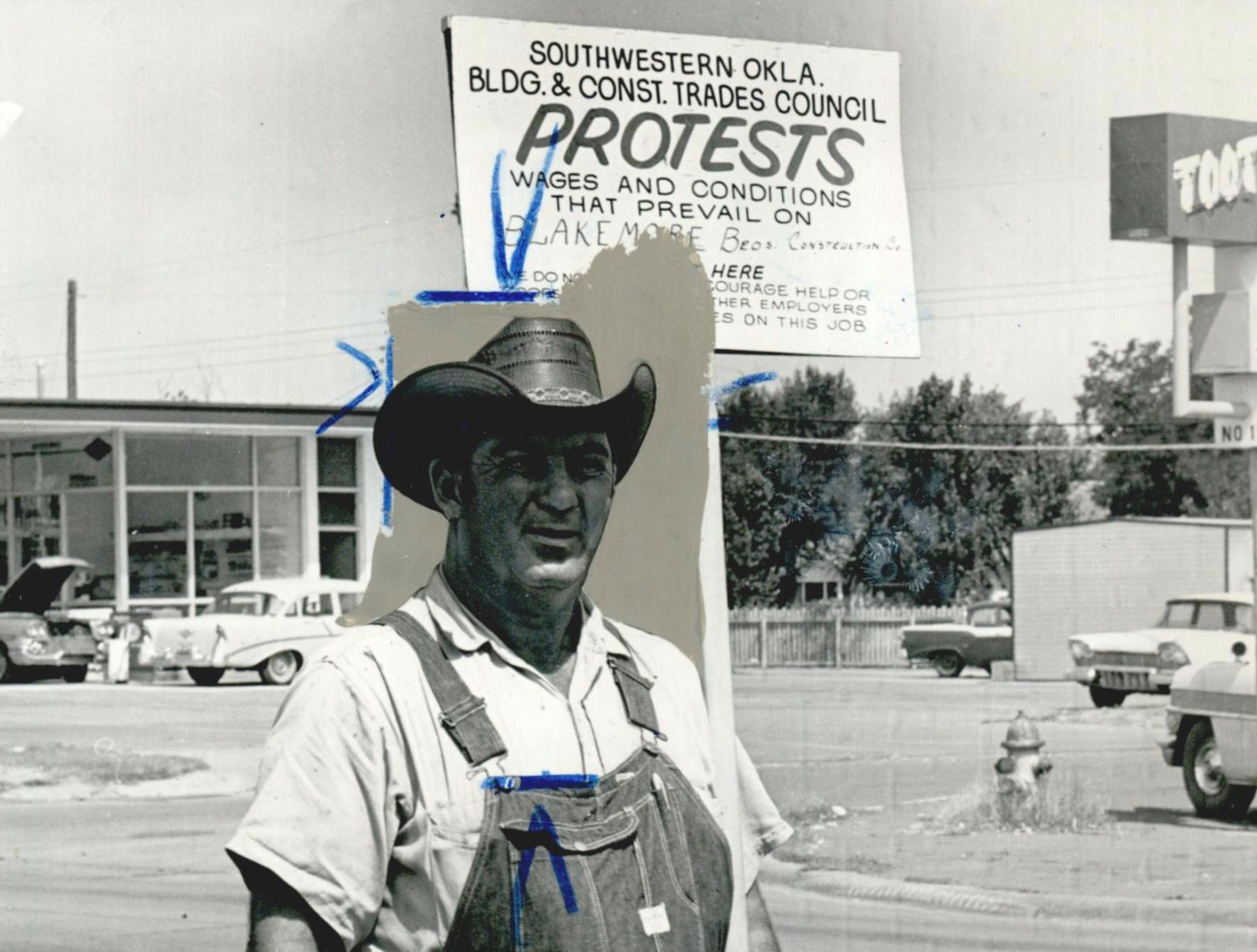
It is perhaps a little ironic that, with one brother behind bars for homicide, another brother should also meet his end by murder. In September 1963, the youngest Kappel son, John Frederick, was found floating in a pond in Sayre, Oklahoma. This was no natural drowning; John’s hands and feet were tied and he had also suffered a blow on the head before being thrown into the lake to drown. He had previously been working as a union picket for the International Hod Carriers, Building and Common Laborers Union protesting at the construction site for a grocery store in Elk City. Police stated that his job had nothing to do with his death, although they were bemused at the lack of signs of a struggle as John was a large man – 6’4” and 240lbs as well as being a karate expert – and throwing him in the pond had required lifting him over a barbed wire fence. The case was never solved.
The lower walls are all that remains of the Vorenberg Hotel after a fire in the 1970s. The house where Bertha and Adolph were living with her brother is also long gone.