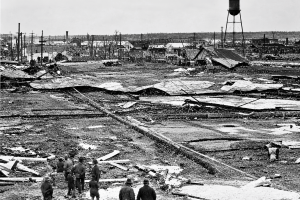
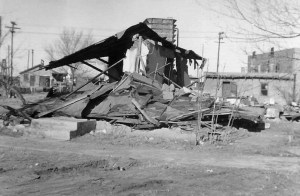
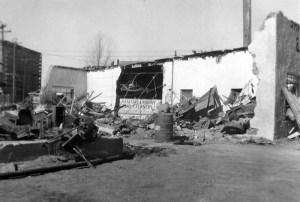
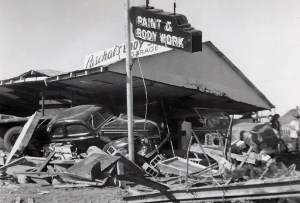
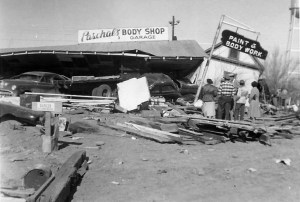
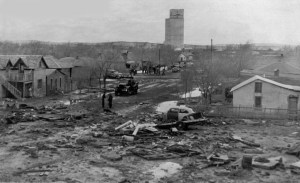
Tucumcari’s business district in ruins after the flood. [Photo: AP]
At 4.10am on December 13, 1951, Henry Fulkes, working in the Southern Pacific railroad yard in Tucumcari heard a slight rumble. Mrs Claude Moncus, wife of the city’s sheriff, thought a jet plane was flying low over the apartment in the courthouse where she was staying. Early riser Lorenzo Gutierrez believed he saw a fireball from his front window. And then all hell broke loose.
Over $500,000 of damage was done to property. That would be around $6.5 million today.
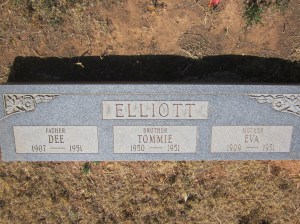
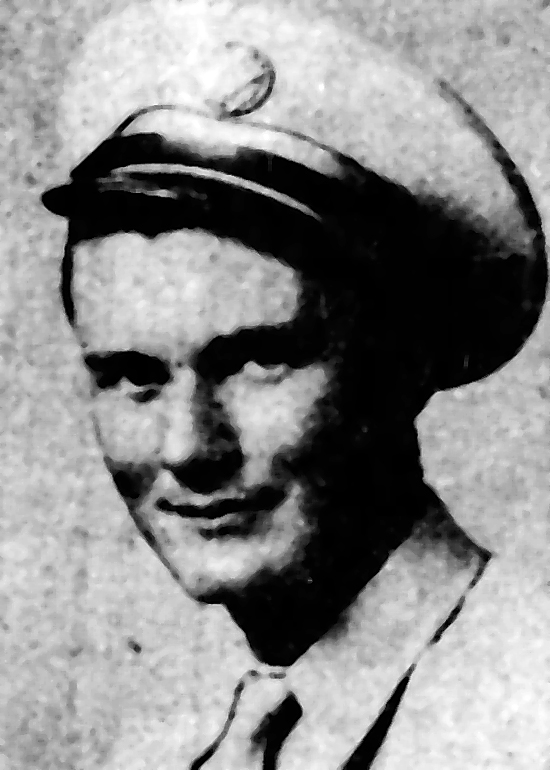
One and a quarter million gallons of water suddenly cascaded down on Tucumcari’s business district, destroying life and property alike. Water was waist deep for three blocks and one of the city’s three municipal water tanks lay in pieces. Just before dawn on that Thursday morning, the water tank, 30 feet high and a hundred feet high, had rolled over and snapped its ground mooring. It was full to capacity and within seconds it had flooded the area. Even worse, the cap of the tank had landed on a house. The occupants, Dee Elliott, 44, his wife Eva, 43 and their 18-month-old son Tommie, were killed. His twin, Tony, asleep in another room with his 5-year-old sister survived. Their neighbour Steve Gallegos, 13, wasn’t so lucky. While his mother and sister were trapped by debris and pieces of metal in their house, Steve was thrown 100 feet and his body found in the street.
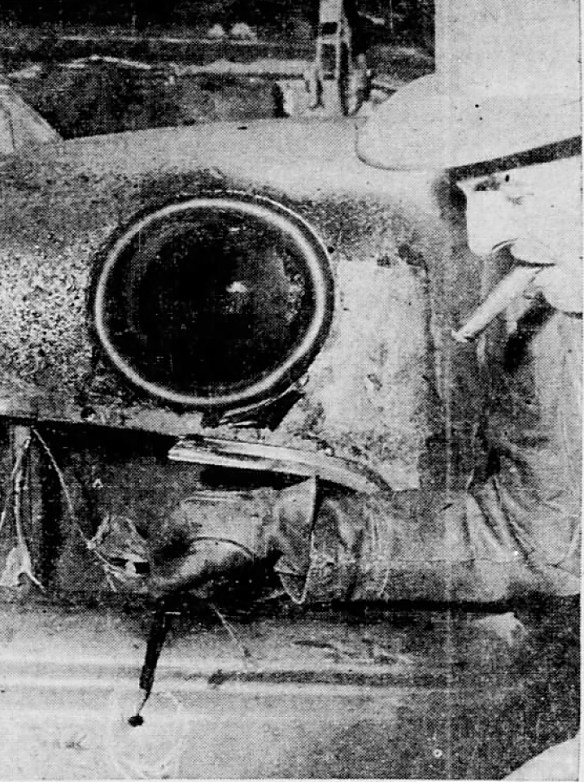
The side of the Sanitary Laundry was torn out. [Photo: AP]
The chaos was widespread. 15 houses, made of adobe, literally dissolved in the torrent. A city warehouse containing two and three-ton tractors was shifted 175 feet off its foundation. A laundry, wedding shop, welding shop, used car lot and the Mason Motor Co were badly damaged. The only saving grace was that if it had happened during business hours the death toll would have undoubtedly been higher.
No sooner had the Paschal Body Shop recovered from the flood then it was destroyed by fire in 1954. [Photo: AP]
In the aftermath a number of theories were advanced for the disaster from a meteor strike to sabotage, but a report by the New Mexico Society of Professional Engineers discovered a more prosaic reason. It found that a faulty weld in the lower section of the tank wall had given way with catastrophic effect; the tragedy is that this was entirely avoidable. The City had purchased the tank from the government after it had been used during the construction of the nearby Conchas Dam and had erected it in around 1940. The tank was not built to the standards of the American Water Works Association; it had never been intended to hold water and was made of lightweight steel, designed to store oil. The surprise was that it had held millions of gallons of water for eleven years before effectively imploding.
Customers cars lie in the wreckage of Paschal’s Body Shop. [Photo: AP]
The grave of the Elliotts and their little son in the Tucumcari cemetery.
Snow hampered the clean up and many residents were inoculated against typhoid because of the danger of contaminated water. [Photo: AP]
On the final day of July 2026 the Shamrock Motel in Springfield became the latest old Route 66 motel to be demolished.
Its history stretches back to the 1920s when it began life as Deaver’s Tourist Camp which was run by Herman Gann. Tragedy struck in February 1946 when 29-year-old truck driver Carril Braudrick was found dead in one of the cabins. The cause of death was carbon monoxide poisoning, the heater in the room being unvented. Weeks later Braudrick’s widow Sadie, mother of five children under 9 and pregnant with their sixth, filed a $10,000 damages suit against Gann and the City of Springfield. Within days Gann had sold the tourist camp to E Wayne Shannon for the modern-day equivalent of $428,000 and it was Shannon who promptly renamed it the Shamrock Motor Court and planned to add a drive-in restaurant.
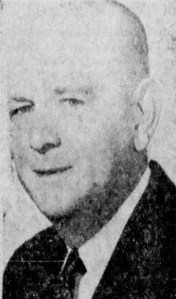
E Wayne Shannon, owner of the Shamrock Motor Court.
However, it was his wife Vera who took on the day-to-day running of the motor court and thus it was Mrs Shannon who found herself in the middle of a case which made news across the state. On Saturday February 5, 1949, she knocked on the door of a cabin to warn the occupants that check-out time was just a half hour away. Fifteen minutes later a young woman from that cabin entered the motel’s office and said; “I think my friend is dead.”
The room had been rented just before midnight the previous night by two men who registered under the false names of Mr and Mrs James Dunn and Mr and Mrs Ed Barnes of Little Rock, Arkansas. However, this was not the Shannons’ first rodeo and they had made a note of the registration number of the men’s 1936 Ford. By the time the girl ran into the motel office that car was long gone and all that was left in the cabin was another girl clad only in a black slip. She had been dead for at least six hours.
Betty Jane Massey
Police immediately arrested the surviving woman, Rosella Wimberly from Phillipsburg, Missouri, 18 years old and already married at least once and a mother twice. The dead girl was, she said, her friend of three years, Betty Jane Massey. Betty was one of 11 children (a sister died of cholera when Betty was eight years old) and it seems she already had an alcohol problem. Two days before she was found dead her landlady had discovered her drunk in bed (she also claimed that five months before Betty had had an operation, which tended to infer it was an abortion). But Betty had recovered enough the next day to go drinking again with Rosella and after hitching several rides the pair found themselves on Route 66 east of Springfield.
An ambulance from the Herman Lohmeyer funeral home prepares to take Betty’s body away. Beside the car the driver holds her handbag.
There they were picked by two used car salesmen who, thanks to Mr Shannon’s diligence in noting their car’s tag, were later identified as Edwin Faber Holyfield, 34, and Earl Lay, 26, used car salesmen of Morrillton, Arkansas. Rather to everyone’s surprise, the two men elected to return to Missouri – although there was no legal requirement for them to do so – and give evidence at Betty’s inquest. According to Holyfield and Lay, they had picked up the girls because they were concerned about them being cold. Presumably the stop they made to buy a bottle of whisky was to warm them up, as was booking a room at the Shamrock Motor Court.
Betty leaves the Shamrock Motor Court for the last time. In the black coat and light hat is Coroner Clyde Abbott.
Once at the motor court, Holyfield said he stayed just fifteen minutes while he was joined by Lay five minutes later and by 12.30am they were on their way back to Little Rock. Except that their car had been seen leaving the cabin by a resident of the motor court between 8am and 8.30am on Saturday morning, by which time Betty had been dead for hours.
Edwin Faber Holyfield (left) and Earl Lay.
Holyfield and Lay maintained that, although they had ‘been intimate’ with the girls, both were alive and well when they left. They stuck to their story that they had only stayed a few minutes and it seems that the inquest jury took the view of “Well, that could have happened to any of us!” Rosella’s testimony was essentially disregarded, especially as she was still being held for vagrancy, a law widely used when police suspected a woman of being a prostitute but couldn’t prove it.
Rosella Wimberly giving testimony at her friend’s inquest.
Betty’s cause of death was ascertained as alcoholism, heat stroke and carbon monoxide poisoning. While it seems she was undoubtedly drunk, the second two causes seem a little strange. It was February in Missouri and the likelihood of anyone suffering heatstroke is just bizarre. Meanwhile, after Carril Braudrick’s death three years before, the Shamrock had had regular inspection of its heaters and had passed examinations both two weeks before and after the death, so carbon monoxide poisoning is equally unlikely.
The coroner was quick to say that Betty’s body showed no sign of violence, yet the inquest stated that she had bruises on her face and a cut lip. Wayne Shannon also stated that the inside of the cabin was ‘an awful shambles’ with fittings and a bathroom faucet broken. Lay and Holyfield quietly paid damages of $43.60 and the matter was closed. That’s the equivalent of $600 today, which seems more than accidental damage, not to mention the injuries on Betty. But it seems that no one ever questioned those issues.
Were the two used car salesmen charged with anything? Yes – they were each fined $75 for supplying minors with liquor. The attitude of the prosecutor Wayne Collinson appears to be one of regret that he had even had to charge the pair with that. He said; “I feel they truly violated the law. But in this particular case I feel the law was made to protect youth. From all our investigation and testimony at the inquest, it was shown that the girls were known in their county to be heavy drinkers and that one (the Massey girl) had been drunk for days. I would say that both looked much older than they are.”
So there we are, it was all the girls’ fault and poor Holyfield and Lay had been led astray. Earl Lay’s wife didn’t think so because she divorced him a year later. Mrs Holyfield was clearly a more forgiving woman as she stayed married to him until his death in 1982.
Rosella was found guilty of vagrancy and received a short jail term after which the magistrate ordered her to “go back home and stay there – you’ve cost Greene county taxpayers a lot of money with this incident.” No matter that she had probably been raped and then found her friend dead.
There is one last coda to this sorry episode. The newspaper reports of the day described Betty Jane Massey as 17, 18 or even 20 years old. Even her death certificate says she was 17. On the day she died, Betty was less than three months past her 16th birthday.
Mention Budville, New Mexico, and anyone with an interest in Route 66 will probably think of the murders of Howard ‘Bud’ Rice and Blanche Brown at the Budville trading post in 1967. Some might even recall the murder four years later of Philip Atkinson outside the building, but few will have heard of Ralph Henderson Rainey.
In 1956 Ralph Rainey was a 48-year-old butcher, working as a meat cutter in a retail store in Santa Monica, California. Born in Kansas in 1907, he had married young when he was 21 and his bride, Bertha Lucille Hilliard, just 16 years old. They had a son Jack, in 1930, followed by twins, Jerry and Jean, three years later. But by the early 1940s the marriage had broken down; In 1946 Bertha married Merle James Ranson in Winnemucca, Nevada, while Ralph remarried the following year to Genevieve Johnson in Carson City, Nevada. That marriage also failed and by the end of 1955, with Genevieve living in Northridge, north Los Angeles and Ralph renting a room in Santa Monica, he had decided to return to Colorado where he had previously lived and where his sons still made their home.
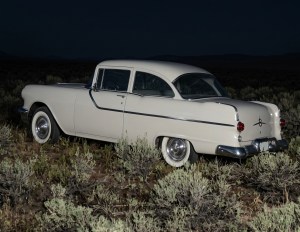
On the afternoon of January 8, 1956, Ralph rang his son Jack, who he had not seen in two years, and told him that he was leaving immediately for Arvada, Colorado. His landlady watched him drive off in his 1955 two-door Pontiac Tudor with some $300 in cash and traveller’s cheques in his pocket.
Travel in the 1950s could be slow and arduous and drivers frequently picked up hitchhikers to stave off the boredom – Genevieve later said that Ralph was in the habit of doing just that. On the day that Ralph left Santa Monica, one Noel Adams had picked up a stocky man at Needles, California, and dropped him in Kingman, Arizona, where Adams was spending the night. The next morning Adams spotted the same hitchhiker by the side of the road but didn’t pick him up again because, he would say, “he made me uneasy”. In light of subsequent events, Noel Adams had reason to thank his instincts. Shortly afterwards, patrolmen Billie Baxter and Alex R Linquist of the Kingman Police Department picked up the hitchhiker and as was their custom, after checking his details and ascertaining he was a transient, escorted a man whose ID said he was Donald Gilray to the edge of town.
Rainey’s car, found abandoned in Utah.
Somehow the hitchhiker made it to Flagstaff where he was picked up by Ralph Henderson Rainey. And that was the last time Ralph was seen alive. One January 10, 1956, State Patrolman Edgar C Bell found the body of man in a deep arroyo on the side of Route 66 near Budville. The man had been dead only a few hours, but two bullet holes in his head made it clear that he had been murdered.
Ironically, the recent World War 2 had made it easier to identify bodies such as the one in the arroyo. Ralph Henderson Rainey had been fingerprinted for the Navy in August 1942 and again when he had applied for a job at the Denver Ordinance Plant in June 1943. Within a couple of days of finding his body, police and the FBI knew who he was – but where was his car?
That puzzled was solved a week later when an identical car was found abandoned 65 miles west of Salt Lake City, Utah, near the tiny town of Low. The front right seat was soaked in blood and had a bullet hole in it and, although the license plates had been removed, it would be identified as Ralph’s Pontiac through a lubrication sticker in the door shut and a card with the dead man’s name and address found in the pocket of a suit in the car. The Pontiac had actually been spotted on Friday January 13, just three days after the murder, when passing tourists had seen a man leaving the car and walking towards the highway where he hitched a ride with a service station attendant.
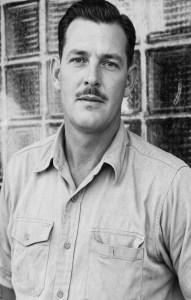
Kenneth Short who disappeared on his way from Michigan to California.
Meanwhile, New Mexico police had more problems on their hands with the disappearance of electronics engineer Kenneth Short who, after buying a car in Flint, Michigan, had set out to drive home to California and who had last been seen in Tucumcari. While they were searching for both Kenneth’s Buick and the owner himself, in Nevada officers were stopping a Buick for speeding. When the driver’s identification papers failed to tally with his description, he was ordered to drive to the police station. Instead, the driver sped off before wrecking the car and running into the desert. The man then broke into Loren Tracy’s home and held the family at gunpoint; deputies did knock at the home’s door, but Loren was forced to say that he hadn’t seen anyone suspicious before driving the stranger to North Las Vegas.
It didn’t take police long to identify the car as belonging to Kenneth Short. Kenneth had been heading to California to meet his second wife, Mira, and daughter Carol. (He had divorced his first wife, Leola, in 1941, when his son Wayne was 4 and his daughter Myrna just 2 years old, and married Mira in Shanghai in 1946 when he was serving as an electronic engineer with the Navy.) At first, police thought that they were looking for a murderer who had escaped from an Indiana prison, but said escapee wrote to his lawyer to say it wasn’t him, nor was it his fingerprints found in the Short car.
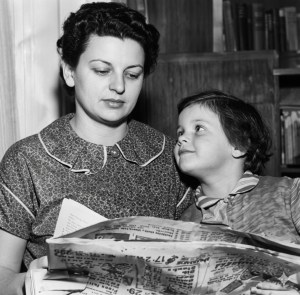
Kenneth Short’s wife Mira and daughter Carol wait for news.
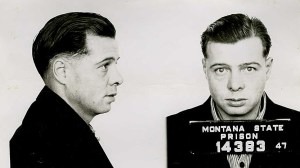
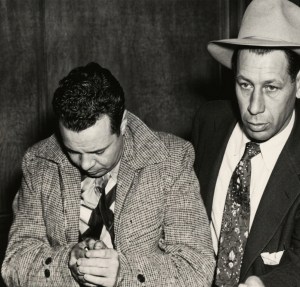
Then, on January 24, in the small town of Caliente north of Las Vegas, Town Marshal Claud Davis and Highway Patrolman Duke Hill arrested a man as he ate breakfast. They said it was on the strength of the description given of the man who had kidnapped Loren Tracy, but Samuel Stewart – as he called himself – denied the accusation, saying he was a hitchhiker from Twin Falls, Idaho. He was held, nonetheless, on a kidnapping charge and soon the FBI identified him from his fingerprints as David Cooper Nelson, a 35-year-old unemployed sheet metal worker from Las Vegas.
Nelson had been born in 1920 in Great Falls, Montana, the fourth son of Levi and Florence Nelson, and life hadn’t been kind to the family. Twin sons, Peter and John, had died at birth in 1912, while Levi passed away in 1928, leaving his widow with eight children, six of whom were under ten. Nelson’s younger brother, Donald, was accidentally shot dead at the age of 15 by a friend, while three years later his older sister Mary Jeanette would die of peritonitis when she was only 24.
By the age of ten, Nelson was in reform school; by 20 he was in a federal road camp in Washington. Two years later he was in Deer Lodge state prison in Montana after being convicted of forgery until December of 1943 when he escaped, only to be arrested in Reno when he cashed a number of cheques that he’d stolen from the prison, representing himself as the chief clerk of the Montana penal institution.
Upon release, Nelson moved from forgery to assault. In August 1947 he pulled a gun on Leroy Larson, the night clerk of the Baxter Hotel in Bozeman, Montana. Larson said at the time; “He pulled a gun. He asked me if I’d split the money with him and he’d tie me up to make the robbery look real. When I said no, he told me to turn my head, then he slugged me.” (Interestingly, he would later omit the offer to split the proceeds and say that Nelson just hit him.) Nelson didn’t even get out of town; he was arrested almost immediately at the Bozeman bus depot. On September 3, 1947, he was sentenced to 12 years in Deer Lodge. Had he served the full term, two and possibly three lives might have been saved.
David Cooper Nelson was sentenced to 12 years in 1947. He served just a third of that term.
Despite initially pleading amnesia, ‘Samuel Stewart’ soon admitted to police that he was David Cooper Nelson. Furthermore he admitted to the killing of Ralph Henderson Rainey and also that of bartender John Valenti in Nevada but denied murdering Kenneth Short, despite overwhelming evidence which included his fingerprints all over Short’s car, being in possession of Short’s clothes and wristwatch and having cashed travellers cheques made out to Short in Holbrook, Santa Rosa and Amarillo.
David Cooper Nelson is arrested.
Nelson told officers that Rainey had picked him up hitchhiking near Flagstaff. When they neared Albuquerque, Rainey pulled over and asked Nelson to drive. Nelson said an argument ensued when he refused and he pulled a 38-calibre pistol out of his bag and shot Rainey. Then, he said, Rainey “was in convulsions and withering with pain as he laid in the front seat. When he appeared to be in great pain, I shot him again.”
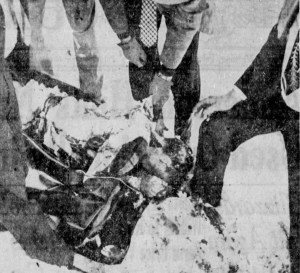
Eventually Nelson admitted to the murder of Short and drew police a sketch of a site near Vega, Texas, where they found the body in an arroyo under eight feet of snow. Like Rainey, he had been shot in the head with a 38-calibre revolver.
Police find the body of Kenneth Short.
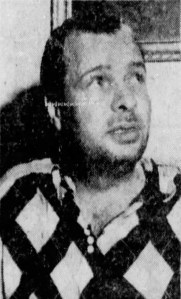
In April 1956 he was charged with the murder of Ralph Henderson Rainey to which he pled innocent on the grounds of insanity – he had acted like a madman in jail, screaming, shouting and punching a sheriff, which only served to put him in a straightjacket and on bread and water rations. No one believed his act.
At his first trial Nelson appeared unkempt and unshaven as part of his insanity act.
After a week long trial, the jury took nine hours to declare him guilty of first degree murder and the judge sentenced him to death. The trial transcript weighed 15lbs and the proceedings almost bankrupted Valencia County which had to postpone all jury trials for the next three months.
Nelson filed an appeal against his death sentence, claiming that he had been promised leniency in exchange for a confession. The Supreme Court granted him a new trial which opened on May 19, 1958, with Nelson representing himself. This time it took the jury less than two and a half hours to convict him of murder.
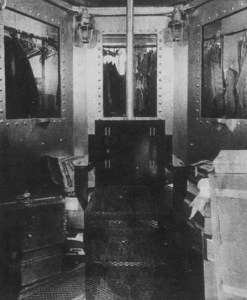
Nelson finally exhausted his appeals and the night before his execution claimed that a friend had shot Rainey but he couldn’t reveal his name. But after a last meal of oyster stew and strawberry shortcake, and telling reporters, “I hope and pray that I am on my way home”, he went to the gas chamber just after midnight on January 8, 1960. It was the one and only time that New Mexico used the gas chamber.
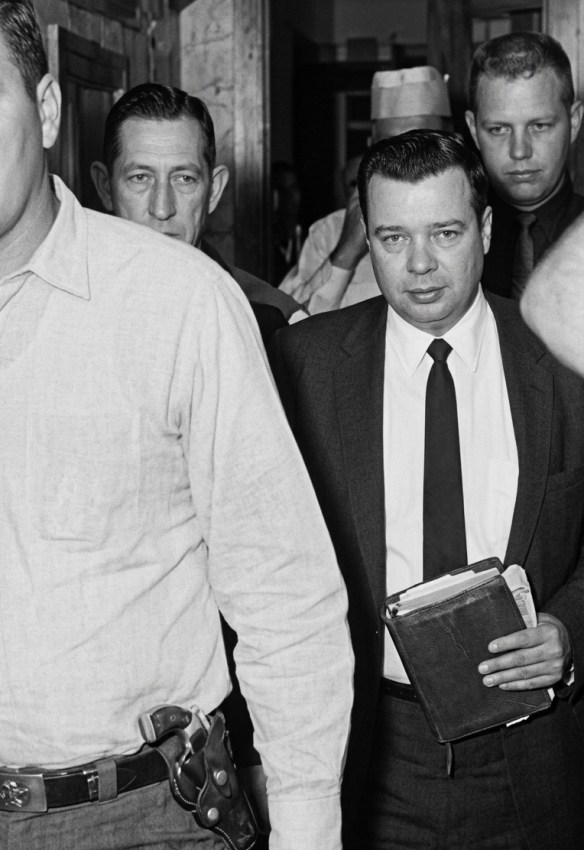
A clean-shaven smartly dressed Nelson, complete with Bible, at his second trial.
The New Mexico gas chamber. It was only ever used once.
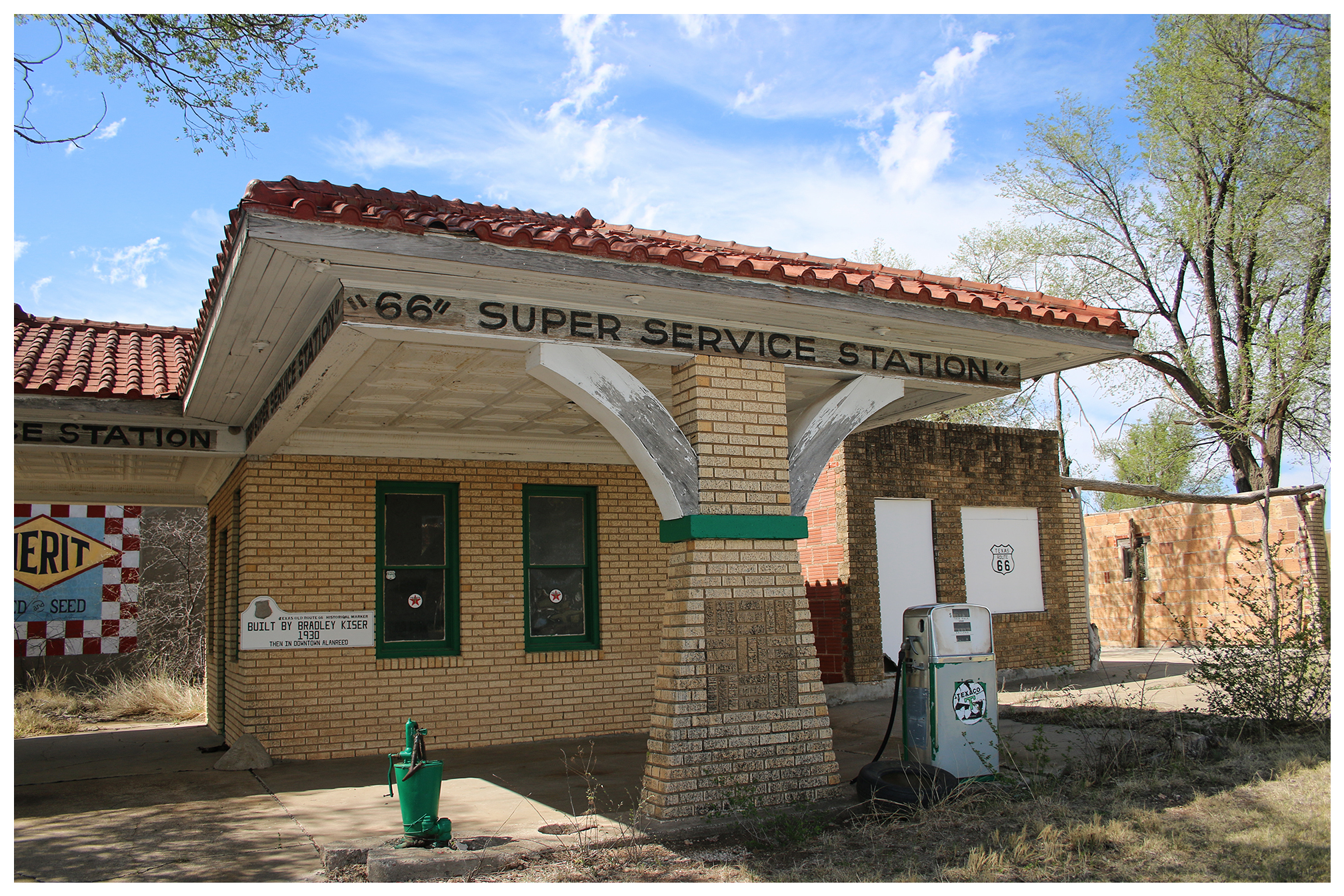
One of the small mysteries of Route 66 is the ‘Bradley Kiser 66 Super Service Station’ in Alanreed, Texas. The only information that is seemingly available is the notice on the building which reads ‘Built by Bradley Kiser 1930’. So, is there any more to be found? Well, a little.
Sanford Bradley Kiser was born in Tennessee in 1892, to Thomas Sanford and Sara Ann ‘Sallie’ Kiser, one of nine children. Thomas was a farmer and Bradley grew up labouring first in Tennessee and then in Oklahoma.
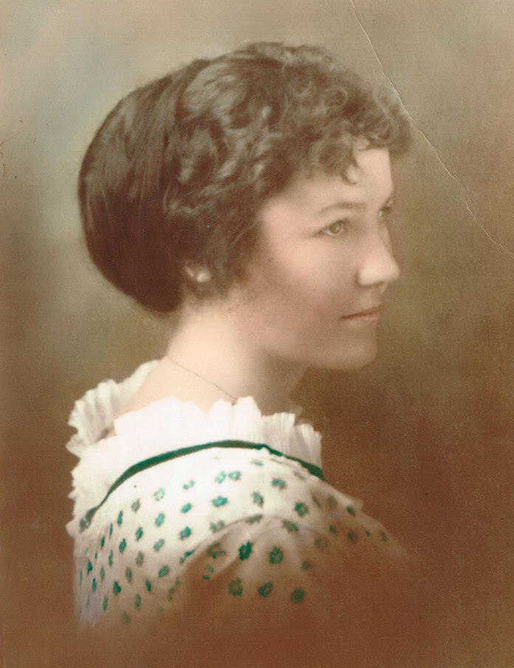
Miss Myrtle Alpha Boystun before her marriage to Bradley Kiser in 1915.
In 1915 the tall blue-eyed Bradley married Myrtle Alpha Boydstun, a beautiful 20-year-old Texan, and the ninth and final child of Henry Sanford Boydstun. To Route 66 aficionados and ghost town hunters that name may be familiar and that’s because Henry (and his wife Mary) were the first homesteaders in the area of what is now famed as the Jericho Gap. They filed a claim on land in 1887 and it eventually grew to have a post office and a siding for the Chicago, Rock Island and Gulf Railway. Now it’s just a name – and one that is technically misspelled!
Bradley and Myrtle had two children, a daughter Joeldine in 1916 and a son, Roy Sanford in 1921. Both children were born in Donley County, Texas, and it seems the family may have flitted between Oklahoma and Texas until 1922 by which time Bradley was farming in his own right with his younger brother, Hoyt, helping him.
Then, at some point, he appears to have diversified into building and running a service station. First thing, is that date correct? Well, maybe… According to the 1930 census, Bradley was indeed a filling station operator. However, census information was often collected for several months before the official ‘census day’ of April 1. It is entirely possible that the service station was already in operation in the late 1920s.
The station stood where two alignments of Route 66 met.
Bradley didn’t stay in the service station business for long. In the late 1930s he became the foreman of the Bruce Nursery, famed for its shrubs and orchard trees. (The owner, Paul M Bruce, built the famous ‘petrified wood’ house of Alanreed in 1925. It still stands six miles north of Alanreed but is now on private property.)
Bradley and Myrtle in later years.
The Kisers then moved a little way north to Kellerville where one of Bradley’s last jobs was as an oilfield pumper (he would have been 60 by now). In 1955 they returned to McLean, living in a little house on North Clarendon, where Myrtle died in 1973. Bradley passed away nine years later in 1982; they are both buried in the cemetery in McLean.
The home in McLean where the Kisers lived in the 1950s and ’60s. Built in 1920, the house is in disrepair and currently for sale.
The station was restored in around 1993 and is in the excellent care of the Old Texas Route 66 Association which continues to ensure its survival.
And then there is one final mystery, one so blindingly obvious that I actually missed it at first – the name ‘Sanford’. It was not only his given first name, but both the middle name of Bradley’s father and his father-in-law and clearly significant enough for him to add it to his son’s name (who, in turn, named his own son Roy Sanford…). Surely this can be no coincidence, but I can find no connection between the families. Yet.
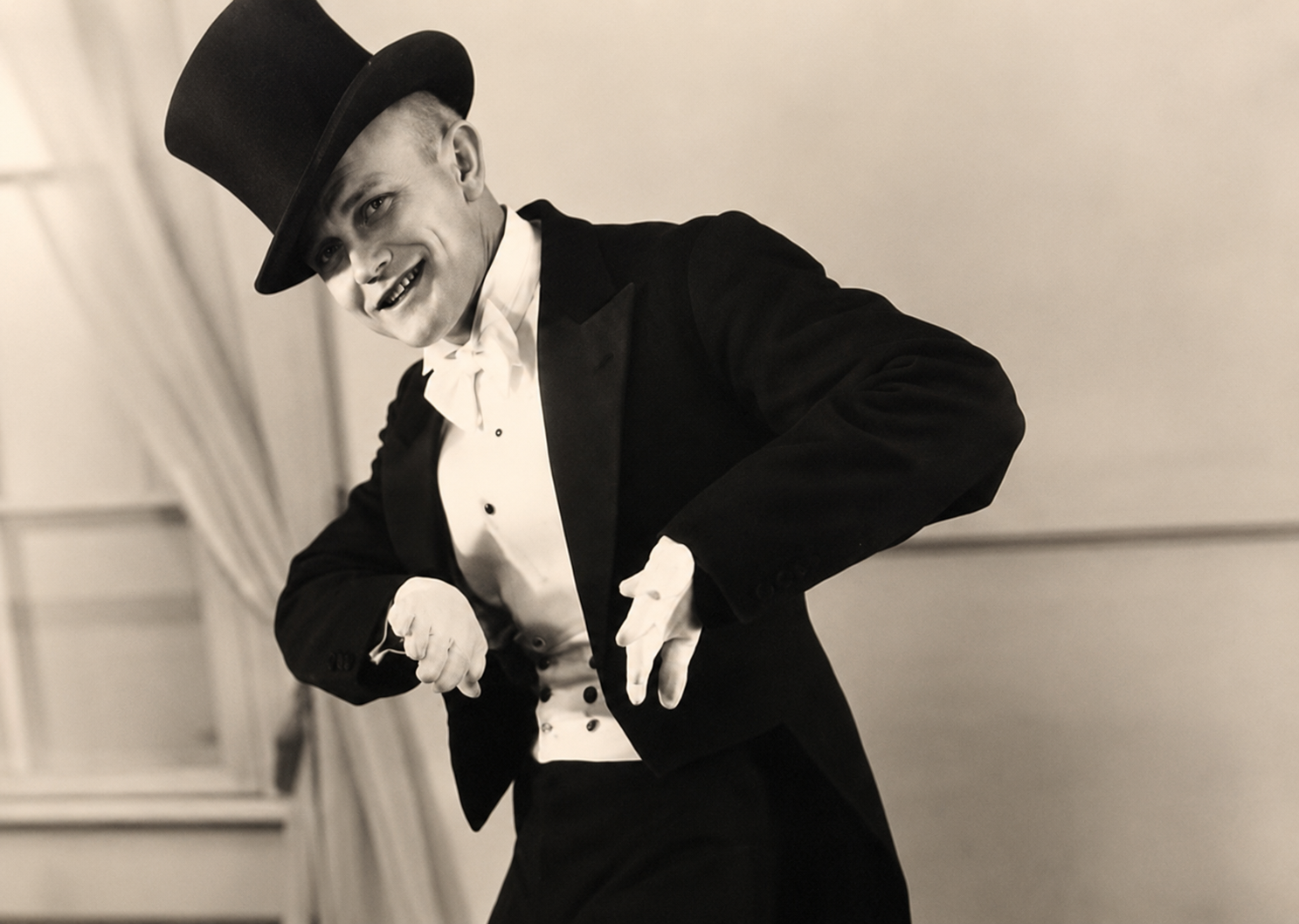
Travellers on Route 66 in the early 1960s might have been surprised to see a middle-aged man in a white suit and broad-brimmed hat bobbing and weaving along the road. That man was Lewis Larrimore Walker and, despite the incongruity of his surname, he was dancing across the United States.
Lewis Walker and his twin Lois were born in Childress, Texas, in 1909, to cotton farmers Lee and Lillie Walker. Yes, Lewis and Lois. The Walkers had an interesting approach to names; the twins had an older brother by the unusual name of Akard, another brother called Bernice and a younger sister who was christened Billy…
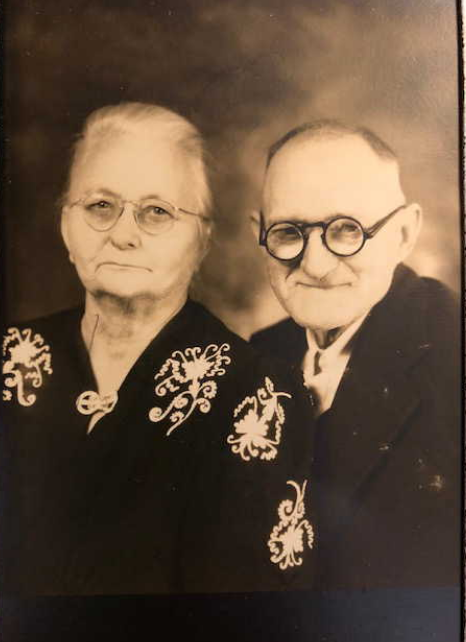
Lillie Pearl and Lee Walker. Larry said he learned to dance in his father’s cotton fields.
By early 1930 Lewis was working in the oilfields, along with another brother, Rudolph, but it was not a profession that suited him and a few months later he was working in Kitty O’Connor’s Dance Studio (‘above Panhandle Paint and Wallpaper Co’). That didn’t last long and in October 1930 he opened the Lewis Walker Dancing School at the Hilton Hotel in Lubbock, Texas. He would later say that he learned to dance from the black workers in his father’s cotton fields.
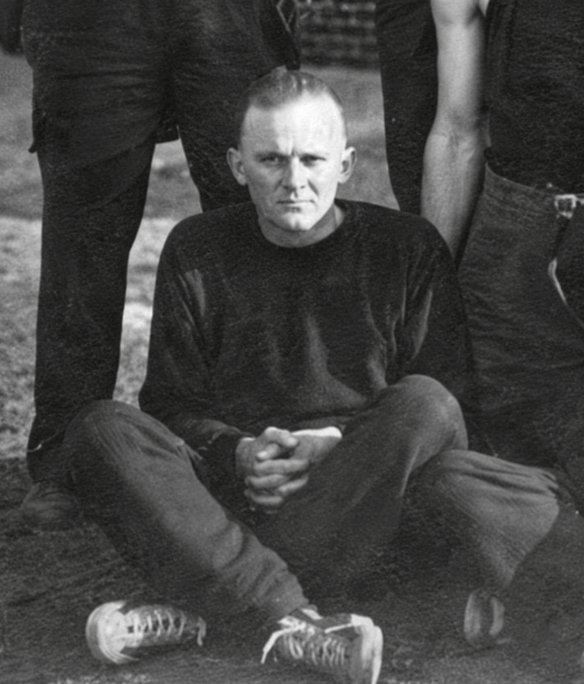
There was little scope for men to take dancing classes at Lubbock High School, so Lewis turned to sports. Here he is part of the Bi-District Basketball Championship team in 1928.
Lewis ran a tight ship. In early 1931 he took out newspaper adverts which listed the ten rules to observed in his dancing school that included ‘This is a dancing school, not a loafing school. There are other places more suited to loafing.’ (#4) and ‘Don’t talk crude. This doesn’t help you or anyone else’ (#6).
This was the Great Depression and dancing lessons might have seemed very low on many people’s priorities, but Lewis would trade cakes and pies for classes and often offered free lessons. In 1935 he changed the name to the Larrymore School of the Dance and then the Larrymore School of Fine Arts. He had hated his middle name as a child but adopted it for his business, although, with typical Walker disregard for convention he spelled it with a ‘Y’ rather than as the ‘Larrimore’ with which he and Lois had been born.
That dance studio would move around a bit – Lewis once said that it had had an address “on every street [in Lubbock] from 8th to 25th” – and he also opened studios in Ruidoso and Carlsbad, New Mexico. However, business was paused when Lewis went off to serve his country in 1943. He flew as a glider pilot and then as a gunner on a B-17 in the 8th Air Force, flying 35 missions and being awarded the Air Medal with five clusters. He spent his last months of service at South Plains Army Airfield as a non-commissioned officer in charge of special services on the airfield.
Lewis was discharged on September 30, 1945, after serving 3 years and 9 months; he immediately returned to Lubbock to build a new dance studio. That would grow to three locations in Lubbock in the 1950s with some of his pupils the children of those he had originally taught. (Lewis liked teaching children and teenagers because they were more difficult to train and he liked the challenge.) He never married, although he had been engaged to Nancy Faver, one of his students, in 1933, but that came to an end when she married someone else.
Then in January 1962, he announced the closure of the Larrymore Dance Studio. He moved to Hollywood but then came his next venture – he would dance across America. (He claimed it was to settle a bet made 31 years previously with his friend Harold Gore.)
His penchant for long distance dancing had began early. In 1931 he danced from Lubbock to Slaton, Texas, and back again in a day, a distance of around 35 miles, accompanied by a piano and a phonograph on a decorated truck.
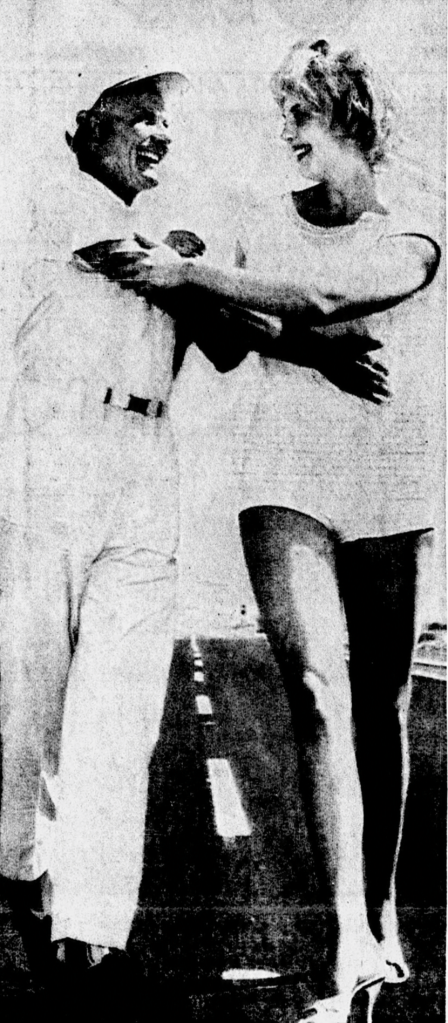
Lewis being partnered in July 1962 by Elaine Dunn who was then starring in ‘Bye Bye Birdie’ at the Hotel Riviera in Las Vegas.
It appears that the cross-country dance started with the intention of a continuous trip, but – probably to the relief of his feet – he soon decided it would be completed in stages. (He had thought he would manage 35 miles a day but the terrain and his age quickly caught up with him and across California he averaged little more than 10 miles a day.) So, on May 2, 1962, he dipped a toe in the Pacific Ocean in California and, with a foam dummy as a dancing partner, headed east. At first he was accompanied by a transistor radio to supply music to which he would do a tango or a waltz, along with a driver and car, although during school holidays his teacher nephew, Robert Vaughn, would join him, driving a motor home.
By July he had danced across the Mojave (getting lost on occasion) and was approaching Las Vegas but it appears that the trip stalled at that point. It resumed at the beginning of the following year: he danced through Seligman, Arizona, spotting a mountain lion, and then had a close encounter with a Hereford bull in Ash Fork. In January 1963, Lewis danced into Two Guns, Arizona, where he was greeted by Fern Rawlinson, the then owner of the trading post, to whom he gave a dancing lesson before moving onto the Hopi House and then to Winslow.
Fern Rawlinson greets Lewis at Two Guns, Arizona, in January 1963.
And so he danced on, through Grants and Albuquerque and across the Texas and Oklahoma Panhandles By July he was in Kansas with plans to reach New York by the fall. Did he? Alas, I can’t tell you that. I could find no further reports of the ‘Dancing Texan’ after Kansas and if he did complete the trip, then it seems to have gone unreported. However, Lewis’s mother, Lillie, died in August 1963 and it could be that that brought a premature end to the challenge, but I would like to think that Lewis did indeed dance all the way to the east coast!
It was a warm day in Washita County, Oklahoma, and, in a field just east of the Canute cemetery, a 13-year-old boy called Clifford Kirk was picking cotton on the Xavier Meiers farm, along with his father and brother, Martin. Between the stalks Clifford made the odd discovery of a shoe and a Continental Oil Company hat and told his brother to take a look around. Minutes later, Clifford made a discovery that would haunt him for years; it was the decomposing body of a badly beaten man. By the time that the police arrived, the teenager was so hysterical that he had to be taken to hospital in Elk City.
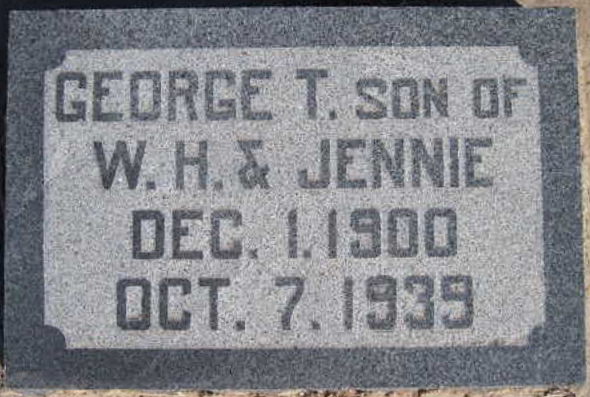
The man had clearly been dead for a little while; he had a broken leg and had suffered cuts and blows to his head. Thanks to a chauffeur’s badge on him he was quickly identified as George Thomas Goodwin, the son of WH Goodwin who lived in Cement, around a hundred miles south-east of Canute. But what also swiftly came to light was horrifying for there had been several missed chances to save George’s life.
The first had been around midnight on Thursday, October 7, 1939. It was then that a Canute farmer called Henry Spieker had spotted a truck, laden with peaches, parked on the side of the road. When it was still there the next day he reported it to the police who towed it away on Sunday. It appears they didn’t investigate further or they might have found the badly injured George some 30 cotton rows into the field beside the truck. According to evidence at the scene and a later post-mortem, it seems that George lived for as long as three or four days in the cotton field, unable to get to the road or to summon help. Later, someone happened to mention that they’d seen a man sitting in the cotton field on Sunday afternoon but had done nothing…
That George had been the victim of foul play was beyond doubt. Afte having supper with his father and family he had left Cement at 8pm on Thursday night with $46 in his pocket; all but a couple of dollars was now missing. His brother-in-law, Claude Underwood, who travelled from Cement to identify the body surmised that George might have picked up a hitchhiker – being a kind-hearted man, he said, that was just the sort of thing he did. George was driving back to San Jon, New Mexico, where he had lived for five years with his second wife Lilly and their three children, William Thomas (13), Pauline Fay (11) and Kathryn (8), and would have appreciated the company.
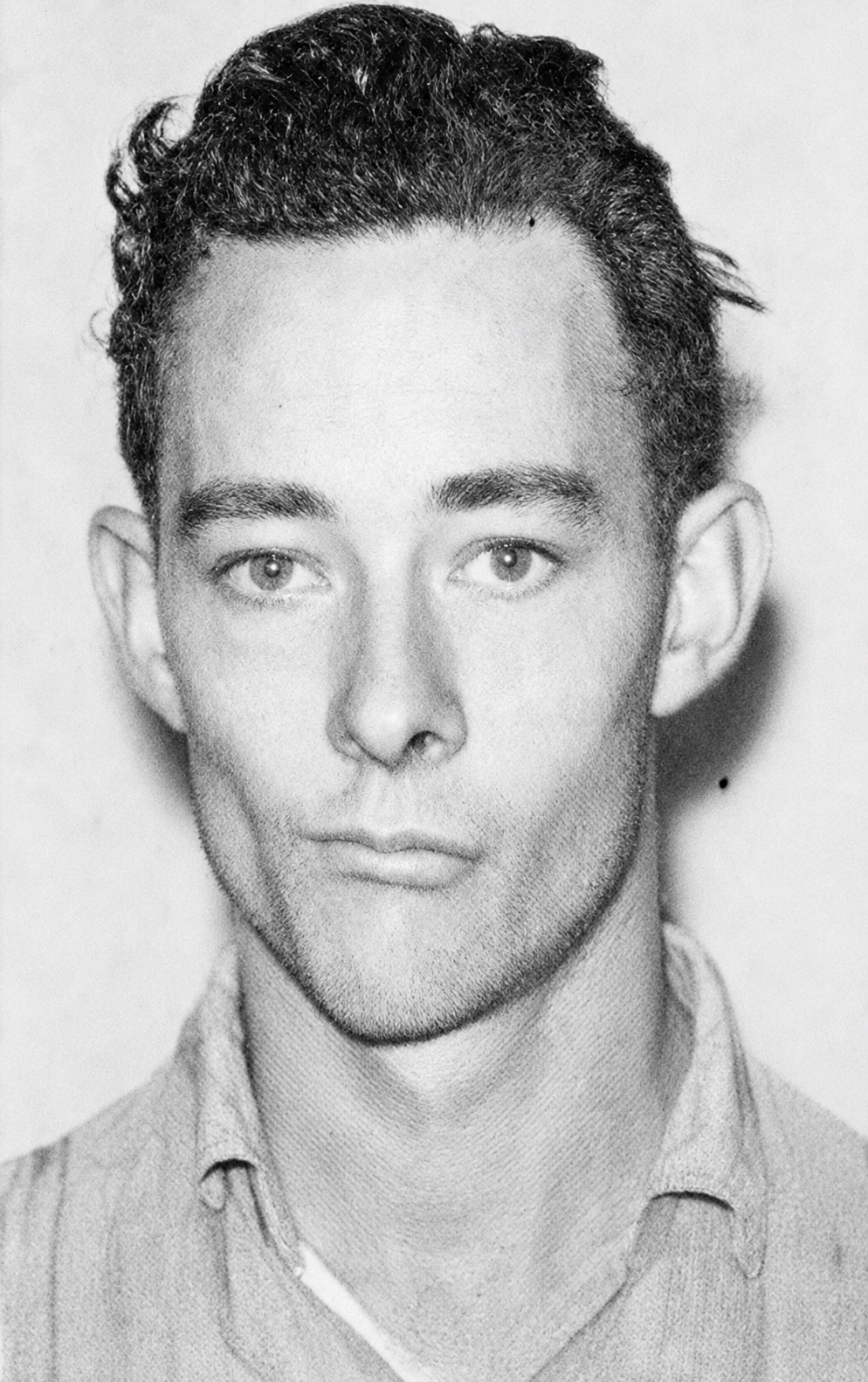
Eunice Earl Daniel posing for a mug shot.
But despite a couple of initial arrests, the trail went cold. Then in April of the following year three young men were arrested in a stolen car after a short chase in Altus, south of Canute. Driving was Eunice Earl Daniel, 20, and with him were his 16-year-old brother Jesse and 17-year-old Albert Jackson ‘Jack’ Ray. The police believed that they were part of a hijacking ring responsible for both automobile thefts and robbing motorists and they were right on that count. Jesse Daniels and Jack Ray admitted to six recent car thefts in Oklahoma and were imprisoned in the Granite state reformatory for those, but, somewhat to the surprise of officers, Daniel then confessed to murdering George Goodwin. He quickly changed this to the murder having been done by an accomplice called Monroe Sprawling – it seems that police didn’t put any credence in this story and no Monroe Sprawling was ever traced – before dropping hints that Jack Ray was involved. Finally, he decided to recant and, when charged, pleaded not guilty.
Daniel looks a little less certain after his arrest.
Under questioning, Jack Ray admitted to the murder too. Having stolen a car in Dallas and then robbed a pawn shop of a gun, the three found themselves in El Reno. Unfortunately for George, the truck driver was at a filling station at the same time. Seeing George pay from a wad of bills, Jack Ray persuaded George to give him a lift when the Daniels brothers followed in the stolen car. A few miles later, Daniel’s car forced George off the highway and the trio demanded that he give them his money. When George refused, Daniel shot him and Ray hit him over the head before taking the gun and also shooting him. They then carried the wounded George into the cotton field where they left him, driving on to Elk City.
Although badly hurt from being shot in the leg and beaten over the head with the gun (part of the handle was found near him) and a wrench, it’s likely that George Goodwin might well have survived had he been found in time. Instead, he spent his final days alone in a cotton field, just yards from rescue.
Jack Ray pled guilty to the charge of murder and was sentenced to life in prison in McAlester Penitentiary to where he was transferred after completing his term for auto theft. In 1958 he was granted parole but while on parole he committed a bank robbery for which he served a term of imprisonment in the United States Penitentiary at Leavenworth, Kansas. Because of violation of his parole he was ultimately returned to the custody of the State of Oklahoma where he remained until 1977. He died on January 9, 1988, and was buried in an unmarked grave.
During his imprisonment Jack Ray confessed to four other murders, but all the confessions were hoaxes.
Eunice Daniel changed his plea to guilty before his trial began and, despite his lawyer claiming all the usual excuses of a terrible childhood (the Daniel family were no strangers to the law; by now his older brother Parnell was serving a ten-year sentence), he too received a life term. Curiously, although he was certainly inside McAlester in 1950, Daniel doesn’t feature in the historical Oklahoma prison records. It’s likely he was released around the same time as Jack Ray and he died in 1978. He too lies in an unmarked grave in the Union Cemetery in Bakersfield, California. As this is where unclaimed prisoners and inmates from local jails and state prisons are buried, it seems that he may have continued on a path of crime.
The little Goodwin family was destroyed by the tragedy. Unable to cope, Lilly Goodwin surrendered her three children to the Masonic Children’s Home, an orphanage in Guthrie, Oklahoma. It was a senseless crime with so many ramifications.
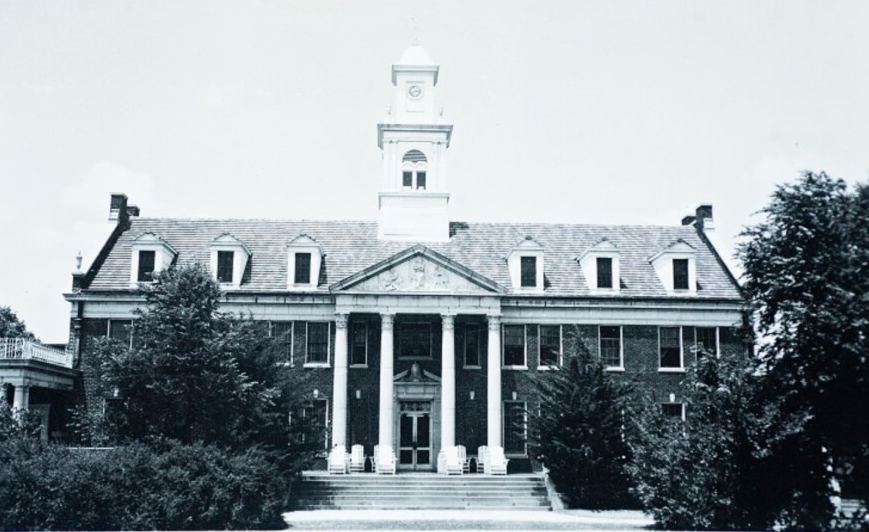
The Masonic Children’s Home where George Goodwin’s children would grow up,
It was midnight on Route 66 on February 5, 1952, and a slow night for state policeman Nash Garcia who was patrolling the road in Grants. Then a dark green 1949 Lincoln Cosmopolitan barrelled towards him at a rapid rate of knots. Patrolman Garcia stopped the car and the driver identified himself as Edward Marso, a 31-year-old Iowan who was returning to Le Mars, Iowa, after visiting friends in California. Having telephoned his employer to say he was driving straight through to get back to Iowa where his father Nick, was seriously ill, he was a hurry, as he explained. Garcia gave him a warning, told him to slow down and let him go.
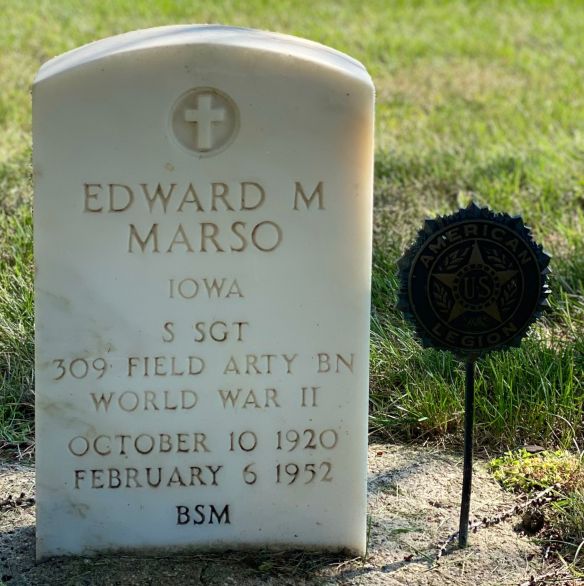
Edward Marso never made it to Iowa.
Around 18 hours later his Lincoln was found on fire just south of Tijeras but there was no sign of Marso, nor of his luggage, tools or the $300 and travellers cheques he had been carrying when he left California.
Born on October 10, 1930, to Elizabeth and Nick Marso, Edward Marso lost his mother when he was just 17. Shortly after he became engaged to Dorothy Luschen, a pretty young woman from Brunsville, Iowa. Two weeks before Christmas 1942, he, Dorothy, Dorothy’s brother Leonard and a 16-year-old girl called Clara Sawin were riding in a car driven by CJ Noonan. It seems that Noonan failed to see a railroad crossing just as a train was coming. The car struck the centre of the train and was dragged along, catching fire. Dorothy and Ed were in the rear seat and the back doors jammed. While Ed broke a window and escaped, he was unable to rescue Dorothy. She and her brother both died in the blaze, Clara suffered terrible burns to which she would succumb three days later while both Noonan and Ed escaped with minor injuries. Friends reported that he never really recovered from not being able to save Dorothy and he would remain single for the rest of his life.
Ed’s fiancee Dorothy Luschen who perished in a blazing car
Because of this tragedy, some surmised that he had either chosen to disappear in New Mexico or was suffering from amnesia. An Albuquerque insurance agent claimed he had seen the 6ft, 180lb black-haired Marso days after the car was found at a Salvation Army service. But by now both the police and Ed’s older brother Paul suspected foul play, a theory given weight when police discovered a bullet hole in the front bumper of the Lincoln.
A further check of the ashes in the car found what was thought to be human remains. Was it a simple case of Ed failing asleep and running off the road and then, like his fiancée, burning to death in the car? Results were delayed by the scientist responsible for testing the ashes having broken his leg but finally he concluded that they were not human. By the end of February little more could be done until the snow in the area melted.
Jess Mann of the Oden Motor Co which recovered the Lincoln points to a bullet hole in the front bumper
Then, on April 13, 1952, two 12-year-old boys found a body hidden under brush in an arroyo five miles from where the car had burned. It was Ed Marso; he had been beaten, strangled, shot and robbed. All his possessions, with the exception of two cigarette lighters and a pack of cigarettes, were missing. (Tragically the day after Ed’s body was found, Nash Garcia, the last witness to see him alive, was found shot dead in similar circumstances, but that’s a story for a future post.)
State Police Sergeant Lonnie Dennis theorised that, feeling sleepy, Ed had stopped by the side of the road where he had been robbed and killed, but the truth was even more terrifying.
Within two weeks of the discovery of Ed’s body, three men had been arrested, Francisco ‘Frank’ Francia, 22, Nasareno Paz, 17, and his cousin Juanito ‘Johnny’ who was also 17. The arrests followed a report by tourists from Oklahoma of being fired upon while driving through Tijeras Canyon on Route 66, They managed to get a description and the license plate of the gunmen’s car and it tracked straight back to one of the Paz boys. Nasareno and Johnny confessed immediately and when police searched Nasareno Paz’s house they found tools and a wristwatch belonging to Ed Marso.
Chief Deputy Sheriff Ed Jackson interviewing Francisco Francia
The trio soon gave up another name and 16-year-old Antonio ‘Tony’ Riboni was extradited from Washington where he had fled. All four pled guilty. They had lain in wait in a car along Route 66 in Tijeras Canyon, close to their homes, and ambushed Ed’s car by shooting out his tyres. When Ed stopped, the quartet beat him and then shot him, before putting his body in the Lincoln and driving to where they dumped the body and set fire to the car five miles away. They’d done it for the money and for the thrill and if the Oklahoma tourists hadn’t had the presence of mind to note their license plate they would probably have killed again – right on their doorstep. But they were allowed to plead guilty to second degree murder; Tony Riboni and Nazareno Paz received a sentence of 50-70 years, Johnny Paz got 60-70 and Frank Francia who had admitted firing three bullets into Ed Marso was sentenced to 90-99 years.
Juanito Paz
Nasareno Paz
The oldest at 22, Francisco Francia confessed to shooting Ed Marso
Effectively this should have meant life in prison. It was nowhere near that. Tony Riboni was paroled in 1961 having served less than nine years (he and the Paz pair had actually appeared before a parole board less than two years after starting their sentences). The Paz cousins were incarcerated a little longer but were still free by 1964. At the time they were released three were still younger than Ed Marso had been when they killed him. Francisco Francia served 17 years of his 90 to 99-sentence and was paroled in August 1969.
The youngest of the four, Antonio Riboni served less than 10 years and died in 1992
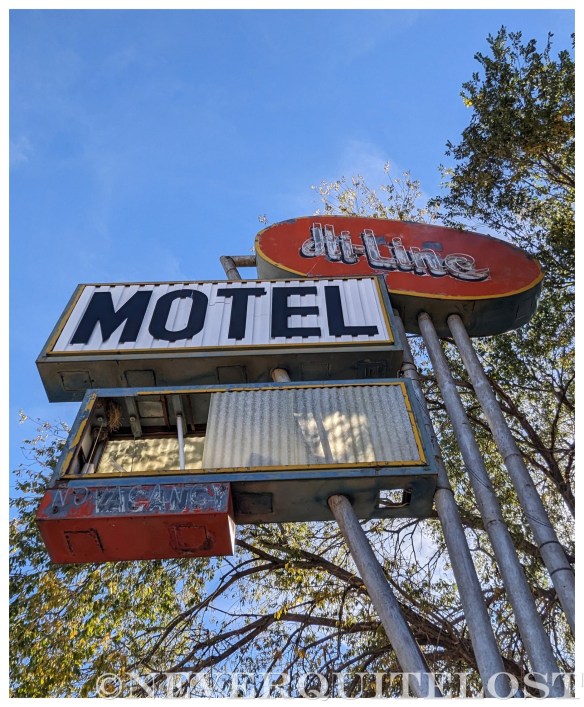
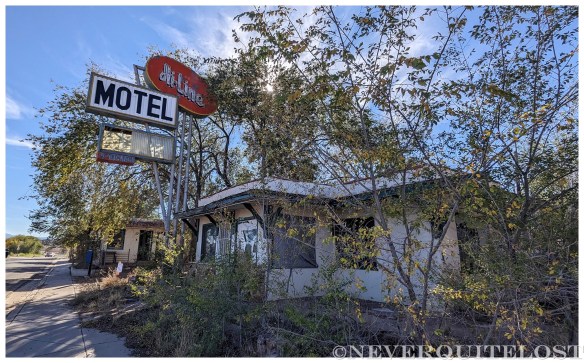
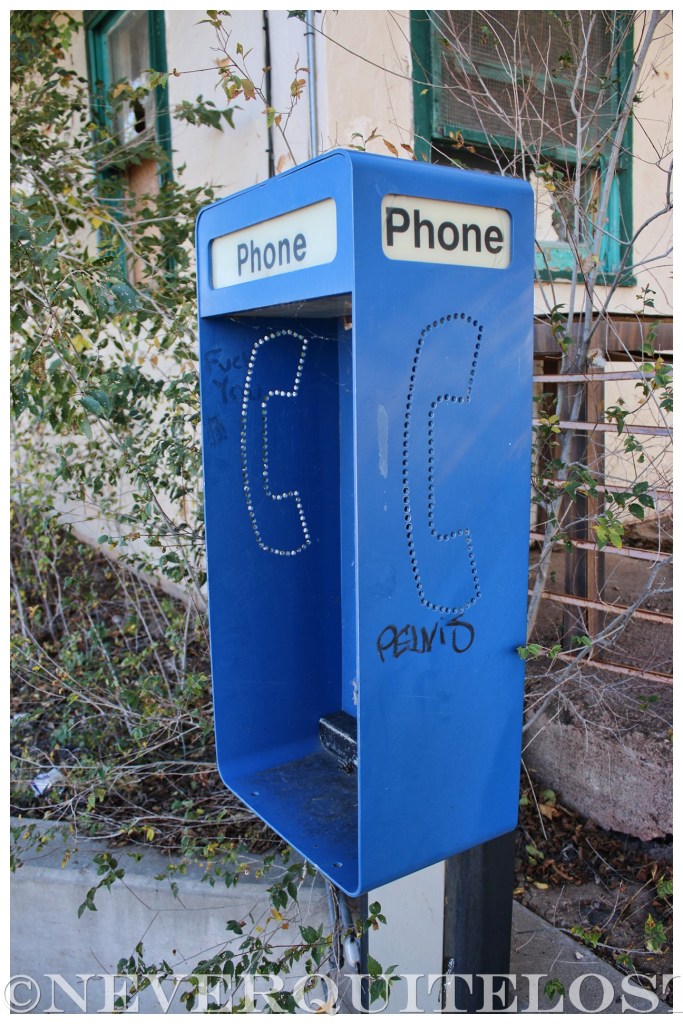
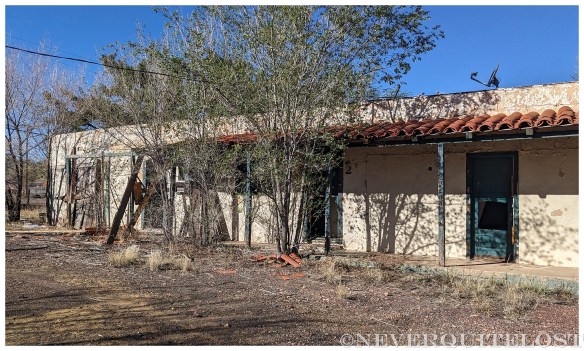
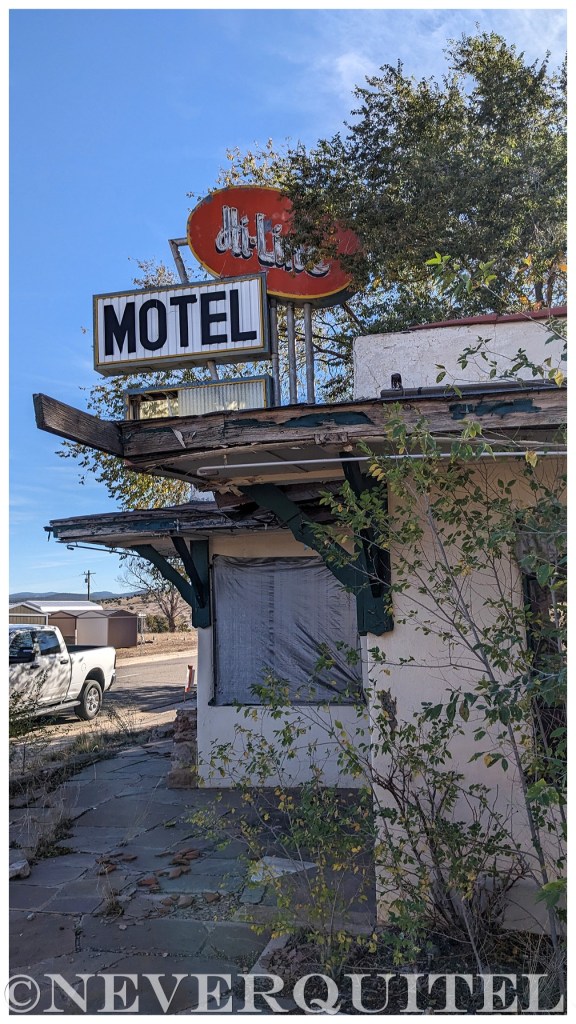
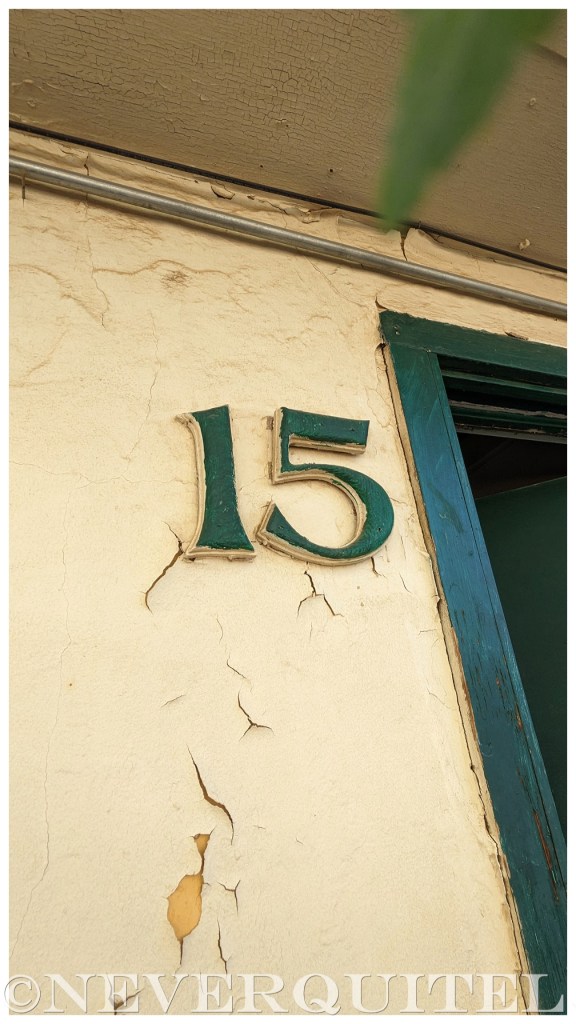
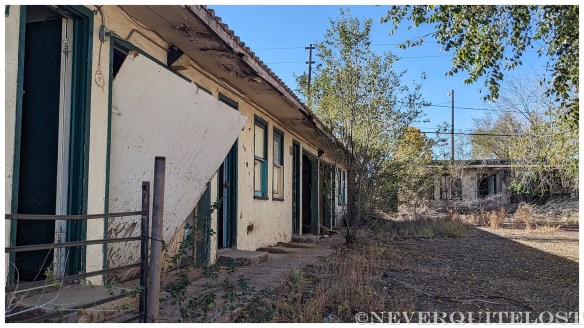
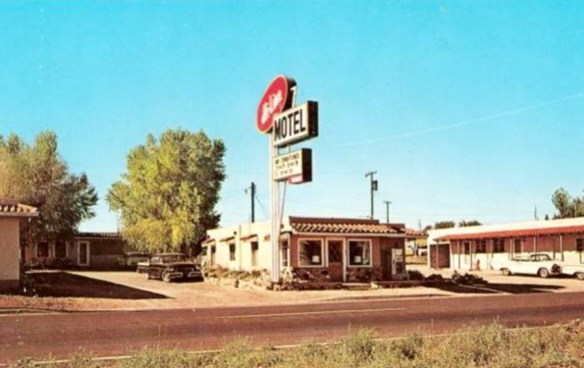
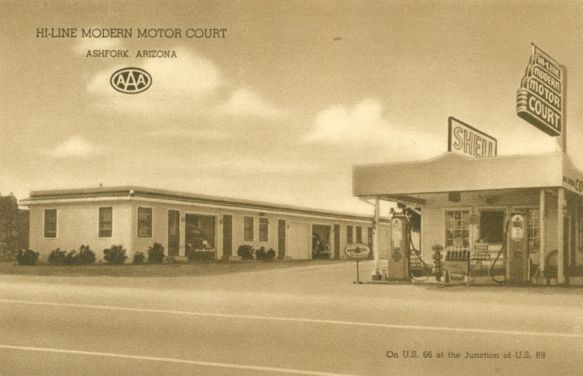
The Hi-Line Motor Court in Ash Fork, Arizona, was opened in around 1936 by a Mr Moore who sold it three years later to Mr and Mrs JR Edwards. In February 1940 they added five new units, each with a kitchenette. Mr Edwards had, apparently, made a thorough study of the tourist business and concluded that there was “a genuine demand” for the type of cabin he was adding.
In the middle of the U-shaped court was a Shell station, which disappeared when the road was widened in the 1950s. Jame Alton and Gladys McAbee took over in the late 1940s and ran it until 1964.
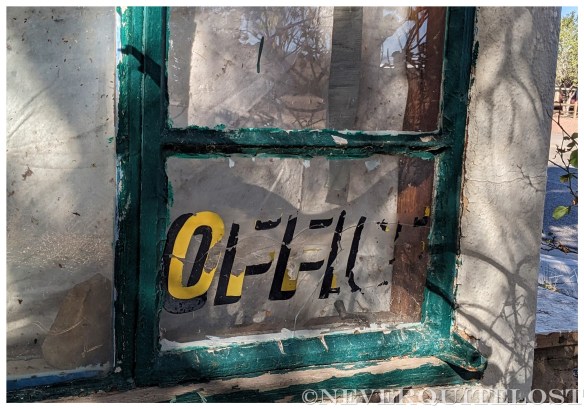
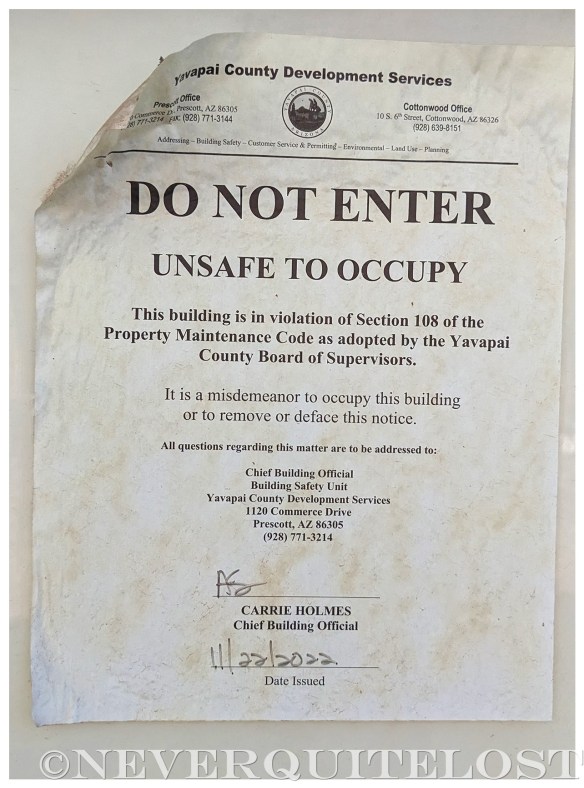
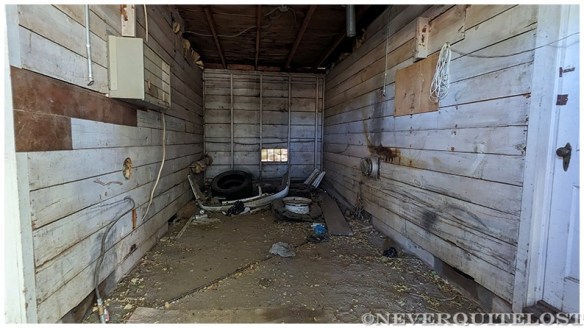
The Hi-Line struggled into the 21st century as long term rentals. Unlike many of its contemporaries it still retained its garages. But around 15 years ago it closed for good and fell into increasing disrepair. In November 2022 it was posted as unsafe for human occupancy.
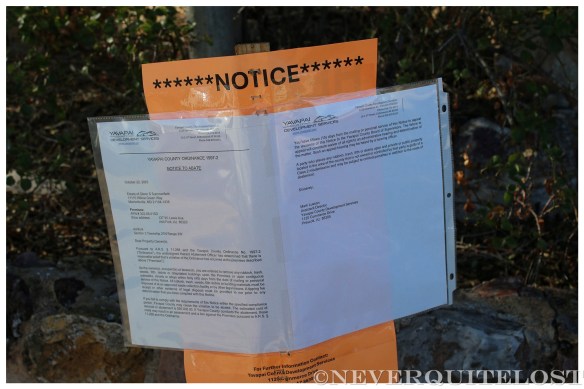
Then, when I stopped by last November, I found that, on October 22, 2025, it had been issued with a Notice to Abate. This raised the stakes for the old motor court. In short, if the owner didn’t make repairs within 40 days, the county had the right to demolish. As the current owner, Glenn Summerfield, had died in August of 2025 it seemed unlikely that would happen, so I stopped to take yet more photos. It was a good call. On December 30, 2025, the oldest motor court in Ash Fork was demolished. The sign has been saved by the excellent Ash Fork Museum.
Alline Alma Patterson Cole. He first name was spelled several different ways by the press of the day, but Alline appears to be the correct version.
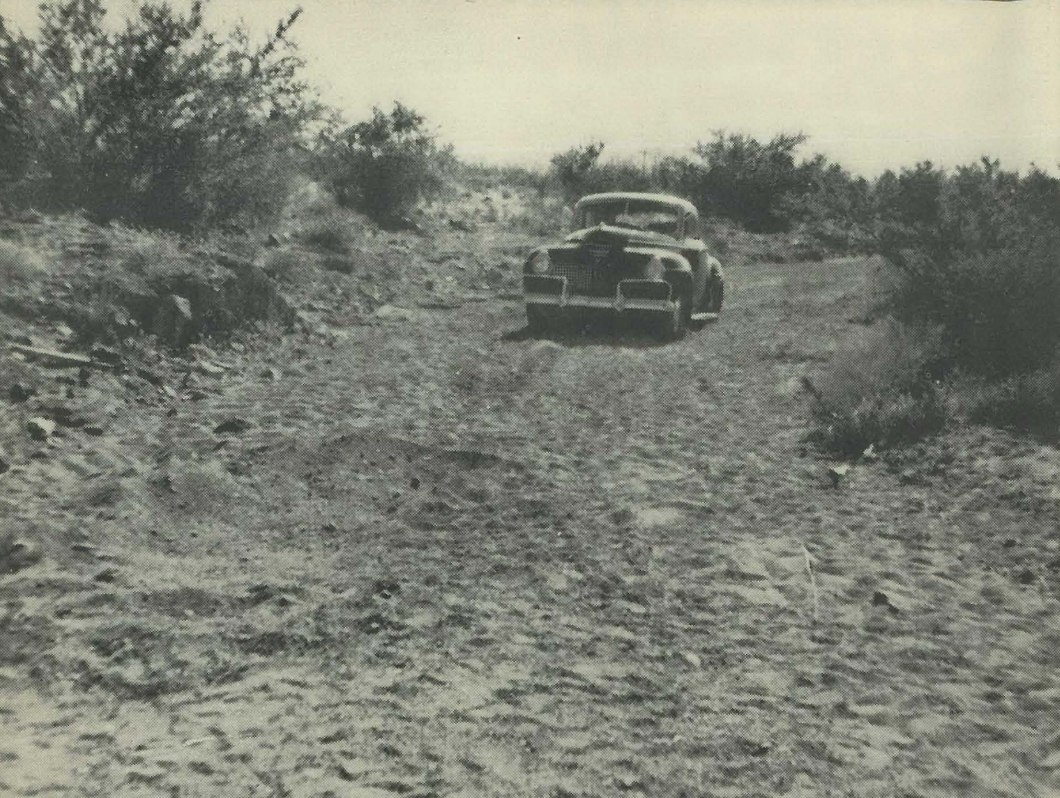
It was the afternoon of September 4, 1945, and an Arizona Highway Department workman was working on Route 66, around 16 miles west of Kingman on the road towards Oatman. The previous day he’d noticed a car stuck in a sand wash the previous morning and thought little of it. But when it was still there the following afternoon he reported it to the Sheriff’s office in Kingman.
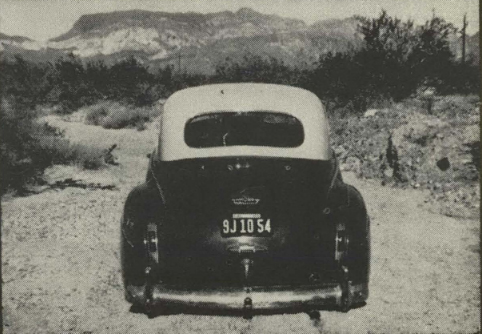
Sheriff Frank L Porter drove out on Highway 66 to inspect the car, expecting nothing more than the misadventure of a traveller. But when he spotted a lady’s black patent leather purse on the rear seat of the 1941 DeSoto Club coupe, he was more concerned – what lady leaves her purse behind? The question was answered a few minutes later when, a few feet in front of the DeSoto, officers spotted a mound of sand – with two fingers protruding from the dirt. They were the ring and left middle finger of a woman, complete with gold wedding band and gold ring with a diamond.
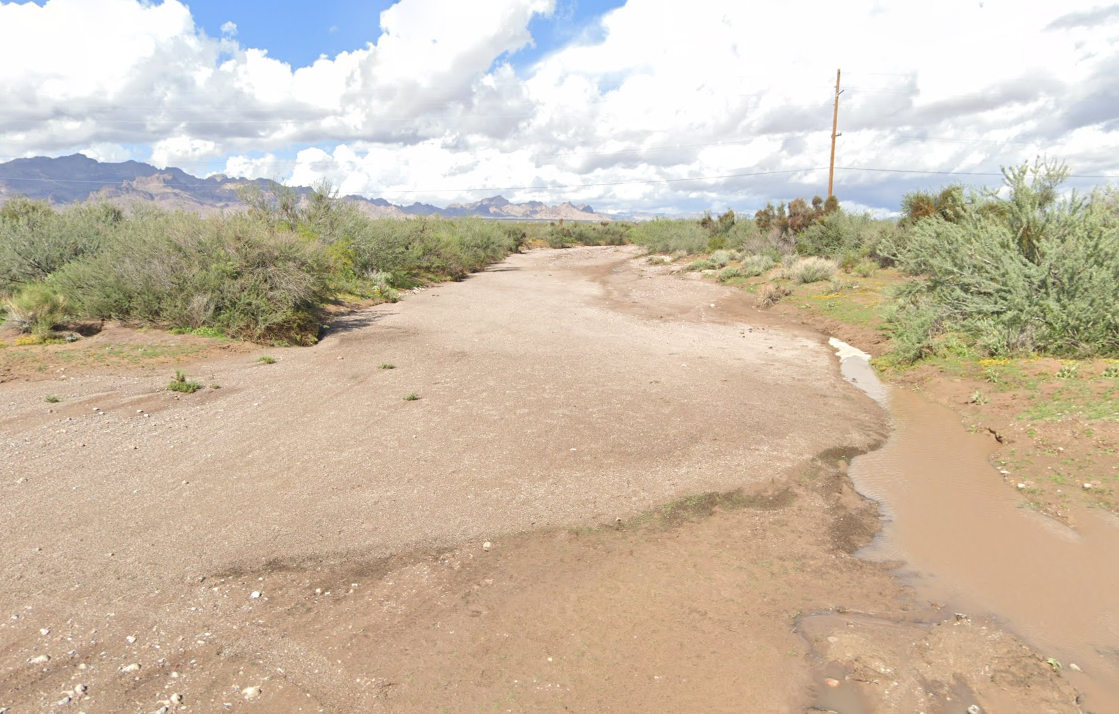
The abandoned DeSoto. In front of it is the grave in which Patterson gave his sister a “Christian burial”.
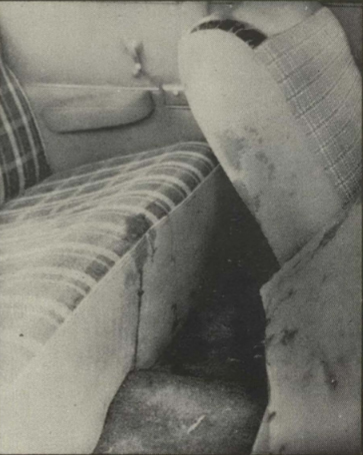
The makeshift grave was revealed to contain a woman of around 30 years of age, about 5 feet six inches in height and around 125lbs in weight. She was wearing blue ladies’ overalls and bobbie socks and had brown hair. Wrapped around her head was a man’s maroon and yellow checkered sports shirt; it was bloodstained, as was the powder blue ladies’ coat that partially covered her and the rear seat and interior of the car. A pair of man’s shoes was also found in the car, the soles covered in oil.
The maroon DeSoto with its tan top was registered to a WM Cole of 1515 East 87th Street in Los Angeles but there was no sign of Mr Cole. The car was filled with cardboard boxes and personal belongings and, from their contents, officers found they belonged to mother of two, Alline Alma Cole, 27. At first, her missing husband came under suspicion – until police found there had been a third person in the car.
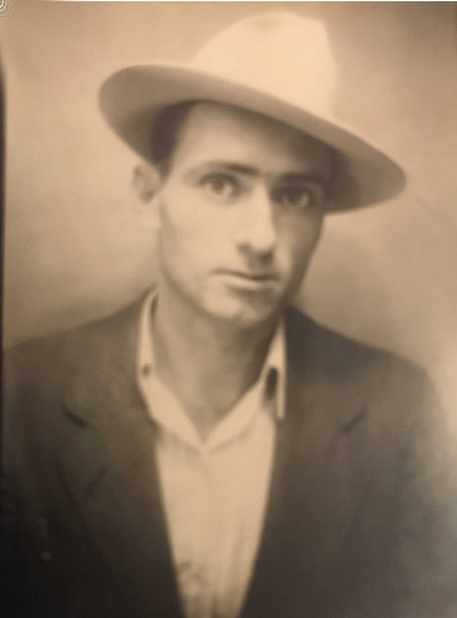
Emmett Edwin Patterson, ex-Marine and murderer.
A small suitcase in the car contained the personal effects – which included divorce papers and letters to a waitress in San Jose, California – of one Emmett Edwin Patterson. Better-known as Ted, Patterson was Mrs Cole’s brother. The Coles had been living in Los Angeles, but had moved in May 1945 to Paris, Texas, where Alline’s family lived and where William Cole owned a dairy farm. In August of that year he had sold the farm and was preparing to move back to California. Patterson hitched a ride with the couple, most likely to see the waitress with whom he had been corresponding.
On the way the trio stopped in Amarillo, Texas, to visit Aline and Ted’s older sister. There William Cole had a new engine fitted in the DeSoto, paying $305.97 in cash for the work. Cole was in the habit of carrying large sums of cash and it was known that he had left Texas with some $7000 (that would be around $126,000 today). One of those who knew this was, it seems, Ted Patterson.
At 1pm on September 1, 1945, the trio left Amarillo, Cole keeping to the instruction of his mechanic to drive not more than 35mph for the first 300 miles and then to keep to under 45mph for the next 300 because of the new motor. With them went their mongrel dog; both the Coles adored the dog and spoiled it – during their stay in Amarillo the dog had refused to eat anything by cooked hamburgers.
At 9.50am on Sunday September 2, 1945, the DeSoto passed through the Agricultural Checking Station on Route 66 in Holbrook, Arizona with William Cole driving, Patterson beside him and Aline and the dog in the rear seat. But after that there was little trace of them.
The police considered the prospect that they had picked up a hitchhiker who had then killed all three of them (a 22-year-old called John Hanson was briefly questioned) but Sheriff Porter was soon convinced that Patterson was responsible for the death of his sister, and possibly for that of his brother-in-law. He and his deputies spent days slowly driving along Highway 66, looking for oil and also for a peculiar type of dark-coloured sand known as ‘Job’s Tears’ which had been thrown on the floor of the DeSoto to absorb Alline’s blood.
Sheriff Porter then worked out that the DeSoto had covered some 303 miles since Holbrook and surmised that would be 150 to a point and back, making it likely the murder had taken place in California. His men searched Route 66 from the point where the DeSoto was abandoned, westwards into California, only returning to Kingman when darkness fell.
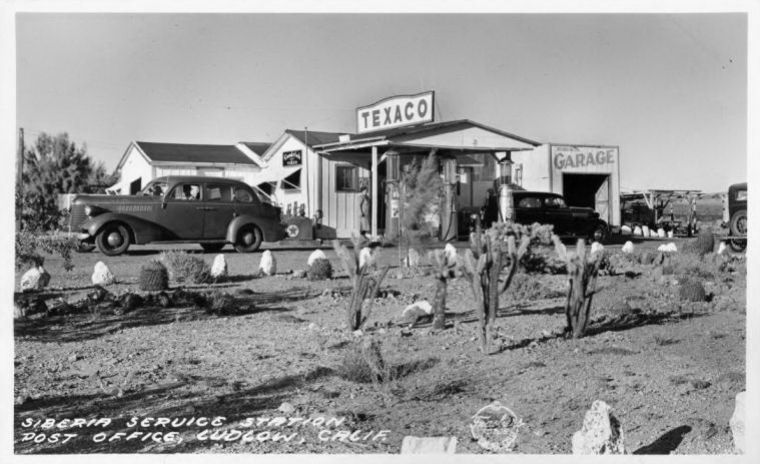
It was not the sheriff’s deputies who found William Cole’s body, but some tourists who, on September 29, had stopped at the side of the highway near Siberia for the night. They let their dog out of their car, only for Fido to return a few minutes later with a man’s legbone. The clothing found on the skeleton matched the last known description of William Cole and, proving Sheriff Cole’s distance theory, he was found 140 miles from where his wife had been buried (and some 15 miles from where the deputies had had to curtail their search).
Near the body was a large bloodstained rock which had been used to crush Cole’s skull. Also found were matches with a green head and red tip, identical to those found in the DeSoto. Just $6.48 was found on William Cole. All that was missing now was Ted Patterson – and the $7000.
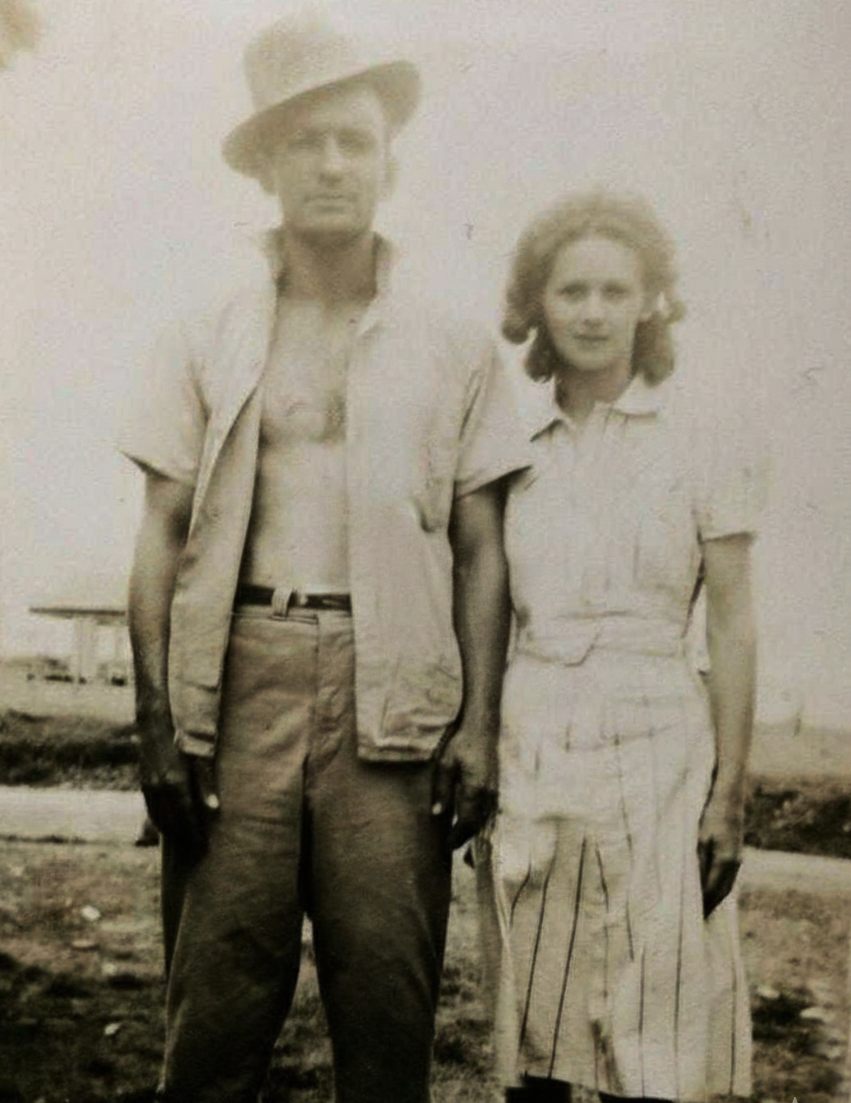
Ted Patterson was two years older than his sister and, like her, had grown up on a farm in Paris, Texas. At the age of 21 he had joined the Marines but, by 1940, he was back in Paris Texas, working as a machine operator and married to Laura Jones who he had wed in February 1938. The union would produce two children but end in divorce – papers found in the car showed that Emmett was desperately short of money, now an itinerant taxi driver, and had not been providing for his kids.
On October 13, 1945, came the news that Patterson had been arrested by a Union Pacific railroad officer near Kelso, California, after having been found sleeping in a sand bed near the tracks. Kelso is only a few miles from Siberia, but around 120 miles from where the DeSoto had been abandoned. Why would he have retraced his steps to where he killed William Cole? The simple answer is, he didn’t. The man in the sand bed wasn’t Emmett Edwin Patterson.
Ted Patterson might well have gone undiscovered had it not been for his temper and his weaknesses for waitresses. It turned out that he had travelled to Hot Springs, Arkansas (how is unknown) where he had taken a job on a dairy farm under the name of Tom Morton. While delivering milk to a café in Hot Springs, he met a waitress and took her to a party on New Year’s Eve, 1945. They both got drunk, had a row, Patterson hit the girl and broke her jaw. She had him arrested the following day, but his luck held. He wasn’t fingerprinted and so his real identity wasn’t revealed. It was only in February 1946 that a sharp-eyed Hot Springs policemen looked through the wanted circulars and spotted the photo of a man wanted by the Sheriffs of Mohave and San Bernadino counties. On March 1, 1946, Emmett Patterson was arrested and taken to California to be tried.
When his trial began on July 16, 1946, in San Bernadino, Patterson had a story. He claimed that the trio had stopped by the side of the road in Siberia (although it was known by relatives that the Coles were afraid of sleeping by the roadside). He had been asleep when he had heard the dog barking and woke to find Cole, gun in hand, beating his wife. Despite claiming he was scared of his brother-in-law, Patterson leapt to his sister’s defence, picking up a rock and beating Cole to death with it, as well as throttling him. However, the trial testimony brought out the fact that Cole was a small man, 20 years older than the ex-Marine, and had suffered from tuberculosis. Moreover, relatives said that Cole not only didn’t like Patterson, but was indeed scared of him.
Patterson stuck to his story, insisting that he then had put his sister in Cole’s DeSoto, planning to take her to hospital in Kingman but, just eight miles later, had found she was dead. So, letting the dog off its leash (the dog was never seen again) he said, he intended to take Alline back home to Paris, Texas, until he realised that having a dead body in the car would invite awkward questions at the Kingman inspection station. Instead, he stopped at Ed’s Camp between Oatman and Kingman, being careful to park the car a hundred yards east of the entrance and spent the day there. After dark he headed east but then stopped at 17 Mile Wash where he buried Alline, saying he had given her a “Christian burial”.
Perhaps it was this last element that helped him escape the death penalty for which the prosecution had asked. But the jury took just minutes to declare him guilty of two counts of first-degree murder and recommend life imprisonment.
Emmett Edwin Patterson served 17 years in San Quentin. He was paroled in April 1963 to Humboldt County where he died in September 1988. Alline never got back to Paris, Texas; she and her husband are buried in the Mountain View Cemetery in Kingman where, as a last insult, the gravestone lists her wrong year of birth.
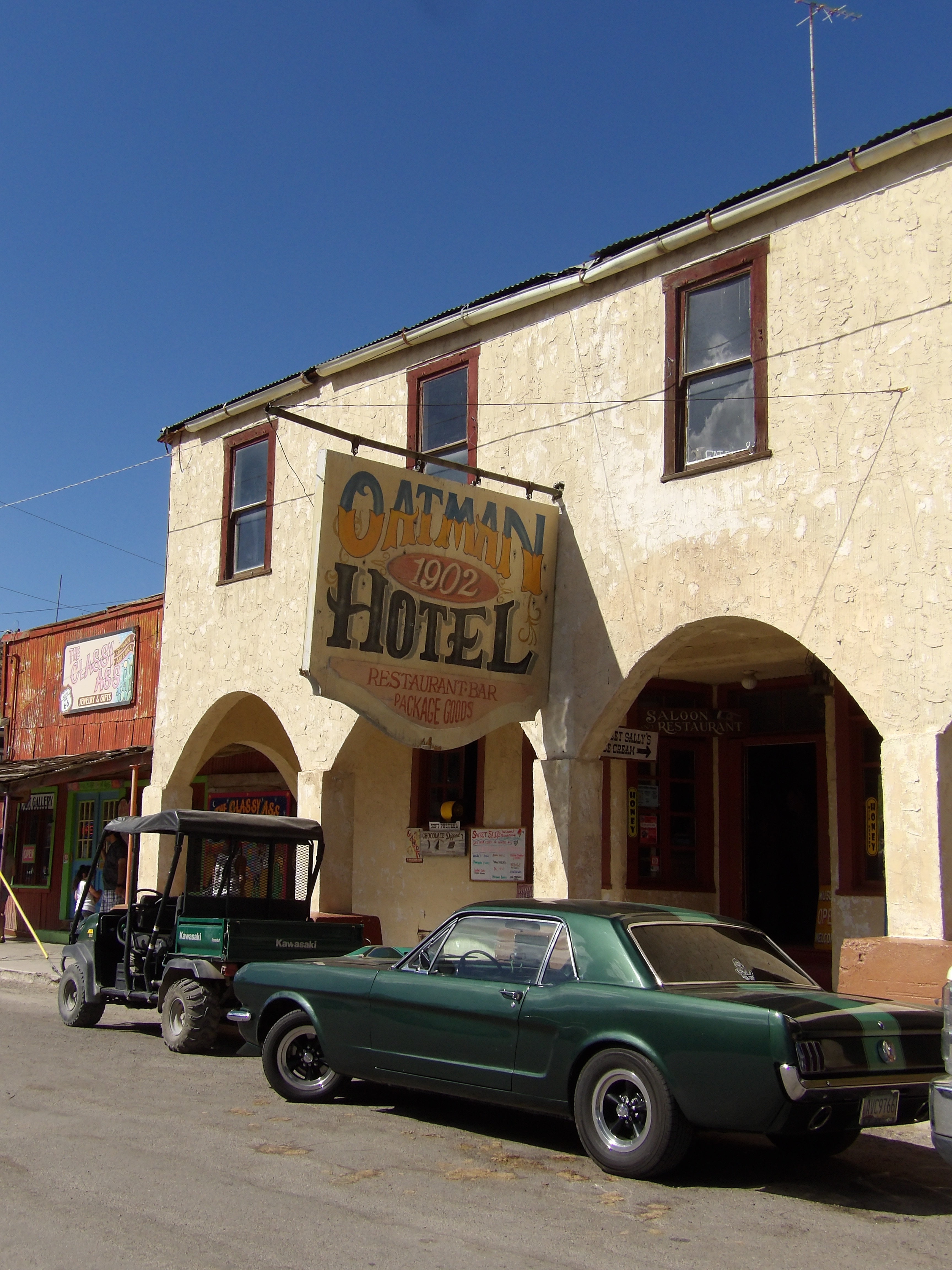
One of the most enduring stories on Route 66 is that film stars Clark Gable and Carole Lombard spent their honeymoon at the Oatman Hotel in Oatman, Arizona. Mention Oatman and this so-called fact will be trotted out. There’s just one problem.
It never happened.
Despite the hotel still having the ‘Gable and Lombard honeymoon suite’ on display, despite town even having produced commemorative postcards in the past, despite hundreds of tourists insisting the story is true, it isn’t. It seems that it was a novel piece of flummery on the part of a past hotelier to bring in more business to his establishment and his town, although it’s uncertain when the story was concocted.
On March 28, 1939, Clark Gable was filming scenes for ‘Gone With The Wind’ when he discovered he wouldn’t be needed on set the next day. Rather than a relaxing day at the ranch he and Carole Lombard had bought in Encino, California, he telephoned Carole and suggested they elope. The pair had been seeing each other for three years, but the relationship had only been made public in 1938 when Gable’s divorce to his previous wife, Houston socialite Maria Langham, was finalised.
They drove through the night with Otto Winkler, an MGM publicist, whose main contribution to the trip was that he had a new car without license plates, allowing the trio to travel without being spotted by press and fans.
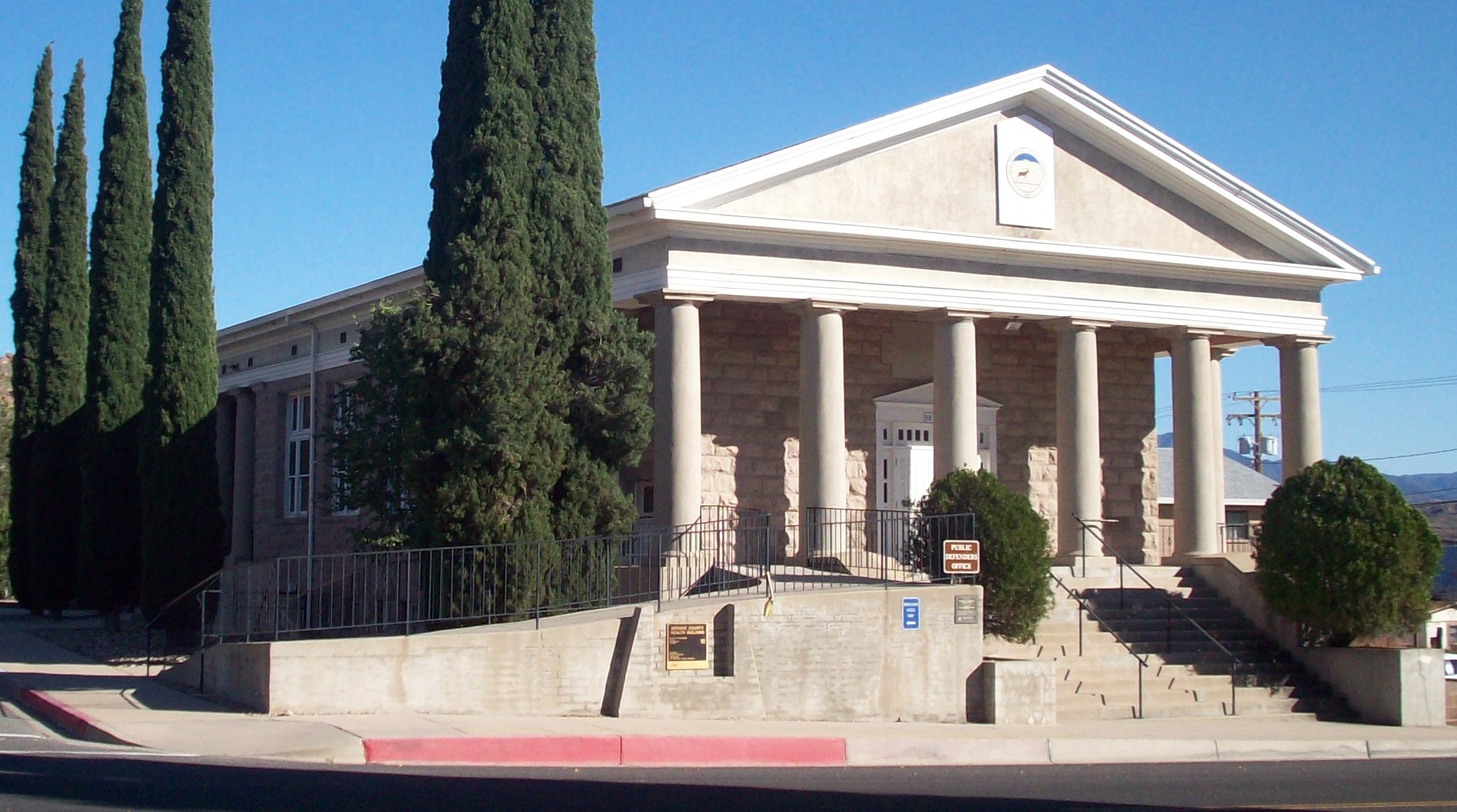
St John’s Methodist Church in Kingman, now the Public Defender’s Office.
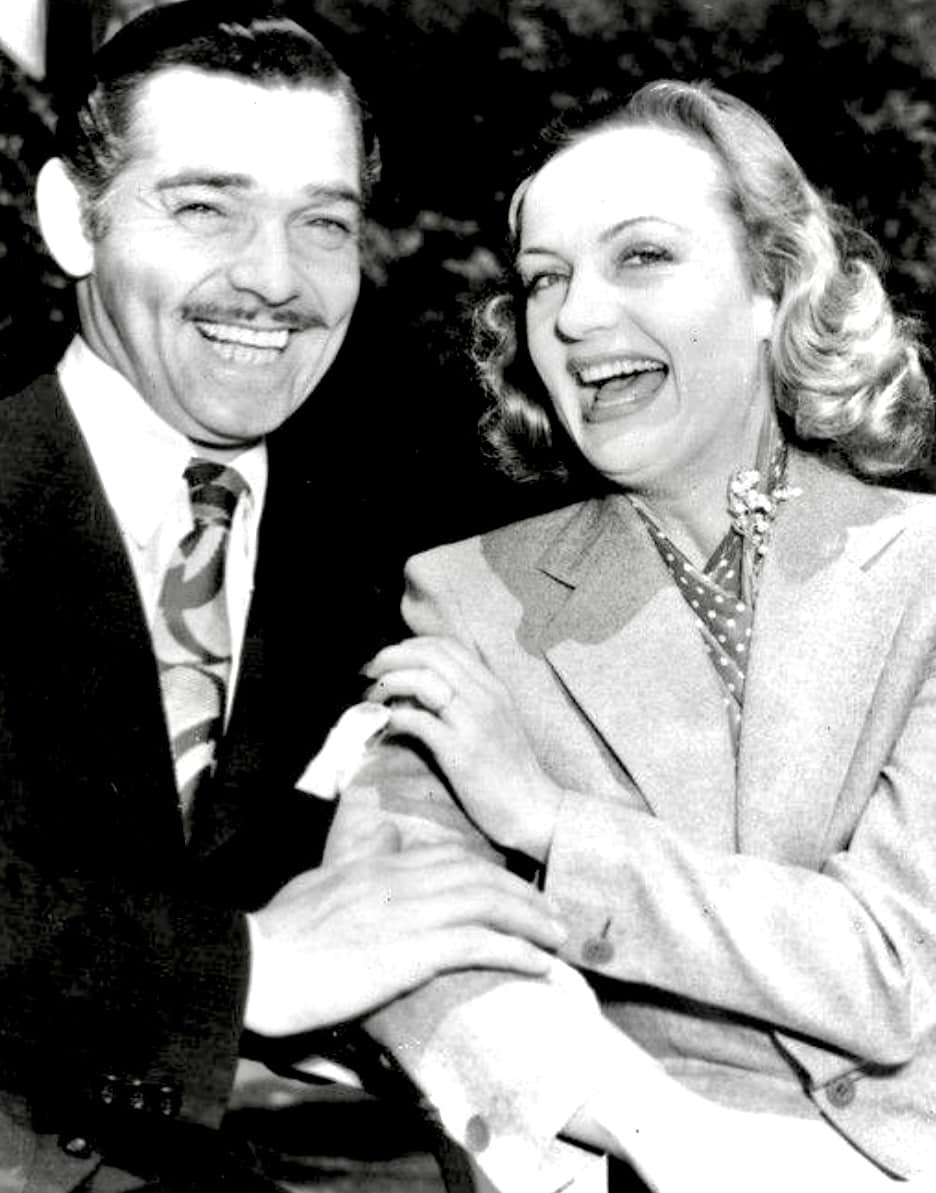
The afternoon of March 29, 1939, was a typically uneventful afternoon for Kingman court clerk Viola Olsen – until two of the most famous stars in the world appeared in her office. “I’d like to get a marriage license,” Viola reported Gable as saying. Then he asked who could marry them. A breathless Viola recommended the Reverend Kenneth Engle, the pastor of Saint John’s Methodist Episcopal Church on North 5th Street. The pastor recruited his wife and his neighbour, Howard Cate, the high school principal, as witnesses and half an hour later Gable and Lombard were man and wife. Clark wore a blue suit with a white shirt and a patterned tie, while Lombard was dressed in a dove-grey flannel suit made by the designer Irene, along with a polka dot blouse.
Sources vary as to what time the pair were married. Newspapers reported that it was ‘dusk’ when the pair walked into Viola Olsen’s office, others that it was ‘just after 4pm’, while Gable himself later said it was 3.30pm (although bear in mind that the clocks would only just have changed in California) and Lombard’s mother said that newly-weds telephoned her from Reverend Engle’s study at 6.15pm. Regardless of these various times, it’s clear that Lombard and Gable were married in the late afternoon in Kingman.
So, was it straight off to Oatman for their honeymoon? No. Howard Cate would say that the couple were heading for Boulder City, Nevada, but it seems that this was a ploy to throw off any press on their trail. The pair and Otto Winkler set off for Carole’s home on St Cloud Road in Bel Air and arrived there at 3am. That trip today would take you at least five hours but this was 1939; the I-40 interstate was years in the future and it would be the often rough and slow Route 66 all the way. It seems that the Gables set off almost immediately after the wedding and stopped only for gas at Daggett along the way (and possibly food in Needles).
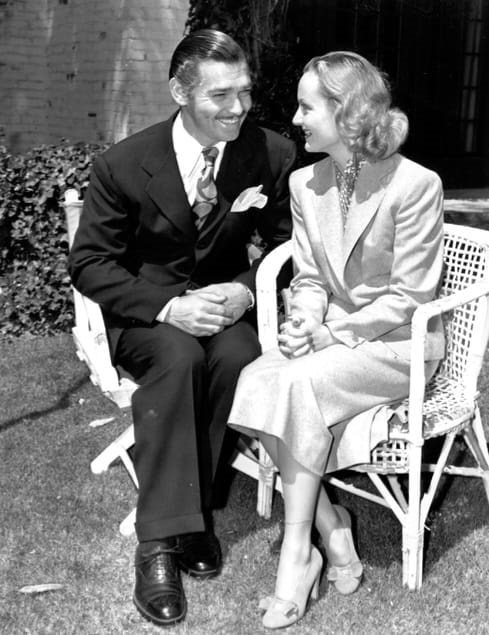
The happy newly-weds.
The next morning they woke at 9am to find reporters and photographers camped outside the house and a press conference was held on the lawn of Carole’s house at around midday. However much you would like the story of the Oatman honeymoon to be true, it would simply be impossible. The pair left Kingman and were home in Los Angeles, some 315 miles of rough road away, ten hours later. No stop in Oatman, no honeymoon.
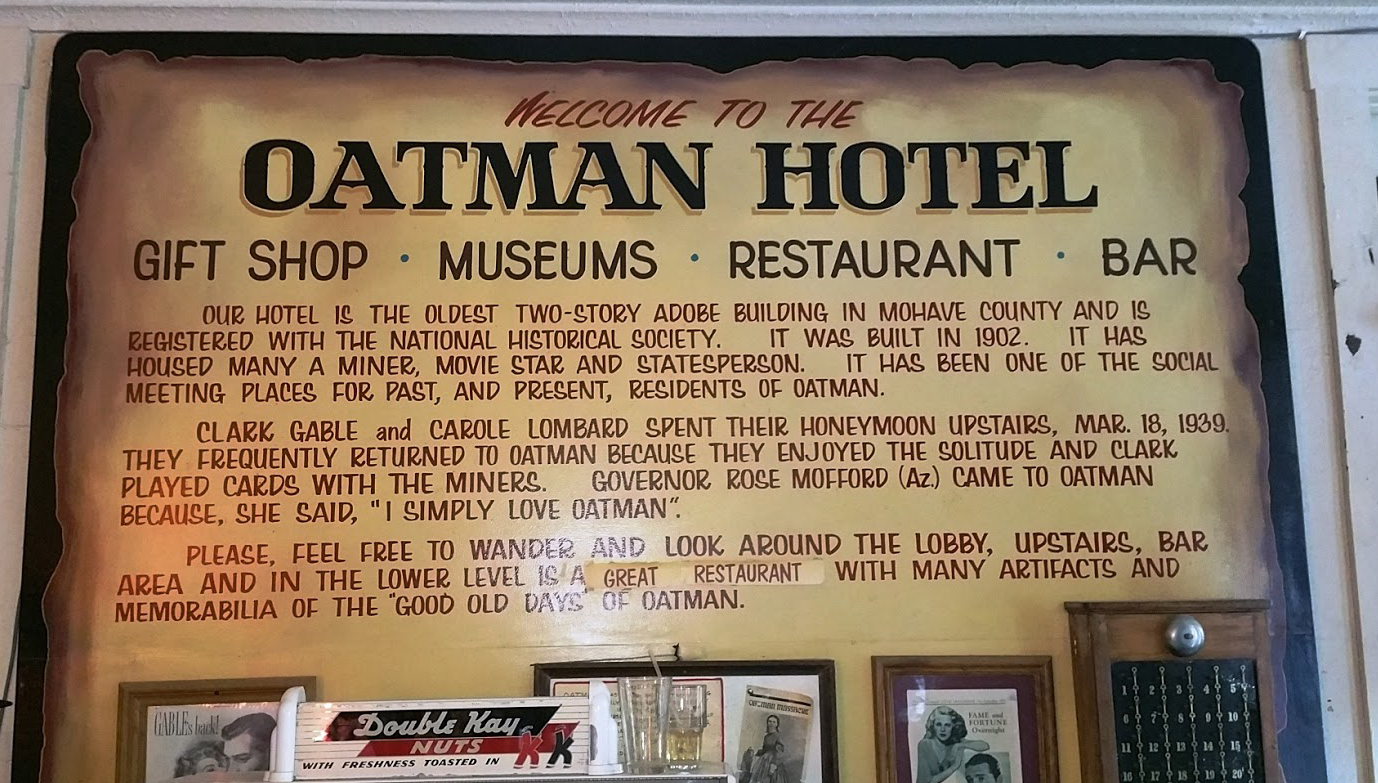
But that hasn’t stopped the legend rumbling on – and despite that both the Oatman Hotel and an ‘anniversary’ postcard of 1989 cite the date of the marriage as March 18, 1939, some eleven days before it actually took place.
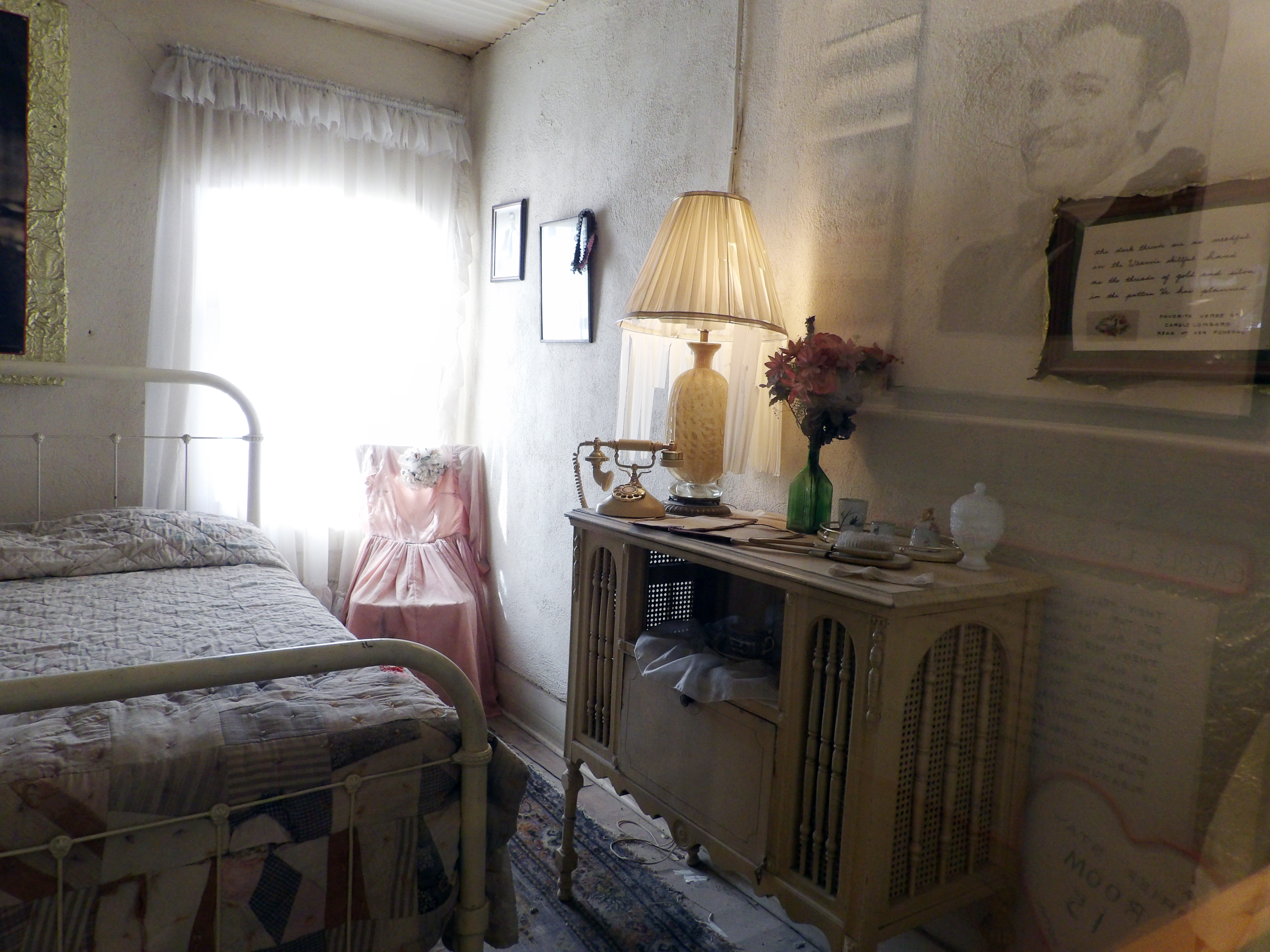
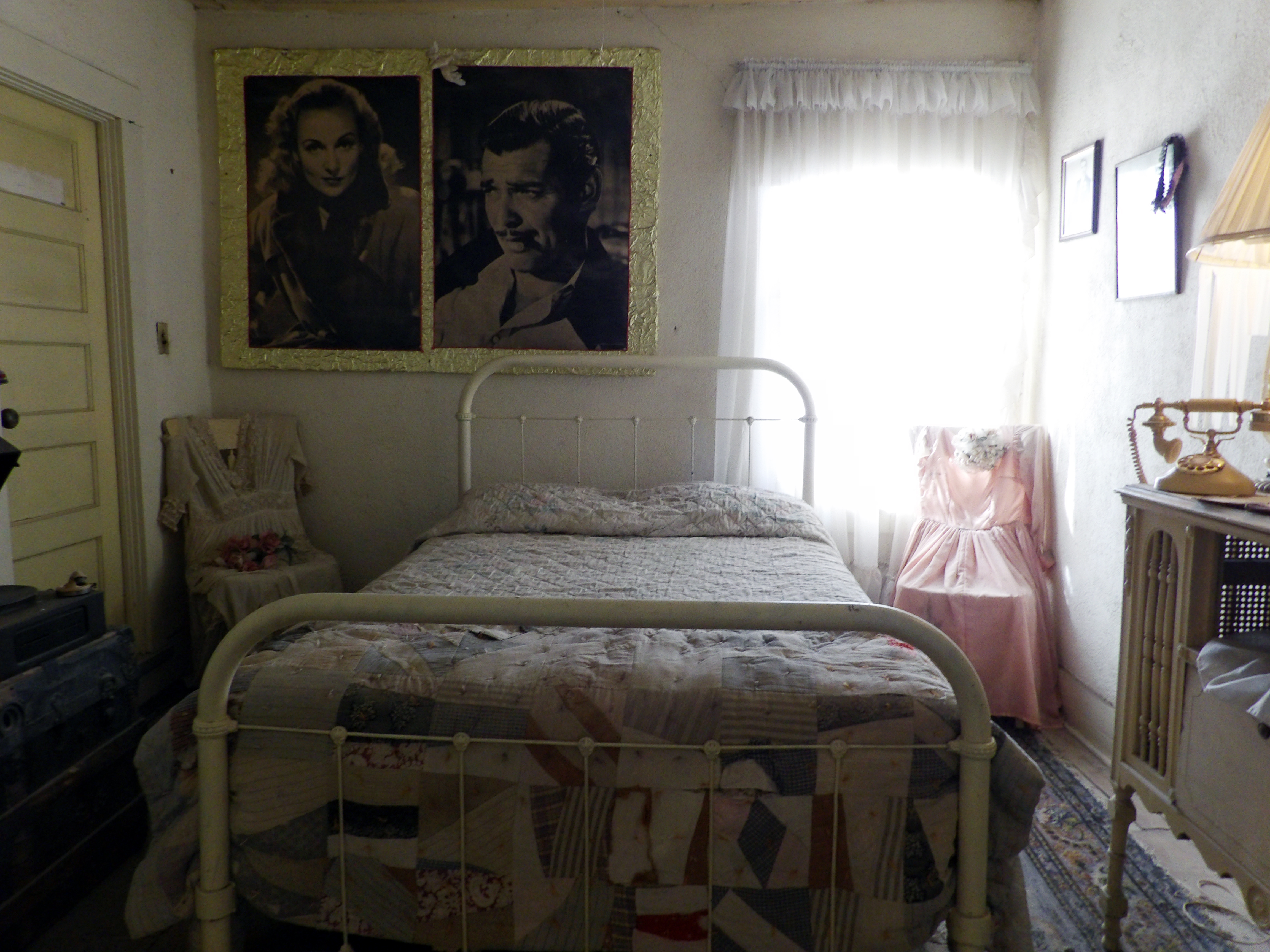
The ‘honeymoon suite’ in the hotel is just hokum. On one chair is, supposedly, Lombard’s wedding gown, a flouncy white affair rather than the tailored grey suit she wore. On the other chair is ‘Lombard’s night gown’. Except it’s pink and, according to Lombard expert Carole Sampeck of the Carole Lombard Archive, ‘Carole never wore pink around Clark (much less a nightgown!) – he loathed that color’.
A board which hangs in the Oatman Motel – note the incorrect date of the marriage. The pink nightgown that Lombard would never have worn.
The dream marriage was all too short. Travelling back from a war bond rally in Indiana, Lombard decided to fly (rumour has it she felt Gable had a wandering eye when she was away). She, her mother and Otto Winkler took TWA Flight 3. Just after 7am the airplane crashed into Double Up Peak southwest of Las Vegas. Everyone aboard was killed.
The so-called honeymoon suite.
But the myth of the Oatman honeymoon still continues, romance triumphing over truth.
Clark Gable and Carole Lombard in Los Angeles, just hours after their marriage.