
BEHIND THE NAMES ON THE TEXOLA STONE: Part Three

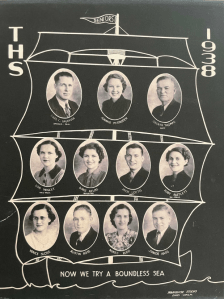
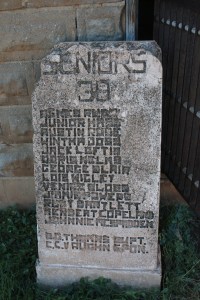
The ‘Seniors 38’ stone outside the one-room jail in Texola.

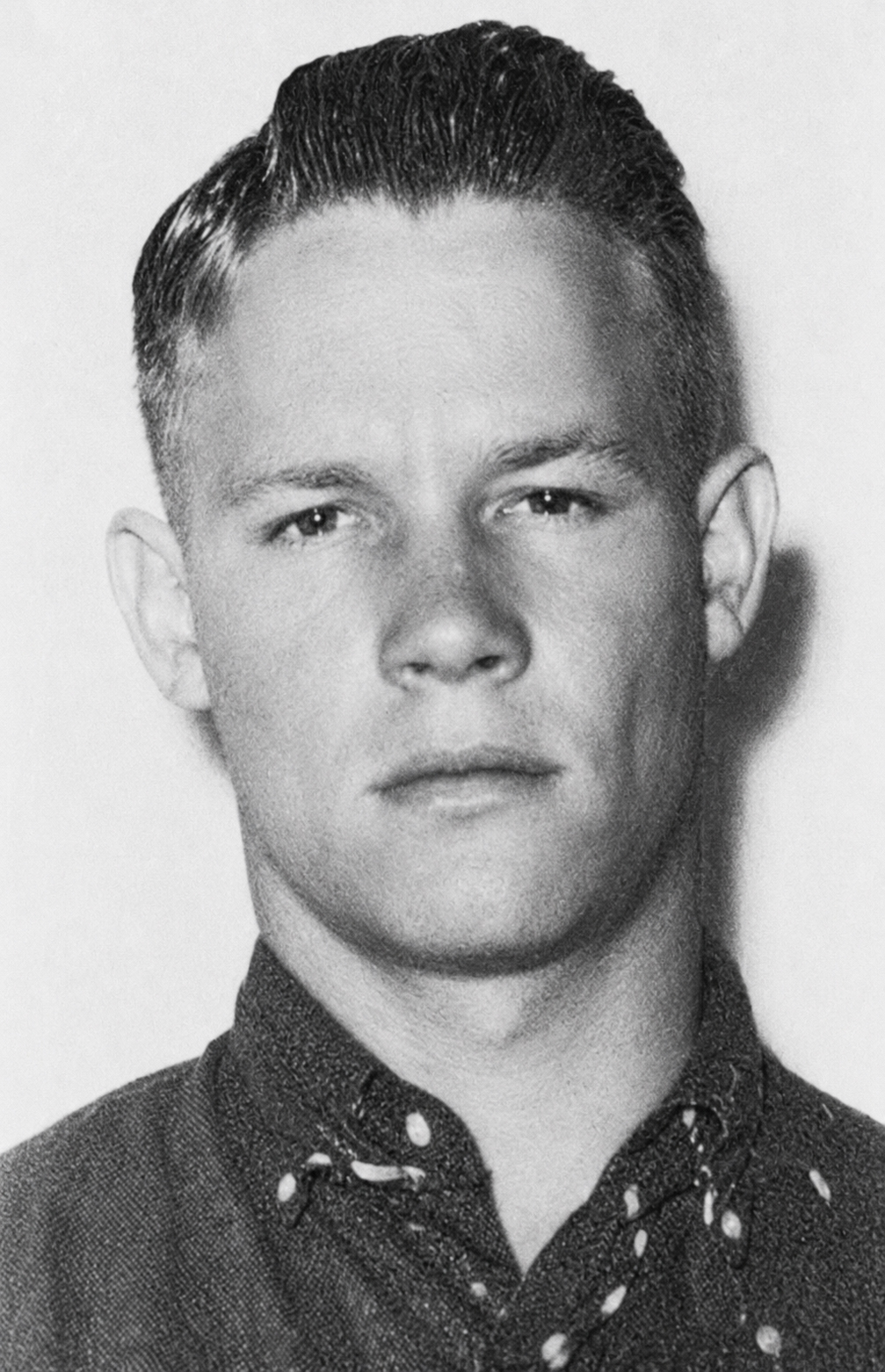
JACK LOFTIS

Abner James ‘Jack’ Loftis was born in Texola on December 4, 1919, to Uriah Bee and Brooks Bernice Loftis, one of three children – Jack had two sisters, Helen and Tommie.

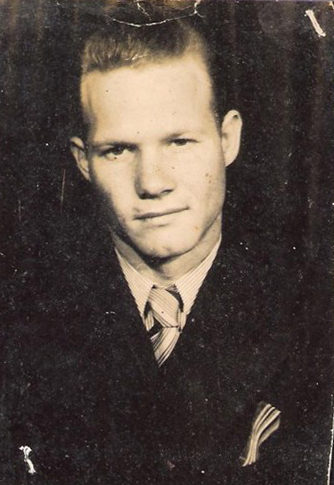
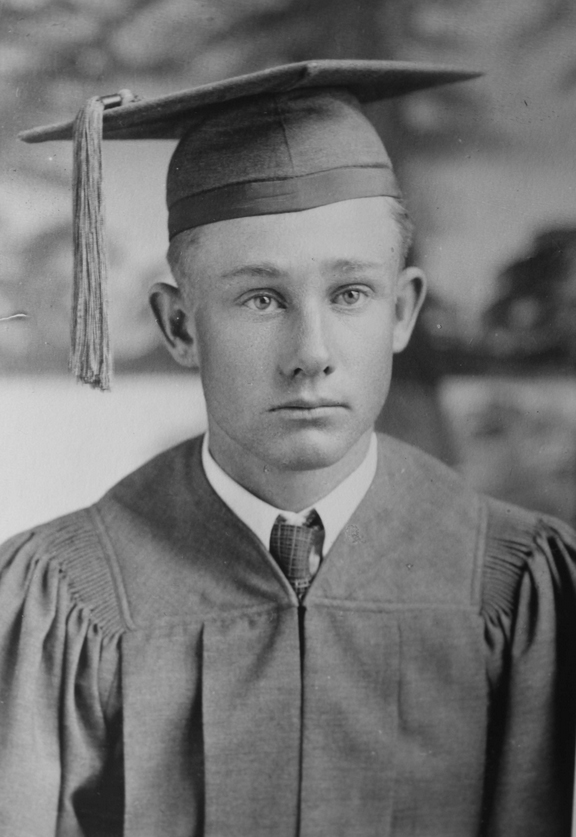
Jack graduated as the valedictorian of his class at Texola High School in 1937. Not yet 20, He married Lottie Belle Ingle in a quiet ceremony on January 3, 1939 – she wore a wine velvet afternoon gown with black accessories. At the time Jack was attending the Centra State Teachers College in Edmond.

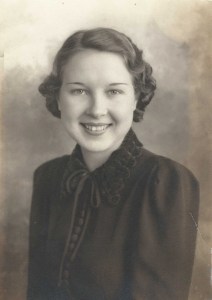
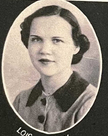
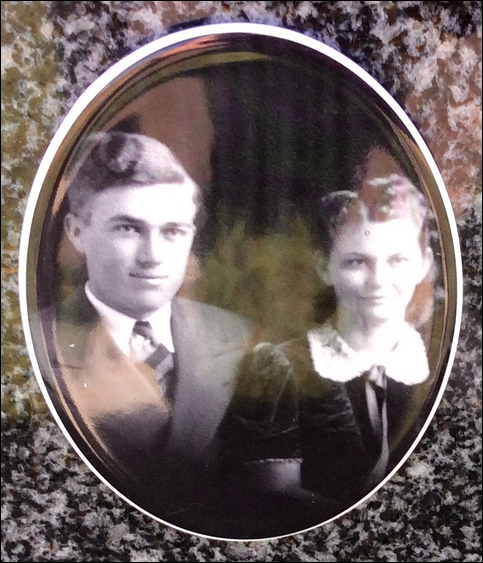
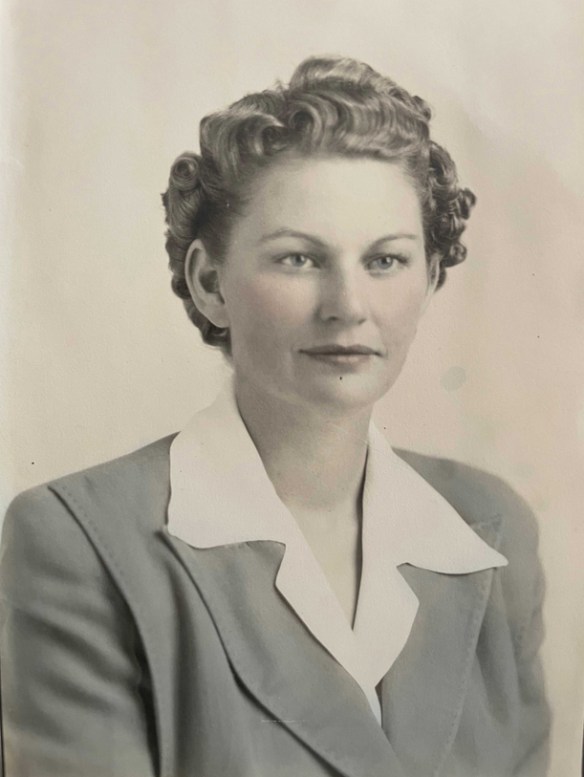
Jack at his graduation

In December 1940, after divorcing Bee, Jack’s mother Brooks moved to Los Angeles where, a year later on December 5, 1941, she was killed after being hit by a car while crossing the street.

It being wartime, Jack went away to fight in the US Navy and served in the Pacific. In fact, he was at Iwo Jima to witness the historic raising of the flag on Mount Suribachi. When he returned to Oklahoma, it was not to teach. By now he had a young son (James, born in 1943) and a new two-bedroom house in the Venice suburb of Oklahoma City, and so he went into retail. For the next 34 years, until he retired in 1979, he worked for Safeway, becoming a manager.

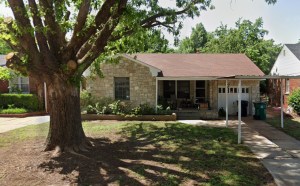
The little house at 2541 E Eubank that Jack and Lottie bought when they moved to Oklahoma City.


Lottie died in 1984 and Jack remarried to Laverne. He passed away in 1996, still living in the little house he and Lottie had bought.  


DORIS NELMS

Doris Nelms was the youngest of those names on the plaque, having been born on August 18, 1921, to Otis and Agnes Leon Nelms. Otis had lived all his life on a farm just outside Texola where he and Agnes raised six children, Doris being in the middle. An older sister, Ruth, had died as a baby two years before Doris was born.

The farm where Doris grew up and where her fatherr Otis was born and died.

Then, in 1933, tragedy struck the family again when Doris’s younger brother Henry died of a burst appendix on July 8 at the age of just 9. Otis was so grief-stricken that he himself died of a heart attack just two days later. He was only 49 and he left his wife not only with six children, but five months pregnant with their last son, Eddie. Agnes continued to run the farm into her 60s, long after the children had left.

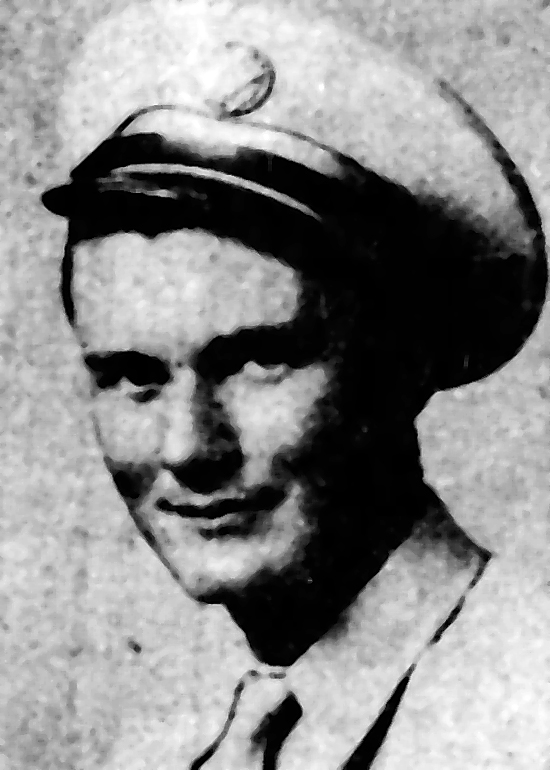
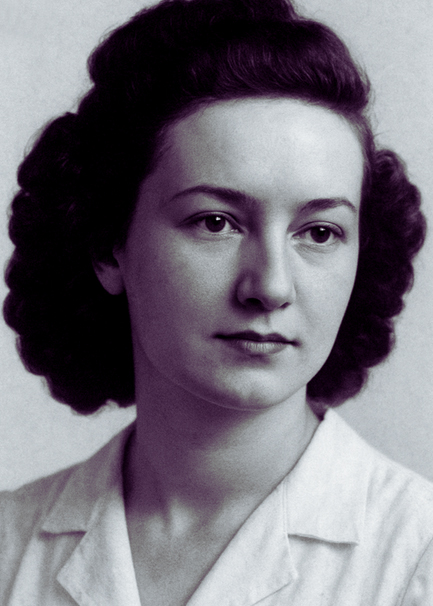
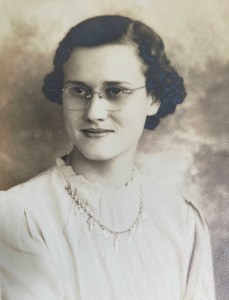
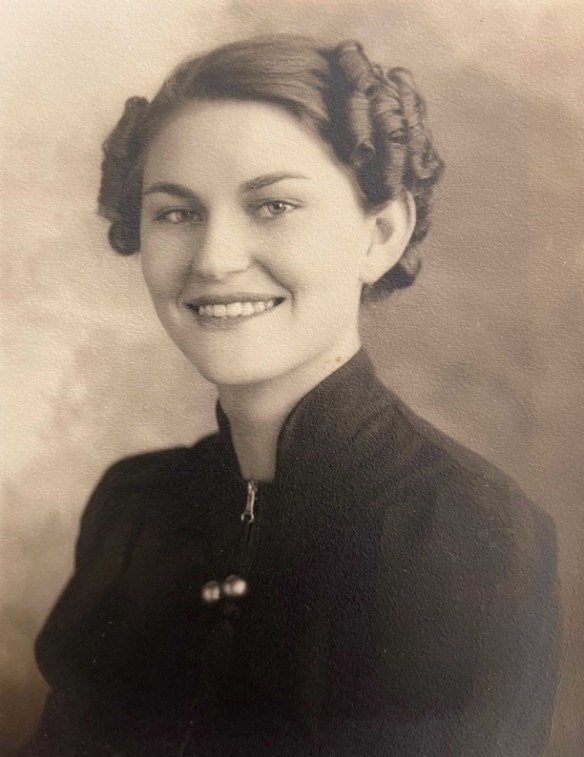
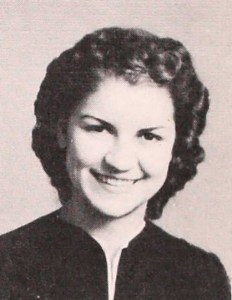
Doris Nelms

Like several of her classmates, Doris went to Weatherford College after graduating. She married Winford Harold Chick in September 1940 and their first son, Winford Harold Jr was born the following April. (Ten years later, in 1950, the family ties would become even strong when Doris’s little brother Curry married Winford’s half-sister Juanita.)  

They moved to Oklahoma City, Winford working as a gas station attendant and Doris as a waitress at the Edwin Café. A second son, Joe Wayne, followed in 1943.

Winford served in the US Navy at Okinawa during World War II while, in June 1945, Doris took up a job as the bookkeeper at local paper, the Beckham County Democrat. When Winford returned from active service the couple moved to Fort Worth where a daughter, Darla, was born in 1951. Winford worked in construction, becoming the superintendent of Lydick Roofing and then general manager for Chas F Williams Co. He later set up his own company, Chick Specialties Inc, with Doris acting as the Company Secretary. However, she died of a heart attack on February 1, 1974, aged just 52 years.

GEORGE BLAIR

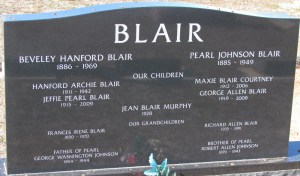
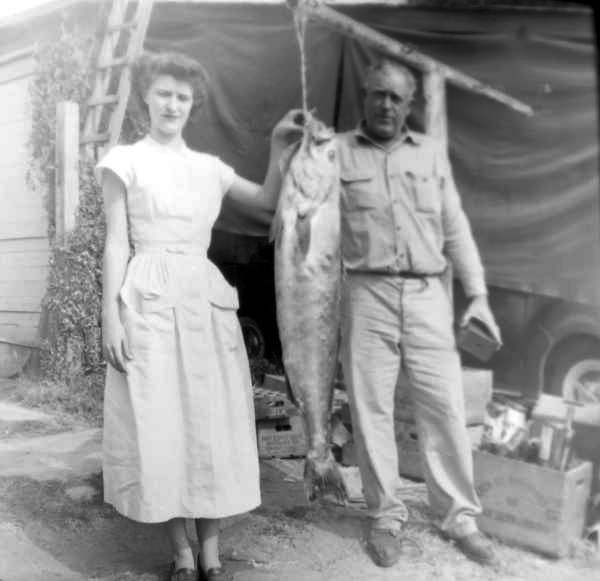
George Allen Blair was born on June 24, 1919, southeast of Texola, to Beveley Hanford and Emma Pearl Blair, the second youngest of five children. Unlike most of those in his graduation class, George never left Texola. He continued to live on the family farm, ranching and taking care of his father in his last years. His parents’ marriage seems somewhat convoluted. In the 1940 census, Emma is listed as head of the house, divorced, and running the farm; George and his sisters Jeffie and Jean. She would also be listed as divorced on her death certificate when she passed away in Shamrock, Texas, in 1949 following a stroke. However, in 1947, she and Beverley were together in San Joaquin, California, looking after their grandchildren, Frances and Richard, the children of their eldest son Hanford.

Beveley and his wife, Ethel, had moved to California in late 1941 and Hanford was working as a farm labourer on the George Berry ranch near Linden. His parents had moved as well and, one April evening in 1942, the whole family were together, sitting on the lawn of the ranch. Around 7pm Hanford went into the house, took a .22 calibre rifle and shot himself in the head. He died two hours later. The official line was that he was despondent over recent ill-health, but the fact that Ethel had filed for divorce twice the previous year may indicate all was far from well in the marriage, and possibly why his parents had moved to California with them.

The stone of the complicated family of George Blair.

Perhaps, unsurprisingly, given all this turmoil, George never married. He looked after his father until Beverley died in 1969. George himself reached the age of 90 before succumbing on August 27, 2009, to injuries he’d sustained in an automobile accident. He was the first last of the plaque’s graduation class.

BEHIND THE NAMES ON THE TEXOLA STONE: Part Two

Please see Part One for the background to this post.

AUSTIN ROSE

The ‘Seniors 38’ stone outside the one-room jail in Texola.

Born Rual Austin Rose on February 24, 1918, to Dana Elwood and Myrtle Rose, he went by the name Austin. Four years later he was joined by a sister, Anna Mae.

This was a Baptist revival held in Texola under the supervision of Reverend Billy Sunday. Anna Mae Rose is being baptised; behind her looking at their father, Dana Elwood Rose, who is crying, is Austin.

Having graduated from Texola High School in 1938, he married Eloise Moore three days before Christmas 1939; it was her 21st birthday. Eloise, like himself, was from Texola and had been part of the Class of 1939. A few months later Austin was working in Albert Ferguson’s wrecking and salvage yard in Wheeler as he trained to be a mechanic.

Austin Rose at his graduation.

At some point it seems that they moved to California as Austin enlisted in the army in 1943 in Los Angeles. He would serve from December 28, 1943 to April 12, 1944. He would later work as a mechanic for James Chrysler Plymouth in Corona for 35 years and his parents moved to southern California too, Dana running a grocery store and raising chickens and rabbits. He died of a heart attack in 1960 after spending five months in hospital.

Austin in the 1950s.

When Myrtle died in 1983 she left everything to Austin. In a will she had made in May 1969 she wrote, ‘I hate to do this but Anna Mae owes me more than I have now and so far hasn’t paid it. So I want Austin to have what I have left’. Austin inherited her mobile home, quilt tops and checking account at Southwest Bank. At their mother’s funeral, Austin gave his sister $5. Anna Mae paid for the funeral.
In 1972, Austin and Eloise moved to Shasta Lake where he died on February 7, 1997.

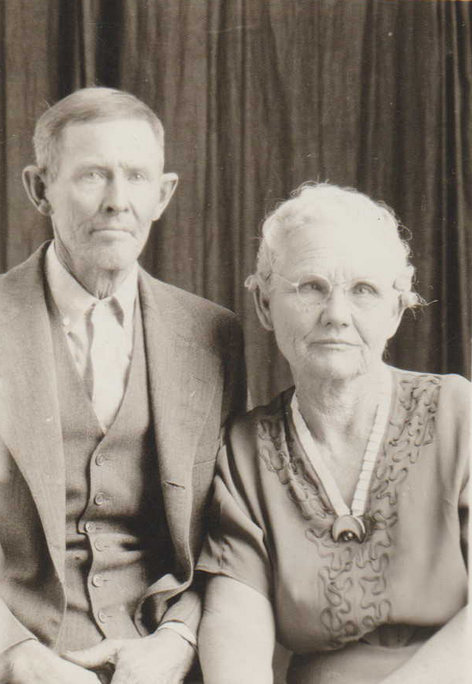
Austin’s parents, Myrtle and Dana Rose.

WINTHA DOSS

Norn November 20,1919, to Henry Tanner and Olli Okla Doss, Wintha graduated from Texola High School in 1938 and went on to the Oklahoma A&M College. He then enlisted in the US Army and fought in Europe, including in the Battle of the Bulge where he was wounded and later awarded a Purple Heart. By now he and his older brother Basil were orphans, his mother having died in 1937 and his father in 1943.

Returning to America, he reenlisted as a career soldier and then married Sybil Estilene Reed in Wheeler, Texas, on August 12, 1947. They travelled the world as a family; their only child, Jana, was born in Osaka, Japan, in 1949 where Wintha was working as a criminal investigator.

In 1960 Wintha retired and they moved to Erick, Oklahoma. But a happy retirement was short-lived. Sybil died after a long illness in 1962 aged just 42. Jana never married and stayed with her father until he died in 1994 and followed him to the grave just four years later.  

BEHIND THE NAMES ON THE TEXOLA STONE: Part One

The ‘Seniors 38’ stone outside the one-room jail in Texola.

On 4th and Main Street, a stone’s throw off Route 66 in Texola, Oklahoma, is a single cell jail. But what is even more interesting is the gravestone-shaped marker that has been propped up outside the jail for years. The names of it are, it says, the ‘Class of 38’. But are they? Well, yes and no.

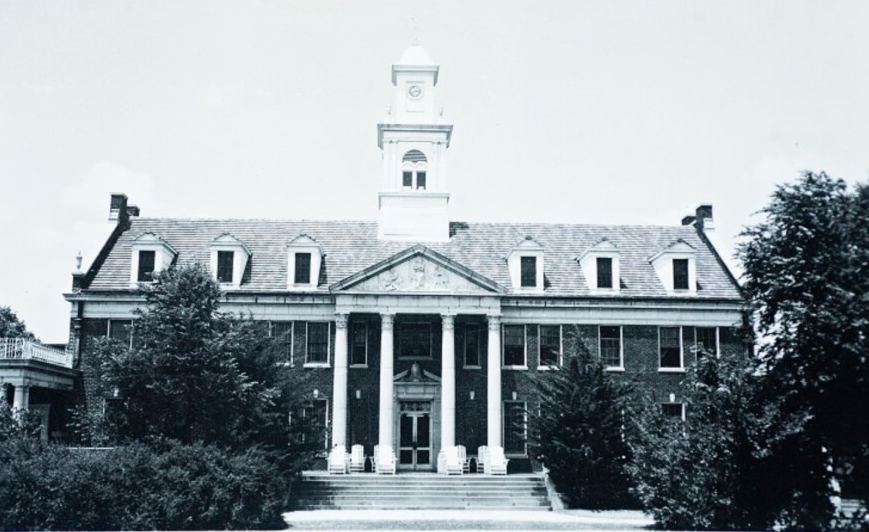
Texola may be a ghost town now, but it once had a thriving high school, complete with baseball, football and basketball teams, Glee Club and even a school newspaper (the ‘Texola Booster’, first published in November 1919). Texola High School had an auditorium which was used for plays and operas and, at its height had over a hundred pupils. By the mid-1930s, the enrolment was around 65, and, as far as I can make out, the last graduation was in 1957.

The Texola jail.

But it’s that curious stone that has always intrigued me. What happened to the boys and girls whose names appears on that plaque, so I set out to find out. What I soon discovered was that this wasn’t simply the Class of 38. One of the youths – Jimmi Powers – was actually in the Clas of 1939, while Herbert Copeland never had the chance to graduate at all. It soon became clear that this was too long for a single blog post and it will therefore be divided into several parts; so, in the order in which the names appear, this is the Texola stone’s ‘Class of 38’.

AGNES RUDD

Agnes Telitha Rudd was born in Erick, Oklahoma on May 6, 1919, to Thomas and Lela Rudd, the second of their two daughters. It was to be a childhood blighted by tragedy. On April 9, 1928, when Agnes was just eight years old, her sister Clora Viola, older by 18 months, died of measles. Clora left big shoes for her sister to fill; Her parents considered she was a saint – before she fell ill she had been top of her class at school, while her obituary spoke of how she read her Bible each day and after she was too sick to read it, she had her mother read it to her. It was said of Clora, “If she could not say something good about anyone, she did not say anything.”

Almost exactly 19 months later, Agnes’s father died in November 1929; Thomas Rudd was just 34 years old. Agnes and Lela had no option but to move in with her grandparents. At the age of 19 she married Wesley Don Lake who had left school after the 5th grade in elementary. A year later they were renting a house in Texola; Wesley worked as a gas station attendant while Agnes stayed at home. Wesley was called up on December 26, 1942, to the 704th Training Group Air Corps in Atlantic City, but he only served six months.

Agnes Rudd

Agnes and Wesley moved to Amarillo where they both took jobs with International Harvester Co, Agnes as a machine operator and Wesley as a parts man. If they wanted children, they never came. And it seems they did, for in 1962, when Agnes was 43, they adopted a baby they called Don Wesley. Wesley was a warehouseman for Sears Roebuck Co But tragedy would strike Agnes again; when little Don was just three years old, Wesley died of a massive heart attack. He was just 50 years old.

Throughout her life, Agnes’ love of poetry sustained her. It might seem a little mawkish by modern standards – after her grandmother’s death she wrote a long poem that started:

Dear loved one we’ve missed you so

We’ve wondered oft times why you had to go

You left a vacancy that can never be filled

For with your presence we were always thrilled.

However, it gave her comfort and she enjoyed gifting poems to family and friends. She never remarried, although she lived to see Don and his wife Shawna give her three grandchildren. Agnes died in Amarillo on July 8, 2002.

JUNIOR HASS

Hugh Harrison Hass was born in Texoma, Oklahoma, to Hugh Manuel Hass and Jamie Clara Lackey-Hass on November 27, 1920, but he was always known as ‘Junior’. By the time he graduated from Texola High School in 1938, his father was a deputy sheriff. Junior went on to attend Panhandle University A&M (Agricultural and Mechanical), now Oklahoma State University. There he excelled in sports, starring in all the major athletic events.

Hugh ‘Junior’ Hass in 1938.

But Junior had an urge to fly. In 1941 he completed a primary flight course at the Texhoma CPT School and gained his pilot’s license, going to Amarillo the following January to join the civil pilot training course there.

By June 1942 he was employed as an instructor in the Cutter-Car Flying Service in Albuquerque, graduating to assistant flight instructor. When Uncle Sam called, it was inevitable that Junior would take to the air. He served in the United States Navy, training cadet fighter pilots in Norman, Oklahoma, as well as being stationed at the Glenview Air Station in Chicago.

Following his discharge he returned to Cutter Car Flying Service and then working for Texhoma Flying Service and Catlin Aviation in Oklahoma City, flying both charter and crop dusting planes. There was a stint with Standard Airways and as the personal pilot for the Tulsa Oilers hockey team, while he finished his flying career in 1990 after 13 years working for Aerial Photo Service in Tulsa.

Then he took on a second career, owning and managing a bridal shop called Joy’s Klothes Kloset. He was a man who always wanted to be busy and constantly learning; he taught himself Spanish and German and travelled widely to Europe, South America and the Galapagos Islands. When not working or travelling, he raised funds for various causes and was an all-round good guy.
On July 29, 1945, he had wed Leatrice Joy Richerson who hailed from Sayre, Oklahoma, and a few months before his death, they had celebrated 63 years of marriage, a union which had produced a son and three daughters, one who predeceased him. Junior Hass passed away on November 2, 2008.

DEATH AT A SAPULPA CAFE

Eudell Walter Whitmire.

Many Route 66 travellers visiting Sapulpa stop at Michael Jones’ Gasoline Alley Classics, at 24 North Main, and some might even casually wonder the block on which the old Ford Model T dealership stands is book-ended at the southern end by the 1904 Young Building with nothing in between. But, until their demolition in 1981, that now empty space was home to two of the town’s oldest buildings; it was in one of those buildings that murder came to visit.

It was December 1960. The town was still recovering from an F5 tornado that had landed in May, killing three people and destroying over 100 homes and the Booker T. Washington High School, but now the town was looking forward to Christmas. Making a new start too was Eudell Walter Whitmire, a 40-year-old Oklahoman of Cherokee descent, who had just moved to Sapulpa from Angleton, Texas. The main reason for the move was the break-up of his marriage to Vivian Lee Brown who would remain in Angleton with their three children.

Eudell already had two sons who lived with their mother, Syble Ludy Stewart, in California. In around 1940, Eudell and his brother Gordon had moved from their home in Adair County, Oklahoma, to the west coast where Eudell found work as a fry cook at the Arches Café in Newport Beach while Gordon worked at White’s Coffee Shop on Balboa Island.

The Arches Cafe in Newport Beach where Eudell worked. It moved in 2007 and finally closed in 2011.

Both brothers enlisted in the military, Eudell in 1941 and Gordon the following July. Eudell served four years and was wounded in the line of duty in 1944, finally returning to Los Angeles in 1945 where Gordon joined him. But during his service Eudell had managed to meet a young waitress called Syble Ludy Stewart who he married in Yuma, Arizona, on February 15, 1943. Just over the border from California, Yuma was a popular destination for ‘quickie’ marriages as between 1926 and 1958 Arizona had no waiting period or blood test requirement for marriage licenses.

The couple had two sons, Stanley born on August 28, 1944, and Dennis, almost exactly two years later, on August 30, 1946. However, both Eudell and Gordon were, it seems fond of a drink. Eudell was arrested twice in 1947 for driving under the influence and on the first occasion his brother was also fined $25 for drunkenness. On March 1, 1949, they split up and Syble filed for divorce, stating that Eudell was “addicted to excessive use of alcohol” and had threatened to take the boys away from her. She was granted a divorce of grounds of extreme cruelty in November 1949 and given custody of Stanley and Dennis.

Eudell returned to Oklahoma, finding work as a cook at a café in Sapulpa which is where he may have met Vivian, who was then Mrs Vivian Tavel although she had been divorced from James Tavel on September 3, 1948. Clearly love blossomed quickly and she and Eudell were married in March 1950. The newly-weds managed the impressive feat of having two children born in the same year – Michael Gordon in January of 1952 and Diedra Dell in December. Randall followed in April 1954 by which time the family were settled in Angleton, south of Houston on the Gulf of Mexico.

Eudell and Vivian’s wedding.

But all was not well. Although the Whitmires were running the Taco House Café together, the marriage broke down and on February 11, 1960, Vivian was granted a divorce, custody of the children and $125 per month support. The Taco House Café was put up for sale.

When Eudell moved to Sapulpa, Vivian and the children stayed at their home in Angleton, Texas.

Eudell moved back to Sapulpa where a new venture was waiting. At the beginning of November, Ray Anderson had bought the Chieftain Café at 12 North Main, just across the road from the Sapulpa Trading Post that he had opened the previous September. Ray was married to Juanita Cates, the sister of Eudell’s mother, and so he invited Juanita’s nephew Eudell to be the chef and operator and, perhaps in memory of his last café or simply to needle Vivian, Eudell planned to call it the Villa Tacos Restaurant. Ray and Juanita Anderson shared their house in Tulsa with Juanita’s nephew – perhaps this intended as a temporary arrangement, but it turned out to be briefer than anyone had imagined.

Juanita Anderson, Eudell’s aunt and co-owner of the cafe.

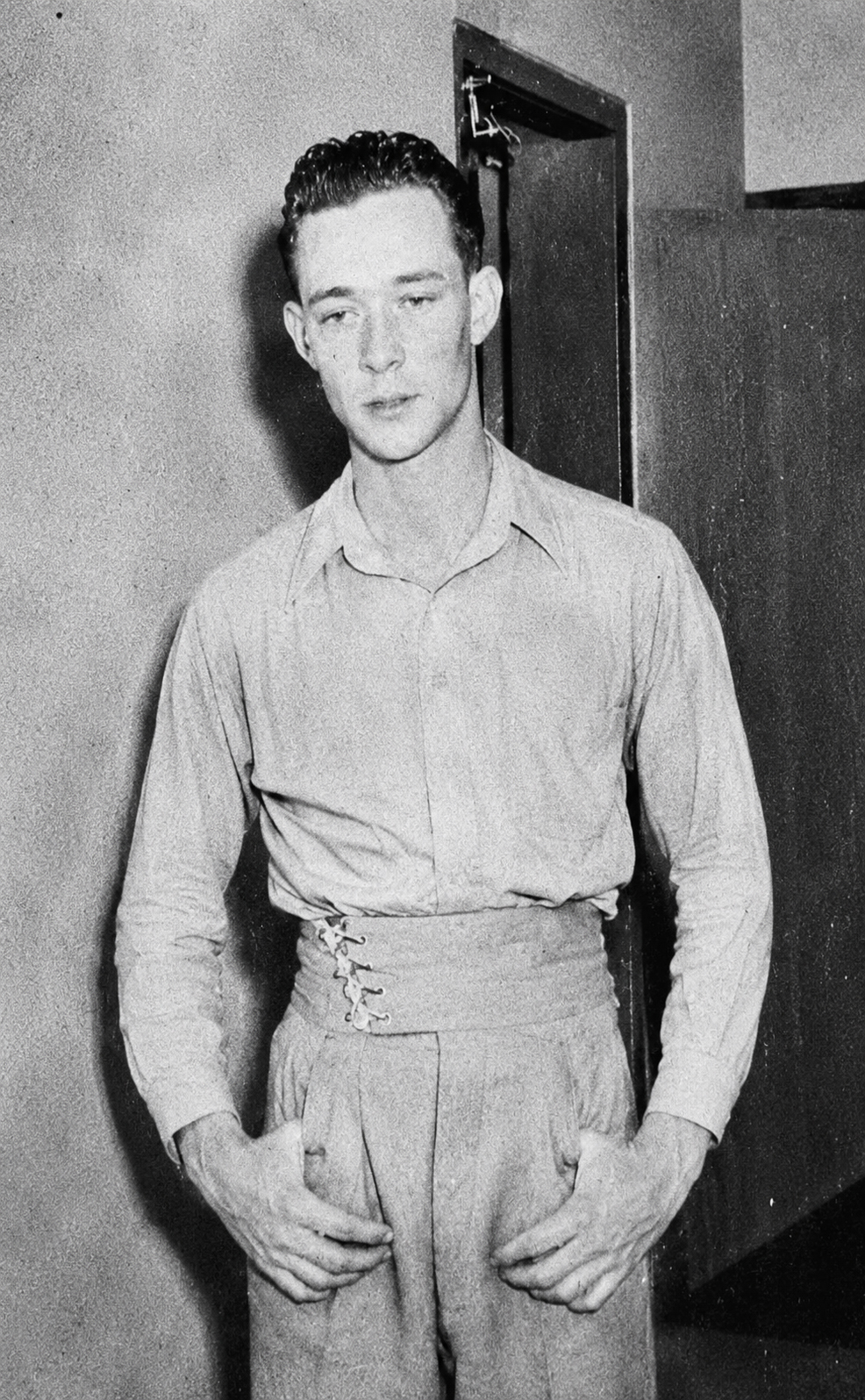
Also newly arrived in Sapulpa were young couple Lawrence and Lola Aldridge who had moved to the Oklahoma town from Winfield, Kansas, in the summer. Lawrence Everett Aldridge had been born in Leon, Kansas, in 1932 and served some time in the military; the US Veterans Gravesites department lists him as serving for just two months in 1952. Why such a short period of time is a matter of conjecture. He was certainly fit enough to work in the oil fields, so perhaps the Army decided that it and Private Aldridge were just not suited?

Lawrence Aldridge photographed at his call up. He lasted just two months in the Army.


In May 1953 he married 18-year-old Lola Imagene Green and, after first living in Stroud, Oklahoma, they moved to California. But it seems Lawrence couldn’t keep a job – he was also convicted of drink driving in Orange County. Why they ended up in Sapulpa in 1960 is unknown, but what is known is the marriage was unhappy. Lola left Aldridge and moved into the Gibson Hotel (which burned down in January 1972); on December 5, 1960, she asked an attorney to prepare divorce papers. As Lawrence had also threatened her several times since the separation she also requested a restraining order. Attorney David Young would later say that he had drawn up the papers but hadn’t had time to file them before being overtaken by events.

Lola had found herself a job as a waitress as the Chieftain Café shortly after the Aldridges had landed in Sapulpa and when the previous owners John and Alice Alexander sold it to the Andersons she was kept on by the new owners and operator. She probably didn’t know many people in Sapulpa while Eudell hadn’t lived in the town for years; she was estranged from her husband and Eudell was divorced. Although 15 years her senior, the 6’2” café owner was a good-looking man and so it seemed only natural they would share the occasional beer. Although it probably went no further, this was too far for Lawrence Aldridge.

On the morning of December 6, 1960, he followed his wife to work, carrying a 16-gauge shotgun. She would say that he appeared to have been drinking and that he “seemed wild and I told him to come to his senses.” He cornered her in the café’s kitchen and threatened to shoot her when she refused to quit her job. He then walked to the front of the café where Eudell was preparing to open up for the day and shot him once. Eudell Whitmire died instantly.

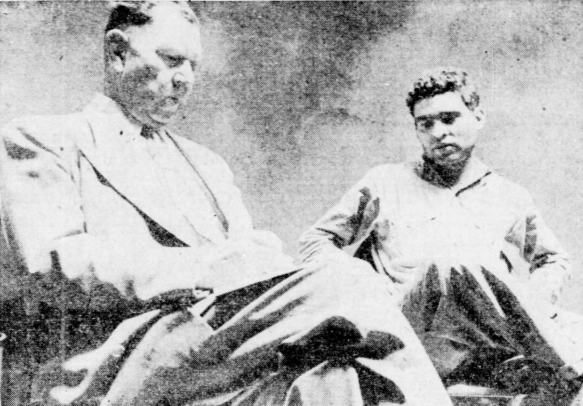
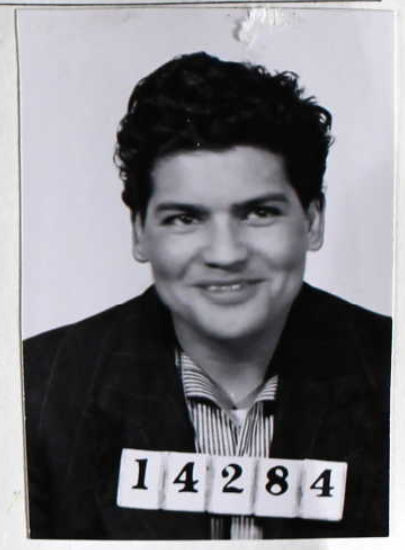
Lawrence Aldridge at the time of his arrest for the murder of Eudell Whitmire.

Aldridge then returned to the kitchen and once more tried to persuade Lola to leave with him, but the terrified woman fled to a nearby bakery where the police were called. When officers arrived, Aldridge had locked himself in the café’s restroom but was persuaded to give himself up. He was charged with murder and it seemed like it would be an open and shut case.

But Aldridge entered an innocent plea and by the time the case came to trial in March he had a story that Eudell had lunged at him and he thought the café operator had a gun. This contradicted the evidence which shown Eudell had several half-dollars clutched in each hand, ready to open the café for the day, and was behind the cash register counter. Delsa Holmes Wright testified that Eudell had kept a pistol at the café (she only worked there for two weeks before being let go, so she may not have been a fan) but Juanita Anderson said she’d never seen such a gun when she had worked there. Unfortunately, the only other witness to the shooting wasn’t allowed to testify after the defence objected – because she was married to the defendant. The jury of six men and six women retired but were hopelessly deadlocked. A mistrial was declared.

In May, a second trial began. By now Aldridge added a few more details, such as Whitmire had threatened him on three previous occasions and had been drinking with his wife. He had only had the shotgun with him because he was cleaning out his apartment before moving away from Sapulpa. It was just a case of self-defence.

The second trial lasted less than two days and the jury’s deliberations were swift. They found him guilty, but only of manslaughter and recommended a sentence of just four years. Lola was granted a divorce in November 1961.

A half-smirk on his face, Lawrence goes to trial with his self-defence story.

Just a year later he applied for parole. It was denied and he served close to his full term, such as it was. By 1966 he was back in Winfield and applying for a marriage license with Donella C Carson, although the fact that Mrs Carson was already married put an end to any wedding plans. He died in Onalaska, Texas, in 1997.

After Eudell’s death the café was sold to Eldon and Eva Billey who reopened it as the Chieftain.

Despite the special dinner steak, the Chieftain never recovered.

But within a couple of months it failed and all the fixtures and fittings were auctioned off in April 1961. The building and its neighbour housed many businesses over the years but by 1980 it was in poor repair. When a section of the outside wall gave away and crashed down onto a pickup truck, the owners, the American National Bank, had the building demolished in 1981 to make way for an employees’ parking lot. And that is the space on North Main.

In April 1961, the Chieftain Cafe closed for good.

MURDER ON MAIN STREET IN ALANREED

It was a quiet night in Alanreed, Texas. Perhaps a dog or two barked at the automobile weaving its way down Main Street; cars were still a novel enough sight for the canine population to call attention to each one, but those automobiles provided a living for Tobe Clodfelter who ran a garage in town.

Tobe Clodfelter’s garage in Alanreed.

Given his trade, it was probably Tobe at the wheel that May night, accompanied by his friends, Joe Hayes, a labourer from Alanreed, and Roy Tipton, a farmer who lived a few miles outside town. The trio had been on a trip into the country for what was described as an entertainment – which could be anything from a shoot to a party and was probably both – at which, by all accounts, the three men had been heavily drinking. It would end very badly that night.

For Tobe the trip and the accompanying libations were probably a chance to let off steam, away from the pressures of running his own business and providing for his two young daughters. At 30, he was the oldest of the three men and the only one to be married, having wed his wife Vallie when she was just 14.

The very young and beautiful Vallie Agee, soon to be Mrs Clodfelter.

Vallie and Tobe had both grown up in the Chickasaw Nation of the Indian Territory (the state of Oklahoma would not become part of the Union until 1907) and, in 1900, the Clodfelter family had applied to become recognized as Missouri Choctaws. His mother Mary claimed to be 1/8th Choctaw, making her only son Tobe and his seven sisters 1/16th Choctaw. It is unlikely this had anything to do with ancestral pride and everything to do with the idea that they would be then be able to claim land or money. There were countless fraudulent claims at the time by people claiming to have ‘Indian blood’ in order to be allocated land and it’s all too likely that the Clodfelters were among those. In any event, in 1902 the claim of Mary and her children to be Choctaws was resoundingly rejected.

The Clodfelter family. Tobe is in the centre, flanked by his parents Newton and Mary and his six sisters. It’s likely this photo was taken around 1894 or ’95 when Tobe was about 9. One of the sisters, Lulu (on far left) would die in 1901 at the age of 16 while another, Mildred (‘Birdie’) was born in 1897.

Tobe and Vallie moved to Alanreed after their marriage in 1905 at a time when the town was growing. It had a hotel, a bank, Baptist and Methodist churches, two grocery stores, a hardware store, a blacksmith’s shop and, in 1912, a new two-storey school. In July 1906 their first daughter, Audrie Mae, was born, followed almost two years later by her sister Arble Faye.

26-year-old Roy Tipton was, in 1916, farming with his brother Charles in Gray County, while Joseph Hayes, the youngest of the three men at 22, got by with general labouring work. The Hayes family was still recovering from the death of Joe’s older sister, Sarah, the previous year. Her death certificate stated she had been suffering from pellagra (a nutrition-related disease which was prevalent in Oklahoma and Texas in the early years of the 20th century) for the previous three years. She had died at the age of 30, leaving three young daughters under the age of six.   

In the early hours of Friday May 12, 1916, as the men drove onto Main Street in Alanreed, an argument broke out. We will never know the cause of the altercation – and the fact the men were intoxicated no doubt exacerbated the situation – but Tobe Clodfelter brought it to a swift and savage end by drawing his gun and shooting his two companions. Roy Tipton fell dead, but Joe Hayes was still alive. With the last of his strength he fired back at Tobe Clodfelter. At 3.30am all three men lay dead in the street.

An inquest was held that morning and, at 4pm on Friday afternoon, the three men were buried in Alanreed Cemetery in a single ceremony conducted by the Methodist minister, Rev Howell.

A plain plaque marks young Joe Hayes’ grave.

It seems Joe’s younger brother Tom went off the rails after his brother’s death. Like his brother he had had little education, spending just three years in school. On May 29, 1917, despite pleading not guilty, Tom Hayes was convicted of stealing ‘one cattle’ for which he was sentenced to two years in Huntville prison where he died on November 8, 1918.

Although the gravestone reads November 11, Huntsville prison recorded his death as three days earlier.

He is buried next to his brother although, curiously, his gravestone gives his date of death as November 11. Tom’s older brother Sam also died young in 1935 of pernicious anaemia, a disease, like pellagra, brought on by vitamin deficiency. He was 46 and left two young sons.

Vallie Clodfelter in later years.

Vallie Clodfelter remarried ten months – probably a necessity for a young woman with two small children – to a man coincidentally called Sam Hays. (He was also from Alanreed and the same age as Joe Hayes’ brother but, while it might have made for a better tale, they were not the same man.) The marriage produced Bradford, a half-brother for Audrie and Arble, but ended in divorce within a few years. Vallie married again to JA Jackson on July 15, 1933, but also divorced him shortly afterwards. She moved to Pampa in 1938 where she rented out property and lived there until her death in 1976. Vallie is buried in Alanreed cemetery along with her eldest daughter Arble.

Arble and Audrie Clodfelter married brothers, Philip and Raymond Howard; Arble and Philip’s marriage lasted just a few months and they were divorced in 1922. Arble married again to Harley Hickman but that too ended swiftly in divorce with Harley dying of a coronary thrombosis in 1952, just as her sister’s husband, Raymond, would in 1958. Neither sister would remarry after that.

While Joe Hayes’ grave is marked with a simple plaque and Tobe Clodfelter’s with a simple and possible more modern stone, it is Roy Tipton’s memorial which attracts most attention and that, even almost 110 years later, resonates with the anguish of his family. A tall marble column, it is etched not only with the family name and Roy’s details, but with the stark words, ‘MURDERED IN COLD BLOOD’.

Roy Tipton’s gravestone.

THE MISSING TREASURE OF TEXOLA

On the evening of January 18, 1908, assistant cashier CW Jones was working late at the First Bank of Texola in Texola on the Oklahoma-Texas border. It was about 7pm when he was suddenly interrupted by two masked men bursting into the bank and uttering the deathless words, “Hands up”.

Cashier Jones did as he was told but while one bandit was busy dumping loose change into a sack he attacked the other man. His brave ‘have a go’ endeavour quickly came to an end when he was hit in the head with a gun, gagged and bound with handcuffs.

The two robbers escaped with $5008 (around $170,000 in today’s money) and Jones was eventually rescued to tell his tale of bravery to Sheriff JH Richerson and Deputy Lee Anderson. He told the lawmen how he hadn’t been able to see the robbers’ faces, but that one was 5’ 10” with light hair under a black felt hat, while his confederate was a dark-haired 5’ 4” tall man wearing dark clothing and a black derby.

Several men were arrested and then released; the bank offered a reward of $1000, but the trail went cold. Cashier Jones continued to work at the bank and tell his tale to curious customers, but not for long. The robbery hit the First Bank of Texola hard and its owners, the Thurmond brothers who owned several banks in western Oklahoma, were quick to liquidate the bank and sell it off to JE Terrell and Ira Speed who promptly withdrew the reward.

In Texola Cashier Jones was a popular man and the town had been outraged by his treatment. Reports of his heroic attempt in deterring two villains to save the bank’s money was broadcast across the nation from New York to Arizona.

There was just one problem; there wasn’t a word of truth in the story.

For whatever reason, CW Jones was not kept on by the bank’s new owners and he went to work as a local agent for the Rock Island railroad. Around this time he made a deposit of $800 with the Vicksburg National Bank of Vicksburg, Mississippi. (That would equate to around $27,000 today, quite a nest egg for an assistant bank cashier or railroad agent.) He then bought a farm in Mississippi and that was the last Texola heard of Cashier CW Jones…

…Until the summer of 1914 when Jones turned up in Clinton and explained to OH Thurmond, who had been the President of the First Bank of Texola at the time of the robbery, that there had been no masked bandits and that the only bank robber had been CW Jones himself. He repaid $440 but the story was to get even odder.

It seems that Jones had found Christianity and his conscience insisted that he confess to the crime, although it seems that he had written an anonymous letter to Thurmond in 1910 telling him that he could find the proceeds of the robbery buried in a field in Texola. Thurmond attempted to find it but with no luck.

On the night of January 18, 1908, Jones had removed some $500 of silver and the rest in gold and banknotes, left the bank and, keeping $1000 back (presumably to finance the Mississippi farm and bank deposit), buried the rest in a tin can in a grass-covered field. Then he returned to the bank, tied a towel over his mouth and manacled himself with a pair of handcuffs that he had ordered by mail order from Chicago and waited to be discovered and tell his tale.

Unsurprisingly, his next stop after OH Thurmond’s office was the local jail. In August he was sentenced to two years in the state penitentiary at McAllister, a rather short sentence which was passed down after the District Attorney made a case for leniency. After that, CW Jones passes into history.

And what of the loot from the bank? Jones went to retrieve the money after the robbery but discovered that the field had been ploughed over and he couldn’t find where it was buried. OH Thurmond was unsuccessful too, and if the money was ever found, someone kept quiet about it. So, somewhere under Texola, there could lie around $150,000 in gold and ancient bank notes…

THE LOTHARIO OF LENWOOD

Lenwood is a small town on Route 66 just west of Barstow, California, that began  in 1923 Frank and Nancy Ellen Woods decided to subdivide some 1540 acres they owned. Through the company Lenwood Estates they established a new town which, according to adverts by the firm was akin to paradise on earth – ideal for health, perfect for chicken farms, orchard tracts and businesses of all kinds. One William Barnard was appointed to manage Lenwood Estates and an office was opened in Los Angeles.

There was just one problem. It was a scam.

An advert announcing the new town of Lenwood on the ‘Ocean-to-ocean’ Highway in 1924.

Of course, no-one knew that when lots came to be sold – as many as 50 in just thirty days according to Barnard, who was actually a bankrupt, something of which the Woods were aware before they hired him. The first signs of disquiet came at the end of 1924 when WB Sifton, who had purchased land in order to build a hotel, filed a suit against Lenwood Estates to collect a salary of $175 for a four-month contract from the company. Two years later the Hayward Lumber Company sought to foreclose on the town and eventually it emerged that Barnard had set up the fictitious Arizona-California Land Company to sell lots to gullible investors during the 1920s real estate bubble.

‘Any system of raising poultry you want’!
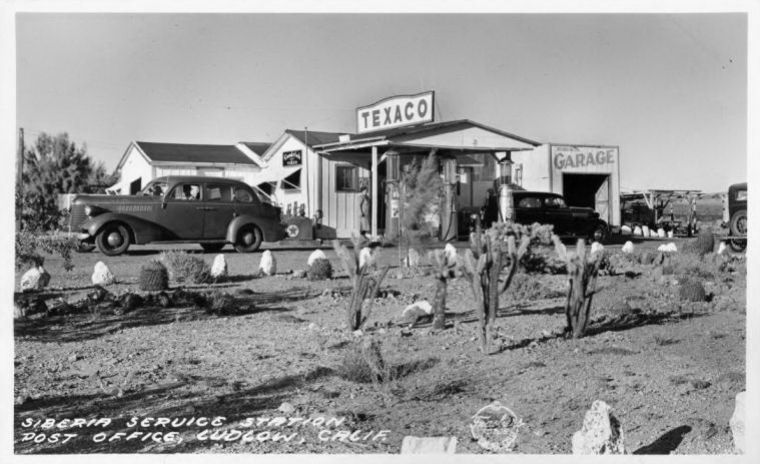
In court in 1927 it emerged that the defendants – Barnard and the Woods – had intended ‘to create a false and fictitious value therefor and to thereby cheat and defraud the public in the sale and disposition of these lands in small tracts, a scheme or joint venture of all defendants was planned whereby they were to receive all the proceeds from such venture and yet not be responsible for any of the losses or liabilities that would surely occur on the eventual dissipation of the real estate bubble’. Woods and Barnard had also entered into a trust agreement whereupon they could deed the land to the Bank of America, leaving the Woods free from liability of any kind in connection with the scheme. It seems that the Woods escaped their liabilities by dying not long afterwards – they were both almost 70 at the time of the court case.

However, Lenwood survived and the fact that it was situated on the National Old Trails Road encouraged business. In 1923 Christian Randolph Duin and his wife Cecilia turned up in Lenwood and opened the Radio Auto Camp, starting with just three cabins and neatly combining two of the technological advances of the age in one name. Duin appears to be a man addicted to romance and marriage.

In October 1896, at the age of 20, he married 19-year-old Alice Smith in Los Angeles. It was to be a short marriage for Alice died of tuberculosis on September 10, 1901. Duin remarried in October 1907 to 27-year-old Russian emigrant Rose W Zarsky. One morning in March 1908 Christian Duin put on his best clothes and left their home in Oakland, California, telling Rose he was going to buy some tools in San Francisco for his employer, the Eagle Box factory. She never saw him again.

The Eagle Box and Manufacturing Co’s factory from which Christian Duin disappeared one morning in 1908.

In June 1909 Rose, having ascertained that her husband was alive and well and hadn’t met with some misfortune, petitioned the courts to have the marriage dissolved on the ground of desertion, which it was. However, by then Christian Duin had already married again – bigamously, of course.

On July 6, 1908 he was wed to Laura May and the marriage consummated in Denver, Colorado. In June 1911 Laura filed for an annulment of the marriage, having discovered that there was a second Mrs Duin still living. In fact, there was actually a fourth Mrs Duin by now as Duin had married Maude M Cook in Oregon on November 9, 1909…

This photo shows the garage, campground office and gas station.

I could find no record of what happened to Maude, although they were still living together in Los Angeles in 1918. It’s not known when he married Cecilia – or if he even did – but they made a success of the fledgling Radio Auto Camp, helped in no small part by Duin’s trade as a carpenter. However, the Woods’ claims of Lenwood being a healthy, dry place to live did Christian Duin no good, nor did he live to take advantage of the increased traffic when the road on which the camp stood was designated Route 66, for he died on September 1, 1926, of tuberculosis, the same disease that had taken his first wife twenty-five years before. We will probably never know whether there were other marriages and other wives than the five I have found.

Captured by Frashers Fotos, this photo shows that the Radio Auto Camp not only had cabins and a cafe, but a restaurant and beer garden.

In November 1927 Cecilia Duin remarried, this time to Moses Tufts, and they carried on operating the Radio Camp; by 1933 it boasted 11 cabins. In 1934 Mrs Tufts leased the place to AO Flowers and his uncle Fred Ridernoor but this appears to have been a business arrangement and would occur several times again.

Moses died in 1945 and Cecilia sold Radio Auto Camp that year to John and Inez O’Leary who then sold it to Homer Luring in April 1948. Two months later, in June 1948, O’Leary renamed the place the Lenwood Inn and the Radio Auto Camp was a thing of the past. I had previously believed that one building still existed, but I no longer think that is the case. Where the Radio Auto Camp/Lenwood Inn was is now a vacant lot, although some trees remain. Cecilia Duin outlived both her husbands and finally passed away in 1986 at the age of 97. She had outlived the Lothario of Lenwood by more than half a century.

Christian Duin, the man who wooed and wed at least five women.

THE ENDURING MYTH OF HOTEL EL RANCHO

Hotel El Rancho as it looked when it opened in 1936.

Hotel El Rancho in Gallup, New Mexico, is as much a draw for tourists as it was when it opened in 1937 and one of the first things anyone is told about the hotel is that it was owned by the brother of the most famous film director of the early 20th century, David Wark ‘DW’ Griffith. Given its history as home to the stars, commemorated today by named rooms and copious photographs through the hotel, it’s easy to see why the idea that RE Griffith was related to such a movie legend has been repeated over and over again, by everyone from the National Parks Service to Wikipedia.

There’s one problem; it isn’t true.

There has always been something that has troubled me about the Griffith connection; I have a degree in film and have researched DW Griffith and I knew that, of his siblings, not one had a name beginning with R. So down the rabbit hole I went.

Rupert Earl Griffith, movie theatre mogul but no relation to DW.

Rupert Earl Griffith was born in 1893 in Hallettville, Texas, the second son of Henry and Minnie Griffith. He had two brothers neither of which were David Wark and his only relationship with DW was that they shared a surname.  In 1920, putting a spell as a grocery salesman and one marriage behind him, RE Griffith – as he would be known for most of his life – found a job working as a commercial salesman in the motion picture industry selling film. He then opened his own theatre before moving to Oklahoma in 1931. From there he began the Griffith Amusement Company with his brothers Louis Clyde and Henry Jefferson, known in the family tradition as ‘LC’ and ‘HJ’.

David Wark Griffith, legendary movie director, but no relation to RE…

Despite the Great Depression, the movie industry – and the Griffith brothers – prospered. By the early 1940s they were the operators of the largest independent chain of theatres in America, owning some 290 picture houses. In 1936 RE had come to Gallup to build the Chief and Navaho theatres; New Mexico was, at that time, very popular with Hollywood filmmakers and Griffith, who adored all things Old West, decided what Gallup needed was a top-notch hotel.

He was right. Hotel El Rancho opened in 1936 and, over the next two or three decades would play host to countless stars. Did DW Griffith ever stay there? It’s quite likely he didn’t, for he had made his last film, the unsuccessful ‘The Struggle’, in 1932, five years before the hotel opened.

RE Griffith also went on to open The Last Frontier hotel in Las Vegas, Nevada (it would be renamed the New Frontier in 1955 and was where Elvis Presley made his Las Vegas debut the following year) which was designed by his nephew William J Moore who owned the El Cortez and Showboat hotels in Vegas. Incidentally, The Last Frontier had originally been planned to be built in Deming, New Mexico, but on a buying trip for the new venture, Griffith and Moore stopped in Las Vegas and realised the potential of the growing city.

The interior of Hotel El Rancho in the 1940s, still instantly recognisable today.

The Last Frontier, Vegas’ first themed hotel, opened its doors in 1942, but RE Griffith would have only months to enjoy its success. On November 24, he died of a second heart attack, days after he had suffered the first at the Beverly Hills Hotel while on a business trip to California. It was just five miles from where DW Griffith would also die of a coronary at the Knickerbocker Hotel in 1948. And the myth continues to persist that they were brothers.

AN UPDATE ON THE MINNETONKA TRADING POST

Some time ago i wrote a piece on the rapid decline of the Minnetonka Trading Post on Route 66 in Arizona. It’s not often I get to add a positive update, but I have been delighted to see that, under new ownership, the Minnetonka is being beautifully regenerated. Only some of the petrified wood wall could be saved (too many people helping themselves to it) but it looks grand!


the woman who loved too much

It was the perfect news story. A husband shot dead by his wife at the exclusive Casa Del Mar club as the last minutes of 1936 ticked away, but, no doubt to the joy of news reporters, this story proved to be so much more.

Just a story’s throw away from the modern end of Route 66 at Santa Monica Pier, the Casa Del Mar opened in 1926, the same year as the Mother Road, as one of the most exclusive beach clubs in California. It was the place to be seen and, on December 31, 1936, Harry Addison Love chose it for his last meal of the year. The problem was the lady with whom he was dining was not his wife, but his 66-year-old mother, Cora Adkins Love, a lady with whom Harry lived and who was unaware that her only son was married.

This had, as you might expect, been something of a bone of contention for Helen Wills Love, the 31-year-old woman who regarded herself as the wife of Harry Love. Despite an apparent marriage in Ensenada, Mexico, in May of 1936, Harry had neither moved in with his bride nor publicly announced the nuptials. In fact, he appears to have been at pains to keep the marriage secret, particularly from his mother and family. While he and Helen had an apartment at 3613½ 4th Street (a convenient five miles north of his mother’s home on South Harvard Boulevard), he rarely spent the night there.

Helen and Harry took an apartment here after their wedding. Helen was allowed to clear the place out in January 1937 after she was evicted while in custody.

After lunching together on that New Year’s Eve, Love and Helen drove to the Elks Club where Harry told her to wait in the car. She did indeed wait in the garage for several hours before discovering that he had left the premises by taxi in order to avoid returning for his car. It was a mistake on Harry’s part, but an even bigger error was to leave his gun in the car. Tucking the pistol into her coat pocket, Helen called a cab and directed driver Max Daniels to take her to the Del Mar club where she had expected to dine with her husband.

Although described variously as an attractive or statuesque brunette, this unfortunate photo was one of the first released to the press of Helen Wills Love.

At the club, she strode up to the table where Cora was sitting and a row ensued. Cora was clearly aware of who Helen was and there seems to be little love lost between them. She declared that, as his mother she had a right to all his holidays (something which, unsurprisingly, didn’t sit well with Helen) and then told her to leave. At this point Harry appeared and grabbed by Helen by the arm, propelling her into the lobby and, after paying Daniels her cab fare, telling the driver to wait for her. According to Helen’s testimony at her trial, Harry told her, “You’re no more married to me than anyone else in the world. You get this cab and I didn’t give a damn where you go!” He then struck her and struggled for the gun after which she remembered nothing.

That story might have had some credence had Max Daniels not been waiting for his fare. He watched with interest as Harry Love came running back out of the Casa Del Mar shouting, “Someone stop her, she is shooting me”. A second or so later, Helen Wills Love ran after her husband and fired at him. Daniels bravely disarmed her, and, as he waited for the police, she cradled her husband’s head as he died on a settee in the entrance to the club.

Max Daniels’ lively testimony painted a picture of the shooting.

And that might have been it, a rather sad crime of passion, but there was much more to come. Once in custody, Helen told an officer that it was only because she had loved Harry so much that she had shot him, while her justification varied between it being because he had chosen his mother over her or that she believe he was about to throw her over for another woman. Both reasons are quite likely, but interestingly, the centre figure of this story, remains a complete enigma.

Harry Addison Love was born in Trinidad, Colorado in 1890, the only son of Charles and Cora Love. He was called up for military service in 1917 and this may have been – as Helen later ascertained – the only time he did not live with his mother. His father had died suddenly of a heart attack in 1923; Charles Love had been a successful lumber merchant who had retired in this forties and this inheritance appears to be the main source of Harry’s income, although there is evidence that he may have run a short-lived company dealing in agricultural implements. While newspapers at the time of the murder claimed the 46-year-old to be a ‘retired wealthy broker’, there is little to confirm this career – indeed, just a year after his father’s death, he was at liberty to take a three month holiday in Hawaii with his mother – and it may be that he was reliant upon his mother’s money, in which case he wouldn’t want to cut off his supply of funds by admitting he had married.

Cora Adkins Love, the mother of Harry Addison Love. She would later prove her son was not married.

The Loves appear to have been a close-knit family; when a daughter, Esther, three years Harry’s junior, married in 1918, it was quite a society event in Los Angeles, but she and her husband Howard Spencer moved in with her parents and brother, a situation which continued with the addition of two granddaughters. After Esther’s death from pneumonia in 1929, her husband and children remained in the Love family home and one granddaughter was still living with Cora when the older woman died in 1950. But Harry remains a shadowy figure and the only photographs that appear to exist of him are, as we will see, less than complementary.

We know equally little of Helen’s background. Newspaper reports of the day described her variously as a women’s wear buyer, a dress designer and a secretary. Nor do we know how she met Harry Love or how long they had been courting before Harry whisked her away on a mysterious trip to Mexico in May 1936 where they were married. It may be that Helen had refused to engage in anything more than a little canoodling until that point, which inspired Harry to arrange the so-called wedding trip in order to persuade her into his bed. But if Helen thought that things would change, she was very much mistaken. Back in California he refused to announce the marriage or tell his mother and when she threatened to show Cora the marriage certificate, he took it away from her and told her he had locked it in a safety deposit box.

Taken into custody after the shooting, Helen immediately made an attempt to hang herself in her cell with what some newspapers termed a silken scarf and others, more lasciviously, her undergarments. For the next few days it was reported she was on a fast, taking only liquids, but of course that might simply have been due to the bruising of her throat following the suicide attempt.

A calm Helen, still in the clothes she was wearing on the night of the shooting.

She was charged with murder on January 5, 1937, and pleaded insanity. The following day she was allowed to visit Harry’s body, laid out in an open coffin in a Venice Boulevard mortuary, where news cameras captured her kissing her dead beau and muttering, “You don’t blame me do you darling? You’re happier than I am.” She made the undertaker promise to bury Harry with a tiny wreath of red rosebuds over his hearts before leaving; whether this happened is unlikely – one can imagine that Harry’s family would have quashed such a maudlin idea.

For the Love family refuted any notion that Harry had ever been married to this woman. Howard Spencer would state in court that his brother-in-law was a single man, while his mother tearfully testified that “My son was a single man. He always had lived with me and never lived anywhere else.”

Howard Spencer, the dead man’s brother-in-law, who was adamant Harry was a single man.

Even Helen, in the cold light of day, must have had qualms about the relationship. When they took the flat on 4th Street, Harry only moved in a few changes of clothing and, when in July 1936 Helen told her husband she was pregnant, Harry’s reaction was fury. She claimed; “Harry told me that if I didn’t get rid of the child I’d be found dead on some beach like lots of other girls were.” Interestingly, this episode was mentioned only briefly in the trial and Helen certainly wasn’t with child as she waited to go to trial.

Helen being comforted by her mother, Mrs Claudia Wills.

The trial began in March 1937 and was clear cut from the start. Several witnesses had seen Helen shoot Harry, she had admitted killing him and the only question was her sanity. Three psychiatrists found her to be sane and in full comprehension of what she had done. The jury retired but, an hour and a half later, the foreman asked to see Judge Frank M Smith. It was presumed the request was to render a verdict, but no. The jury was complaining that one of their number was drunk and foreman Harry Joannes quite rightly said that this was entirely inappropriate, particularly given that the prosecution was asking for the death penalty. Dr Benjamin Black, county physician, administered a sobriety test to Mrs Mary Plettner and found that she was indeed inebriated – a pint bottle of grain alcohol was found in the ladies’ washroom with a fair amount of it gone. She was replaced by an alternate juror and deliberations continued.

The newspapers delighted in this photo of Mrs Mary Plettner, the jurist dismissed for drunkeness.

There seems to have been a certain amount of sympathy towards Helen from the eight-woman, four-man jury, whether it was because of the way Harry had treated her or for her own gullibility, for they returned a verdict of second degree murder. This was despite the fact that Helen had gone to the Casa Del Mar with a pistol in her pocket which might be said to indicate some degree of premeditation.

Mary Plettner (left) was sentenced to five days in custody for contempt of court which she served in the cell next to Helen (seen her on the right). Her husband, Walter, was at pains to point out she had been drinking gin, not raw grain alcohol as reported…

Before the sentence could be pronounced there was yet another twist in this story. Returning to her cell, Helen told a jail matron that she could “kill myself by strength of will power”. Laying down on the bed she appeared to lapse into a coma which defied half a dozen psychiatrists. They stuck pins in her, slapped her face and tickled her ears but she remained inert for seven days, being fed by a sugar drip, until she was awakened by Dr Samuel Marcus (unfortunately there appears to be no record of how he achieved what half a dozen of his colleagues could not). Once recovered she was sentenced to seven years to life and, although she had requested a second trial due to the episode of the drunken juror, this was denied and she was taken to the women’s correction facility at Tehachapi in California to begin her sentence.

Helen Wills Love heading for the California Institution for Women in Tehachapi.

There is no record of when she was paroled, but given that she is listed at the prison in the 1940 census and not in 1950, it seems logical to assume that she served closer to seven years than to life. In 1951 she married Edward B Gloeckner and, when that marriage failed, George McCullough in 1967. Neither husband suffered the fact of her first so-called bridegroom but then one supposes they were sensible enough to keep their mothers at arm’s length.

I say ‘so-called’ because, in December 1937, Cora Love succeeded in obtaining an injunction permanently bar Helen from using the name Love or representing herself as Harry’s widow. Her attorneys had searched the records in Mexico and could find no proof of the 1936 ‘marriage’ of Harry and Helen; thus she was ruled to have never been married to him and had no claim upon his estate. Everything went to his mother.