The roads that led somewhere and now go nowhere. The history that you see out of the corner of your eye. The flicker where past and present collide. The time and the road and the world that is never quite lost.
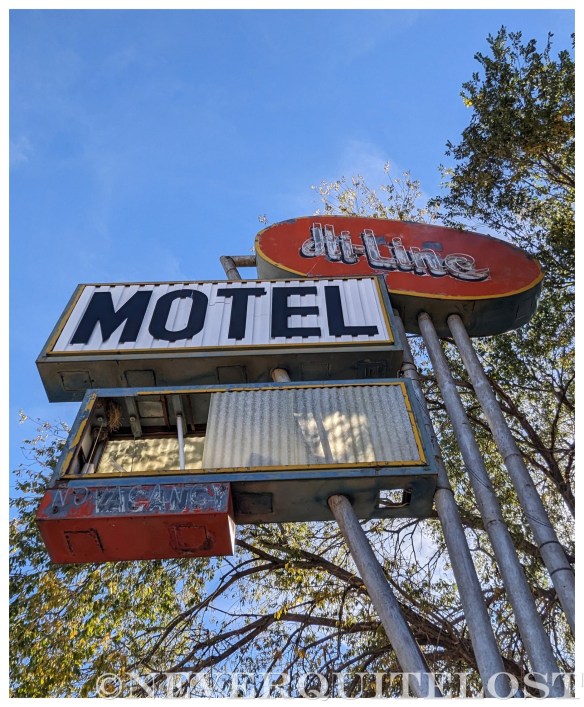
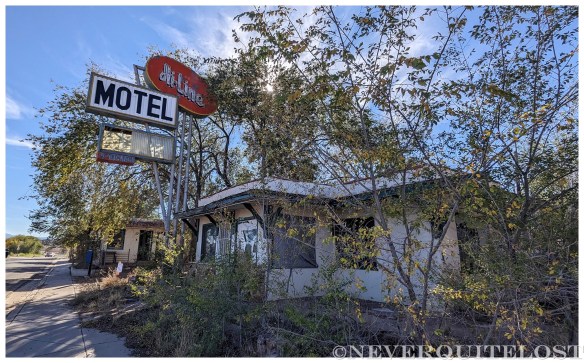
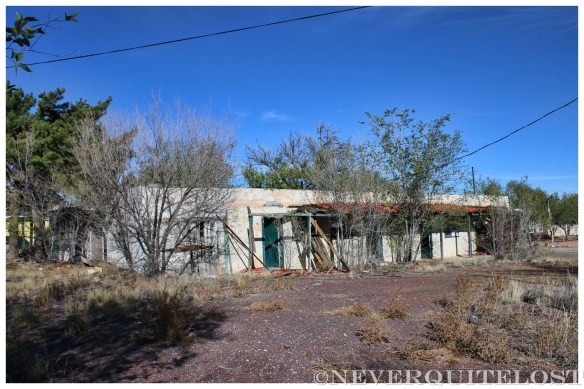
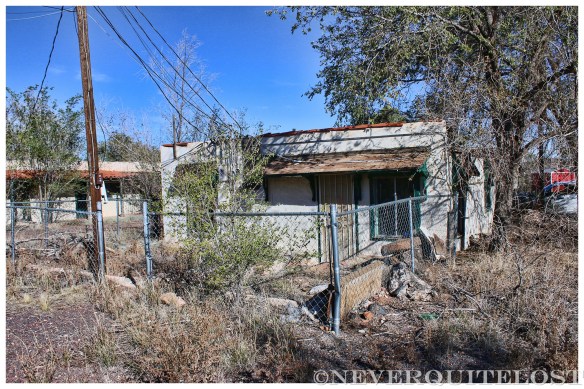
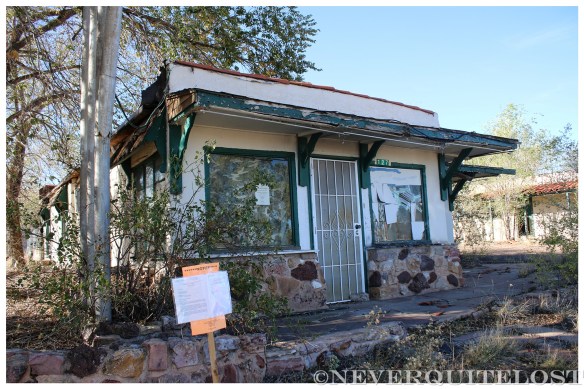
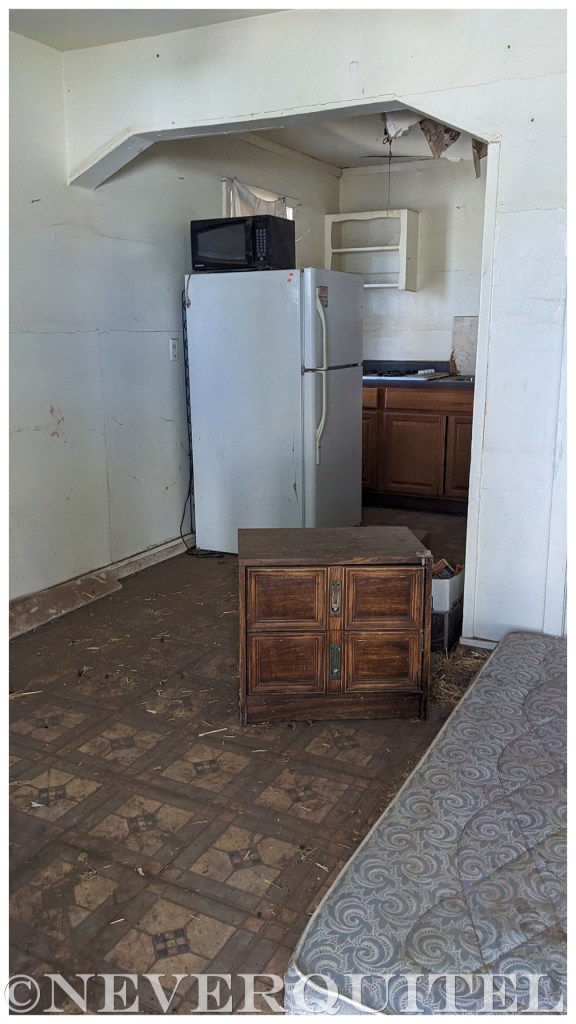
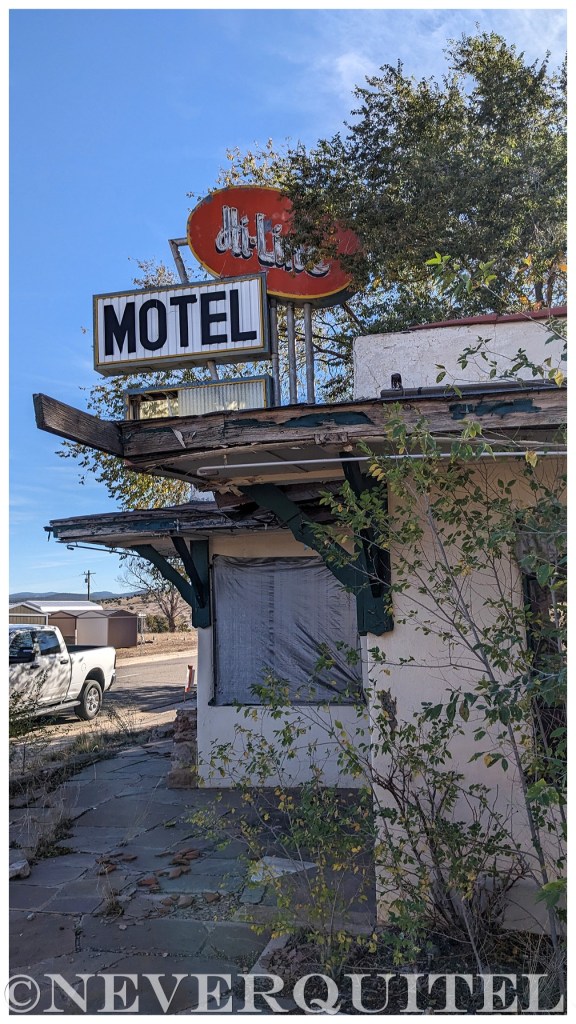
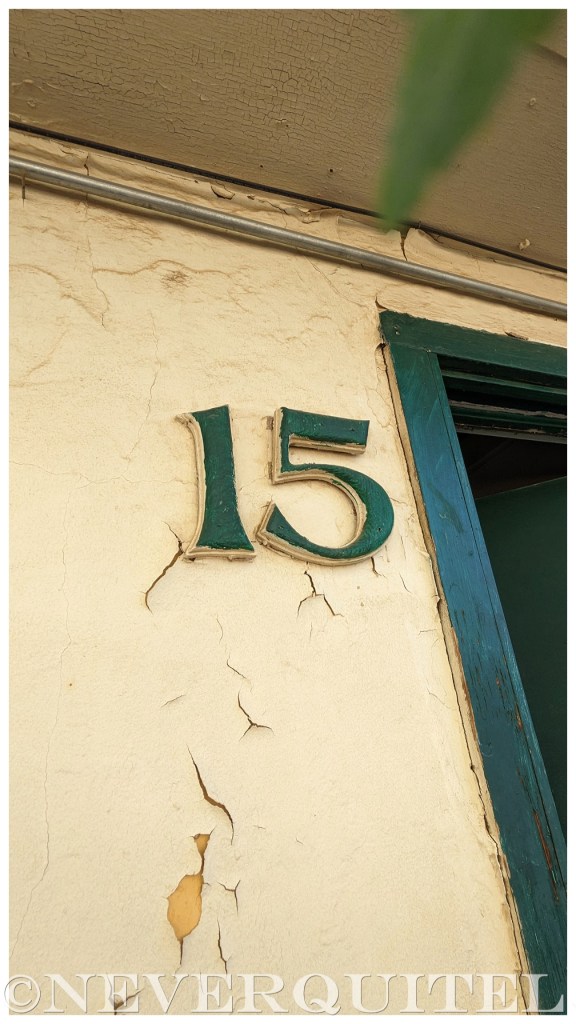
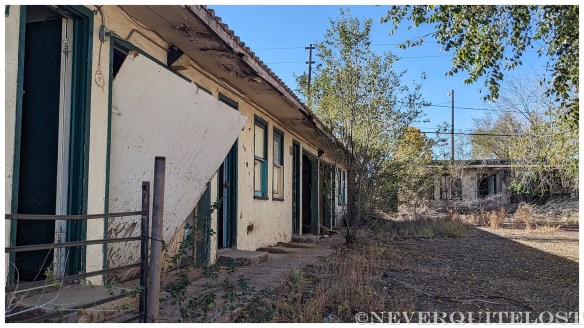
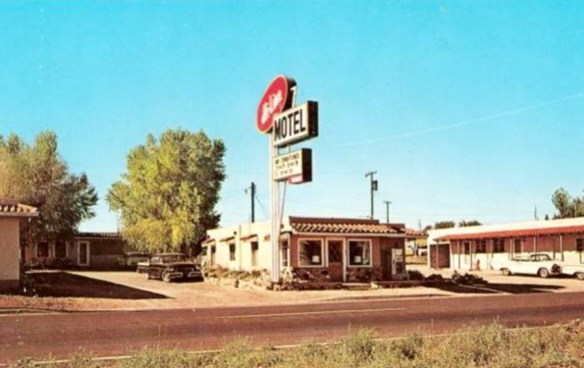
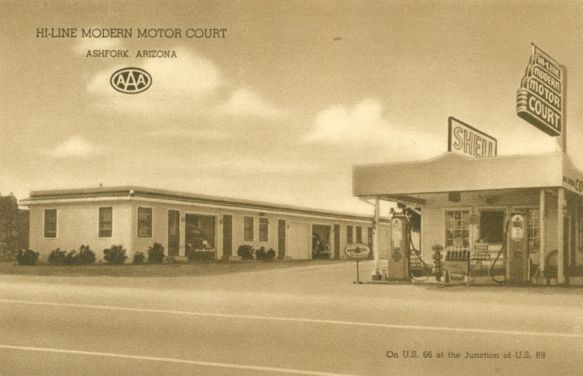
The Hi-Line Motor Court in Ash Fork, Arizona, was opened in around 1936 by a Mr Moore who sold it three years later to Mr and Mrs JR Edwards. In February 1940 they added five new units, each with a kitchenette. Mr Edwards had, apparently, made a thorough study of the tourist business and concluded that there was “a genuine demand” for the type of cabin he was adding.
In the middle of the U-shaped court was a Shell station, which disappeared when the road was widened in the 1950s. Jame Alton and Gladys McAbee took over in the late 1940s and ran it until 1964.
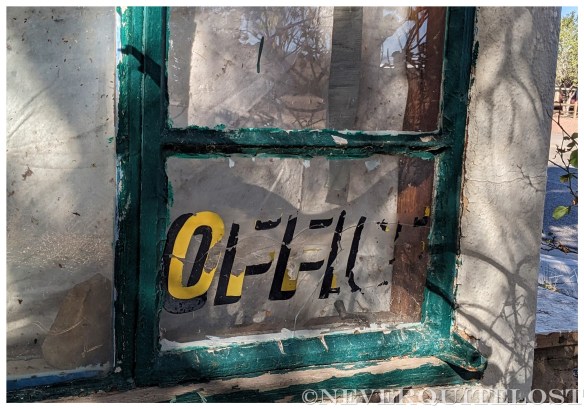
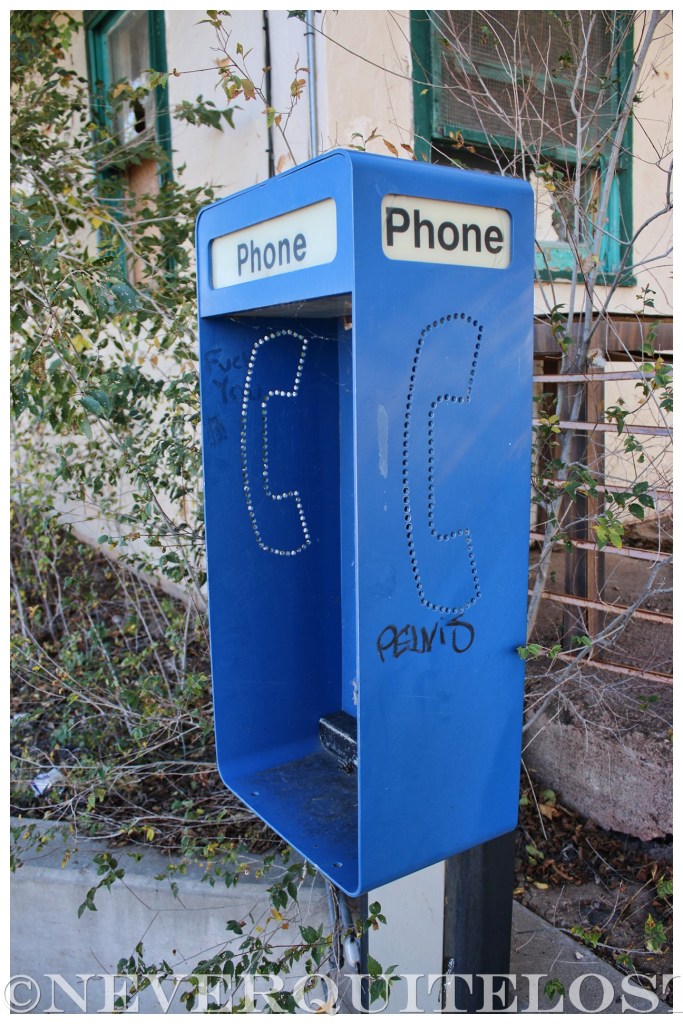
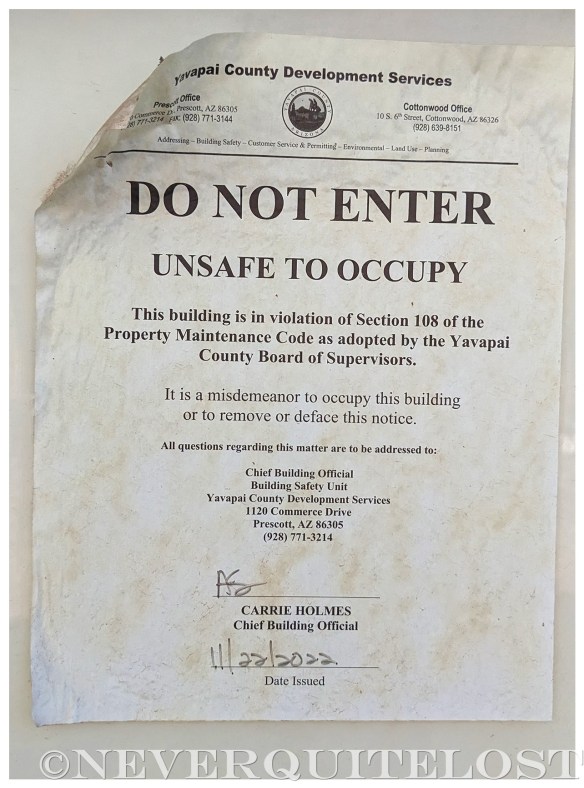
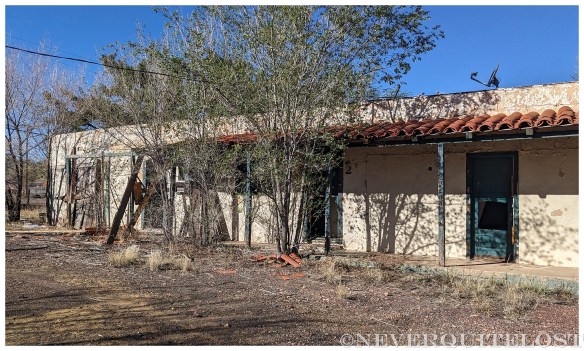
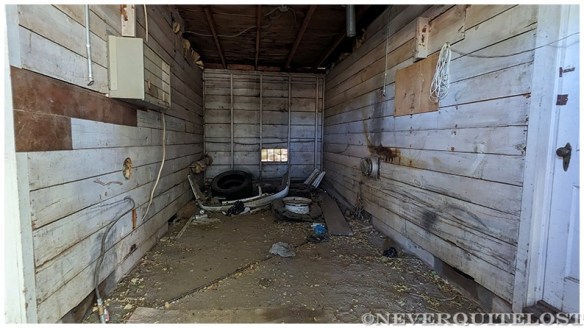
The Hi-Line struggled into the 21st century as long term rentals. Unlike many of its contemporaries it still retained its garages. But around 15 years ago it closed for good and fell into increasing disrepair. In November 2022 it was posted as unsafe for human occupancy.
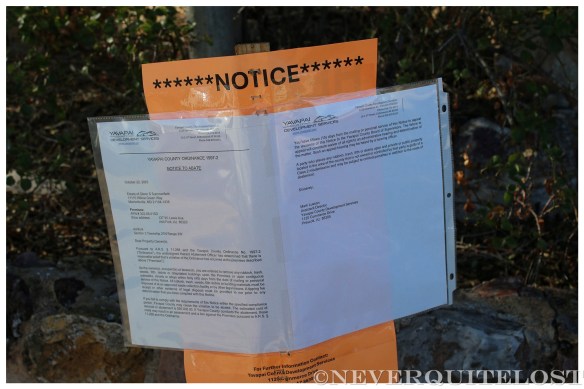
Then, when I stopped by last November, I found that, on October 22, 2025, it had been issued with a Notice to Abate. This raised the stakes for the old motor court. In short, if the owner didn’t make repairs within 40 days, the county had the right to demolish. As the current owner, Glenn Summerfield, had died in August of 2025 it seemed unlikely that would happen, so I stopped to take yet more photos. It was a good call. On December 30, 2025, the oldest motor court in Ash Fork was demolished. The sign has been saved by the excellent Ash Fork Museum.
Alline Alma Patterson Cole. He first name was spelled several different ways by the press of the day, but Alline appears to be the correct version.
It was the afternoon of September 4, 1945, and an Arizona Highway Department workman was working on Route 66, around 16 miles west of Kingman on the road towards Oatman. The previous day he’d noticed a car stuck in a sand wash the previous morning and thought little of it. But when it was still there the following afternoon he reported it to the Sheriff’s office in Kingman.
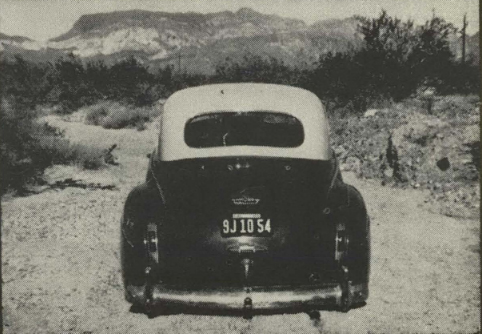
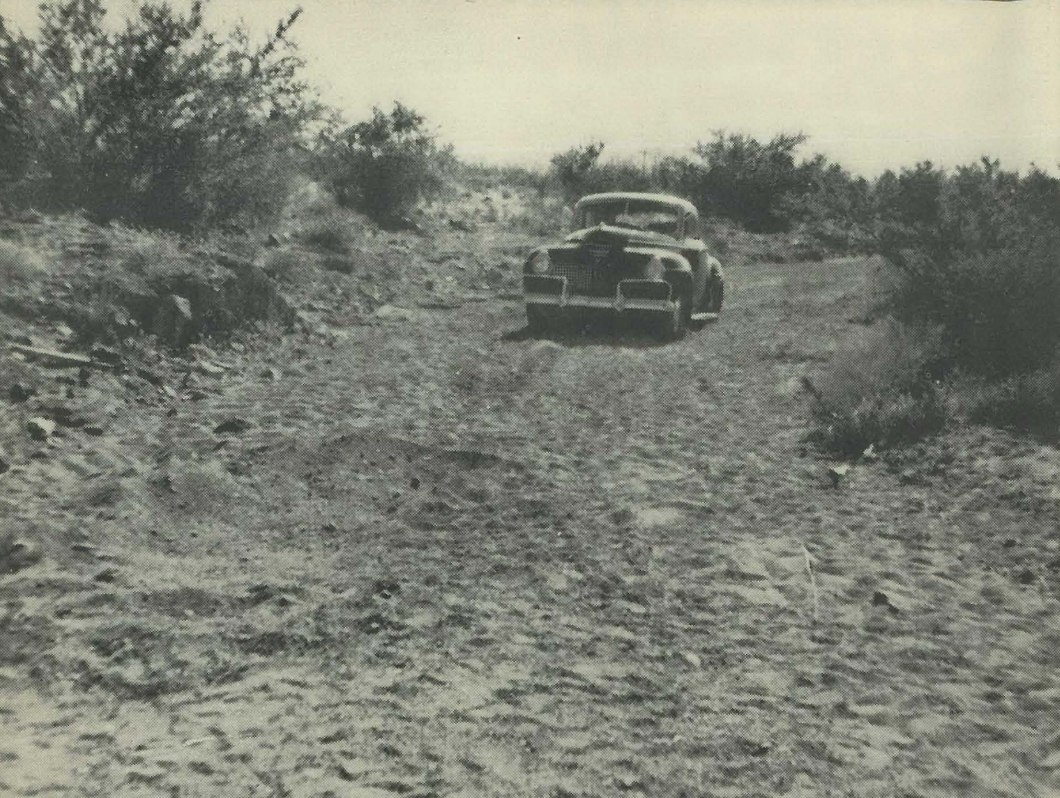
Sheriff Frank L Porter drove out on Highway 66 to inspect the car, expecting nothing more than the misadventure of a traveller. But when he spotted a lady’s black patent leather purse on the rear seat of the 1941 DeSoto Club coupe, he was more concerned – what lady leaves her purse behind? The question was answered a few minutes later when, a few feet in front of the DeSoto, officers spotted a mound of sand – with two fingers protruding from the dirt. They were the ring and left middle finger of a woman, complete with gold wedding band and gold ring with a diamond.
The abandoned DeSoto. In front of it is the grave in which Patterson gave his sister a “Christian burial”.
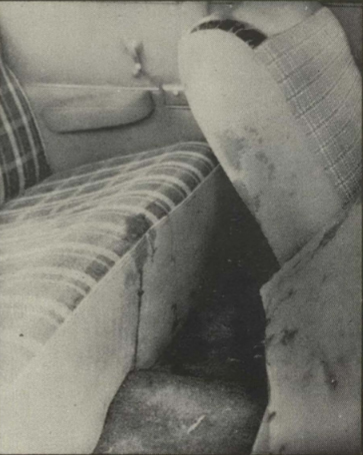
The makeshift grave was revealed to contain a woman of around 30 years of age, about 5 feet six inches in height and around 125lbs in weight. She was wearing blue ladies’ overalls and bobbie socks and had brown hair. Wrapped around her head was a man’s maroon and yellow checkered sports shirt; it was bloodstained, as was the powder blue ladies’ coat that partially covered her and the rear seat and interior of the car. A pair of man’s shoes was also found in the car, the soles covered in oil.
The maroon DeSoto with its tan top was registered to a WM Cole of 1515 East 87th Street in Los Angeles but there was no sign of Mr Cole. The car was filled with cardboard boxes and personal belongings and, from their contents, officers found they belonged to mother of two, Alline Alma Cole, 27. At first, her missing husband came under suspicion – until police found there had been a third person in the car.
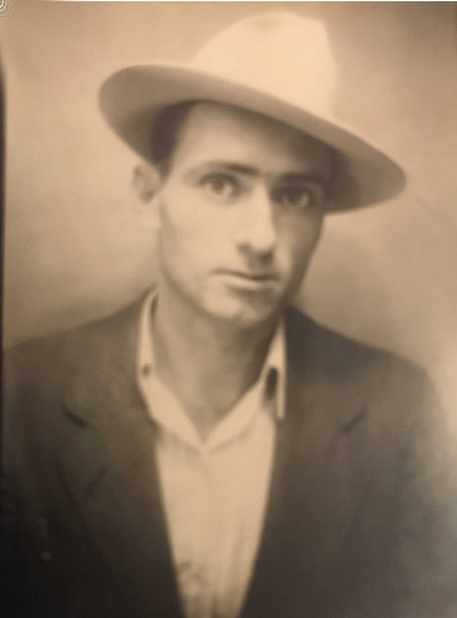
Emmett Edwin Patterson, ex-Marine and murderer.
A small suitcase in the car contained the personal effects – which included divorce papers and letters to a waitress in San Jose, California – of one Emmett Edwin Patterson. Better-known as Ted, Patterson was Mrs Cole’s brother. The Coles had been living in Los Angeles, but had moved in May 1945 to Paris, Texas, where Alline’s family lived and where William Cole owned a dairy farm. In August of that year he had sold the farm and was preparing to move back to California. Patterson hitched a ride with the couple, most likely to see the waitress with whom he had been corresponding.
On the way the trio stopped in Amarillo, Texas, to visit Aline and Ted’s older sister. There William Cole had a new engine fitted in the DeSoto, paying $305.97 in cash for the work. Cole was in the habit of carrying large sums of cash and it was known that he had left Texas with some $7000 (that would be around $126,000 today). One of those who knew this was, it seems, Ted Patterson.
At 1pm on September 1, 1945, the trio left Amarillo, Cole keeping to the instruction of his mechanic to drive not more than 35mph for the first 300 miles and then to keep to under 45mph for the next 300 because of the new motor. With them went their mongrel dog; both the Coles adored the dog and spoiled it – during their stay in Amarillo the dog had refused to eat anything by cooked hamburgers.
At 9.50am on Sunday September 2, 1945, the DeSoto passed through the Agricultural Checking Station on Route 66 in Holbrook, Arizona with William Cole driving, Patterson beside him and Aline and the dog in the rear seat. But after that there was little trace of them.
The police considered the prospect that they had picked up a hitchhiker who had then killed all three of them (a 22-year-old called John Hanson was briefly questioned) but Sheriff Porter was soon convinced that Patterson was responsible for the death of his sister, and possibly for that of his brother-in-law. He and his deputies spent days slowly driving along Highway 66, looking for oil and also for a peculiar type of dark-coloured sand known as ‘Job’s Tears’ which had been thrown on the floor of the DeSoto to absorb Alline’s blood.
Sheriff Porter then worked out that the DeSoto had covered some 303 miles since Holbrook and surmised that would be 150 to a point and back, making it likely the murder had taken place in California. His men searched Route 66 from the point where the DeSoto was abandoned, westwards into California, only returning to Kingman when darkness fell.
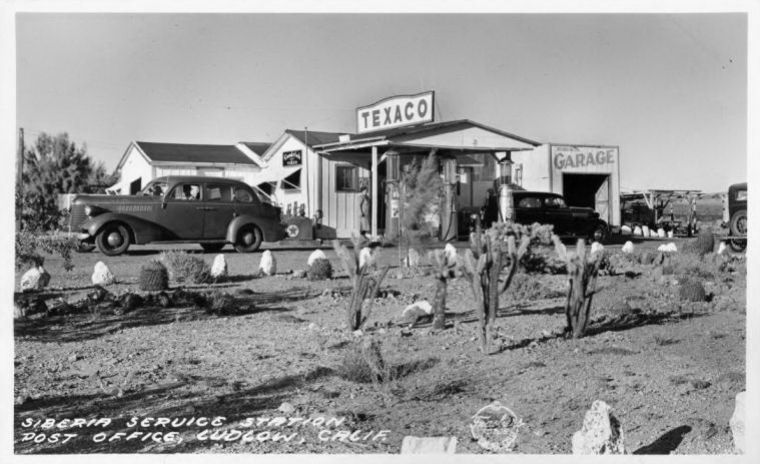
It was not the sheriff’s deputies who found William Cole’s body, but some tourists who, on September 29, had stopped at the side of the highway near Siberia for the night. They let their dog out of their car, only for Fido to return a few minutes later with a man’s legbone. The clothing found on the skeleton matched the last known description of William Cole and, proving Sheriff Cole’s distance theory, he was found 140 miles from where his wife had been buried (and some 15 miles from where the deputies had had to curtail their search).
Near the body was a large bloodstained rock which had been used to crush Cole’s skull. Also found were matches with a green head and red tip, identical to those found in the DeSoto. Just $6.48 was found on William Cole. All that was missing now was Ted Patterson – and the $7000.
Ted Patterson was two years older than his sister and, like her, had grown up on a farm in Paris, Texas. At the age of 21 he had joined the Marines but, by 1940, he was back in Paris Texas, working as a machine operator and married to Laura Jones who he had wed in February 1938. The union would produce two children but end in divorce – papers found in the car showed that Emmett was desperately short of money, now an itinerant taxi driver, and had not been providing for his kids.
On October 13, 1945, came the news that Patterson had been arrested by a Union Pacific railroad officer near Kelso, California, after having been found sleeping in a sand bed near the tracks. Kelso is only a few miles from Siberia, but around 120 miles from where the DeSoto had been abandoned. Why would he have retraced his steps to where he killed William Cole? The simple answer is, he didn’t. The man in the sand bed wasn’t Emmett Edwin Patterson.
Ted Patterson might well have gone undiscovered had it not been for his temper and his weaknesses for waitresses. It turned out that he had travelled to Hot Springs, Arkansas (how is unknown) where he had taken a job on a dairy farm under the name of Tom Morton. While delivering milk to a café in Hot Springs, he met a waitress and took her to a party on New Year’s Eve, 1945. They both got drunk, had a row, Patterson hit the girl and broke her jaw. She had him arrested the following day, but his luck held. He wasn’t fingerprinted and so his real identity wasn’t revealed. It was only in February 1946 that a sharp-eyed Hot Springs policemen looked through the wanted circulars and spotted the photo of a man wanted by the Sheriffs of Mohave and San Bernadino counties. On March 1, 1946, Emmett Patterson was arrested and taken to California to be tried.
When his trial began on July 16, 1946, in San Bernadino, Patterson had a story. He claimed that the trio had stopped by the side of the road in Siberia (although it was known by relatives that the Coles were afraid of sleeping by the roadside). He had been asleep when he had heard the dog barking and woke to find Cole, gun in hand, beating his wife. Despite claiming he was scared of his brother-in-law, Patterson leapt to his sister’s defence, picking up a rock and beating Cole to death with it, as well as throttling him. However, the trial testimony brought out the fact that Cole was a small man, 20 years older than the ex-Marine, and had suffered from tuberculosis. Moreover, relatives said that Cole not only didn’t like Patterson, but was indeed scared of him.
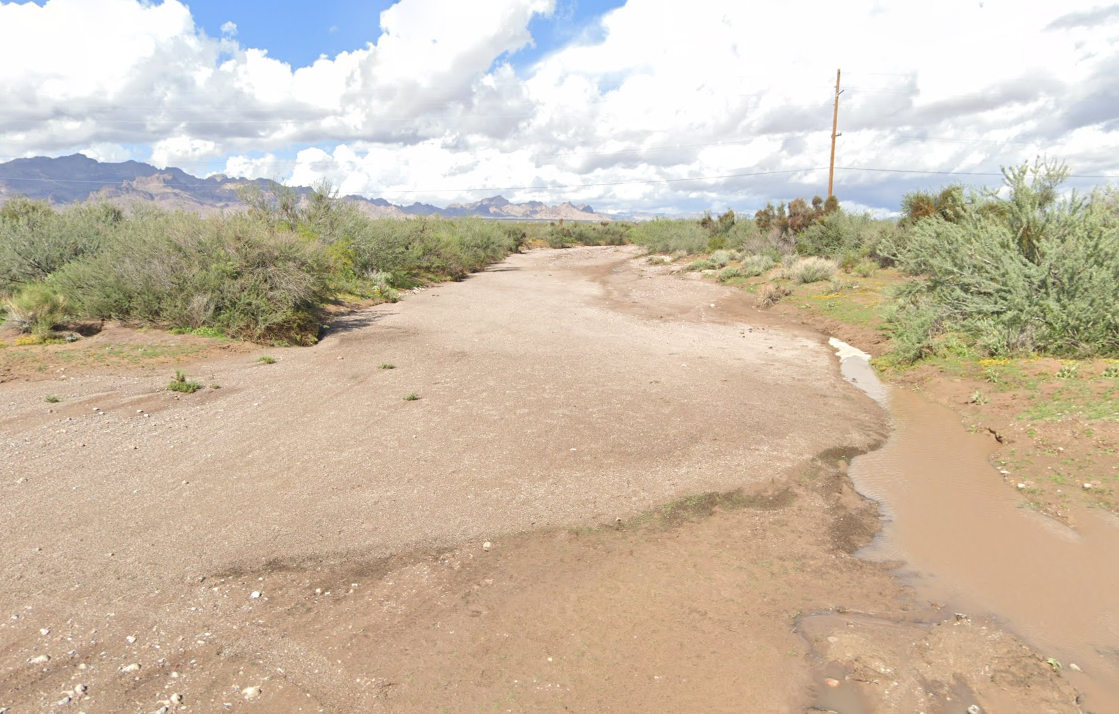
Patterson stuck to his story, insisting that he then had put his sister in Cole’s DeSoto, planning to take her to hospital in Kingman but, just eight miles later, had found she was dead. So, letting the dog off its leash (the dog was never seen again) he said, he intended to take Alline back home to Paris, Texas, until he realised that having a dead body in the car would invite awkward questions at the Kingman inspection station. Instead, he stopped at Ed’s Camp between Oatman and Kingman, being careful to park the car a hundred yards east of the entrance and spent the day there. After dark he headed east but then stopped at 17 Mile Wash where he buried Alline, saying he had given her a “Christian burial”.
Perhaps it was this last element that helped him escape the death penalty for which the prosecution had asked. But the jury took just minutes to declare him guilty of two counts of first-degree murder and recommend life imprisonment.
Emmett Edwin Patterson served 17 years in San Quentin. He was paroled in April 1963 to Humboldt County where he died in September 1988. Alline never got back to Paris, Texas; she and her husband are buried in the Mountain View Cemetery in Kingman where, as a last insult, the gravestone lists the wrong year of birth.
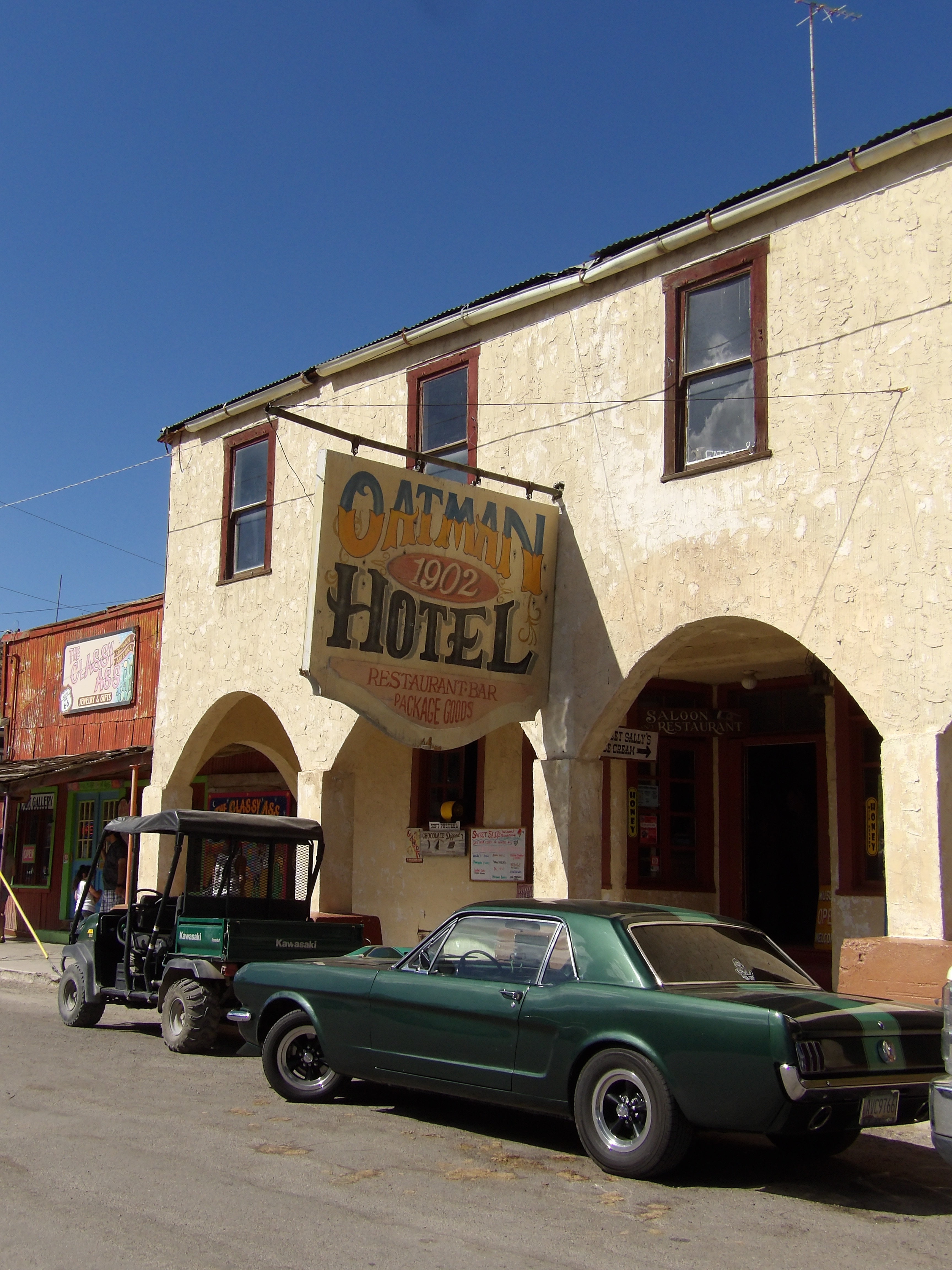
One of the most enduring stories on Route 66 is that film stars Clark Gable and Carole Lombard spent their honeymoon at the Oatman Hotel in Oatman, Arizona. Mention Oatman and this so-called fact will be trotted out. There’s just one problem.
It never happened.
Despite the hotel still having the ‘Gable and Lombard honeymoon suite’ on display, despite town even having produced commemorative postcards in the past, despite hundreds of tourists insisting the story is true, it isn’t. It seems that it was a novel piece of flummery on the part of a past hotelier to bring in more business to his establishment and his town, although it’s uncertain when the story was concocted.
On March 28, 1939, Clark Gable was filming scenes for ‘Gone With The Wind’ when he discovered he wouldn’t be needed on set the next day. Rather than a relaxing day at the ranch he and Carole Lombard had bought in Encino, California, he telephoned Carole and suggested they elope. The pair had been seeing each other for three years, but the relationship had only been made public in 1938 when Gable’s divorce to his previous wife, Houston socialite Maria Langham, was finalised.
They drove through the night with Otto Winkler, an MGM publicist, whose main contribution to the trip was that he had a new car without license plates, allowing the trio to travel without being spotted by press and fans.
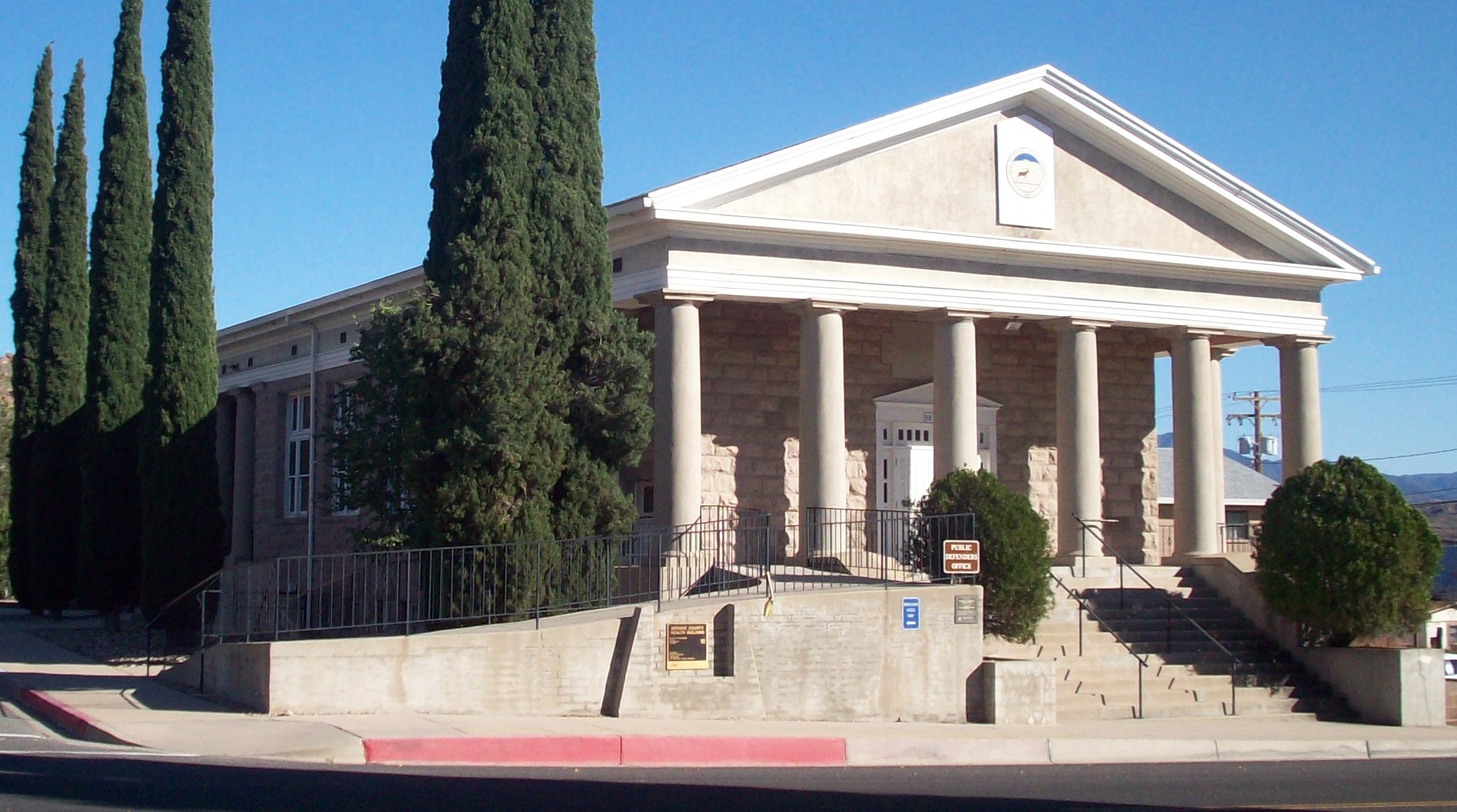
St John’s Methodist Church in Kingman, now the Public Defender’s Office.
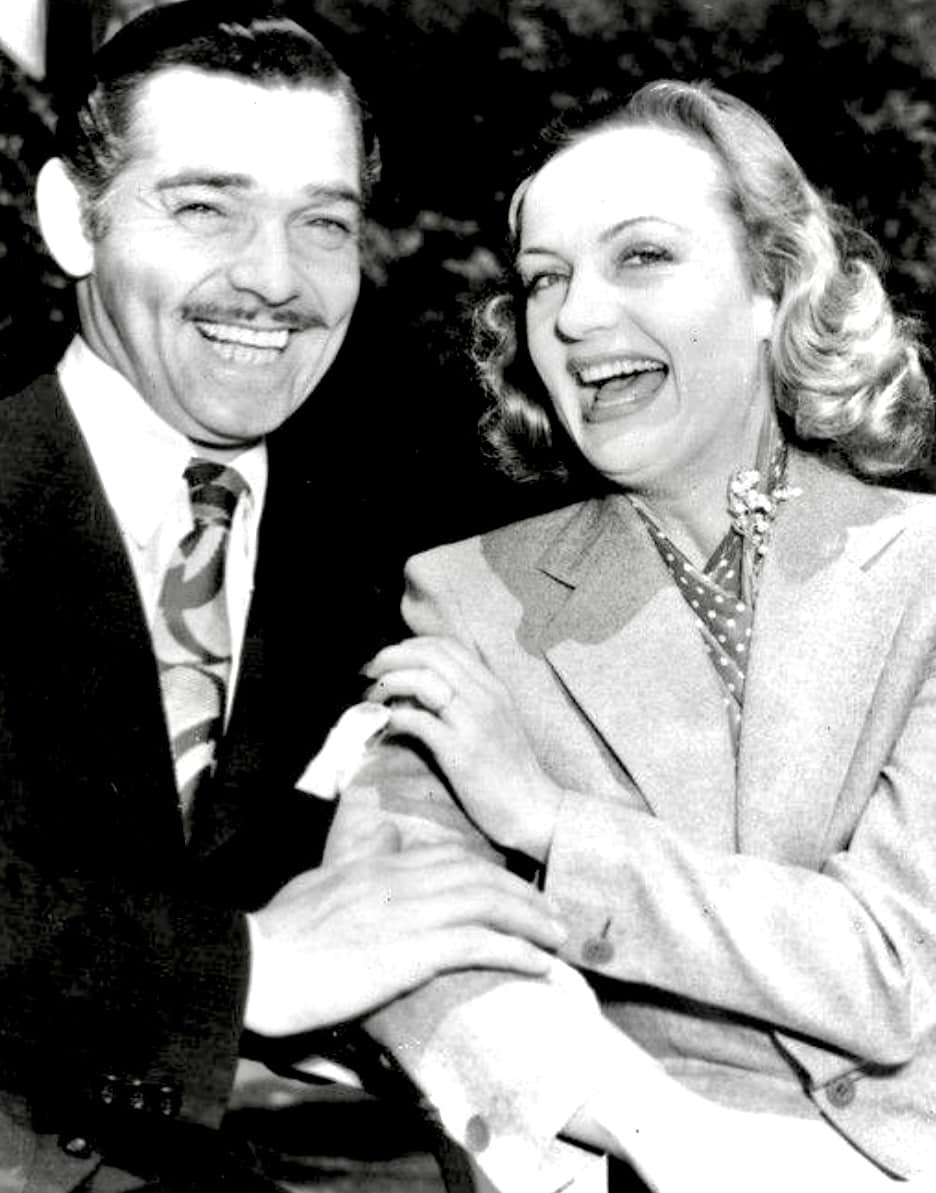
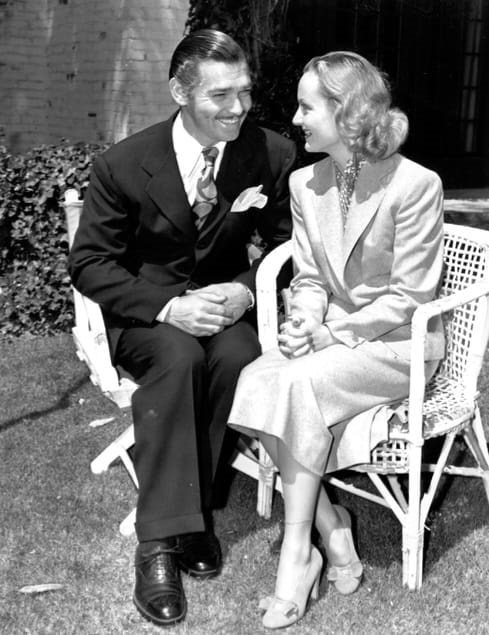
The afternoon of March 29, 1939, was a typically uneventful afternoon for Kingman court clerk Viola Olsen – until two of the most famous stars in the world appeared in her office. “I’d like to get a marriage license,” Viola reported Gable as saying. Then he asked who could marry them. A breathless Viola recommended the Reverend Kenneth Engle, the pastor of Saint John’s Methodist Episcopal Church on North 5th Street. The pastor recruited his wife and his neighbour, Howard Cate, the high school principal, as witnesses and half an hour later Gable and Lombard were man and wife. Clark wore a blue suit with a white shirt and a patterned tie, while Lombard was dressed in a dove-grey flannel suit made by the designer Irene, along with a polka dot blouse.
Sources vary as to what time the pair were married. Newspapers reported that it was ‘dusk’ when the pair walked into Viola Olsen’s office, others that it was ‘just after 4pm’, while Gable himself later said it was 3.30pm (although bear in mind that the clocks would only just have changed in California) and Lombard’s mother said that newly-weds telephoned her from Reverend Engle’s study at 6.15pm. Regardless of these various times, it’s clear that Lombard and Gable were married in the late afternoon in Kingman.
So, was it straight off to Oatman for their honeymoon? No. Howard Cate would say that the couple were heading for Boulder City, Nevada, but it seems that this was a ploy to throw off any press on their trail. The pair and Otto Winkler set off for Carole’s home on St Cloud Road in Bel Air and arrived there at 3am. That trip today would take you at least five hours but this was 1939; the I-40 interstate was years in the future and it would be the often rough and slow Route 66 all the way. It seems that the Gables set off almost immediately after the wedding and stopped only for gas at Daggett along the way (and possibly food in Needles).
The happy newly-weds.
The next morning they woke at 9am to find reporters and photographers camped outside the house and a press conference was held on the lawn of Carole’s house at around midday. However much you would like the story of the Oatman honeymoon to be true, it would simply be impossible. The pair left Kingman and were home in Los Angeles, some 315 miles of rough road away, ten hours later. No stop in Oatman, no honeymoon.
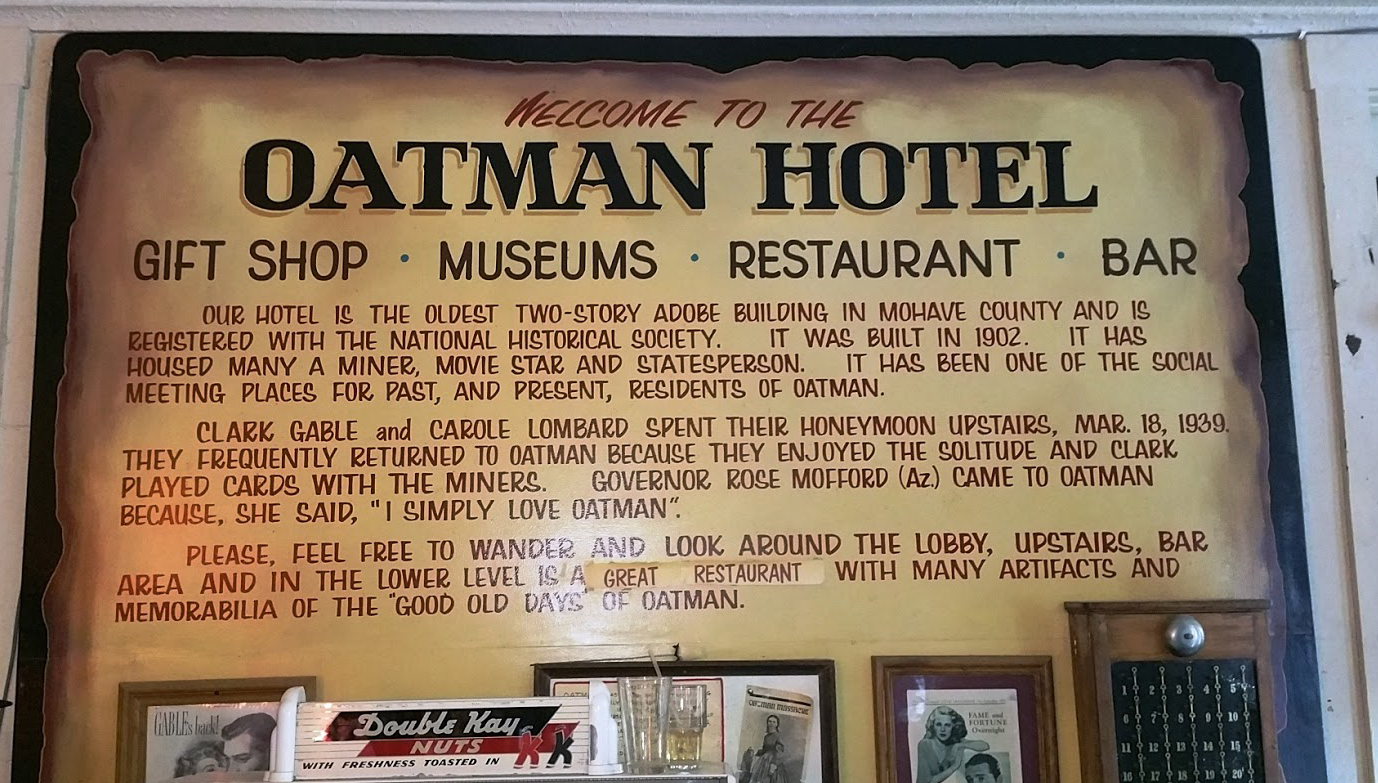
But that hasn’t stopped the legend rumbling on – and despite that both the Oatman Hotel and an ‘anniversary’ postcard of 1989 cite the date of the marriage as March 18, 1939, some eleven days before it actually took place.
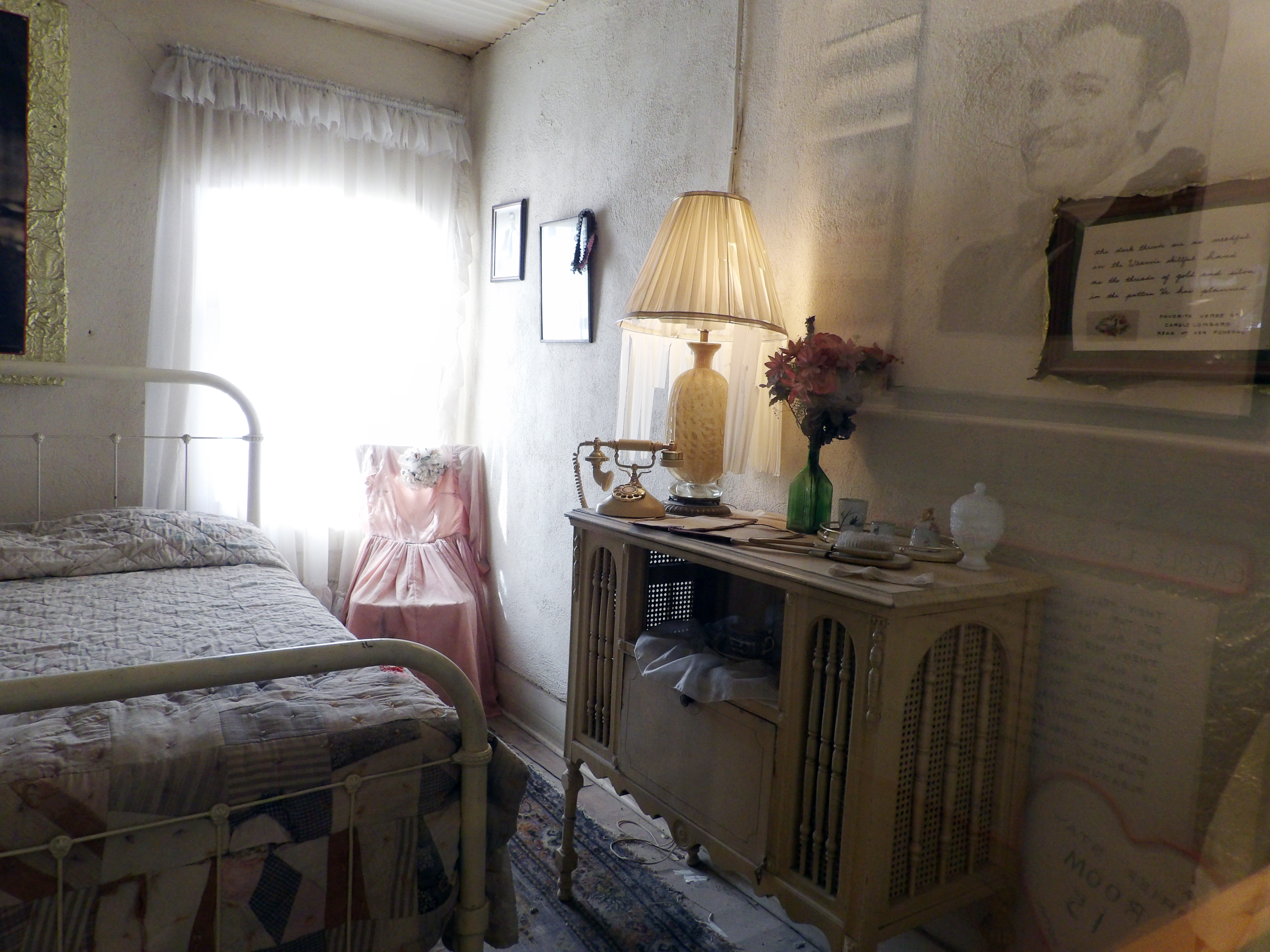
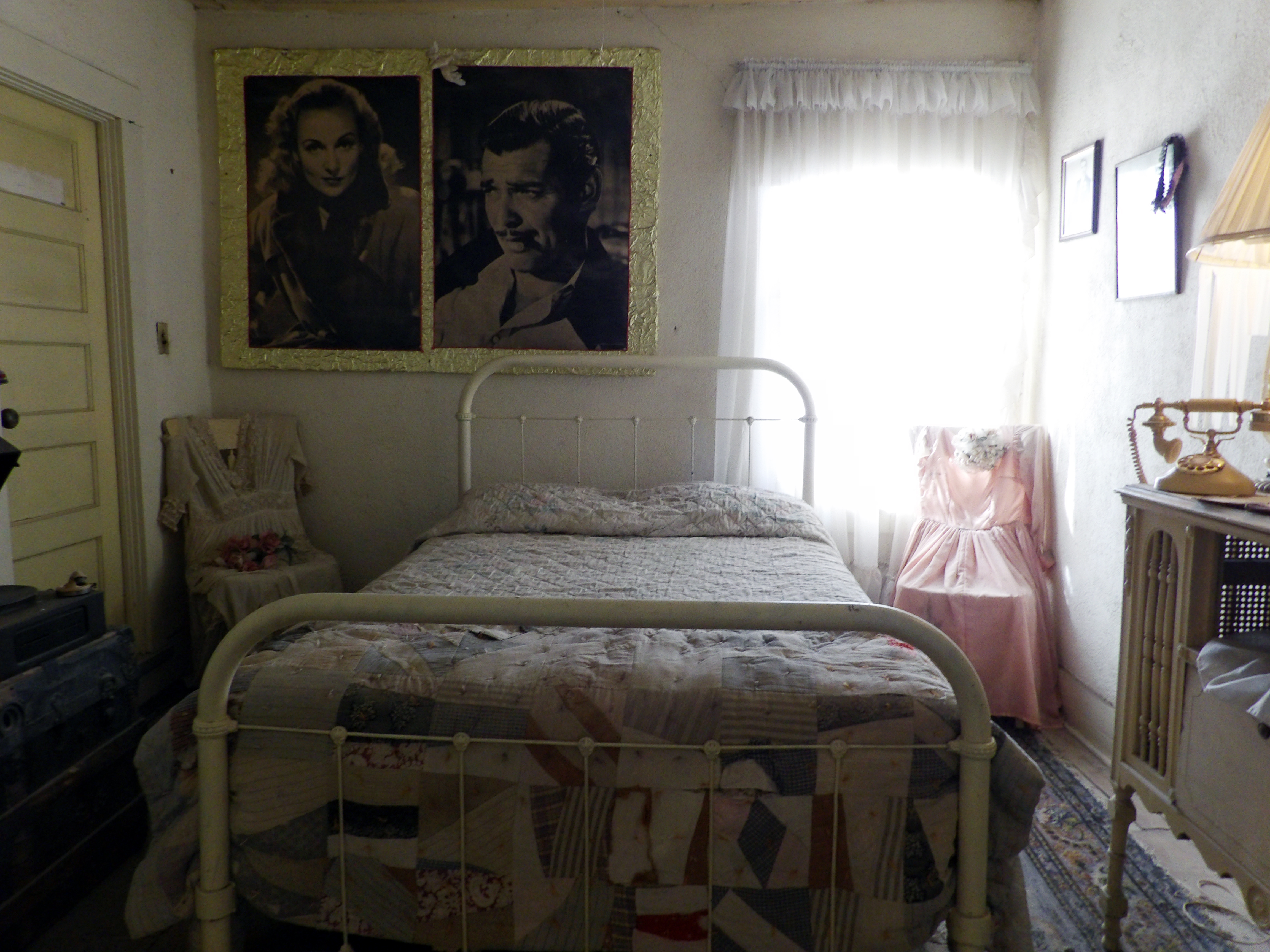
The ‘honeymoon suite’ in the hotel is just hokum. On one chair is, supposedly, Lombard’s wedding gown, a flouncy white affair rather than the tailored grey suit she wore. On the other chair is ‘Lombard’s night gown’. Except it’s pink and, according to Lombard expert Carole Sampeck of the Carole Lombard Archive, ‘Carole never wore pink around Clark (much less a nightgown!) – he loathed that color’.
A board which hangs in the Oatman Motel – note the incorrect date of the marriage. The pink nightgown that Lombard would never have worn.
The dream marriage was all too short. Travelling back from a war bond rally in Indiana, Lombard decided to fly (rumour has it she felt Gable had a wandering eye when she was away). She, her mother and Otto Winkler took TWA Flight 3. Just after 7am the airplane crashed into Double Up Peak southwest of Las Vegas. Everyone aboard was killed.
The so-called honeymoon suite.
But the myth of the Oatman honeymoon still continues, romance triumphing over truth.
Clark Gable and Carole Lombard in Los Angeles, just hours after their marriage.
Although Herbert Wayne Copeland’s name appears on the Texola stone, he never graduated.
Herbert was born on January 9, 1921, to Herbert and Zetta Louise Copeland. The middle child of three. His sister Billie Frances was just over two years old and his little brother, Bobby Gene, was born in February 1930. Until the age of 7 he grew up in Thomas, Oklahoma, and then the family moved to Texola when he enrolled in school. A good student, he had a near-perfect attendance record and scored As in Oklahoma history, algebra and general science. In his first two years at Texola High he received the silver cups offered as rewards for highest scholarship and was elected class vice-president.
One June Saturday night in 1937, Herbert and his cousin Lonnie joined two girls from Sayre, Opal Hammons and Laverne Avant, in a trip to a midnight movie in Sayre, Oklahoma. Ernie Bartlett – Ruby’s brother – was driving a 1936 Ford V-8 as the five young people travelled along Route 66.
Opal Hammons and Laverne Avant who were killed alongside Herbert Copeland.
At about 10.10pm, six miles east of Erick, their car collided head on with another driven by 24-year-old Alfred Eugene ‘Gene’ Still Harmon, the new assistant manager of Harrell’s Variety store in Sayre, who’d been married just four months. It was believed both cars were travelling at high speed, both in the middle of the road. The impact was colossal, destroying both automobiles. Harmon, Herbert and the girls were killed instantly. A passing motorist found Ernie and Lonnie still alive, but they died a few hours later in hospital.
A joint funeral was held for the cousins, Herbert and Lonnie. Among the pall bearers were Wintha Doss, his brother Basil, Austin Rose, Junior Hass and Jack Loftis. That Herbert’s name appears on the stone is surely an indication of the affection in which he was held by his schoolmates. The following December, Billie Frances Copeland married Basil Doss.
JOHNNIE McSPADDEN
Johnnie McSpadden at the time of her graduation.
Johnnie McSpadden was born in Arkansas on December 5, 1918, the second daughter of Aaron and Flossie McSpadden. The McSpadden children were well-spaced out; Johnnie’s sister Janice was five years her senior while her brother Roe Owen was six years younger. When the McSpaddens moved to Oklahoma they rented farmland some five miles out of Texola with Aaron’s brother. This meant Johnnie and her cousins, Nona and Mirl, had a ten-mile round walk each day to get to school; they rarely missed a day. (Incidentally, Nona would marry Hugh Manuel Hass in 1939 and become Junior Hass’s stepmother.)
Johnnie with her first husband, Bernard Burford, who was killed when his Liberator crashed in New Mexico. Johnnie was widowed at 25 with a one-year-old son.
After graduation Johnnie married flying cadet Bernard Phillip Burford on April 26, 1942 and they had a son, Garon, in September 1943. In September 1944, Staff Sergeant Burford had been on furlough to see his parents in Clovis and was on his way back to camp in Tucson where Johnnie and Garon were waiting. His Liberator bomber crashed while trying to land at an army airbase at Alamogordo, New Mexico. He was just 26; his son had just turned a year old four days earlier.
Johnnie and baby Garon moved back with her parents until 1950 when she married again in May of that year, this time to Horace Hodnett who had served in the Pacific but was now a dairy salesman. They had a son, Kenneth, born on February 22, 1952. Then, three days before Christmas 1952, 43-year-old Horace died
Johnnie’s second husband Horace, with whom she had a son, Kenneth. Horace died suddenly when Kenneth was two years old.
suddenly of a heart attack, leaving Johnnie widowed for the second time and with two small boys, one less than a year old.
In October 1962, Johnnie married for the third time, this time to Sam Davis Moore, and their daughter Janita Gaye was born in 1964. Sadly, Johnnie was widowed again in 1972, and there was still more sadness when her son Kenneth died in 1982, just one day short of exactly 30 years from his father’s death. But between her family and that of Sam’s, she got to meet 20 grandchildren and 14 great grandchildren before she passed away on January 16, 1996.
Johnnie with her sons, Garon on the right and Kenneth on the left.
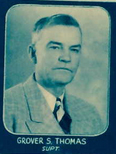
GROVER S THOMAS
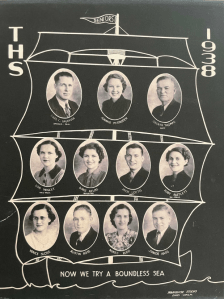
Although the Superintendent was listed as Grover S Thomas, his full name was actually Solon Grover Thomas. He was born in Collin, Texas, on February 16, 1885 and moved to Sentinel, Oklahoma, in 1899. At the age of 24 he began teaching school and, in May 1914 married his sweetheart, Montie Roland, who was also from Collin. In 1919 he was appointed as County Superintendent, a post he served in until 1925 when he stood for election to the state senator. He would serve as the senator representing Custer, Kiowa and Washita counties for three consecutive terms while also owning a grocery store in Cordell.
Grover Thomas, a man who named his twin sons Okla and Homa!
Grover and Montie had four sons, beginning with twins born on March 21, 1915. Perhaps Grover was inordinately proud of his adopted state, or maybe he had a refined sense of humour, because he named the boys Okla and Homa. Their younger siblings, Travis Spurgeon and Solon Grover got off a little lighter (although one has to wonder if he hated his first name so much that he went through life using his middle name, why he saddled his youngest son with the name Solon).
After he failed to be elected for a fourth term in November 1936, Grover Thomas returned to teaching and became the Superintendent of Texola High School. He and Montie rented a house – possibly one tied to the school as it cost them just $8 a month, hardly anything of his $1800 a year salary. In 1941 he moved to take the same position (as well as teaching Mathematics) at Highway School near Elk City.
Grover and Montie would then move back to Oklahoma City, to a house on NE 23rd Street within sight of the state capitol. There Grover suffered a paralysing stroke and passed away on December 12, 1944, just short of his 60th birthday.
Several mysteries remain. I couldn’t track down who Charles C Vaughn, the ‘Sponsor’ of the Class of 38 was, nor do I know why a couple of names appears who were no in the graduating class that year. But the biggest mystery is just who created this stone and when. If I had to guess, I’d say George Blair, but the truth is, I just don’t know.
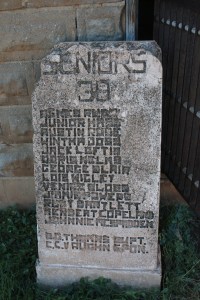
The ‘Seniors 38’ stone outside the one-room jail in Texola.
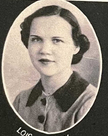
LOIS WIGLEY
Lois Wigley was born on June 23, 1919, to Thadeus Park and Ollie Wigley, two years after her brother Robert. She was known as ‘Kitten’ from a young age and was active in school activities, especially those involving performing. Before enrolling at Texola High School, she was educated at Erick High School where, in 1935, she was Point Secretary of X-Mu, a society for students with a B average; Parliamentarian of the Rainbow Club; President of the Dinner Bell Club; founder of the Coo Coo Club and a member of the Glee Club. Texola might have seems a little dull after that!
Lois Wigley
Just days after graduating she married Gerald Bibb on October 18, 1938. Gerald had been at school in Sayre and been as active as his bride – he’d been the President of his senior class and a schout master. After graduation he had intended to attend the Cincinnati College of Mortuary Science and become an undertaker. But the couple stayed in Sayre after their marriage with Gerald first managing a gas station and then owning and operating Bibb Ditching and Constriction Company. They had two children, Bobby Gerald, born on August 27, 1940, and Kenneth ‘Kenney’ Thad on July 11, 1943. Gerald enlisted in the US Army in February 1944 and served for two years. An accomplished pilot, he was instrumental in developing the Sayre Municipal airport and had served as a Trustee of the Airport Commission. ‘Kitten’ died on August 28, 1992.
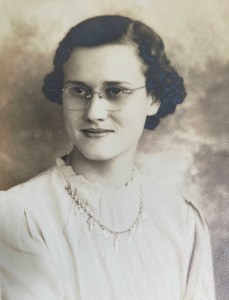
VENICE SLOSS
Venice Sloss was born on January 9, 1917, to George Benson ‘GB’ and Laura Sloss in Shamrock, Texas. She married a mechanic called Robert Lee Wright on July 27, 1940, and they had four children, three daughters and a son. But the marriage ended in divorce in October 1969. Robert Lee remarried, this time to Ruth Henry, but died of stomach cancer in 1977. Venice moved to Amarillo where her youngest daughter Ethel Elizabeth lived, and spent her later years quilting, crocheting, gardening and being a grandmother and great grandmother. She died on February 22, 2008 having outlived two of her children, Rovena who died in 2004 and Doiel Wayne who passed away in 2005.
Venice Sloss
JIMMIE POWERS
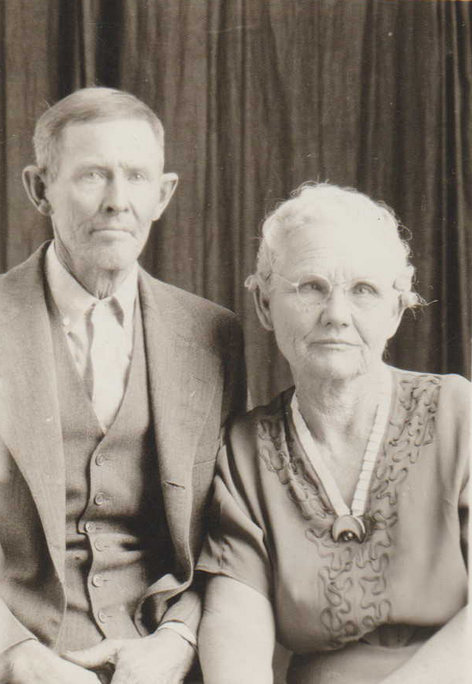
Jimmie Arnold Powers was born to James Andrew and Minnie Belle Powers in Heavener, Oklahoma, on October 7, 1919, the youngest of ten. His father was a farmer and several of his older brothers worked on the farm.
Jimmie’s parents, James and Minnie Powers.
When Jimmie was just seven, the family was devastated by an appalling tragedy; Jimmie’s oldest brother William Walter ‘Bud’ had gone off to be a fireman on the railroad. On September 18, 1927, while he was acting as fireman on a Kansas City Southern freight train, the boiler of engine number 710 exploded near Marble City, Oklahoma. Bud suffered terrible injuries and died the following morning while the locomotive’s engineer lingered another week; both men were from Heavener. 27-year-old Bud left a wife and a seven-year-old son, LD Eugene. (In a horrible twist of fate, LD was killed while acting as tailgunner on the B-29 ‘Devil May Care’ which was shot down over Siam in 1944. He had just turned 25.
Jimmie Powers
Jimmie actually graduated in 1939, a year after most of the others on the stone, which seems to indicate that this was a group of friends rather than the actual class.
Like his nephew, Jimmie too would enlist and served in the army for over four years, finally being demobbed on August 29, 1945. He married Katherine McManamon and they lived in Ohio where he worked as a wire salesman before moving to California. He would marry again in 1979 and died on May 12, 1985.
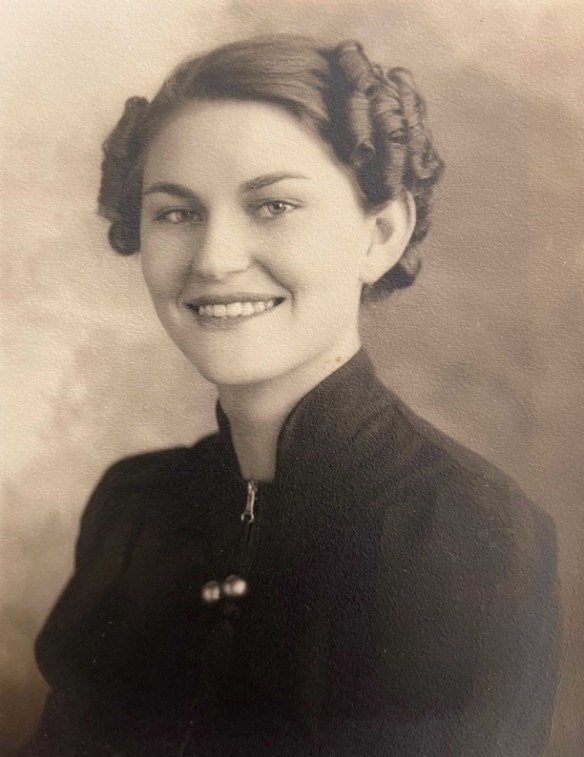
RUBY BARTLETT
Ruby Ellen Bartlett was born on May 4, 1920, in Texola to Luther and Stella Bartlett.
In 1935 she was a member of the nearly formed Texola High School girls’ Glee Club, along with fellow class members, Johnnie McSpadden and Doris Nelms. The same year, she was one of 15 Texola freshmen who made a two-day trip to Oklahoma City (others included Doris Nelms, George Blair, Wintha Doss and Herbert Copeland). It seems that only the star pupils of the school were selected for the trip in which they stayed at the Skirvin Hotel and visited some of Oklahoma’s important institutions and industries. Later that year she was picked to be one of the school’s librarians and, along with Jack Loftis and Lois Wigley, was in the Senior class play (it was called ‘George in a Jam’ and was billed as ‘a three-act comedy that will keep the audience in an uproar from the rising of the curtain’).
The youngest of Stella and Luther’s four children, she had three older brothers, but was closest in age to Ernest. He was just three years her senior and it must have been devastating when Ernest was killed in a car crash when Ruby was 17.
Ruby Bartlett at the time of her graduation.
In 1939 Ruby went to the Southwestern College of Diversified Occupations, but in November her father Luther died suddenly from a single shot from a .22 calibre rifle. The coroner adjusted that it had been an accident, Luther having grabbed his rifle by the barrel from his wagon and the trigger catching on something.
On August 30, 1941, in a dress of royal blue velvet with a bouquet of pink rosebuds and to the accompaniment of violin and accordion music, she married George Benson ‘GB’ Sloss Jr of Shamrock, Texas. If that name sounds familiar it’s because GB was the brother of Ruby’s classmate, Venice Sloss.
Ruby and her husband GB Sloss who graduated from Texola High School in 1939.
Wedded life was put on hold when GB joined the 313th Engineers Combat Battalion in 1943 and went off to Italy as part of the 5th Army. He would not return to Texola until November 1945. GB and Ruby settled down to a life ranching, raising pigs and growing alfalfa and peaches, although she continued to be an active member of the community, helping in the First Baptist church of Texola and being a member of the Bulo Home Demonstration Club. Their first child, David, was born on October 25, 1946, followed by a daughter, Martha.
Ruby Bartlett
Stella had signed the farm over to her daughter shortly after Ruby was married, living with the newlyweds but, on December 19, 1953, GB sold off everything on the farm, from the livestock to machinery to a lot of canned goods. Just a month before, the family had moved to Modesto, California, where GB had taken up a job with a food processing company. Whatever the reasons, the move didn’t work out and GB, Ruby and children were back in Texola less than a year later. They then moved to Shamrock, although Stella stayed in Texola.
In 1966 David joined the US Air Force and went on to train as a munitions specialist. He was assigned to an airbase in Okinawa, Japan, where he spent his career, married and continues to live.
Then, at 3pm on August 31, 1981, weeks before their 40th wedding anniversary, GB put a gun to his head and shot himself dead. Ruby’s mother, Stella, lived to the age of 101, dying in 1990 after which Ruby moved to Pampa, Texas, where her daughter and son-in-law lived. She passed away in 2014 at the age of 93.
The ‘Seniors 38’ stone outside the one-room jail in Texola.
JACK LOFTIS
Abner James ‘Jack’ Loftis was born in Texola on December 4, 1919, to Uriah Bee and Brooks Bernice Loftis, one of three children – Jack had two sisters, Helen and Tommie.
Jack graduated as the valedictorian of his class at Texola High School in 1937. Not yet 20, He married Lottie Belle Ingle in a quiet ceremony on January 3, 1939 – she wore a wine velvet afternoon gown with black accessories. At the time Jack was attending the Centra State Teachers College in Edmond.
Jack at his graduation
In December 1940, after divorcing Bee, Jack’s mother Brooks moved to Los Angeles where, a year later on December 5, 1941, she was killed after being hit by a car while crossing the street.
It being wartime, Jack went away to fight in the US Navy and served in the Pacific. In fact, he was at Iwo Jima to witness the historic raising of the flag on Mount Suribachi. When he returned to Oklahoma, it was not to teach. By now he had a young son (James, born in 1943) and a new two-bedroom house in the Venice suburb of Oklahoma City, and so he went into retail. For the next 34 years, until he retired in 1979, he worked for Safeway, becoming a manager.
The little house at 2541 E Eubank that Jack and Lottie bought when they moved to Oklahoma City.
Lottie died in 1984 and Jack remarried to Laverne. He passed away in 1996, still living in the little house he and Lottie had bought.
DORIS NELMS
Doris Nelms was the youngest of those names on the plaque, having been born on August 18, 1921, to Otis and Agnes Leon Nelms. Otis had lived all his life on a farm just outside Texola where he and Agnes raised six children, Doris being in the middle. An older sister, Ruth, had died as a baby two years before Doris was born.
The farm where Doris grew up and where her fatherr Otis was born and died.
Then, in 1933, tragedy struck the family again when Doris’s younger brother Henry died of a burst appendix on July 8 at the age of just 9. Otis was so grief-stricken that he himself died of a heart attack just two days later. He was only 49 and he left his wife not only with six children, but five months pregnant with their last son, Eddie. Agnes continued to run the farm into her 60s, long after the children had left.
Doris Nelms
Like several of her classmates, Doris went to Weatherford College after graduating. She married Winford Harold Chick in September 1940 and their first son, Winford Harold Jr was born the following April. (Ten years later, in 1950, the family ties would become even strong when Doris’s little brother Curry married Winford’s half-sister Juanita.)
They moved to Oklahoma City, Winford working as a gas station attendant and Doris as a waitress at the Edwin Café. A second son, Joe Wayne, followed in 1943.
Winford served in the US Navy at Okinawa during World War II while, in June 1945, Doris took up a job as the bookkeeper at local paper, the Beckham County Democrat. When Winford returned from active service the couple moved to Fort Worth where a daughter, Darla, was born in 1951. Winford worked in construction, becoming the superintendent of Lydick Roofing and then general manager for Chas F Williams Co. He later set up his own company, Chick Specialties Inc, with Doris acting as the Company Secretary. However, she died of a heart attack on February 1, 1974, aged just 52 years.
GEORGE BLAIR
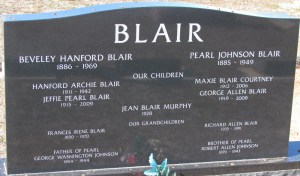
George Allen Blair was born on June 24, 1919, southeast of Texola, to Beveley Hanford and Emma Pearl Blair, the second youngest of five children. Unlike most of those in his graduation class, George never left Texola. He continued to live on the family farm, ranching and taking care of his father in his last years. His parents’ marriage seems somewhat convoluted. In the 1940 census, Emma is listed as head of the house, divorced, and running the farm; George and his sisters Jeffie and Jean. She would also be listed as divorced on her death certificate when she passed away in Shamrock, Texas, in 1949 following a stroke. However, in 1947, she and Beverley were together in San Joaquin, California, looking after their grandchildren, Frances and Richard, the children of their eldest son Hanford.
Beveley and his wife, Ethel, had moved to California in late 1941 and Hanford was working as a farm labourer on the George Berry ranch near Linden. His parents had moved as well and, one April evening in 1942, the whole family were together, sitting on the lawn of the ranch. Around 7pm Hanford went into the house, took a .22 calibre rifle and shot himself in the head. He died two hours later. The official line was that he was despondent over recent ill-health, but the fact that Ethel had filed for divorce twice the previous year may indicate all was far from well in the marriage, and possibly why his parents had moved to California with them.
The stone of the complicated family of George Blair.
Perhaps, unsurprisingly, given all this turmoil, George never married. He looked after his father until Beverley died in 1969. George himself reached the age of 90 before succumbing on August 27, 2009, to injuries he’d sustained in an automobile accident. He was the first last of the plaque’s graduation class.
Please see Part One for the background to this post.
AUSTIN ROSE
The ‘Seniors 38’ stone outside the one-room jail in Texola.
Born Rual Austin Rose on February 24, 1918, to Dana Elwood and Myrtle Rose, he went by the name Austin. Four years later he was joined by a sister, Anna Mae.
This was a Baptist revival held in Texola under the supervision of Reverend Billy Sunday. Anna Mae Rose is being baptised; behind her looking at their father, Dana Elwood Rose, who is crying, is Austin.
Having graduated from Texola High School in 1938, he married Eloise Moore three days before Christmas 1939; it was her 21st birthday. Eloise, like himself, was from Texola and had been part of the Class of 1939. A few months later Austin was working in Albert Ferguson’s wrecking and salvage yard in Wheeler as he trained to be a mechanic.
Austin Rose at his graduation.
At some point it seems that they moved to California as Austin enlisted in the army in 1943 in Los Angeles. He would serve from December 28, 1943 to April 12, 1944. He would later work as a mechanic for James Chrysler Plymouth in Corona for 35 years and his parents moved to southern California too, Dana running a grocery store and raising chickens and rabbits. He died of a heart attack in 1960 after spending five months in hospital.
Austin in the 1950s.
When Myrtle died in 1983 she left everything to Austin. In a will she had made in May 1969 she wrote, ‘I hate to do this but Anna Mae owes me more than I have now and so far hasn’t paid it. So I want Austin to have what I have left’. Austin inherited her mobile home, quilt tops and checking account at Southwest Bank. At their mother’s funeral, Austin gave his sister $5. Anna Mae paid for the funeral. In 1972, Austin and Eloise moved to Shasta Lake where he died on February 7, 1997.
Austin’s parents, Myrtle and Dana Rose.
WINTHA DOSS
Norn November 20,1919, to Henry Tanner and Olli Okla Doss, Wintha graduated from Texola High School in 1938 and went on to the Oklahoma A&M College. He then enlisted in the US Army and fought in Europe, including in the Battle of the Bulge where he was wounded and later awarded a Purple Heart. By now he and his older brother Basil were orphans, his mother having died in 1937 and his father in 1943.
Returning to America, he reenlisted as a career soldier and then married Sybil Estilene Reed in Wheeler, Texas, on August 12, 1947. They travelled the world as a family; their only child, Jana, was born in Osaka, Japan, in 1949 where Wintha was working as a criminal investigator.
In 1960 Wintha retired and they moved to Erick, Oklahoma. But a happy retirement was short-lived. Sybil died after a long illness in 1962 aged just 42. Jana never married and stayed with her father until he died in 1994 and followed him to the grave just four years later.
The ‘Seniors 38’ stone outside the one-room jail in Texola.
On 4th and Main Street, a stone’s throw off Route 66 in Texola, Oklahoma, is a single cell jail. But what is even more interesting is the gravestone-shaped marker that has been propped up outside the jail for years. The names of it are, it says, the ‘Class of 38’. But are they? Well, yes and no.
Texola may be a ghost town now, but it once had a thriving high school, complete with baseball, football and basketball teams, Glee Club and even a school newspaper (the ‘Texola Booster’, first published in November 1919). Texola High School had an auditorium which was used for plays and operas and, at its height had over a hundred pupils. By the mid-1930s, the enrolment was around 65, and, as far as I can make out, the last graduation was in 1957.
The Texola jail.
But it’s that curious stone that has always intrigued me. What happened to the boys and girls whose names appears on that plaque, so I set out to find out. What I soon discovered was that this wasn’t simply the Class of 38. One of the youths – Jimmi Powers – was actually in the Clas of 1939, while Herbert Copeland never had the chance to graduate at all. It soon became clear that this was too long for a single blog post and it will therefore be divided into several parts; so, in the order in which the names appear, this is the Texola stone’s ‘Class of 38’.
AGNES RUDD
Agnes Telitha Rudd was born in Erick, Oklahoma on May 6, 1919, to Thomas and Lela Rudd, the second of their two daughters. It was to be a childhood blighted by tragedy. On April 9, 1928, when Agnes was just eight years old, her sister Clora Viola, older by 18 months, died of measles. Clora left big shoes for her sister to fill; Her parents considered she was a saint – before she fell ill she had been top of her class at school, while her obituary spoke of how she read her Bible each day and after she was too sick to read it, she had her mother read it to her. It was said of Clora, “If she could not say something good about anyone, she did not say anything.”
Almost exactly 19 months later, Agnes’s father died in November 1929; Thomas Rudd was just 34 years old. Agnes and Lela had no option but to move in with her grandparents. At the age of 19 she married Wesley Don Lake who had left school after the 5th grade in elementary. A year later they were renting a house in Texola; Wesley worked as a gas station attendant while Agnes stayed at home. Wesley was called up on December 26, 1942, to the 704th Training Group Air Corps in Atlantic City, but he only served six months.
Agnes Rudd
Agnes and Wesley moved to Amarillo where they both took jobs with International Harvester Co, Agnes as a machine operator and Wesley as a parts man. If they wanted children, they never came. And it seems they did, for in 1962, when Agnes was 43, they adopted a baby they called Don Wesley. Wesley was a warehouseman for Sears Roebuck Co But tragedy would strike Agnes again; when little Don was just three years old, Wesley died of a massive heart attack. He was just 50 years old.
Throughout her life, Agnes’ love of poetry sustained her. It might seem a little mawkish by modern standards – after her grandmother’s death she wrote a long poem that started:
Dear loved one we’ve missed you so
We’ve wondered oft times why you had to go
You left a vacancy that can never be filled
For with your presence we were always thrilled.
However, it gave her comfort and she enjoyed gifting poems to family and friends. She never remarried, although she lived to see Don and his wife Shawna give her three grandchildren. Agnes died in Amarillo on July 8, 2002.
JUNIOR HASS
Hugh Harrison Hass was born in Texoma, Oklahoma, to Hugh Manuel Hass and Jamie Clara Lackey-Hass on November 27, 1920, but he was always known as ‘Junior’. By the time he graduated from Texola High School in 1938, his father was a deputy sheriff. Junior went on to attend Panhandle University A&M (Agricultural and Mechanical), now Oklahoma State University. There he excelled in sports, starring in all the major athletic events.
Hugh ‘Junior’ Hass in 1938.
But Junior had an urge to fly. In 1941 he completed a primary flight course at the Texhoma CPT School and gained his pilot’s license, going to Amarillo the following January to join the civil pilot training course there.
By June 1942 he was employed as an instructor in the Cutter-Car Flying Service in Albuquerque, graduating to assistant flight instructor. When Uncle Sam called, it was inevitable that Junior would take to the air. He served in the United States Navy, training cadet fighter pilots in Norman, Oklahoma, as well as being stationed at the Glenview Air Station in Chicago.
Following his discharge he returned to Cutter Car Flying Service and then working for Texhoma Flying Service and Catlin Aviation in Oklahoma City, flying both charter and crop dusting planes. There was a stint with Standard Airways and as the personal pilot for the Tulsa Oilers hockey team, while he finished his flying career in 1990 after 13 years working for Aerial Photo Service in Tulsa.
Then he took on a second career, owning and managing a bridal shop called Joy’s Klothes Kloset. He was a man who always wanted to be busy and constantly learning; he taught himself Spanish and German and travelled widely to Europe, South America and the Galapagos Islands. When not working or travelling, he raised funds for various causes and was an all-round good guy. On July 29, 1945, he had wed Leatrice Joy Richerson who hailed from Sayre, Oklahoma, and a few months before his death, they had celebrated 63 years of marriage, a union which had produced a son and three daughters, one who predeceased him. Junior Hass passed away on November 2, 2008.
Many Route 66 travellers visiting Sapulpa stop at Michael Jones’ Gasoline Alley Classics, at 24 North Main, and some might even casually wonder the block on which the old Ford Model T dealership stands is book-ended at the southern end by the 1904 Young Building with nothing in between. But, until their demolition in 1981, that now empty space was home to two of the town’s oldest buildings; it was in one of those buildings that murder came to visit.
It was December 1960. The town was still recovering from an F5 tornado that had landed in May, killing three people and destroying over 100 homes and the Booker T. Washington High School, but now the town was looking forward to Christmas. Making a new start too was Eudell Walter Whitmire, a 40-year-old Oklahoman of Cherokee descent, who had just moved to Sapulpa from Angleton, Texas. The main reason for the move was the break-up of his marriage to Vivian Lee Brown who would remain in Angleton with their three children.
Eudell already had two sons who lived with their mother, Syble Ludy Stewart, in California. In around 1940, Eudell and his brother Gordon had moved from their home in Adair County, Oklahoma, to the west coast where Eudell found work as a fry cook at the Arches Café in Newport Beach while Gordon worked at White’s Coffee Shop on Balboa Island.
The Arches Cafe in Newport Beach where Eudell worked. It moved in 2007 and finally closed in 2011.
Both brothers enlisted in the military, Eudell in 1941 and Gordon the following July. Eudell served four years and was wounded in the line of duty in 1944, finally returning to Los Angeles in 1945 where Gordon joined him. But during his service Eudell had managed to meet a young waitress called Syble Ludy Stewart who he married in Yuma, Arizona, on February 15, 1943. Just over the border from California, Yuma was a popular destination for ‘quickie’ marriages as between 1926 and 1958 Arizona had no waiting period or blood test requirement for marriage licenses.
The couple had two sons, Stanley born on August 28, 1944, and Dennis, almost exactly two years later, on August 30, 1946. However, both Eudell and Gordon were, it seems fond of a drink. Eudell was arrested twice in 1947 for driving under the influence and on the first occasion his brother was also fined $25 for drunkenness. On March 1, 1949, they split up and Syble filed for divorce, stating that Eudell was “addicted to excessive use of alcohol” and had threatened to take the boys away from her. She was granted a divorce of grounds of extreme cruelty in November 1949 and given custody of Stanley and Dennis.
Eudell returned to Oklahoma, finding work as a cook at a café in Sapulpa which is where he may have met Vivian, who was then Mrs Vivian Tavel although she had been divorced from James Tavel on September 3, 1948. Clearly love blossomed quickly and she and Eudell were married in March 1950. The newly-weds managed the impressive feat of having two children born in the same year – Michael Gordon in January of 1952 and Diedra Dell in December. Randall followed in April 1954 by which time the family were settled in Angleton, south of Houston on the Gulf of Mexico.
Eudell and Vivian’s wedding.
But all was not well. Although the Whitmires were running the Taco House Café together, the marriage broke down and on February 11, 1960, Vivian was granted a divorce, custody of the children and $125 per month support. The Taco House Café was put up for sale.
When Eudell moved to Sapulpa, Vivian and the children stayed at their home in Angleton, Texas.
Eudell moved back to Sapulpa where a new venture was waiting. At the beginning of November, Ray Anderson had bought the Chieftain Café at 12 North Main, just across the road from the Sapulpa Trading Post that he had opened the previous September. Ray was married to Juanita Cates, the sister of Eudell’s mother, and so he invited Juanita’s nephew Eudell to be the chef and operator and, perhaps in memory of his last café or simply to needle Vivian, Eudell planned to call it the Villa Tacos Restaurant. Ray and Juanita Anderson shared their house in Tulsa with Juanita’s nephew – perhaps this intended as a temporary arrangement, but it turned out to be briefer than anyone had imagined.
Juanita Anderson, Eudell’s aunt and co-owner of the cafe.
Also newly arrived in Sapulpa were young couple Lawrence and Lola Aldridge who had moved to the Oklahoma town from Winfield, Kansas, in the summer. Lawrence Everett Aldridge had been born in Leon, Kansas, in 1932 and served some time in the military; the US Veterans Gravesites department lists him as serving for just two months in 1952. Why such a short period of time is a matter of conjecture. He was certainly fit enough to work in the oil fields, so perhaps the Army decided that it and Private Aldridge were just not suited?
Lawrence Aldridge photographed at his call up. He lasted just two months in the Army.
In May 1953 he married 18-year-old Lola Imagene Green and, after first living in Stroud, Oklahoma, they moved to California. But it seems Lawrence couldn’t keep a job – he was also convicted of drink driving in Orange County. Why they ended up in Sapulpa in 1960 is unknown, but what is known is the marriage was unhappy. Lola left Aldridge and moved into the Gibson Hotel (which burned down in January 1972); on December 5, 1960, she asked an attorney to prepare divorce papers. As Lawrence had also threatened her several times since the separation she also requested a restraining order. Attorney David Young would later say that he had drawn up the papers but hadn’t had time to file them before being overtaken by events.
Lola had found herself a job as a waitress as the Chieftain Café shortly after the Aldridges had landed in Sapulpa and when the previous owners John and Alice Alexander sold it to the Andersons she was kept on by the new owners and operator. She probably didn’t know many people in Sapulpa while Eudell hadn’t lived in the town for years; she was estranged from her husband and Eudell was divorced. Although 15 years her senior, the 6’2” café owner was a good-looking man and so it seemed only natural they would share the occasional beer. Although it probably went no further, this was too far for Lawrence Aldridge.
On the morning of December 6, 1960, he followed his wife to work, carrying a 16-gauge shotgun. She would say that he appeared to have been drinking and that he “seemed wild and I told him to come to his senses.” He cornered her in the café’s kitchen and threatened to shoot her when she refused to quit her job. He then walked to the front of the café where Eudell was preparing to open up for the day and shot him once. Eudell Whitmire died instantly.
Lawrence Aldridge at the time of his arrest for the murder of Eudell Whitmire.
Aldridge then returned to the kitchen and once more tried to persuade Lola to leave with him, but the terrified woman fled to a nearby bakery where the police were called. When officers arrived, Aldridge had locked himself in the café’s restroom but was persuaded to give himself up. He was charged with murder and it seemed like it would be an open and shut case.
But Aldridge entered an innocent plea and by the time the case came to trial in March he had a story that Eudell had lunged at him and he thought the café operator had a gun. This contradicted the evidence which shown Eudell had several half-dollars clutched in each hand, ready to open the café for the day, and was behind the cash register counter. Delsa Holmes Wright testified that Eudell had kept a pistol at the café (she only worked there for two weeks before being let go, so she may not have been a fan) but Juanita Anderson said she’d never seen such a gun when she had worked there. Unfortunately, the only other witness to the shooting wasn’t allowed to testify after the defence objected – because she was married to the defendant. The jury of six men and six women retired but were hopelessly deadlocked. A mistrial was declared.
In May, a second trial began. By now Aldridge added a few more details, such as Whitmire had threatened him on three previous occasions and had been drinking with his wife. He had only had the shotgun with him because he was cleaning out his apartment before moving away from Sapulpa. It was just a case of self-defence.
The second trial lasted less than two days and the jury’s deliberations were swift. They found him guilty, but only of manslaughter and recommended a sentence of just four years. Lola was granted a divorce in November 1961.
A half-smirk on his face, Lawrence goes to trial with his self-defence story.
Just a year later he applied for parole. It was denied and he served close to his full term, such as it was. By 1966 he was back in Winfield and applying for a marriage license with Donella C Carson, although the fact that Mrs Carson was already married put an end to any wedding plans. He died in Onalaska, Texas, in 1997.
After Eudell’s death the café was sold to Eldon and Eva Billey who reopened it as the Chieftain.
Despite the special dinner steak, the Chieftain never recovered.
But within a couple of months it failed and all the fixtures and fittings were auctioned off in April 1961. The building and its neighbour housed many businesses over the years but by 1980 it was in poor repair. When a section of the outside wall gave away and crashed down onto a pickup truck, the owners, the American National Bank, had the building demolished in 1981 to make way for an employees’ parking lot. And that is the space on North Main.
In April 1961, the Chieftain Cafe closed for good.
It was a quiet night in Alanreed, Texas. Perhaps a dog or two barked at the automobile weaving its way down Main Street; cars were still a novel enough sight for the canine population to call attention to each one, but those automobiles provided a living for Tobe Clodfelter who ran a garage in town.
Tobe Clodfelter’s garage in Alanreed.
Given his trade, it was probably Tobe at the wheel that May night, accompanied by his friends, Joe Hayes, a labourer from Alanreed, and Roy Tipton, a farmer who lived a few miles outside town. The trio had been on a trip into the country for what was described as an entertainment – which could be anything from a shoot to a party and was probably both – at which, by all accounts, the three men had been heavily drinking. It would end very badly that night.
For Tobe the trip and the accompanying libations were probably a chance to let off steam, away from the pressures of running his own business and providing for his two young daughters. At 30, he was the oldest of the three men and the only one to be married, having wed his wife Vallie when she was just 14.
The very young and beautiful Vallie Agee, soon to be Mrs Clodfelter.
Vallie and Tobe had both grown up in the Chickasaw Nation of the Indian Territory (the state of Oklahoma would not become part of the Union until 1907) and, in 1900, the Clodfelter family had applied to become recognized as Missouri Choctaws. His mother Mary claimed to be 1/8th Choctaw, making her only son Tobe and his seven sisters 1/16th Choctaw. It is unlikely this had anything to do with ancestral pride and everything to do with the idea that they would be then be able to claim land or money. There were countless fraudulent claims at the time by people claiming to have ‘Indian blood’ in order to be allocated land and it’s all too likely that the Clodfelters were among those. In any event, in 1902 the claim of Mary and her children to be Choctaws was resoundingly rejected.
The Clodfelter family. Tobe is in the centre, flanked by his parents Newton and Mary and his six sisters. It’s likely this photo was taken around 1894 or ’95 when Tobe was about 9. One of the sisters, Lulu (on far left) would die in 1901 at the age of 16 while another, Mildred (‘Birdie’) was born in 1897.
Tobe and Vallie moved to Alanreed after their marriage in 1905 at a time when the town was growing. It had a hotel, a bank, Baptist and Methodist churches, two grocery stores, a hardware store, a blacksmith’s shop and, in 1912, a new two-storey school. In July 1906 their first daughter, Audrie Mae, was born, followed almost two years later by her sister Arble Faye.
26-year-old Roy Tipton was, in 1916, farming with his brother Charles in Gray County, while Joseph Hayes, the youngest of the three men at 22, got by with general labouring work. The Hayes family was still recovering from the death of Joe’s older sister, Sarah, the previous year. Her death certificate stated she had been suffering from pellagra (a nutrition-related disease which was prevalent in Oklahoma and Texas in the early years of the 20th century) for the previous three years. She had died at the age of 30, leaving three young daughters under the age of six.
In the early hours of Friday May 12, 1916, as the men drove onto Main Street in Alanreed, an argument broke out. We will never know the cause of the altercation – and the fact the men were intoxicated no doubt exacerbated the situation – but Tobe Clodfelter brought it to a swift and savage end by drawing his gun and shooting his two companions. Roy Tipton fell dead, but Joe Hayes was still alive. With the last of his strength he fired back at Tobe Clodfelter. At 3.30am all three men lay dead in the street.
An inquest was held that morning and, at 4pm on Friday afternoon, the three men were buried in Alanreed Cemetery in a single ceremony conducted by the Methodist minister, Rev Howell.
A plain plaque marks young Joe Hayes’ grave.
It seems Joe’s younger brother Tom went off the rails after his brother’s death. Like his brother he had had little education, spending just three years in school. On May 29, 1917, despite pleading not guilty, Tom Hayes was convicted of stealing ‘one cattle’ for which he was sentenced to two years in Huntville prison where he died on November 8, 1918.
Although the gravestone reads November 11, Huntsville prison recorded his death as three days earlier.
He is buried next to his brother although, curiously, his gravestone gives his date of death as November 11. Tom’s older brother Sam also died young in 1935 of pernicious anaemia, a disease, like pellagra, brought on by vitamin deficiency. He was 46 and left two young sons.
Vallie Clodfelter in later years.
Vallie Clodfelter remarried ten months – probably a necessity for a young woman with two small children – to a man coincidentally called Sam Hays. (He was also from Alanreed and the same age as Joe Hayes’ brother but, while it might have made for a better tale, they were not the same man.) The marriage produced Bradford, a half-brother for Audrie and Arble, but ended in divorce within a few years. Vallie married again to JA Jackson on July 15, 1933, but also divorced him shortly afterwards. She moved to Pampa in 1938 where she rented out property and lived there until her death in 1976. Vallie is buried in Alanreed cemetery along with her eldest daughter Arble.
Arble and Audrie Clodfelter married brothers, Philip and Raymond Howard; Arble and Philip’s marriage lasted just a few months and they were divorced in 1922. Arble married again to Harley Hickman but that too ended swiftly in divorce with Harley dying of a coronary thrombosis in 1952, just as her sister’s husband, Raymond, would in 1958. Neither sister would remarry after that.
While Joe Hayes’ grave is marked with a simple plaque and Tobe Clodfelter’s with a simple and possible more modern stone, it is Roy Tipton’s memorial which attracts most attention and that, even almost 110 years later, resonates with the anguish of his family. A tall marble column, it is etched not only with the family name and Roy’s details, but with the stark words, ‘MURDERED IN COLD BLOOD’.











 NEVER QUITE LOST