The roads that led somewhere and now go nowhere. The history that you see out of the corner of your eye. The flicker where past and present collide. The time and the road and the world that is never quite lost.
The café and service station in Desert Center has
long been one of my favourite stops, although it’s been shut up for years. The café
has remained just as it did on the last day of business in 2012, with
condiments on the tables and coffee mugs on the counter. For years a note on
the door informed customers it was temporarily closed for building maintenance.
The iconic neon sign of the Desert Center Cafe.
The only food place for 50 miles, the café and service station was built by town founder Stephen A Ragsdale in 1921 and his advertising for the café claimed ‘We lost our keys – we can’t close!’, a boast that the café had been open 24 hours a day, 365 days a year since it opened. Desert Center went onto become the birthplace from which Kaiser Permanente, the world’s largest managed health care system, would rise. Despite being a noted businessman, Ragsdale’s reputation was shot down in 1950 when he was accused of a dalliance with one of his employees and he retreated to a log cabin in the mountains where he lived out his days. The café, meanwhile, featured in films and adverts and even a video game, but it never reopened after that final day seven years ago, I-10 rushing by just yards from its back door.
The bar stools sold for $300 and everything behind the counter (except for the milkshake machine) for another $300.
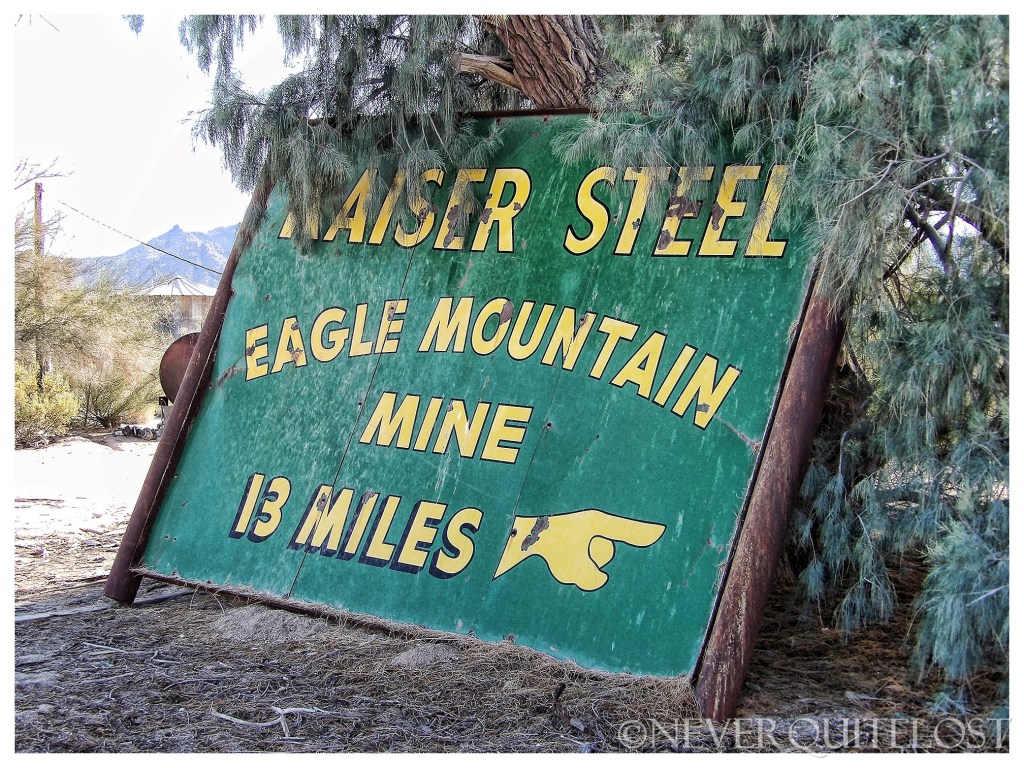
Last weekend, almost all the contents of the Desert Center Café and Service Station (not to mention the farm equipment and the cars in the junkyard which also belonged to the late owner of the town, ‘Desert Dave’ Ragsdale, grandson of Stanley) were auctioned off in an online estate sale, including the old cars and replica of a train that you could only previously see by peering through the dusty windows or holding a camera up to the window. The classic cars or the American LaFrance fire engine didn’t make much money, although the porcelain Eagle Mine Mountain sign that has been outside for years raised $3300 and four Texaco hand cloths printed with the Desert Center address made $250. The seven gas pumps which stood outside the service station made a reasonable $3300, but the wonderful old neon sign sold for a seemingly paltry $7400. You could have bought a a full-size wood and fibreglass replica of a Southern Pacific GS-4 steam locomotive, built as a prop for the film Tough Guys, for just $130. A Coke vending machine went for a mere $10, but a Los Angeles Times newspaper rack for $270. The nine bar stools which, the last time I was there, still butted up to the counter, fetched $300. Behind the counter, the whole backline of stainless steel tables, cupboards, Kelvinator freezer, soda fountain and coffee maker made $300, the whole kitchen set-up including the stove, fryer, griddle and prep stations just $375. Another lot consisting of deep friers, ovens, refrigerators, various cooking utensils, steamers and a deep freezer fetched just $40.
And there it is, everything gone from Desert Center, every last glass, every bit of scrap metal, every sign the café and service station ever existed. I guess they found those keys after all.
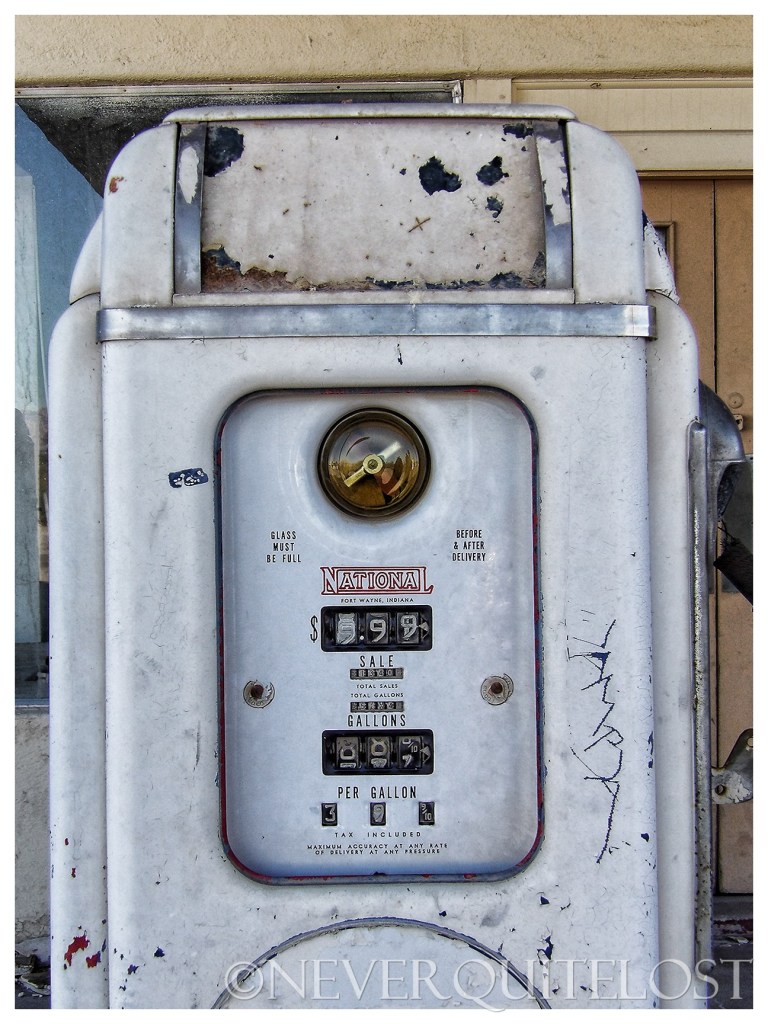
One of the seven National pumps which stood outside the gas station and were sold as a group lot for $3300.The cafe had remained untouched since it closed in 2012. The wooden phone booths in the background sold for $1500.
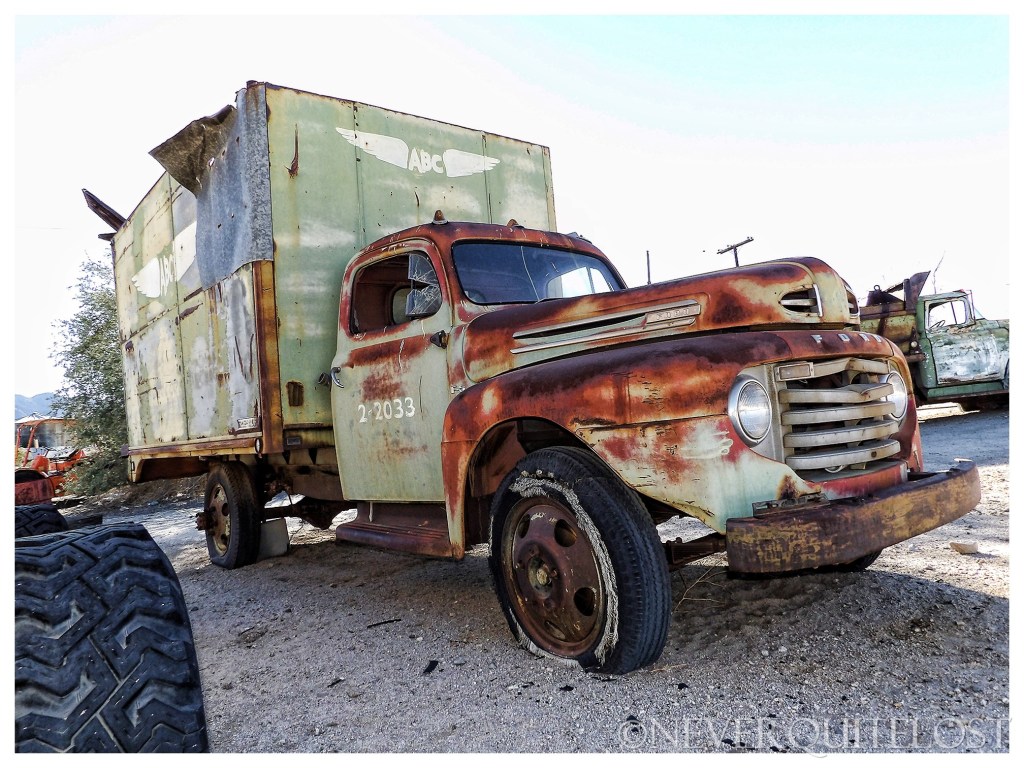
This sign had been propped up against a tree at the back of the cafe for years. It fetched $3300.This sadfaced 1959 GMC 550 dump truck made $700.The 1950 Ford cargo truck saw $1400.I knew where this porcelain sign was and I’m surprised it had escaped the light-fingers, but it made $800.If you’d wanted a plywood replica of a train – and a movie prop no less – this one would have set you back just $130.This 1948 caboose was one of the big sellers (the biggest was a 1930 Indian motorcycle which reached $42,000), going to a new owner for $4500.This sign wasn’t listed in the sale so perhaps it had already ‘found’ a new home. Neither were the tables and booths listed for sale, indicating that they will just be ripped out when the building is demolished as no doubt it will be at some point in the future. Goodbye Desert Center.
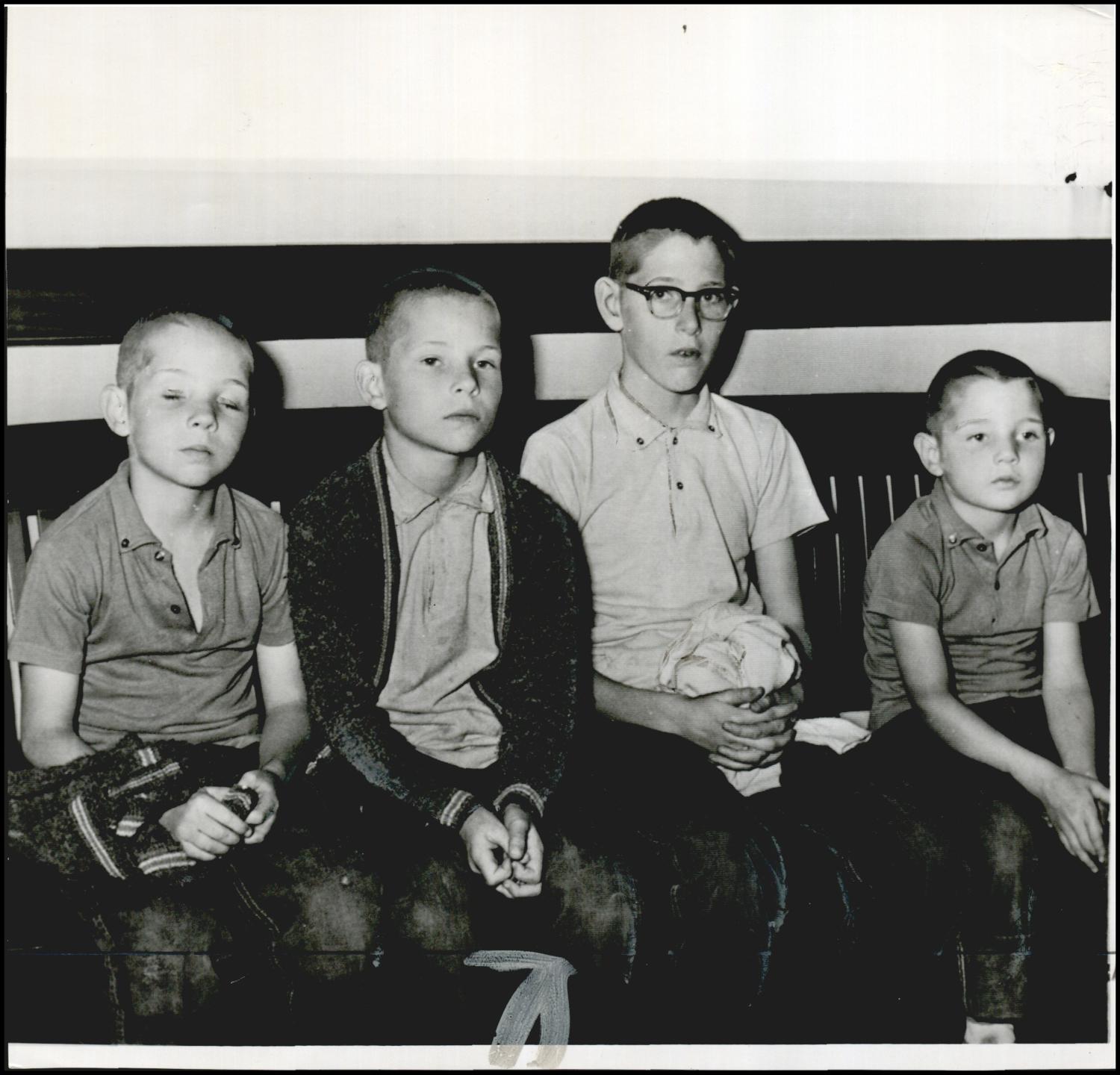
There are many stories born on Route 66 that tug at the heart, but perhaps one more than any other when, in June 1961, the lives of four little boys were changed forever.
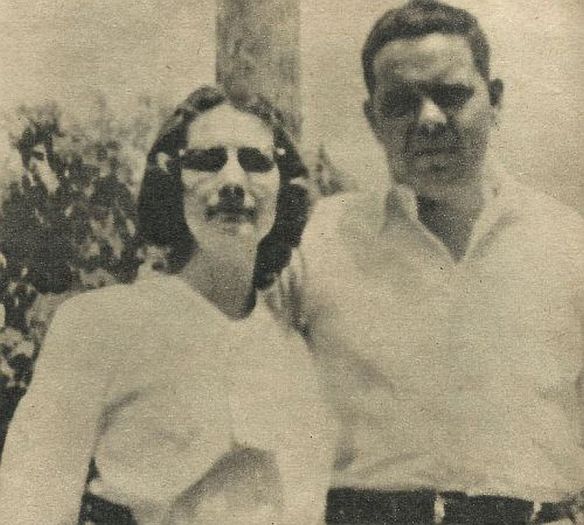
James Dolphus (‘JD’) and Utha Marie
Welch were a typical American couple in their early thirties. JD, a burly
six-footer and 200lbs, was a truck driver for Trans-Con, while Utha was a
housewife and stay at home mother for their four sons. Jimmy, 12; Billy, 9: Tommy,
8 and 5-year-old Johnny. (There had been another son, born between Jimmy and Billy,
but Noble – named after Utha’s father – was a sickly child from birth and died
in infancy.) This, however, didn’t stop both parents being involved in many
local activities in their hometown of Spencer, Oklahoma.
JD and Utha Marie Welch.
Most of JD’s family lived in California and, in June 1961, the family set out from Oklahoma to drive to Tulare, California to see JD’s mother before she went in for surgery. Then they intended to return to Oklahoma via Colorado Springs. The boys were keen to camp during the trip and JD and Utha agreed they could take their Boy Scouts pup tent. On Thursday 8th June, a day into the trip, the family left Amarillo in the morning. It was late at night by the time they stopped for gas in Ash Fork, Arizona and enquired about a motel room. The owner would tell police that JD had thought the room too expensive and left. As the motel owner never spoke about the incident publicly (despite being the last person outside of the family and their murderer to see the Welches alive), one wonders whether, glancing at the family’s shiny two-year-old Oldsmobile – JD had only bought it two weeks earlier – and calculating the lateness of the hour and the small boys, quoted a price higher than normal.
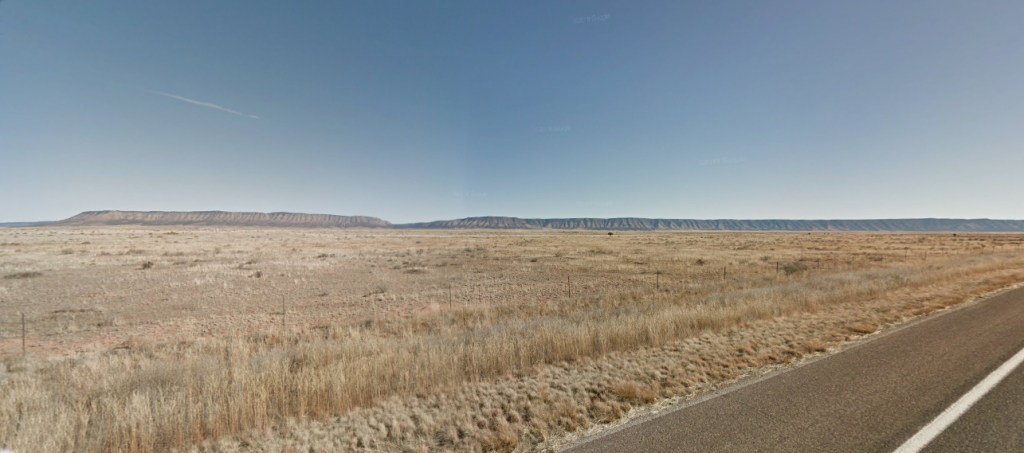
Looking north-east across the Aubrey valley, close to where the Welch family made camp. [Image courtesy of Google Maps]
No-one will ever know why the family
didn’t then stop in Seligman where there were more motels. It may have been
cost or it may have been that the boys were nagging their parents to camp. But
eventually, around midnight, JD pulled into the side of the road around 13
miles west of Seligman. Even now, it’s a bleak and barren stretch of road, the
plain of the Aubrey Valley stretching for miles around. The only cover were two
large piles of rubble and it was beside one of these that JD pitched his sons’
tent while he and his wife slept in the Oldsmobile.
The next morning, little Johnny was the first boy awake. He went over to the car where his parents were sleeping and tried to wake them. Confused, he ran back to his brothers, saying there was something on mommy’s face. Going to check, Jimmy found his mother’s face covered with blood. He lifted his father’s head and found that he too had been shot several times in the head. The little boys tried desperately to flag down help, but several cars would speed past before salesmen and race drivers, Jere Eagle and Dan Cramer from California, stopped and realised the horror of the situation.
The boys’ pup tent beside the Oldsmobile. Despite being so close, none of the boys heard the shots that killed their parents.
Highway Patrolman Dan Birdino and Deputy
Sheriff Perry Blankenship were first to arrive on the scene, Blankenship having
been notified by his wife, Bertie Lee, after a driver stopped at Johnson’s Café
on the east end of Seligman where she worked as a waitress. Bertie would have a
bigger role in this story than she could have imagined at the time.
Although around $60 had been taken from
JD’s wallet, Utha’s purse, which contained $147, and her expensive jewellery
was untouched. Despite a few promising leads – a Greyhound bus had stopped at
the same place although this turned out to be some hours after the murders –
clues quickly dried up. The best that the local police had was a statement from
Bertie Blankenship about a young man she had served late the previous night. He
only had a nickel on him, not enough for a cup of coffee, but there was
something about him that spooked Bertie so much she gave him the coffee for free.
A few hours later, the same man returned to the all-night diner and this time
ordered a full meal with tomato juice, paying for it with a $20 note and
professing not to recognise Bertie.
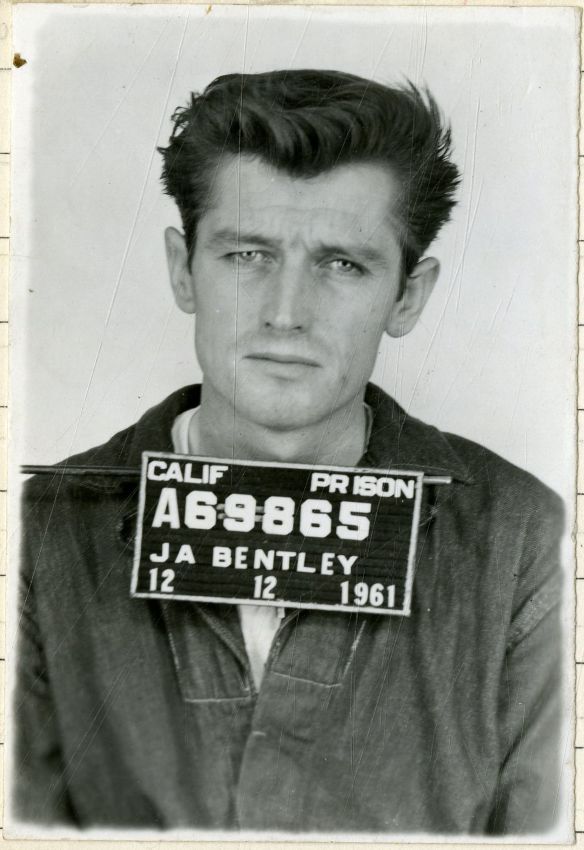
However, a suspect did flag up on the law enforcement radar almost immediately. James Abner Bentley lived in Gilbert, Arizona. However, his mother and estranged wife claimed that he had been in Fresno, California, with them on the night of the murders. Arrested for the robbery and attempted murder of a Phoenix gas station attendant in late June, it transpired that Bentley had been in Fresno – but a month earlier, when he had killed the owner of a liquor store.
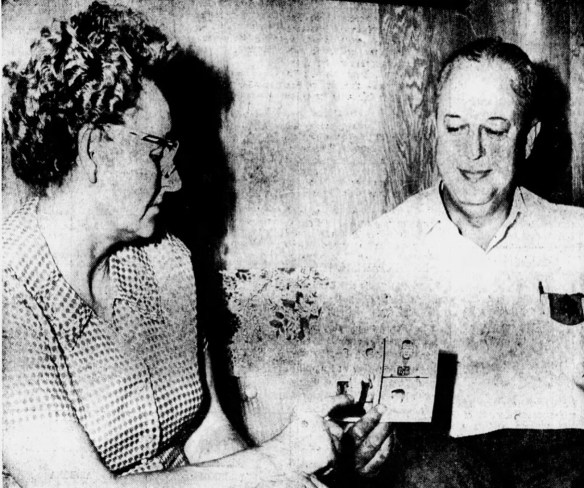
Shown a photo of Bentley by Sheriff Jim Cramer, Bertie Blankenship identifies him as the man who visited the diner twice. [Photo by Bill Nixon, Arizona Republic]
So, James Abner Bentley was already suspected of the Welches’ murders just days after they happened and local Seligman police had a mug shot of Bentley. For whatever reason, no-one thought to show that photo to Bertie Blankenship. Bertie didn’t see a photo of Bentley until a year later after a cellmate of the condemned prisoner had revealed that Bentley alluded to the murders, proudly saying he’d left the children alive. When Bertie was shown an image of Bentley, she immediately identified him as the stranger who had come to the diner – once poor and once with money in his pocket – the night of the murders.
James Abner Bentley. he would be described as a ‘mad dog’ by a boy who witnessed his attempted murder of a Phoenix gas station worker.
James Abner Bentley was charged with the murders of JD and Utha Welch while on death row in San Quentin, convicted of the murder of the Fresno liquor store owner. Had his death sentence been commuted – and that was a definite possibility at the time as Pat Brown, then Governor of California, was a firm opponent of the death penalty – then Arizona would have proceeded with the prosecution for both the Welch murders and the robbery and attempted murder charge in Phoenix. But, on 23rd January 1963, just after 10am, Bentley went to the gas chamber. It was little consolation to the four small boys (although Jim was, unsurprisingly, a lifelong supporter of the death penalty) whose childhood ended so brutally on the side of Route 66.
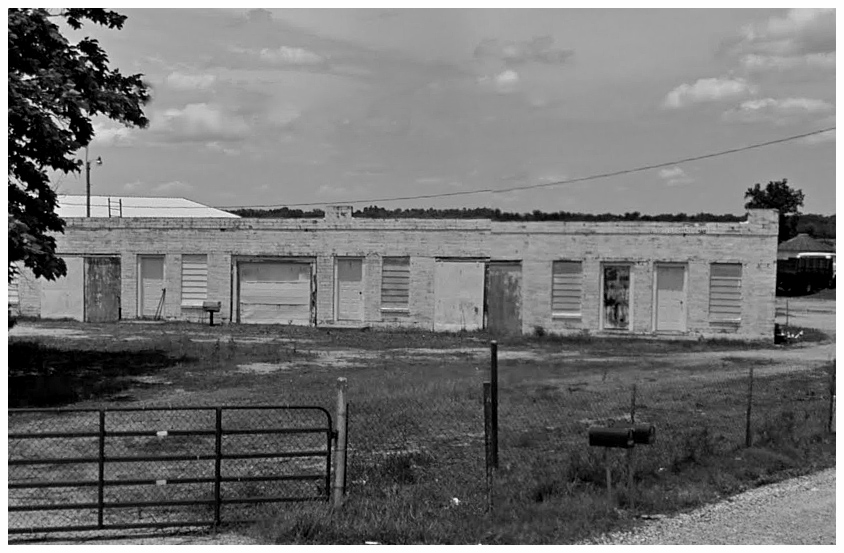
Still looking very much as it did when it was built over 80 years ago, but the Riviera Courts is in bad shape.
In 1937, the newly opened Riviera Courts was one of the swishest places to stay in Miami, Oklahoma. With its wide V-shape, its white Mission Revival look and being placed on the curve of the road, it was designed to be conspicuous to travellers in both directions and, like many other motels, its destiny was inextricably tied to that of Route 66. It was built at the south west end of Miami at a time when virtually all the local motels were situated at the north end of town; the reason why lies with the date of when it opened. 1937 saw the opening of a new bridge over the Neosho river and a new alignment of Route 66. That traffic would run right past the Riviera Courts and for years it brought in motorists.
The motel had not only garage bays, but doors on those bays, too.
One of the elements of the Riviera Courts was that, next to each of the fifteen rooms, was a garage bay for the resident’s car. Not so unusual, except for the fact that the Riviera Courts’ garages had doors which was a feature rarely seen on motor courts of the time. Passers-by today might assume that those bays have been fitted with doors in modern times for the purposes of storage, but that’s not the case. The Riviera Courts looks very much as it would have done in the 1930s and ‘40s and, on most of the garages, there still exists the original sliding doors mounted on an overhead track.
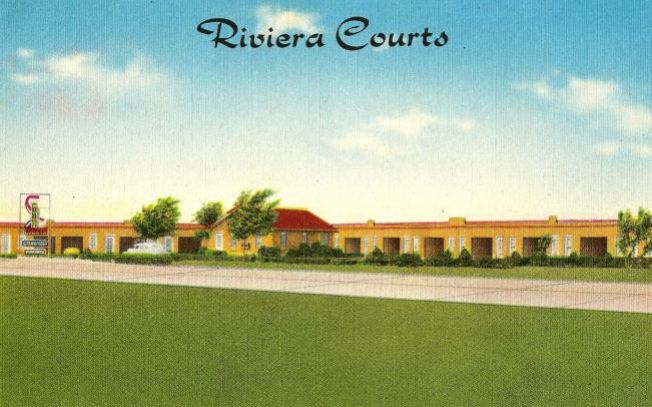
A postcard of the 1940s states that the Riviera Courts was ‘All brick, modern, 100% fireproof with automatic steam heat, tile showers, Beautyrest mattresses, with cross ventilation and ventilating fans.’ The motel passed through several hands, for example, Mr and Mrs PA Janson, and then, in 1952, Adam Ried and his wife although they seem to have quickly passed it onto NC Sawyer. He would subsequently sell the motel to Marion and Nolah Roberts in February 1956 who gave him a promissory note and chattel mortgage on the property. The problem was that the Robertses then didn’t pay.
Sawyer took Marion and Nolah Roberts to court for the sum of $69,500 (which indicates they had never made a single payment). Nolah Roberts’ defence for not paying was that Sawyer had neglected to mention the Riviera Courts had been flooded by the Neosho river during the Great Flood of 1951 which killed 17 people, displaced over half a million others and resulted in millions of dollars worth of damage. Was the Riviera Courts under water? If so, surely it would have been restored in the intervening five years (during which time major flood preventions were also put into place to ensure it wouldn’t happen again).
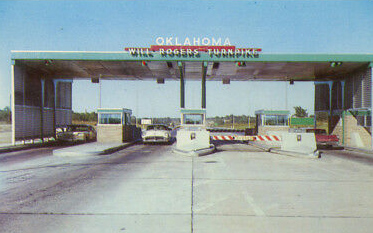
The opening of the Will Rogers Turnpike would be the beginning of the end for the Riviera Courts.
Perhaps more telling for the defaulting on the motel’s mortgage is that, just months after Nolah Roberts (and it was very much her project) agreed to buy the Riviera Courts, the Will Rogers Turnpike opened, bypassing Miami. Mrs Roberts may not have anticipated just the effect that this would have on the motel and either wouldn’t or couldn’t pay. Sawyer was charged with perjury in 1958 on the ground that he did indeed know about the flooding but by then the Rivera Courts had been foreclosed and was the subject of an auction in November 1958. Sawyer had tried to sell the place in May of that year with no luck.
These were clearly not good years for the Robertses. In April of 1958, Marion Roberts was implicated in a land development scandal in which Cinema-Surf took several thousand dollars from investors for a half-a-million dollar scheme to build a luxurious drive-in theatre, swimming pool and amusement park in southern Oklahoma. Roberts handled the stock sales through his company Marion L Roberts Brokerage Co in Oklahoma City – or at least he did until the company’s license and bond were cancelled in 1957 – while his son, also called Marion, was the main stock salesman for Cinema-Surf.
One wing of the Riviera Courts. The building to the right was the living quarters and office of the owners.
From then on, as is so often the case, the motel went downhill. It was renamed as the Holiday Motel – probably trying to cash in on the popularity of the Holiday Inn hotel chain – and would struggle on for another two decades, filling its rooms with long term residents, until it finally closed in 1978. It was a private residence for a while, as well as being listed on the National Register of Historic Places in 2004, but it has the air of general desertion each time I’ve passed recently. In a town which has devoured or demolished most of its Route 66-era motels, Miami’s Riviera Courts deserves to be saved and cherished.
This stylized postcard seems to be the only image of the Riviera Courts. It dates to around 1951 or ’52 when Mr and Mrs Adam Ried were the owners and operators. Postcard by kind permission of Joe Sonderman.
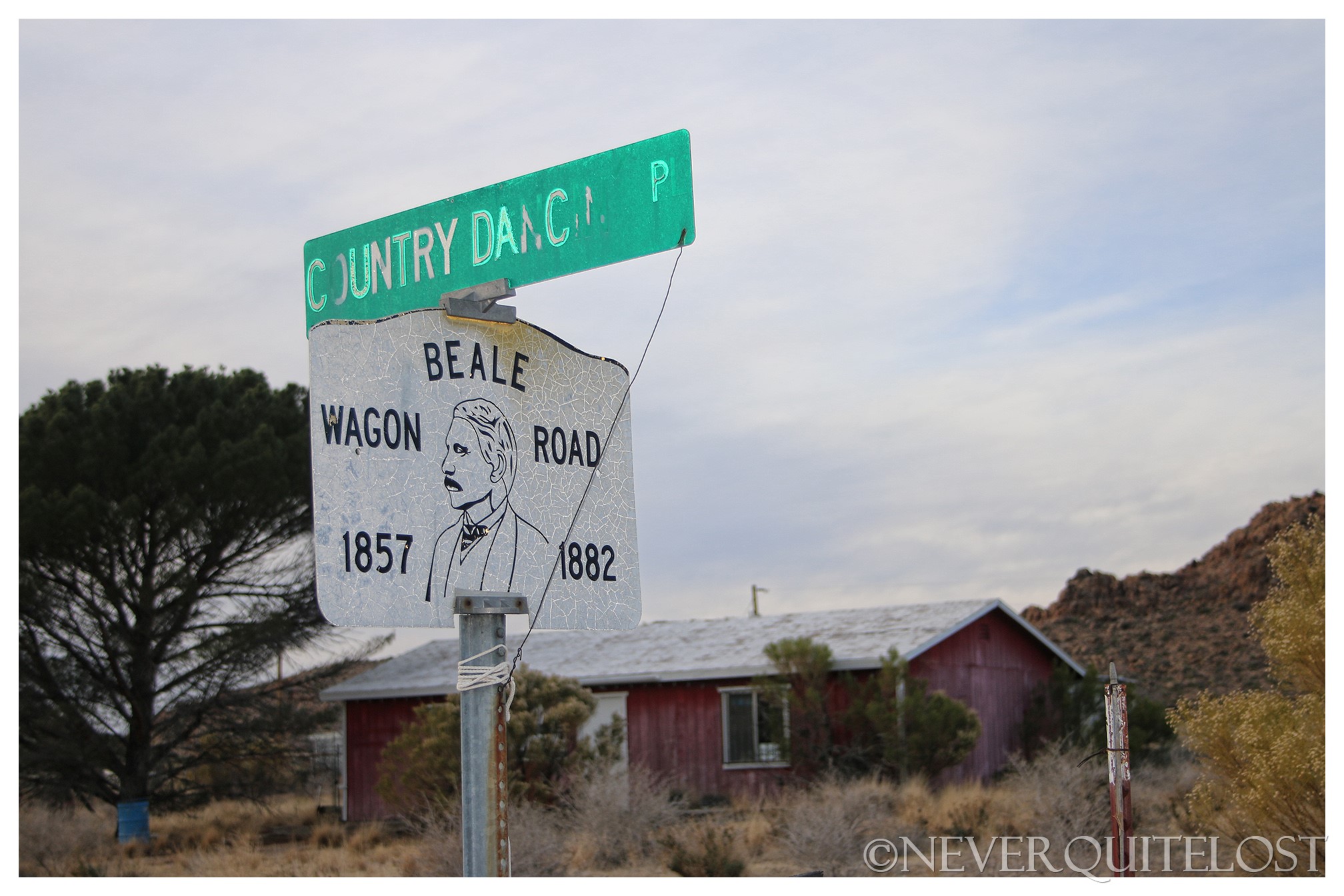
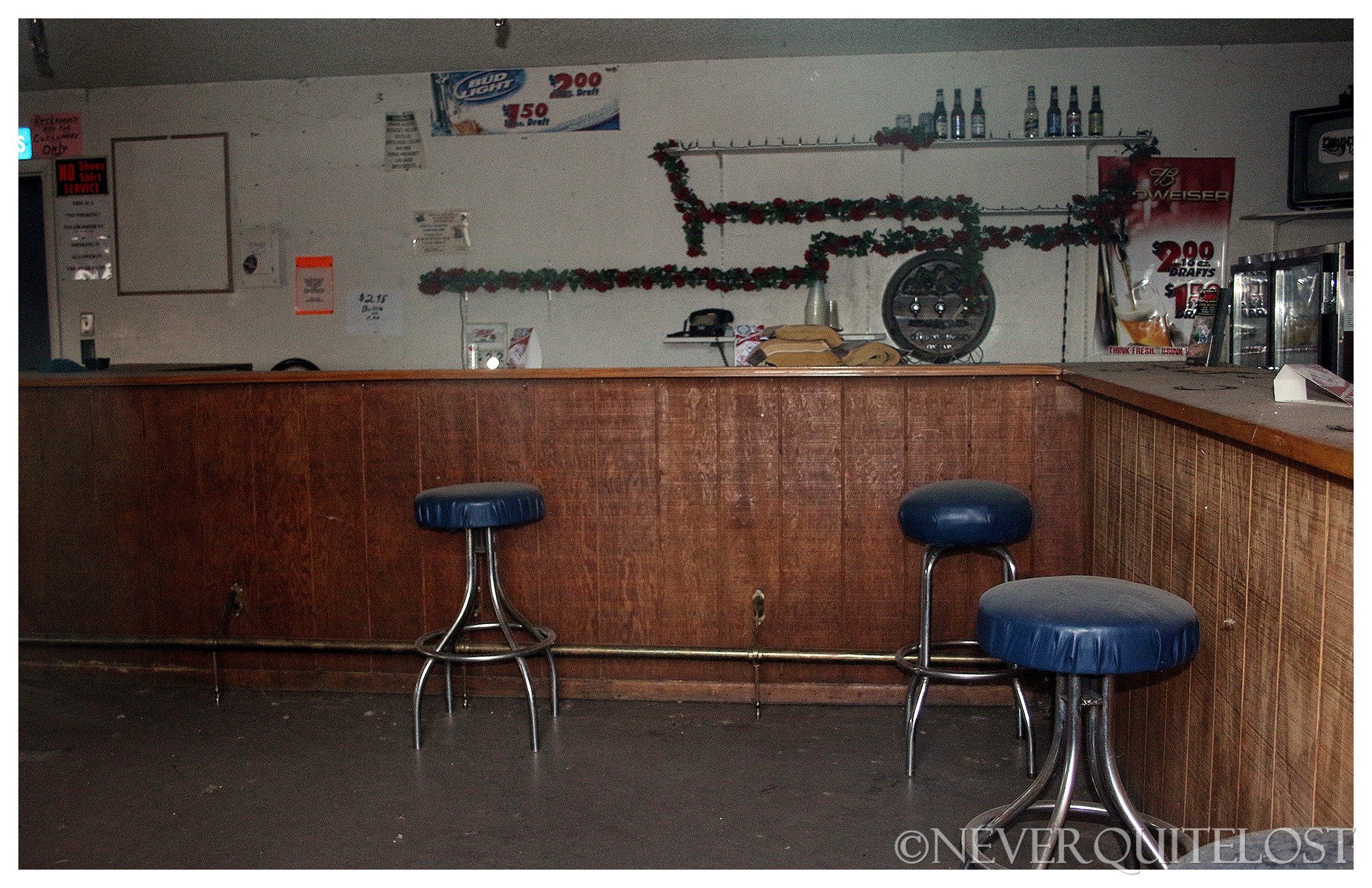
There are many places on Route 66 that are better known, more flamboyant, historically more important, but my heart has always taken by Bert’s Country Dancing in Valentine, Arizona. I’ve written about it elsewhere on this blog and I never pass up an opportunity to stop, just to reassure myself it’s still there.
I never knew Bert’s Country Dancing when it was open – Bert Denton, the eponymous owner, was gone a decade before I started travelling Route 66 and I’ve missed the very rare occasion on which the bar has re-opened briefly, although even that hasn’t been for years now. But I think Bert would still recognise it all as his place. He wouldn’t approve of the dust gathering on the bar top or the grass growing over the benches out back, but it has changed little since his death nearly a quarter of a century ago. Not much changes around these parts and when it does, it does it very slowly. Why would anyone clear out the bar? It’s not as if the space is needed out here where you never see another soul. And who knows, one day there might be a call for a bit of country dancing in Valentine again.
On a snowy afternoon in February 1960 a truck driver travelling the lonely stretch of Route 66 near Hyde Park, Arizona, spotted something out of place some yards off to the side of the road. He pulled over to investigate and what he found saw him heading to Seligman to call the police. Slumped against a fence was the body of a man resting in a pool of blood, his face covered in mud. Papers on the corpse identified it as Jacob Nicklos Krentz, late of Phoenix.
However, police had already been looking for Krentz after the 1958 Oldsmobile registered to his wife, Ila, had been found parked on a car lot in Roswell, New Mexico. It was unlikely to find any buyers due to the bullet holes in the windscreen and the interior being saturated in blood, along with a human tooth on the floor. It was clear that something had gone very wrong in this car and two days later the discovery of Krentz’s body proved that. Ila, who was initially thought to have gone missing with her husband, told Phoenix police that he had left a week earlier with “two old men” to find work on the Glen Canyon Dam construction project and had failed to telephone her at the end of the week as planned.
Jacob Krentz, who also went by the name of Ray (and indeed was referred to during subsequent trials as ‘Jacob Ray Krentz’) had only lived in Phoenix for a few months, moving there from California with Ila and his two stepsons to look after the children of his wife’s deceased sister. This wasn’t as straight forward as it might have been for Krentz’s parole officer had to agree to the move. Krentz had a record which went back to 1943 when he was charged with transporting 500 cases of whiskey in violation of internal revenue codes. In 1951 he was sent to jail for robbing a tavern in California and then placed on four years’ probation. The following year he skipped the state and it was three years before he was arrested in Las Vegas, Nevada, on vagrancy charges and charged with parole violation. His protests of innocence were shot down when the judge produced a photo of Krentz as a pallbearer at a funeral in one of his previous hometowns in Montana. Captain Peter Starasinic of the Alameda County Sheriff’s department described Krentz as “the best safecracker in the West” although there seems little to indicate that he was any more than a common or garden burglar. Because he had been fraternizing with criminals, the judge dismissed the idea of county jail and sent Krentz to San Quentin to serve his original 1-5 year sentence. While he was in prison, Ila filed for divorce although the couple were later reconciled.
Krentz may well have wanted to find a job as a bulldozer driver at the dam project in Page (he might equally have just wanted to get away from the small Phoenix trailer he was sharing with his wife and five children) but it seems that he never actually made it there. What is known is that he spent the last three days of his life drinking with his two companions in bars in Ash Fork and Williams before winding up dead on the side of Route 66.
There the trail might have gone as cold as Krentz’s frozen body had not a plump dishevelled 53-year-old man called Charles Francis Caldwell walked into the FBI office in San Antonio, Texas, the day after the grim discovery and said he had been with Krentz when he was killed. But he hadn’t done it. He had been driving on Route 66 when the killer, sitting in the back seat, pulled out a pistol and shot Krentz (who was in the passenger seat) three times, causing Krentz to collapse into his lap. He eventually named the killer as a Joe Brown. The authorities didn’t hold up much hope of finding ‘Joe Brown’, but just a few days later the FBI arrested Joe Brown – his real name – in his home city of Tulsa, Oklahoma. Both Caldwell and Brown were charged with murder.
What elevated this incident from a sordid drunken killing to an extraordinary murder are two things; it was the first murder case to be tried in Yavapai County in eleven years and, despite the evidence, no-one was ever convicted of Jacob Krentz’s murder.
Brown, 57, went on trial first, with Caldwell due to be tried a week later. Caldwell – who had insisted on taking a lie detector test to prove his story – was the prosecution’s main witness, amid cries of “Liar, liar!” from Brown. But, although the judge gave the jury the options of either first or second degree murder, the court was stunned when, after eighteen hours of deliberation, it returned a verdict of innocent. The following day the murder charge against Caldwell was dropped. Brown was immediately rearrested and charged with being an accessory to a felony. Tried in October 1960 there was a dramatic twist when the jury had to deliberate in darkness due to a power cut, but they found him guilty. He served two and a half years in the state prison at Florence and then, released in April 1963, disappeared. Caldwell moved to Flagstaff and the following year was arrested for driving under the influence of alcohol. In April 1971 he was diagnosed with stomach cancer and died a year later.
In retrospect, it appears that Joe Brown was indeed the murderer. As well as Caldwell’s testimony, the trio had been seen leaving Seligman with Caldwell driving and Brown in the back seat. Brown’s landlady had watched him pack a pistol in his case before leaving Phoenix, the teenage son of a Seligman service station owner had seen Brown move the same case from the trunk to the rear seat of the car probably just moments before Krentz was killed and Caldwell even produced the blood-stained trousers he had been wearing at the time that backed up his story that Krentz had been shot in the head and neck before slumping into his lap. It seems that the good jury of Prescott considered that an ex-con had simply got his just desserts.
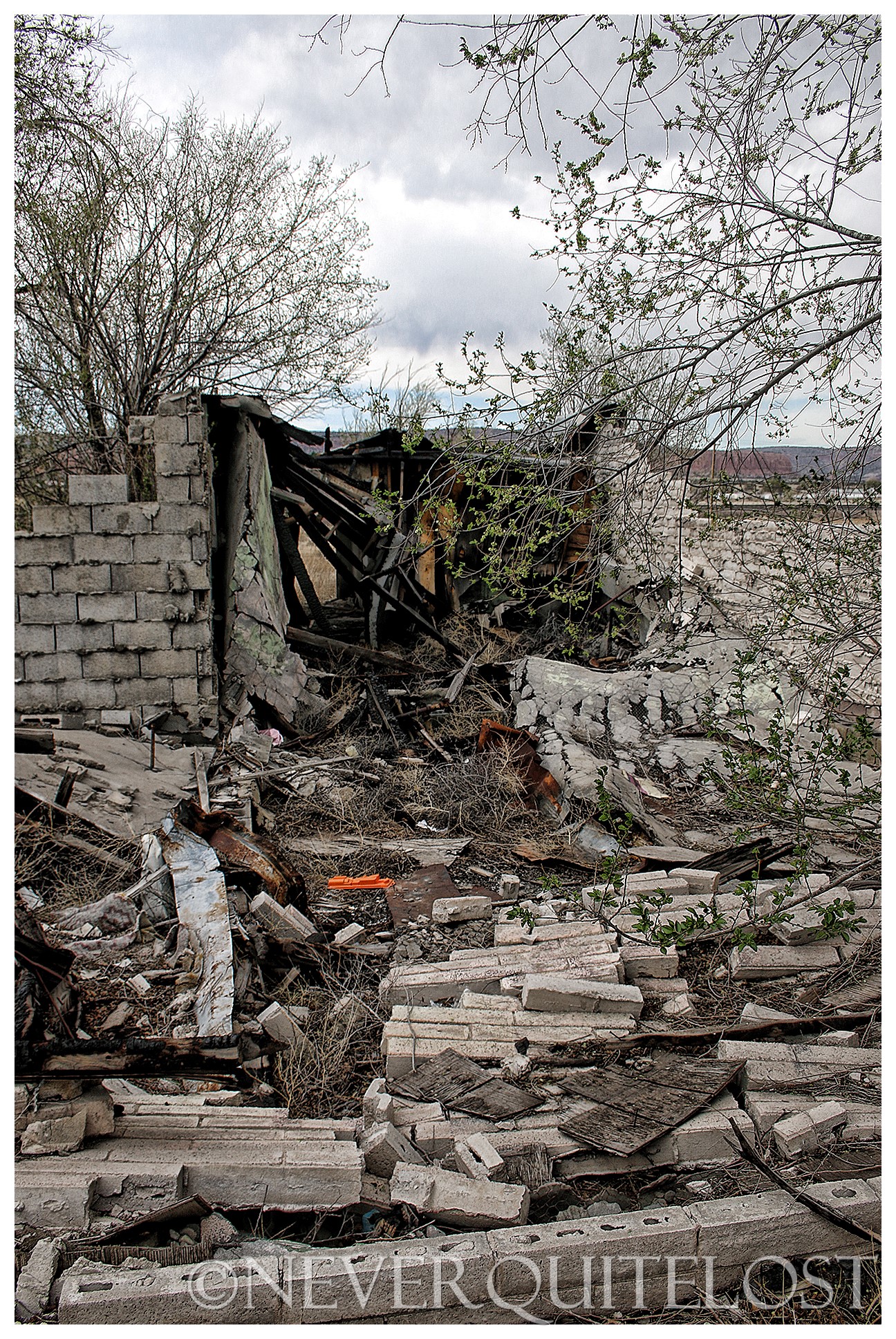
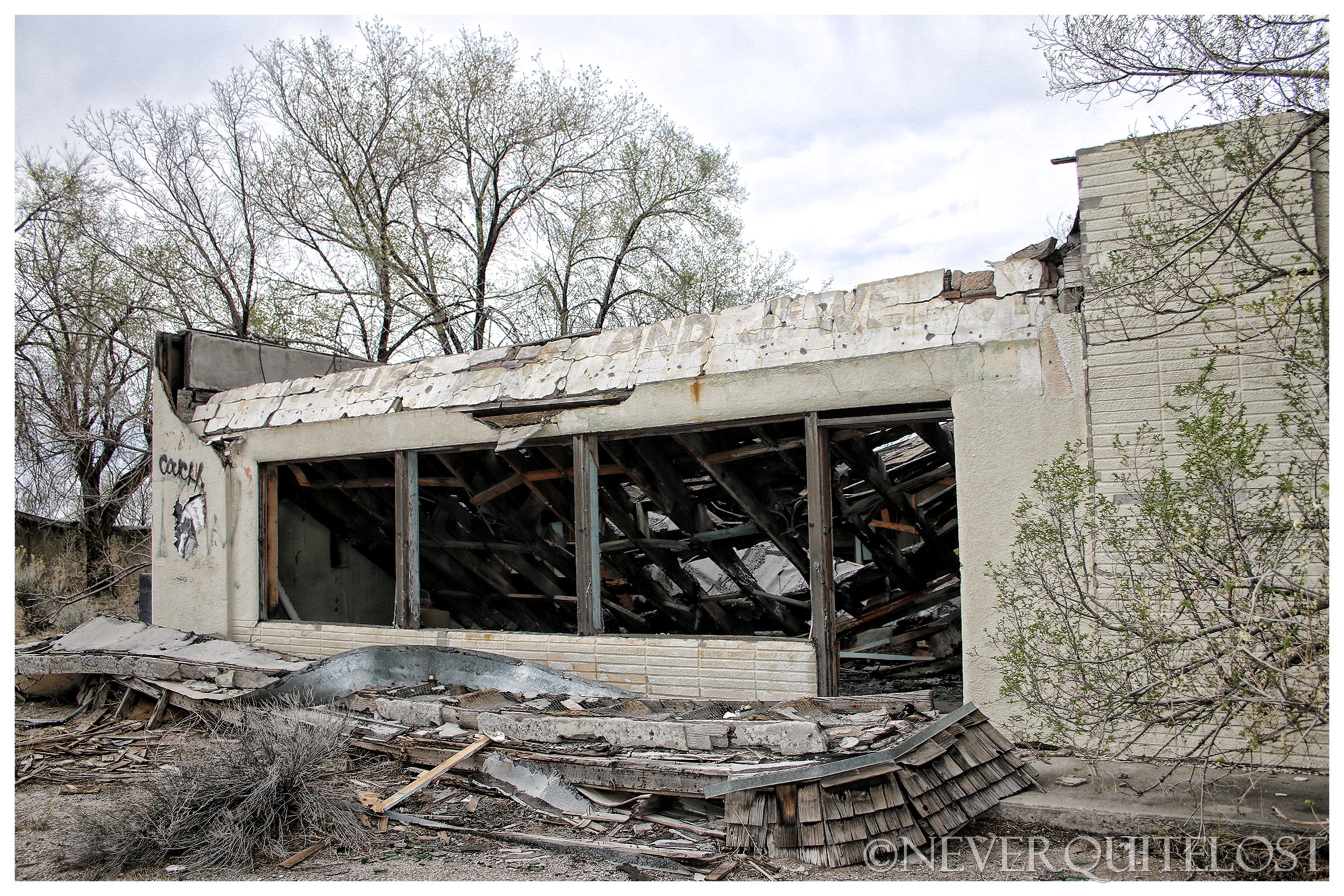
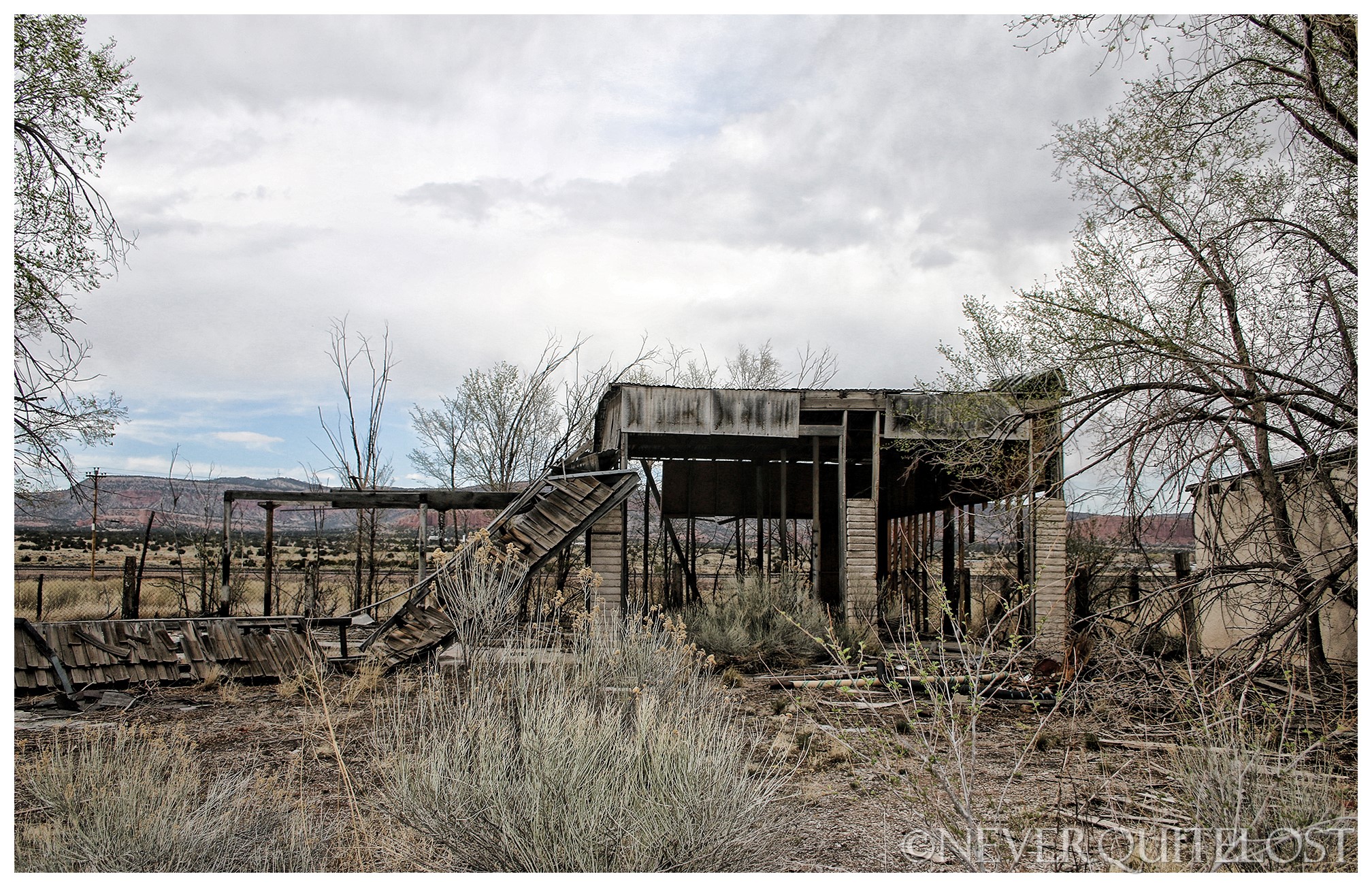
This is another example of how recent history can vanish so quickly. This trading post stands to the west of Thoreau in New Mexico and is rapidly falling apart. Yet even its name is already lost, or so it seemed.
Part of the problem with identifying the building is that Thoreau was a town which, despite its tiny size, thrived on trading posts (at least six to my knowledge). But, putting my faith in Jack Rittenhouse and his 1946 guide, I figured that this place must have been either the Thoreau Trading Post or the Beautiful Mountain Trading Post, both of which Rittenhouse mentions as being on Route 66.
To be honest, I really hoped this place would be the Beautiful Mountain Trading Post, if only because it seemed that someone had at least made an effort with the name. The Thoreau Trading Post was, well, just a little short on imagination. For a while, that seemed likely. Even the Northern Arizona University digital archive had a modern-day picture of the building which it titled ‘Beautiful Mountain Trading Post’. But it had then attached a question mark to that title which didn’t inspire confidence.
Then, tucked away on an inside page of a 1945 edition of the Gallup Independent I found a single mention of the Beautiful Mountain Trading Post in which it was described as at the intersection of Route 66 and the road into Thoreau. That, of course, is where the now closed Red Mountain Market and Deli stands … and ‘Red Mountain’ is close to the original name, if a little more economic on paint.
The reason why the place was even mentioned in the paper was because it had just been sold to Mr TM Lane by one Jake Atkinson, member of one of the two famous trading post families of this part of New Mexico. If you read the post on the Atkinsons on this blog, you’ll see that the timing matches – 1945 was the year that he and his wife Maxine bought the Brock Trading Post in Bluewater and turned it into the famous Rattlesnake Trading Post. Even more intriguing, by the mid-1950s, the Beautiful Mountain was owned by Blake Bowlin, from the other famous trading post family, and brother of the remarkable Claude Bowlin.
So, that seems to solve the mystery of the Beautiful Mountain Trading Post, but it leaves me little the wiser about the history of this sad place. As well as the Atkinsons and Bowlins, John H ‘Bill’ Bass operated a trading post in Thoreau as well as opening the Thunderbird Bar in Thoreau on 4th July 1964. Bill Bass and his wife Lorene had moved to New Mexico in the 1940s and Bass ran the Top of the World Cocktail Lounge at Continental Divide. In 1948, he was charged with ‘operating a confidence game’ at Willard Neal’s zoo, although it doesn’t seem to have hurt his future career. For many years he was either the McKinley County Sheriff or Under Sheriff (once working for his son amid calls of nepotism). Was this his business? And did it ever have a name to call its own? Given how I have watched this building deteriorate over the last few years, that may soon not even matter.
Soon the sun will go down over the Wayside Motel for the last time.
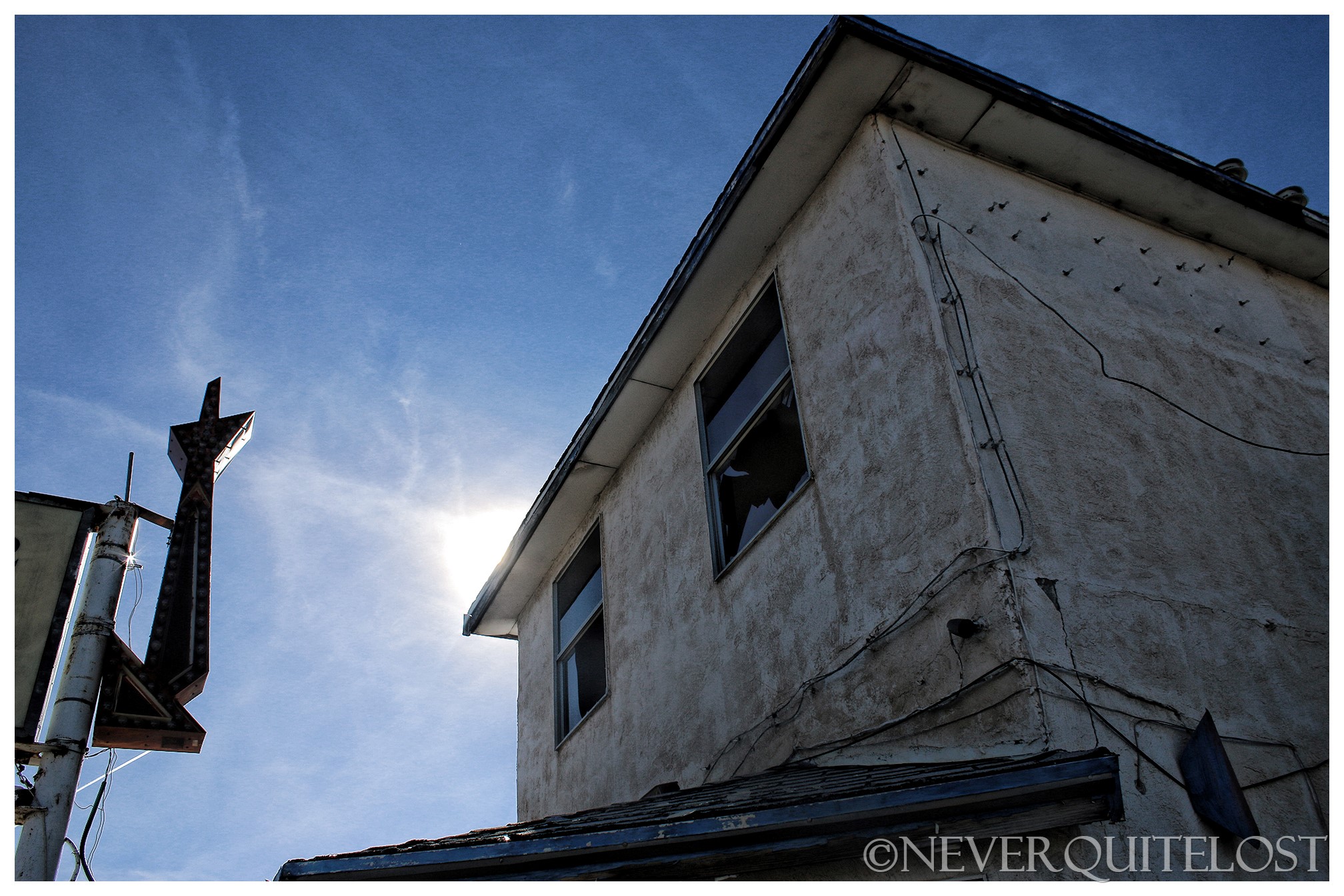
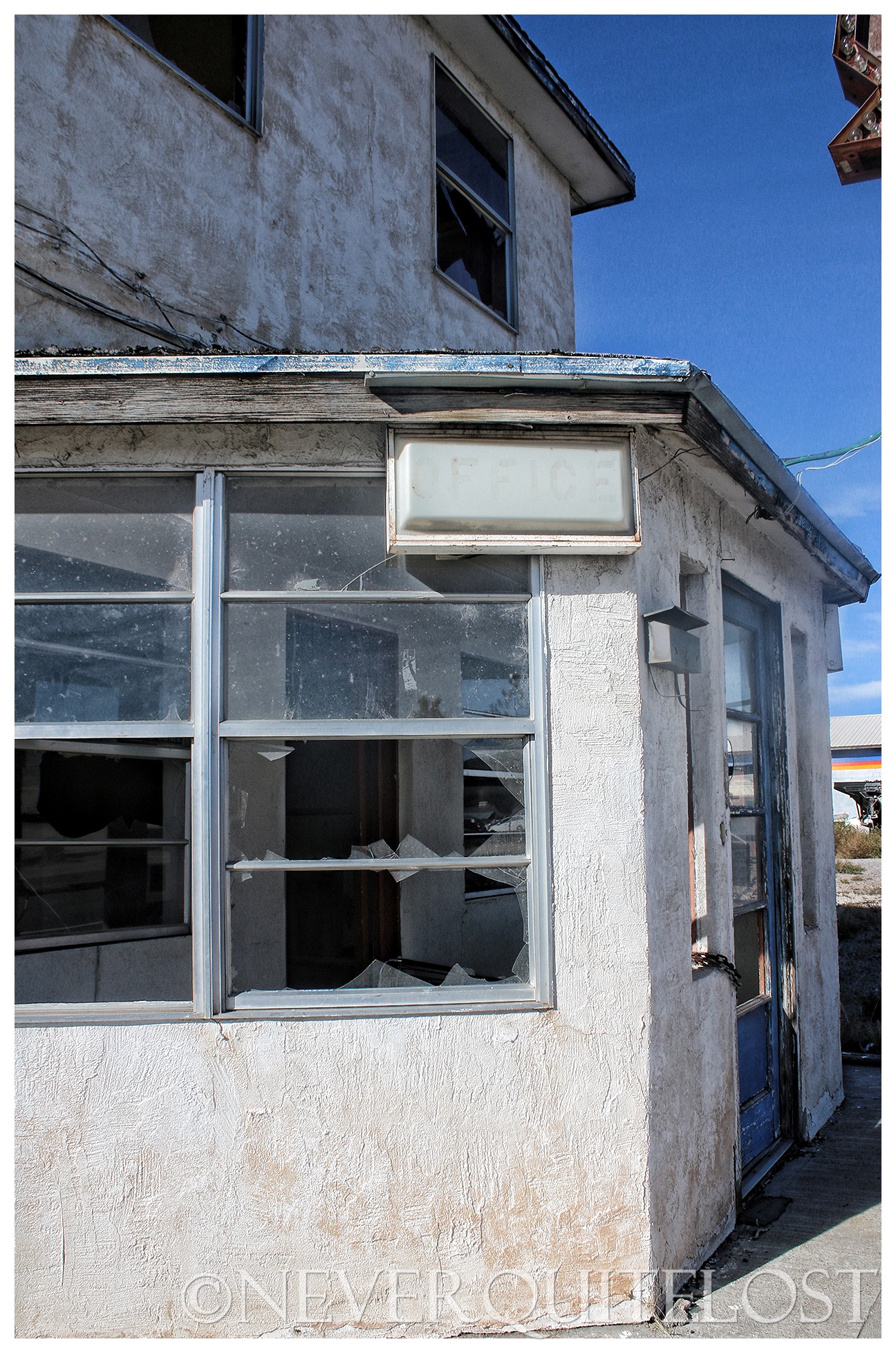
The Wayside Motel, with its sad lightbulb arrow, is one of the familiar sights on the east side of Grants, New Mexico. But not, it would seem, for much longer. In September 2018, City of Grants code enforcer Robert Windhorst announced that the Wayside Motel was on its hitlist for demolition – or, at least, what remains of it. The motel itself is long gone, what is left is the two-storey white building that served as motel office and living quarters for the owners.
If this did represent the original Grants Motor Lodge, the office and living accommodation building had yet to be built. [Postcard by very kind permission of Joe Sonderman and his splendid 66postcards.com web site]
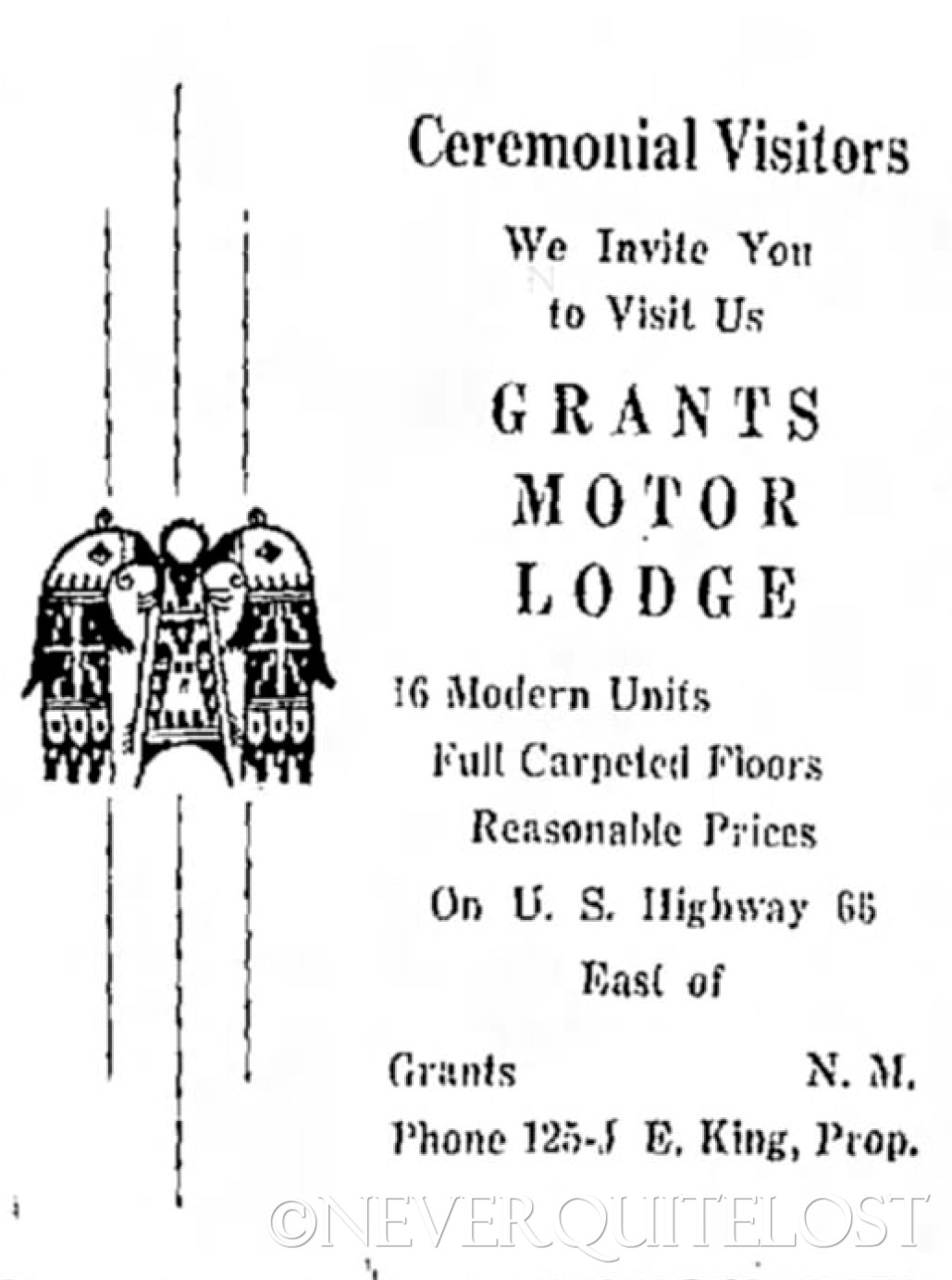
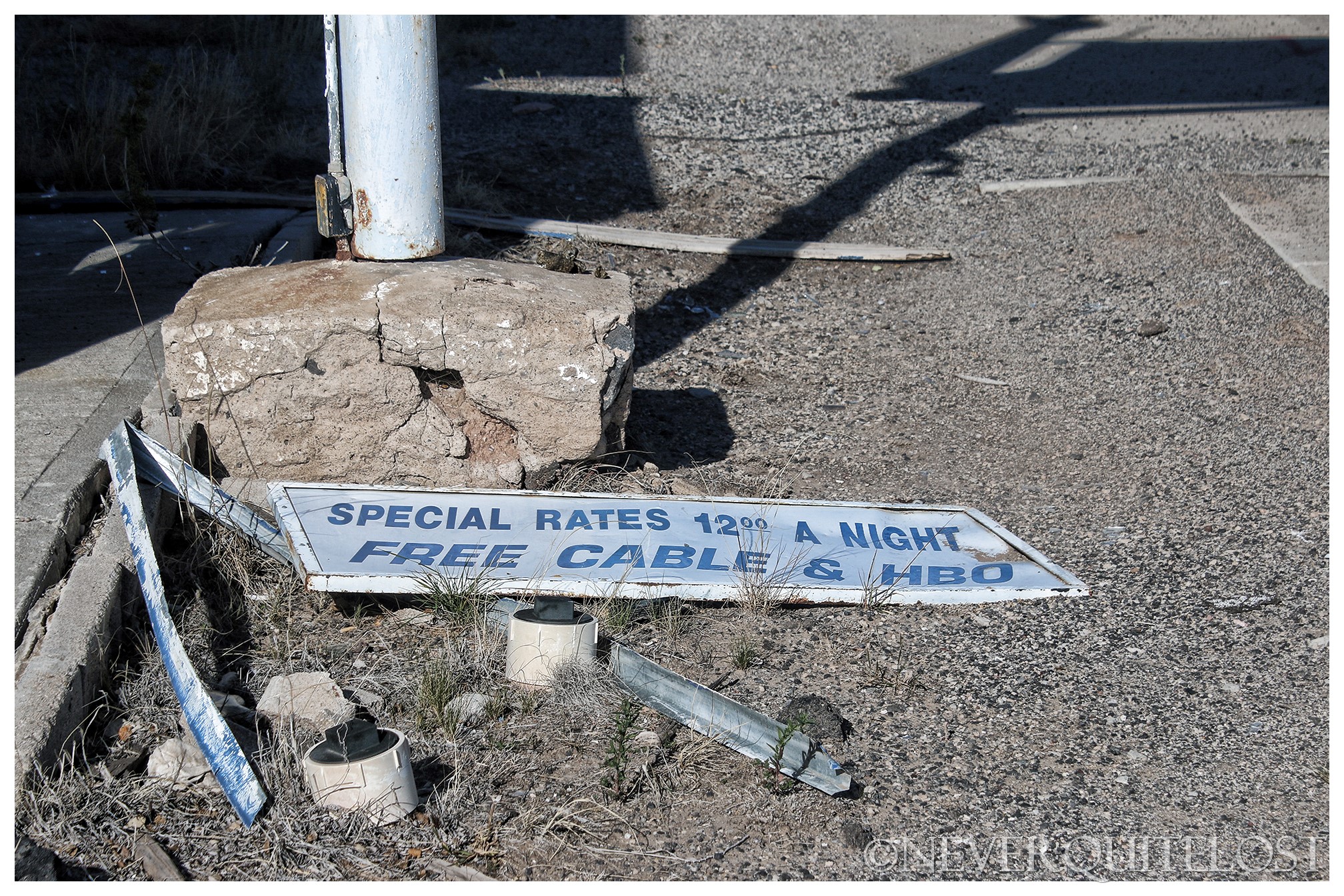
It originally started life as the Grants Motor Lodge in 1945 and is said to be the first motel that wasn’t a campground on the east side of Grants, although that seems quite a late date for such a claim. Over its lifetime it appears to have been a relatively run of the mill place; nothing made it stand out, no murders, no fires or the excitements that various other motels seem to attract. The one postcard I have been able to find is a generic drawing that could depict a motel in any town – and probably did.
In more prosperous times, the motel would even advertise – this was in the Gallup Independent of 1959.
The Grants Motor Lodge ran through a number of owners and managers with one of the most memorable being the Lesters in the early 1960s. Clint Lester and his wife stood out in Grants because of their size. They were little people. That’s not an insult; Clint, at just 4 foot 8 inches tall (his wife was two inches shorter) was the Director for District 10 of The Little People, an organisation founded in 1958 by Billy Barty.
Perhaps its slow decline started with the change of name to the It’ll Do Inn. However quirky or amusing it might mean to be, that really doesn’t show a lot of pride in your establishment… It was still the It’ll Do Inn in 1974 when the owner was clearly keen to sell, even offering to take a house in Albuquerque as payment. By the time it was rechristened the Wayside Inn, the place was firmly going downhill.
Here in its It’ll Do Inn incarnation, the building in the middle is readily identifiable as the last surviving part of the Wayside Motel. [Photo from unknown source]
The 15-room motel accommodation was eventually torn down, leaving the main building marooned. Anyone passing by might notice the collection of cars that nuzzle up to the building – an old Mercedes, a 1950s Jaguar Mk2, an MG Midget and some older vehicles. It was these cars that recently gave the Grants Police Department one of its less glorious moments.
The motel office.
On the morning of Wednesday 26th September 2018, just days after the City announced it wanted to tear down the house, some enterprising thieves rolled up in broad daylight and made away with a two door 1933 Ford, a 1927 Packard and a 1929 Model T. It seems they did this in quite a leisurely manner – if I recall rightly, the ’33 Ford and the Packard were parked on trailers, so the thieves took those too – no-one took any notice. Someone did eventually call the police and Lt Jeff Marez made his way down to East Santa Fe to enquire what the gentlemen were doing. They assured the Grants Police Department officer that they were moving the vehicles for the owner. They then reeled off the owner’s name and details and Lt Marez went away satisfied. The three cars, the trailers and the thieves were long gone by the time that the Grants Police realised that those details were all on the zoning notice that the City Council had pasted to the Wayside Motel’s door and all the thieves had had to do was memorise them…
The rear of the building where the owners could sit on their hacienda-style balcony and gaze out over the railroad just feet away.
The Wayside Motel isn’t a grand building. To be honest, it’s not even a really very interesting one. But it is part of the history Route 66 through Grants and the chances are that the next time you pass this way it will probably be gone.
Well, for $12 a night, you’d want free cable and HBO!
The snow started falling over the Texas Panhandle on 1st February 1956. Within hours it would herald one of the worst blizzards in American history as snow fell for four straight days over Texas, Oklahoma and New Mexico; by the time it began to thaw, at least eighteen people and hundreds of cattle were dead. The little town of Vega bore the brunt of the storm, recording a staggering 61 inches of snow, but everywhere was affected. But life had to, somehow, go on and that meant Route 66 had to keep rolling.
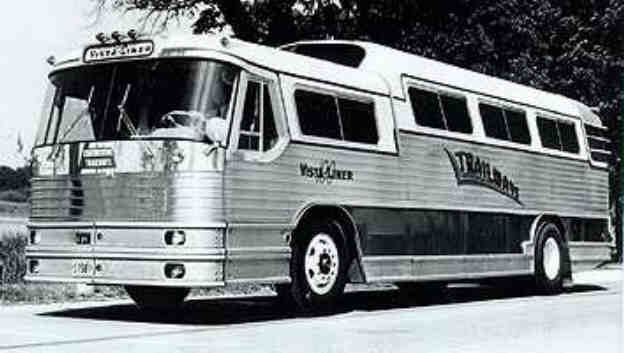
If the road was open for business, then so were the companies that used it, among them the bus line, Continental Trailways. At 5.30am, John D Hearon, 38, pulled his Vista-Liner out of Amarillo, heading to Tucumcari. He knew that the conditions were dire, having already done a run in the opposite direction, arriving in Amarillo two hours behind schedule. There are varying estimates as to how passengers he had on board for that return trip – contemporary accounts state between 14 and 35 (although the lower figure is probably the correct one) but all agree that among the passengers was 21-month-old Patricia Henderson, travelling with her mother, Ruth.
Ohio company Flxible built just 208 Vista-Liners between 1954 and 1958. Continental Trailways purchased 126 of them and it was one of these buses John Hearon was driving on the Amarillo-Tucumcari run.
All was well until around 9am when, John Hearon related; “I was going about 25 miles an hour when I hit this drift in a deep cut. Snow was about waist high and we couldn’t move the bus. No-one got excited, though. We had about a half tank of fuel, so there was no immediate worry about heat. We figured we’d just sit tight until help arrived.” But more than five hours passed with not a single vehicle in sight – the blizzard had closed down Route 66 and even snow clearing machinery couldn’t get through – and Mr Hearon started to worry that the bus was running low on fuel. Once that ran out, the bus would become a freezing metal box – and possibly a tomb. The only food on the bus was two sandwiches which the passengers gave to the little girl. Mr Hearon decided that he had to go for help. Norris Turner, a passenger from Houston, offered to go with him, but Mr Hearon urged him to stay behind and help keep up the morale of the other passengers. John Hearon opened the door and set off into the storm.
Plainview, to the south of Amarillo, at the end of the five-day storm.
Adrian was the closest town, but John Hearon realised that he would be walking uphill and into the freezing wind and blowing snow, so he headed west for Glenrio. He was wearing only his bus driver’s uniform of low cut shoes, unlined gloves, woollen trousers and a light regulation jacket and within minutes he had to return to the bus to find a piece of cloth to wind around his head to protect his ears and neck. Then he set off again, finding his way by the telephone poles along the now hidden road, often slipping and falling. He came across a couple stranded in their car who tried to persuade him to seek refuge with them, but Mr Hearon was adamant his passengers, especially the little girl, needed help and he pushed on.
The Brownlee Diner rallied around to feed the stranded bus passengers.
He would later tell John Phillips of the Reader’s Digest, “About nine o’clock my eyes felt strange. There was a beacon north of Glenrio I’d been using as a guide, but suddenly I stopped seeing it … my right eye had gone blind.” Not long after, his left eye began to cloud up as he began to succumb to snow blindness. Slapping his face to keep himself awake, he finally saw distant spots of light just after 10pm; he had been pushing himself forward for hours with thoughts of steaming hot coffee and he passed Joseph Brownlee’s gas station, stumbling towards the diner next door. But his strength finally failed him and he fell to his knees in the snow. He managed to whistle a couple of times and this saved his life. A young man in the diner heard him and found him in the dark, dragging him into the gas station. Joe Brownlee said; “He looked nearly dead. His face was blue, his eyes closed, his lips swollen. I’ve never seen anyone look like that.”
The Brownlee gas station where John Heardon was taken when he reached Glenrio.
John Hearon had staggered through the storm for almost nine hours. Frostbitten and snowblind, he could barely speak, but he managed to tell his rescuers exactly where the bus was, how many passengers were on it, how long they had been without food and how much gas had been in the tank when he left. Joe Brownlee loaded up his Power Wagon with food and blankets and, putting chains on the wheels, fought his way to the bus, arriving at 2am. Thanks to John Hearon’s incredible bravery, everyone was well and in good spirits and the engine was still running, although they were no doubt pleased to see Joe Brownlee. Over several trips, all the passengers were ferried back to the diner where the town donated food for all of them.
Mr Hearon spent just four days in hospital. After six more days at home, he resumed his Tucumcari-Amarillo route. His courage was recognised with an all-expenses paid holiday to Treasure Island in Florida (Continental Trailways let him have the extra week off, which was mighty big of it) where he was feted and presented with an engraved medallion and his wife, Winnie, with an orchid and a pendant. Other gifts were a little odder; as well as money, the town of Sudan, Texas, presented him with a bale of cotton.
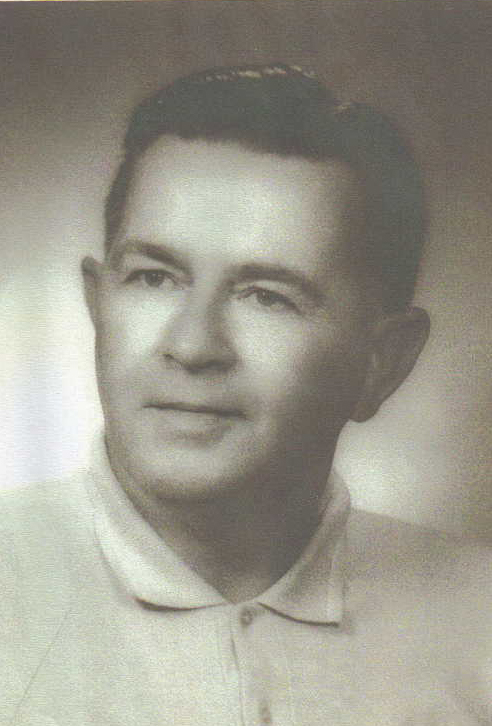
However, there was no long happy ending for John Hearon. On 12th March 1965 he passed away from pneumonia while suffering from lung cancer. He was just 47 years old. But to his four children, the oldest of whom was just 12 when he died, to the passengers of that bus and to the people of Glenrio he was and always will be a hero.
The diner (the place was built to resemble a Valentine Diner) and the idea of steaming hot coffee kept John Hearon going during his courageous trek.
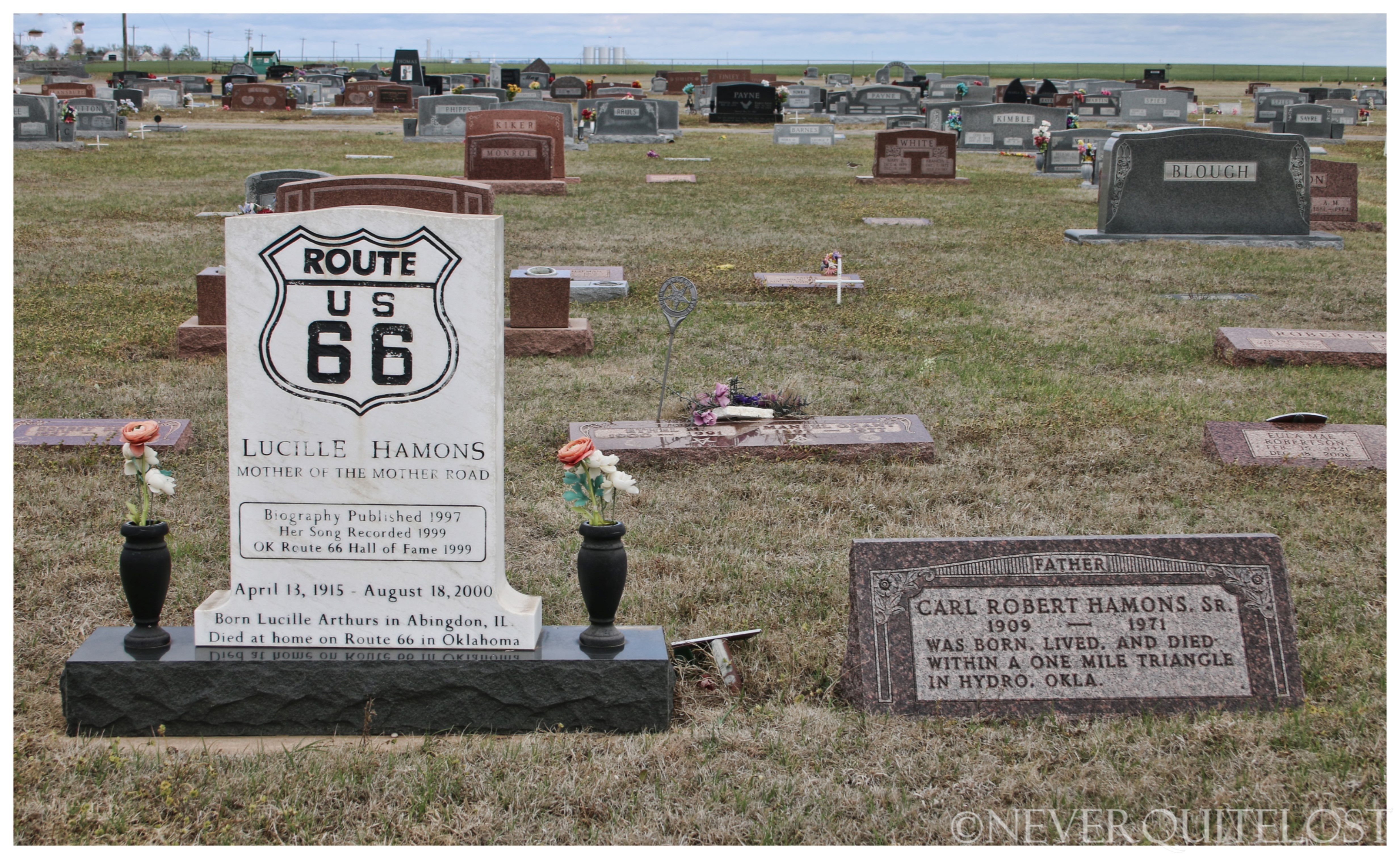
Lucille and Carl Hamons, reunited in death, along with their only son.
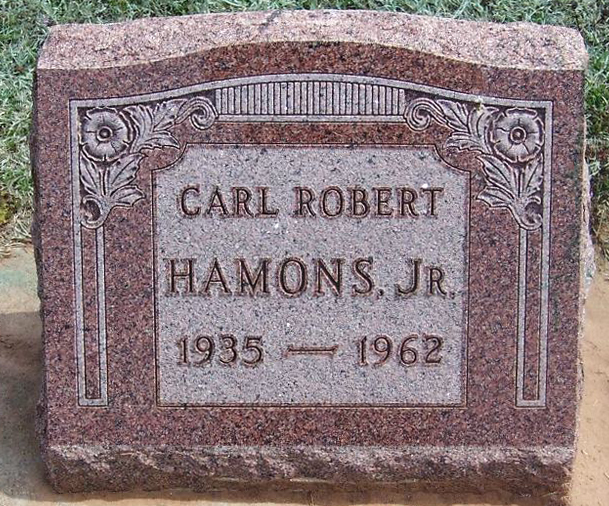
I recently visited the Oklahoma grave of ‘The Mother of the Mother Road’, Lucille Hamons, not expecting that visit to be the start of another quest into times gone by. I was intrigued by the fact that she is reunited in the Hydro Masonic Cemetery with the husband from whom she had been divorced for over a quarter of a century. Of course, it could be that the plots had been purchased while they were still together and Lucille didn’t see the point of selling hers, but a nearby headstone made me wonder whether, even after death, they wanted to be in the same place. The stone reads simply, ‘CARL HAMONS JR, 1935-1962’.
Carl Jr’s headstone in the Masonic Cemetery in Hydro, Oklahoma.
Lucille and Carl Sr’s two daughters are quite often mentioned in articles about the Provine Service Station; it was the late Cheryl Hamons Nowka who persuaded her mother to write her memoirs, not only preserving those memories for posterity, but making enough money to bring the gas tanks underneath the station up to EPA standards and ensuring that Lucille could keep the place she had run since 1941, while oldest daughter, Delpha Dene Martin has operated a music store in Grants, New Mexico, for over 50 years. But, other than one comment that he was an ‘excellent mechanic’, few histories mention Carl Jr and not one explains his death at the age of just 27. When I started out, I thought the cause of his demise would be a car crash or perhaps illness. The truth was far more startling and dramatic. Unlike his father who was born and died in Hydro, Carl was almost a thousand miles from home when he met his death.
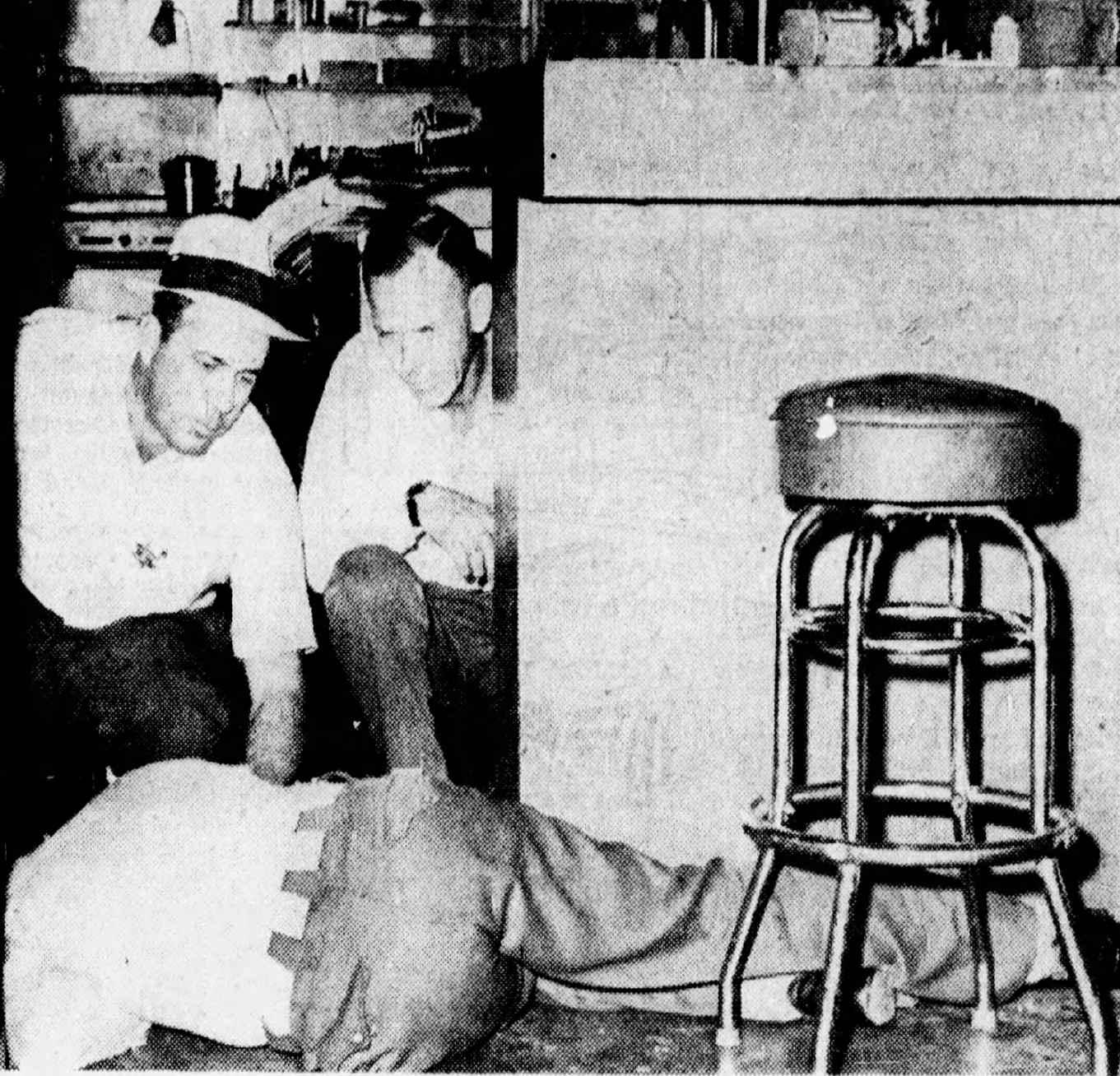
In this photo by an Arizona Republic photographer, Gila County Sheriff Jack Jones (left) and Coroner Clyde Shute bend over the body of Carl Hamons Jr. He was asleep on the bar stool when his ex-wife shot him nine times.
In his early twenties, Carl moved from Oklahoma to Globe, Arizona, where he found employment with the Magma Copper Co. Then he met Yetta Jean Aragon, a petite brunette who had four children and had run through three husbands by her mid-20s – by the time she was 16, she was on her second husband. If two people should have been kept far apart from each other, it was Carl and Jean. But they fell for each other and were married in August 1961. The marriage lasted just seven months and they were divorced in February 1962. Jean moved to New Mexico where she married her fifth husband in short order, but returned to live with Carl in the middle of 1962 because, she said later, “I couldn’t live without him”.
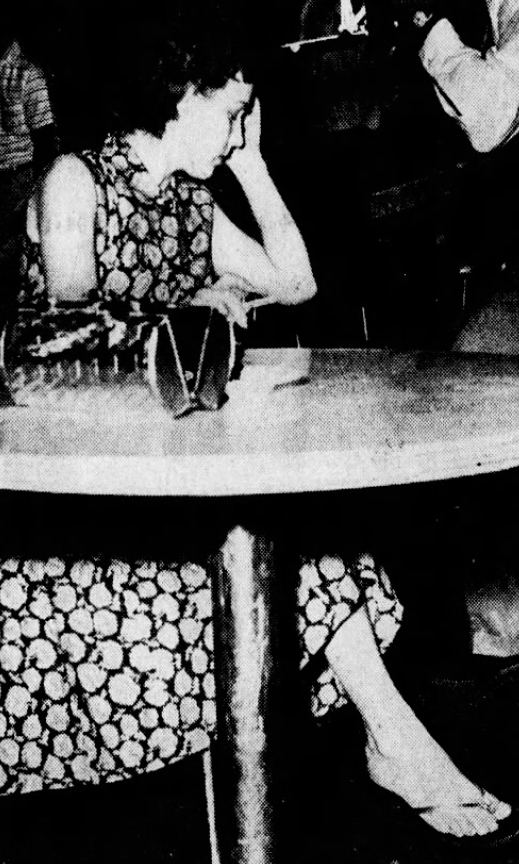
Yetta Jean Aragon had shot her ex-husband just minutes before an Arizona Republic newspaper man took this photograph in the Double-N bar.
Carl, who also had four children by a previous marriage, wasn’t the easiest man to live with; he’d been undergoing psychiatric treatment while married to Jean but he seems to have turned to alcohol as a cure. In the summer of 1962 the couple embarked on an epic two day drinking spree that ended at the Double-N Tavern in Globe on 29th August. Carl had passed out on a bar stool when his ex-wife drew a .22 calibre revolver and shot him – nine times. Eight of the bullets found their target and, with entry, exit and re-entry wounds, coroner Clyde Shute would find 13 gunshot wounds in Carl Hamons’ body.
Jean Aragon made no effort to escape. She told officers that night that she had decided to kill him because she was scared of threats he had allegedly made towards her and that that fear was, she said, “like a blue-flame whirlwind that kept getting bigger and bigger until the moment I shot him.” She added that she had been thinking about killing her ex-husband for some twenty minutes, and had drunk four glasses of beer very quickly in order to get up the courage. As she stood beside him, “he lifted his head from the bar, looked at me, then passed out again. That’s when I shot him.”
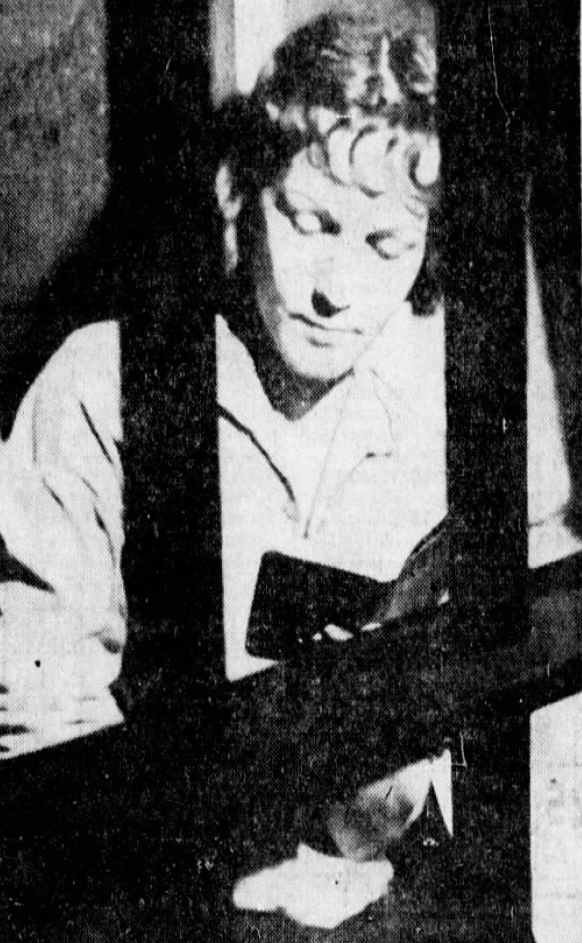
Jean Aragon behind bars following her trial. The photo was taken by Arizona Republic photographer Wade Cavanaugh who had also taken the image of Jean just after she had shot Carl.
Although it constituted premeditated murder, Jean’s defence counsel built his case on a plea of temporary insanity and that his client had been forced to this breaking point by Carl Hamon’s violent behaviour, claims against which, of course, Carl could not defend himself. This, along with the fact that Jean was, as one contemporary newspaper described her, ‘a trim, attractive brunette’, seems to have swayed the jury which, after deliberating for just six hours, convicted her of second degree murder, rather than the first degree murder with which she was charged. On 19th January 1963, she was sentenced to 12-20 years in the Arizona State Prison. On hearing the verdict, 29-year-old Jean said; “I’m glad it’s over. Now maybe when I get out of here I can live the life like I’ve always wanted.” For Lucille Hamons’ only son, that wasn’t an option.
Carl Jr was only six years old when his parents bought the Provine Service Station and he would grow up here.
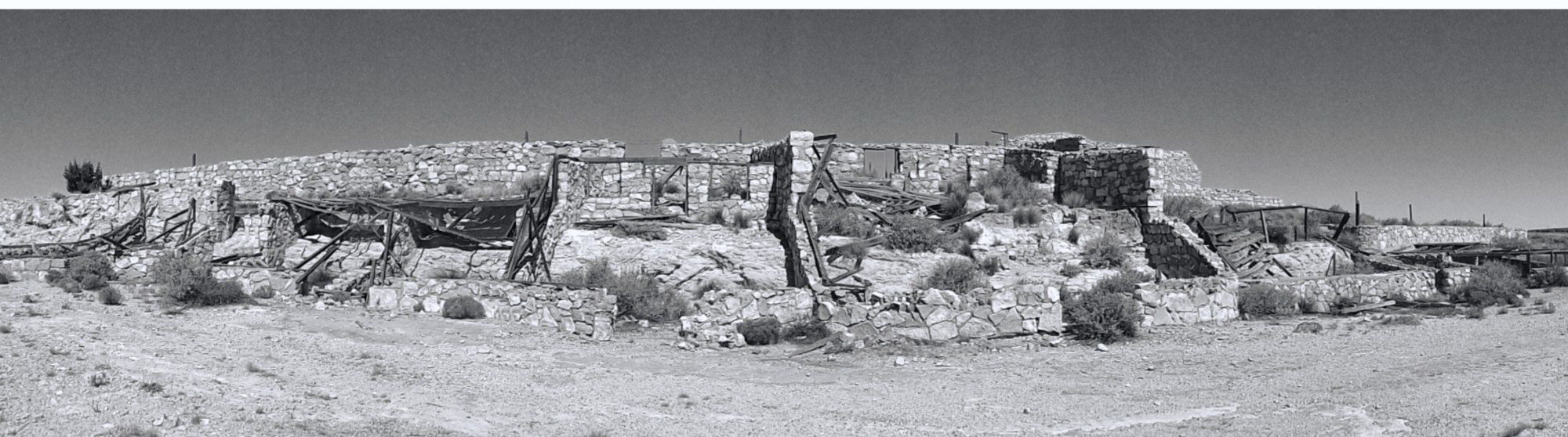
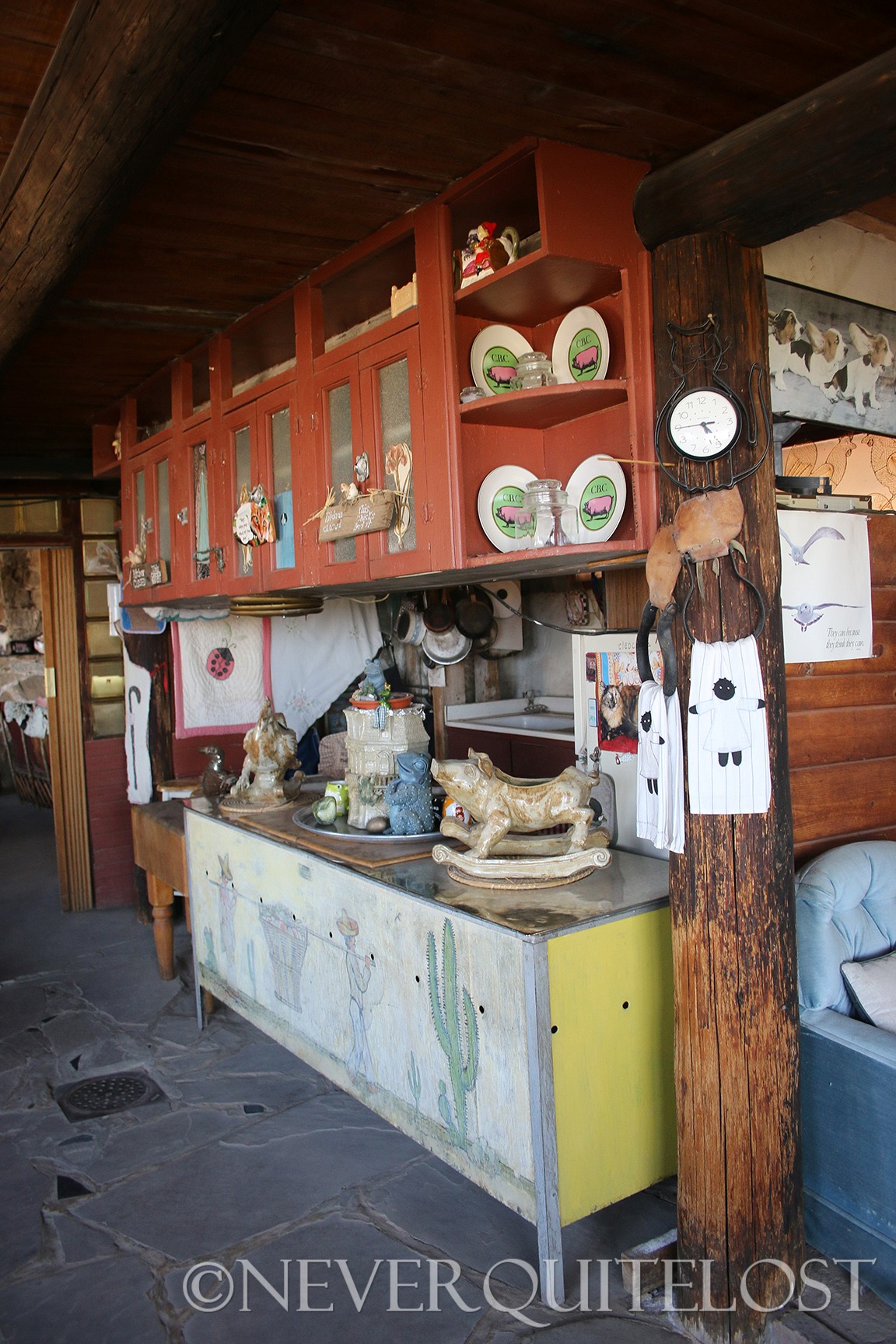
In Phoenix is a building remarkable in itself, but even more interesting is the story behind it. Mystery Castle stands in the foothills of South Mountain Park; once alone in the desert, Phoenix is now rushing up to meet it.
It was the work of Seattle advertising man, Boyce Luther Gulley, who, in 1929, was diagnosed with tuberculosis. The best hope of a cure then relied upon being in a warm, dry climate, so he moved to Arizona. The only problem was, he didn’t tell his wife, Frances, or his 5-year-old daughter, Mary Lou, where he was going. He simply said he wanted to pursue a life as an artist and drove off in his new Stutz Bearcat. They would never see him again.
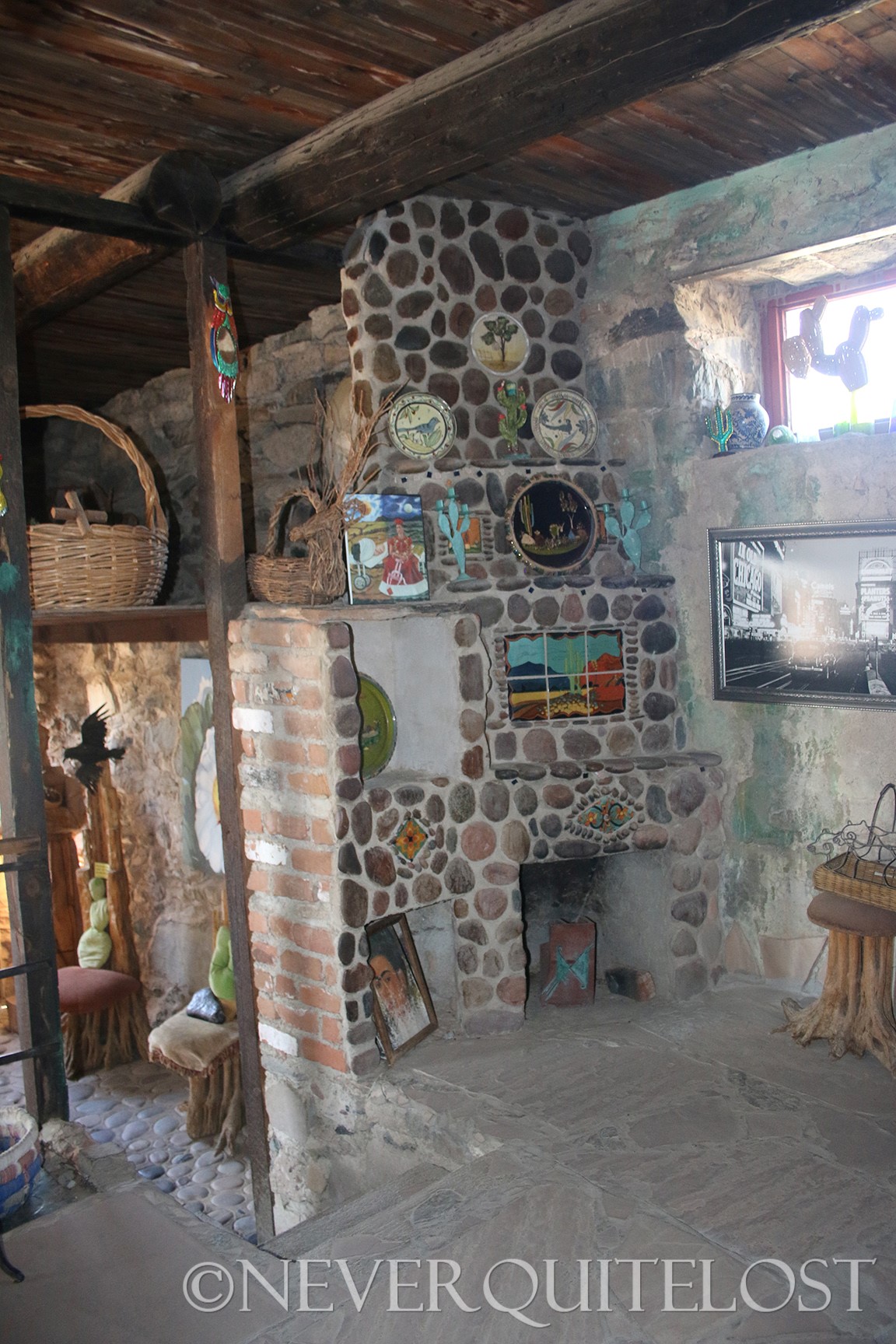
It’s thought that Gulley did indeed believe that he had just six months to live and didn’t want to put his family though any suffering (although simply deserting them doesn’t seem to be much of an alternative). Six months passed and then another and he hadn’t died. So it was then that he started upon his life’s work; staking a claim on land close to the South Mountains, he began building what would become an incredible, meandering house with 18 rooms, 13 fireplaces, a chapel and a dungeon. It was built of all types of recycled material – adobe, stone, railroad tracks, telegraph poles, even parts of the Stutz Bearcat when it ceased to be of use – held together with cement, mortar, calcum and goat milk. Gulley, who had had basic architectural training, bartered for materials and also laboured and sold shoes when he needed cash.
And for the next 16 years the house grew and grew. However, even with his tuberculosis cured, at no point did Gulley send for his family. Some stories say they believed he was dead, but it seems likely that he did send the occasional letter to Seattle in later years, although without saying exactly where he was (other family members, however, did visit the house, as did many of Gulley’s friends). Then, in 1945, Boyce Gulley died, not of TB but cancer. He left the house to his wife and daughter, along with a mysterious locked trap door and the stipulation that they had to live there for three years before it could be opened.
Life magazine covered the opening of the locked compartment, as well as dubbing the place Mystery Castle, although it contained just two $500 bills, some gold nuggets and a Valentine’s card Mary Lou had made for her father when she was a child. Mary Lou stayed on and in fact lived in the house until her death in 2010, although it had no plumbing or electricity until 1992. The accepted story is that this was a labour of love for her on her father’s part, to build her the castle she had always wanted as a little girl. However, I suspect much of this may have been embroidered by Mary Lou to excuse why her father had deserted her; Boyce Gulley seems to have been a selfish albeit talented man who, even after his death, continued to manipulate his family. Mystery Castle is an amazing place, but also a rather sad one; that Mary Lou continued to live in the building seems to be the act of a sad little girl clinging onto an idealised image of her father. I can’t help thinking that, rather than some fantasy building in the desert, she would have much preferred to have her father in her life.





















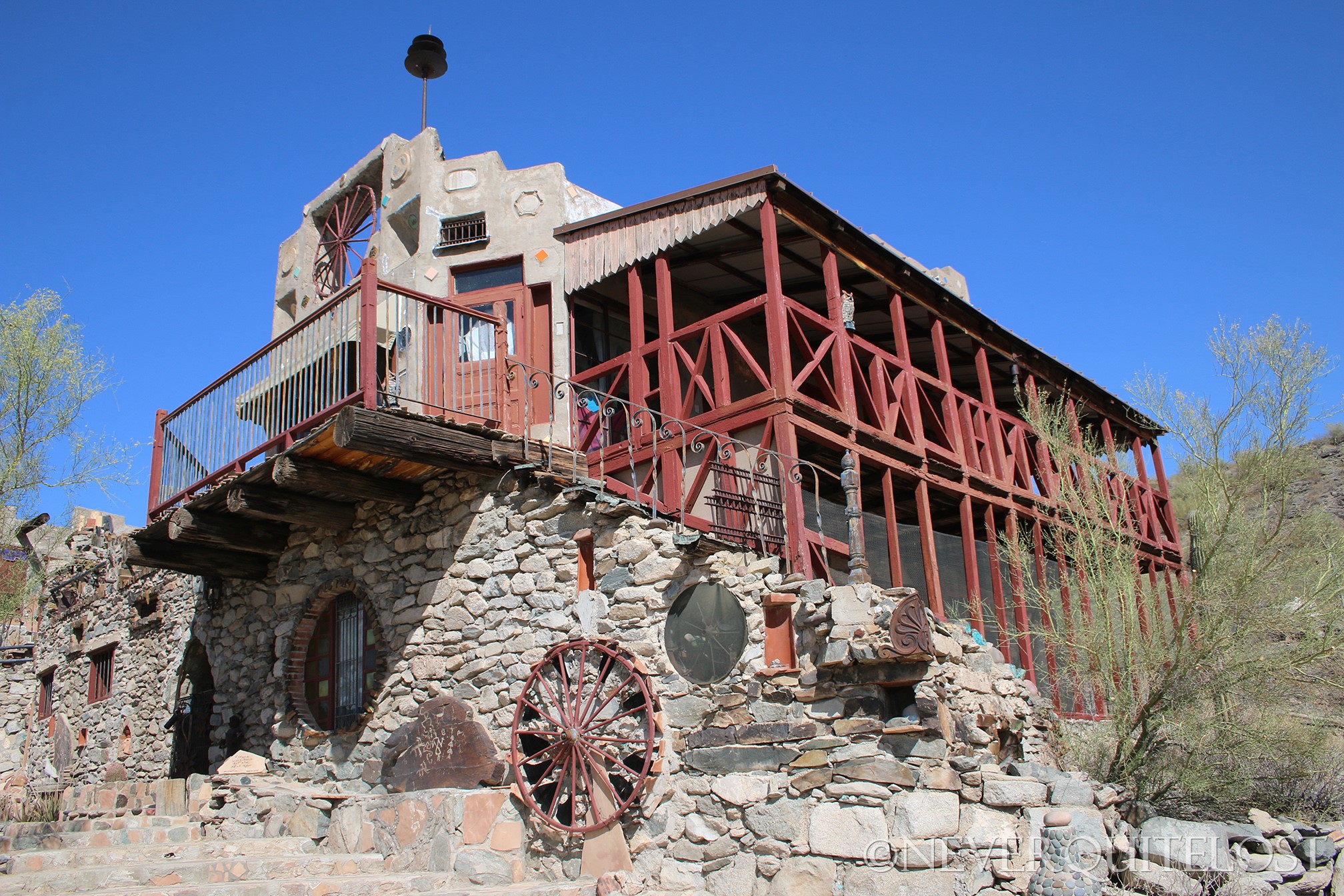
 It was the work of Seattle advertising man, Boyce Luther Gulley, who, in 1929, was diagnosed with tuberculosis. The best hope of a cure then relied upon being in a warm, dry climate, so he moved to Arizona. The only problem was, he didn’t tell his wife, Frances, or his 5-year-old daughter, Mary Lou, where he was going. He simply said he wanted to pursue a life as an artist and drove off in his new Stutz Bearcat. They would never see him again.
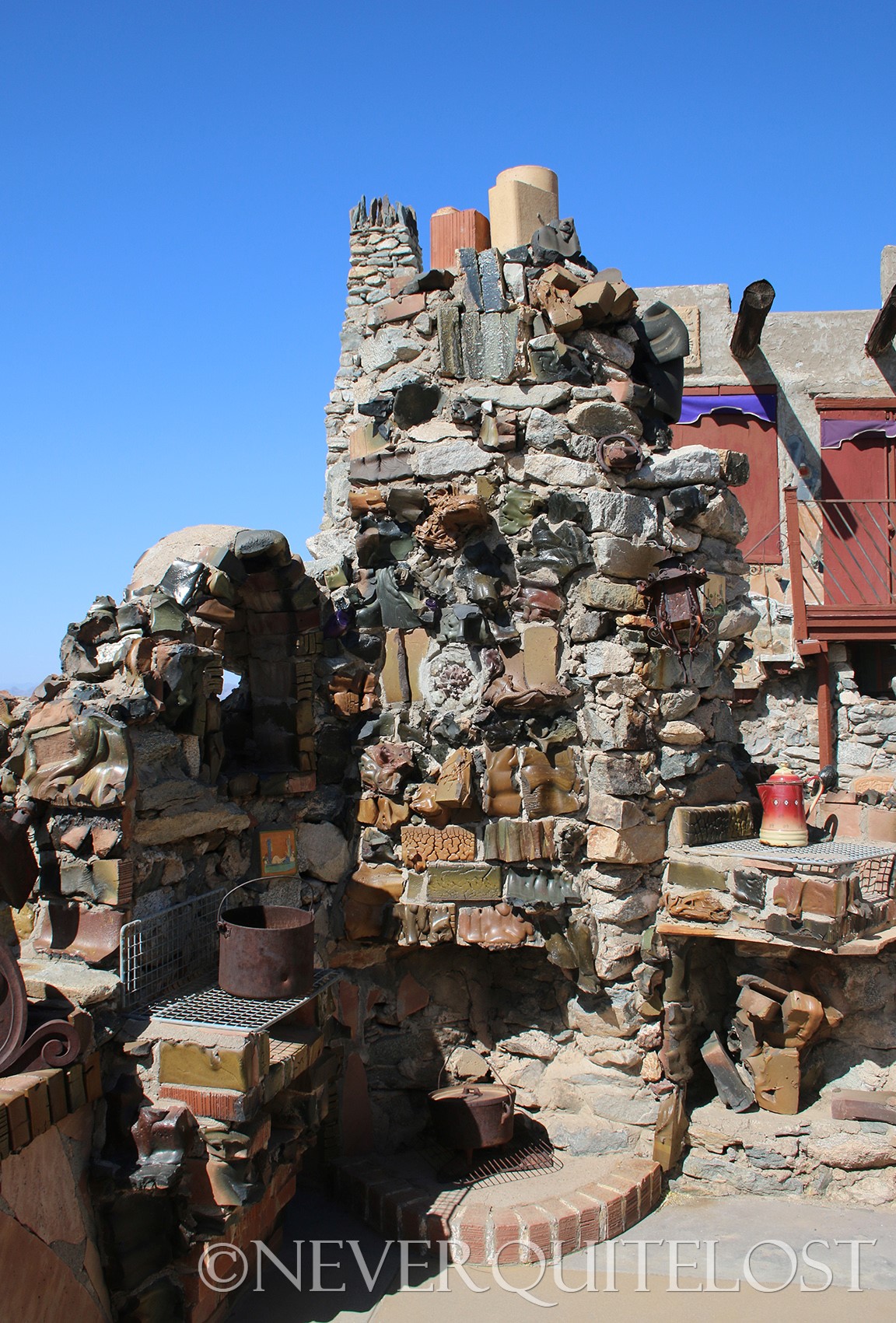 It’s thought that Gulley did indeed believe that he had just six months to live and didn’t want to put his family though any suffering (although simply deserting them doesn’t seem to be much of an alternative). Six months passed and then another and he hadn’t died. So it was then that he started upon his life’s work; staking a claim on land close to the South Mountains, he began building what would become an incredible, meandering house with 18 rooms, 13 fireplaces, a chapel and a dungeon. It was built of all types of recycled material – adobe, stone, railroad tracks, telegraph poles, even parts of the Stutz Bearcat when it ceased to be of use – held together with cement, mortar, calcum and goat milk. Gulley, who had had basic architectural training, bartered for materials and also laboured and sold shoes when he needed cash.
 And for the next 16 years the house grew and grew. However, even with his tuberculosis cured, at no point did Gulley send for his family. Some stories say they believed he was dead, but it seems likely that he did send the occasional letter to Seattle in later years, although without saying exactly where he was (other family members, however, did visit the house, as did many of Gulley’s friends). Then, in 1945, Boyce Gulley died, not of TB but cancer. He left the house to his wife and daughter, along with a mysterious locked trap door and the stipulation that they had to live there for three years before it could be opened.
 Life magazine covered the opening of the locked compartment, as well as dubbing the place Mystery Castle, although it contained just two $500 bills, some gold nuggets and a Valentine’s card Mary Lou had made for her father when she was a child. Mary Lou stayed on and in fact lived in the house until her death in 2010, although it had no plumbing or electricity until 1992. The accepted story is that this was a labour of love for her on her father’s part, to build her the castle she had always wanted as a little girl. However, I suspect much of this may have been embroidered by Mary Lou to excuse why her father had deserted her; Boyce Gulley seems to have been a selfish albeit talented man who, even after his death, continued to manipulate his family. Mystery Castle is an amazing place, but also a rather sad one; that Mary Lou continued to live in the building seems to be the act of a sad little girl clinging onto an idealised image of her father. I can’t help thinking that, rather than some fantasy building in the desert, she would have much preferred to have her father in her life.


 NEVER QUITE LOST