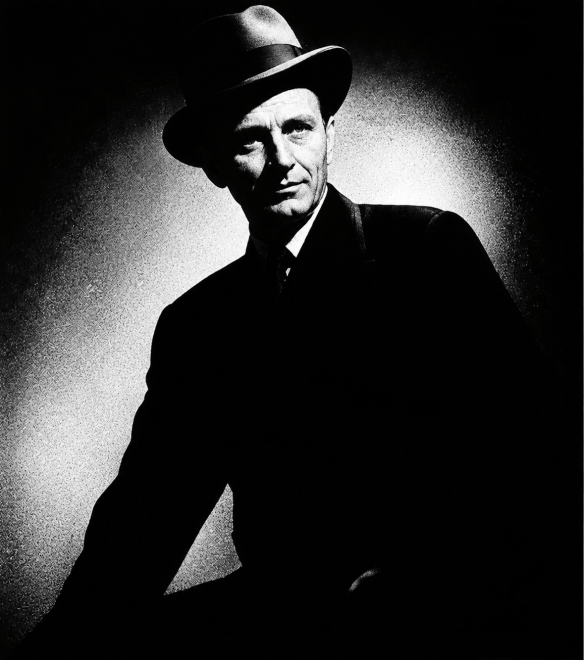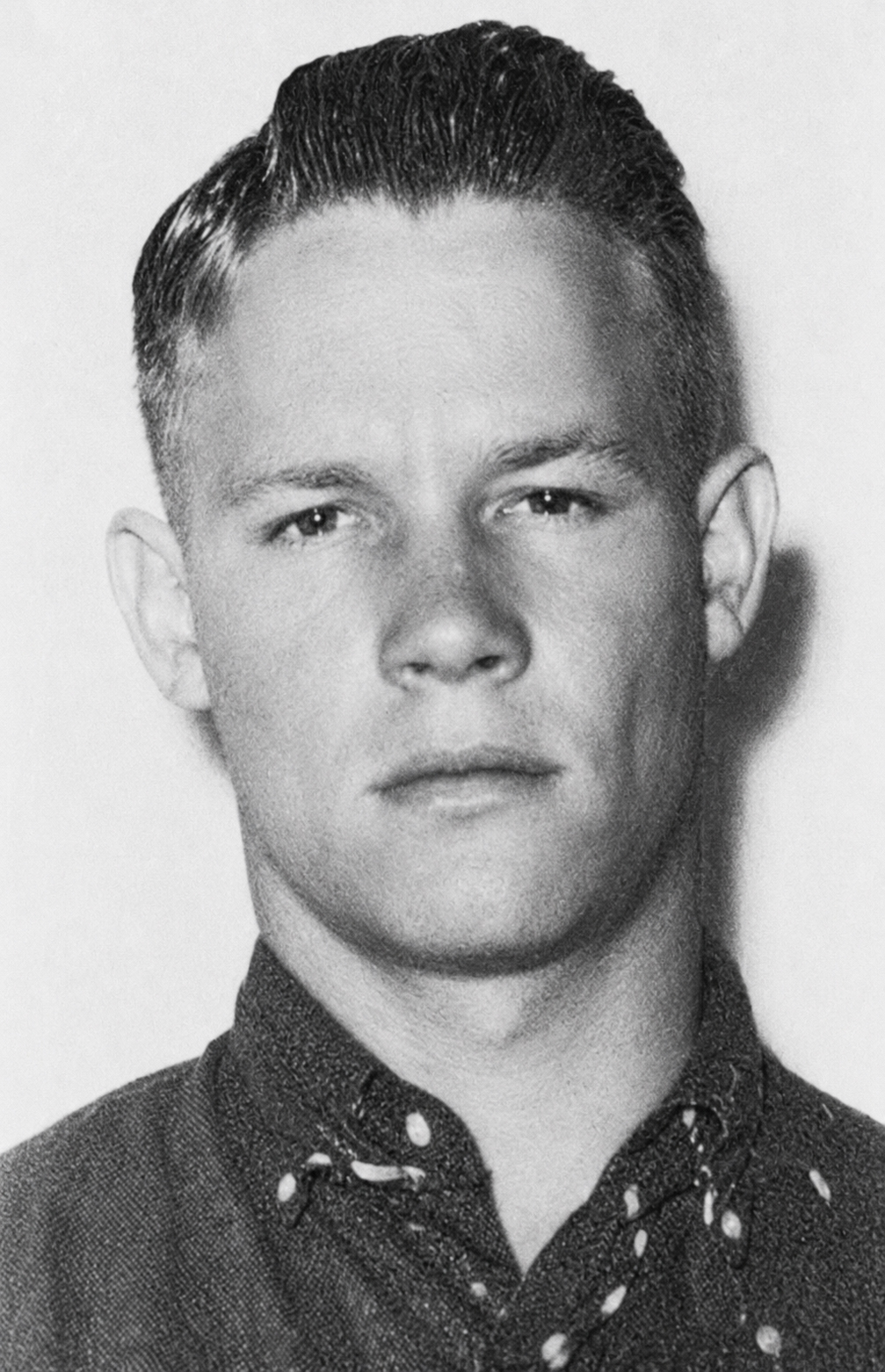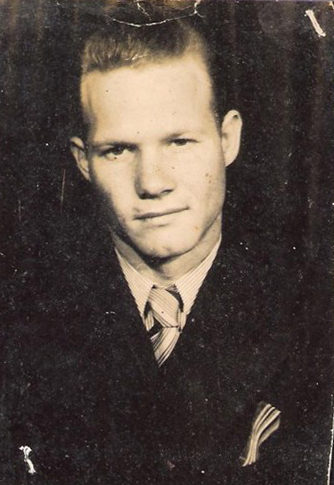
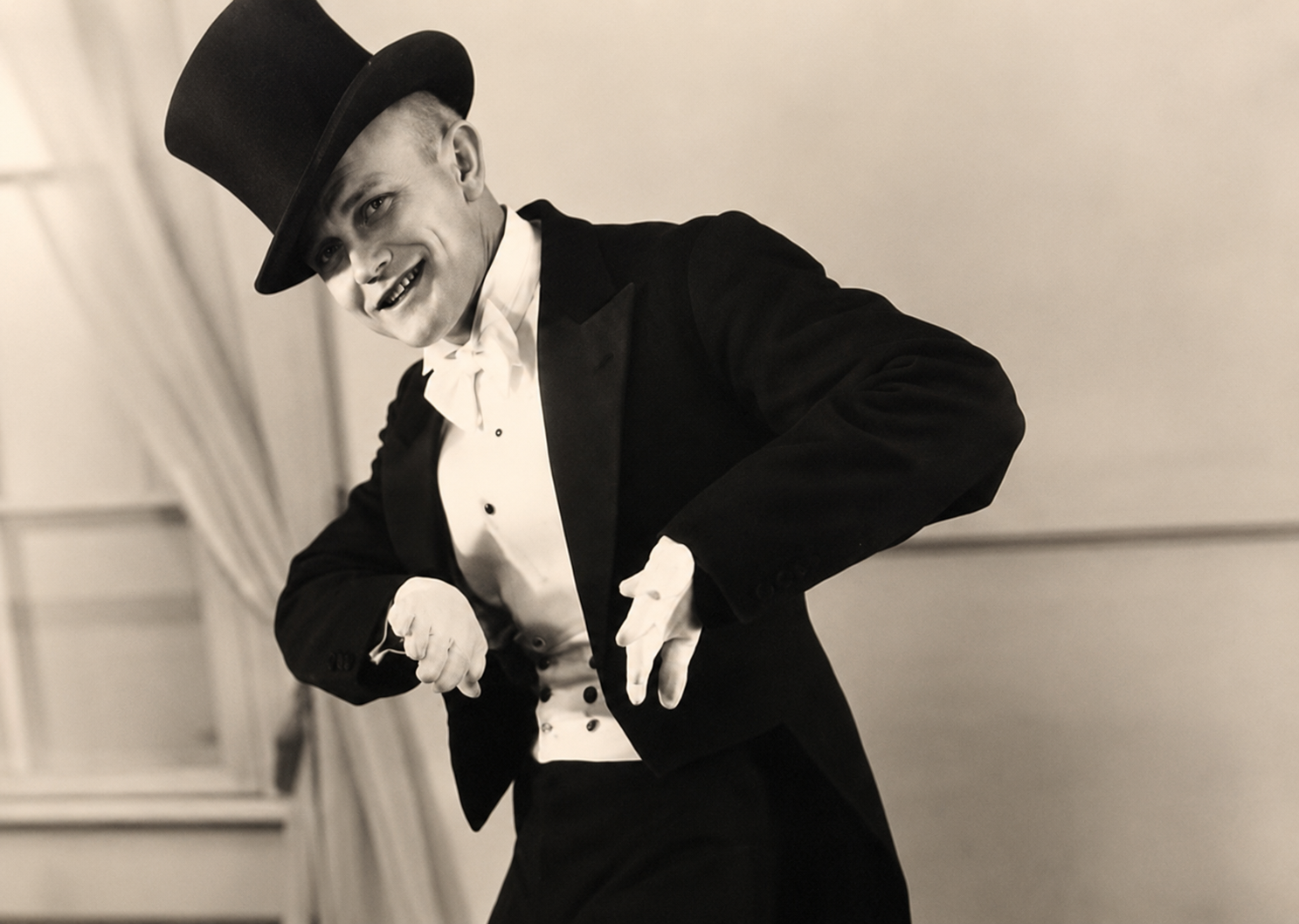
Travellers on Route 66 in the early 1960s might have been surprised to see a middle-aged man in a white suit and broad-brimmed hat bobbing and weaving along the road. That man was Lewis Larrimore Walker and, despite the incongruity of his surname, he was dancing across the United States.
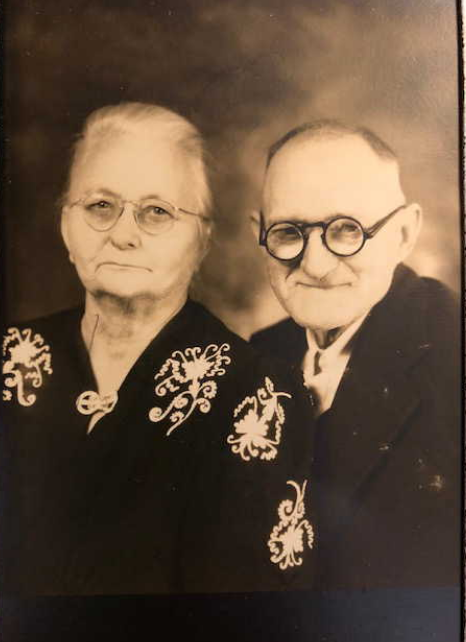
Lewis Walker and his twin Lois were born in Childress, Texas, in 1909, to cotton farmers Lee and Lillie Walker. Yes, Lewis and Lois. The Walkers had an interesting approach to names; the twins had an older brother by the unusual name of Akard, another brother called Bernice and a younger sister who was christened Billy…
By early 1930 Lewis was working in the oilfields, along with another brother, Rudolph, but it was not a profession that suited him and a few months later he was working in Kitty O’Connor’s Dance Studio (‘above Panhandle Paint and Wallpaper Co’). That didn’t last long and in October 1930 he opened the Lewis Walker Dancing School at the Hilton Hotel in Lubbock, Texas. He would later say that he learned to dance from the black workers in his father’s cotton fields.
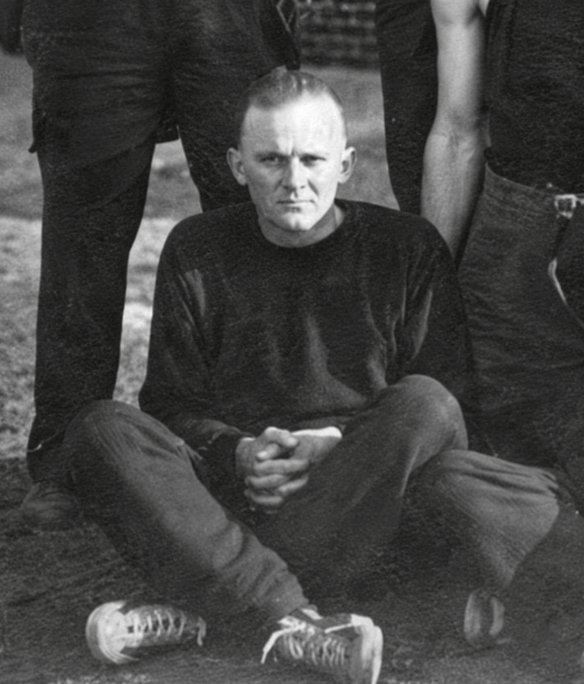
Lewis ran a tight ship. In early 1931 he took out newspaper adverts which listed the ten rules to observed in his dancing school that included ‘This is a dancing school, not a loafing school. There are other places more suited to loafing.’ (#4) and ‘Don’t talk crude. This doesn’t help you or anyone else’ (#6).
This was the Great Depression and dancing lessons might have seemed very low on many people’s priorities, but Lewis would trade cakes and pies for classes and often offered free lessons. In 1935 he changed the name to the Larrymore School of the Dance and then the Larrymore School of Fine Arts. He had hated his middle name as a child but adopted it for his business, although, with typical Walker disregard for convention he spelled it with a ‘Y’ rather than as the ‘Larrimore’ with which he and Lois had been born.
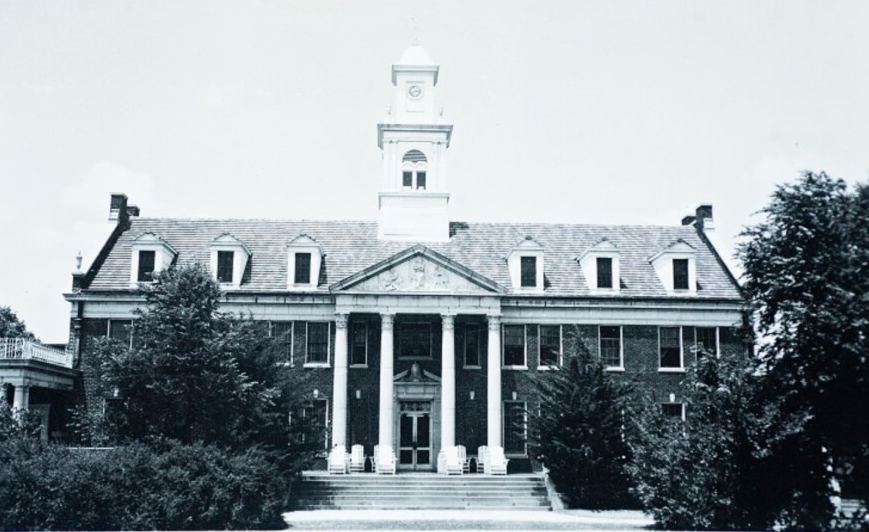
That dance studio would move around a bit – Lewis once said that it had had an address “on every street [in Lubbock] from 8th to 25th” – and he also opened studios in Ruidoso and Carlsbad, New Mexico. However, business was paused when Lewis went off to serve his country in 1943. He flew as a glider pilot and then as a gunner on a B-17 in the 8th Air Force, flying 35 missions and being awarded the Air Medal with five clusters. He spent his last months of service at South Plains Army Airfield as a non-commissioned officer in charge of special services on the airfield.
Lewis was discharged on September 30, 1945, after serving 3 years and 9 months; he immediately returned to Lubbock to build a new dance studio. That would grow to three locations in Lubbock in the 1950s with some of his pupils the children of those he had originally taught. (Lewis liked teaching children and teenagers because they were more difficult to train and he liked the challenge.) He never married, although he had been engaged to Nancy Faver, one of his students, in 1933, but that came to an end when she married someone else.
Then in January 1962, he announced the closure of the Larrymore Dance Studio. He moved to Hollywood but then came his next venture – he would dance across America. (He claimed it was to settle a bet made 31 years previously with his friend Harold Gore.)
His penchant for long distance dancing had began early. In 1931 he danced from Lubbock to Slaton, Texas, and back again in a day, a distance of around 35 miles, accompanied by a piano and a phonograph on a decorated truck.
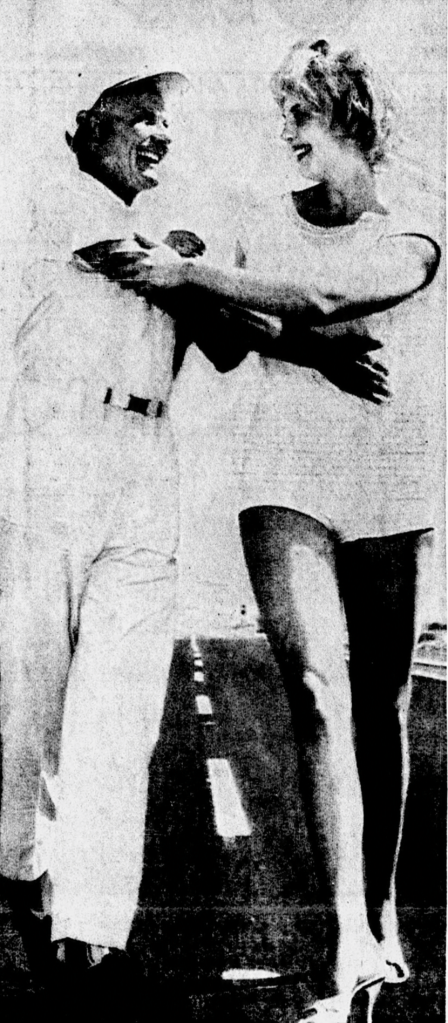
It appears that the cross-country dance started with the intention of a continuous trip, but – probably to the relief of his feet – he soon decided it would be completed in stages. (He had thought he would manage 35 miles a day but the terrain and his age quickly caught up with him and across California he averaged little more than 10 miles a day.) So, on May 2, 1962, he dipped a toe in the Pacific Ocean in California and, with a foam dummy as a dancing partner, headed east. At first he was accompanied by a transistor radio to supply music to which he would do a tango or a waltz, along with a driver and car, although during school holidays his teacher nephew, Robert Vaughn, would join him, driving a motor home.
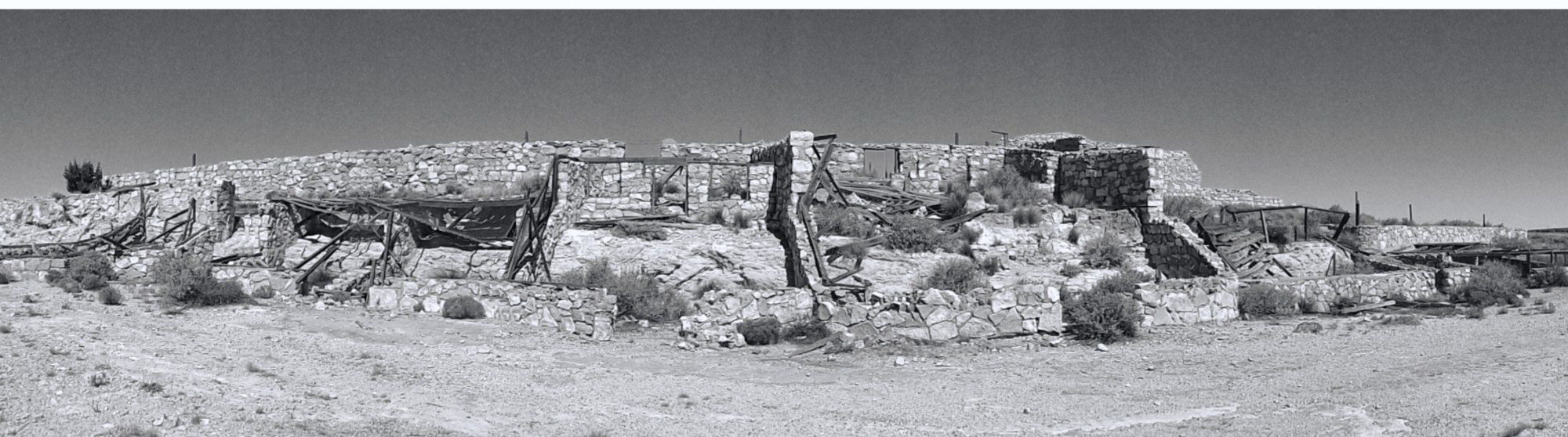
By July he had danced across the Mojave (getting lost on occasion) and was approaching Las Vegas but it appears that the trip stalled at that point. It resumed at the beginning of the following year: he danced through Seligman, Arizona, spotting a mountain lion, and then had a close encounter with a Hereford bull in Ash Fork. In January 1963, Lewis danced into Two Guns, Arizona, where he was greeted by Fern Rawlinson, the then owner of the trading post, to whom he gave a dancing lesson before moving onto the Hopi House and then to Winslow.
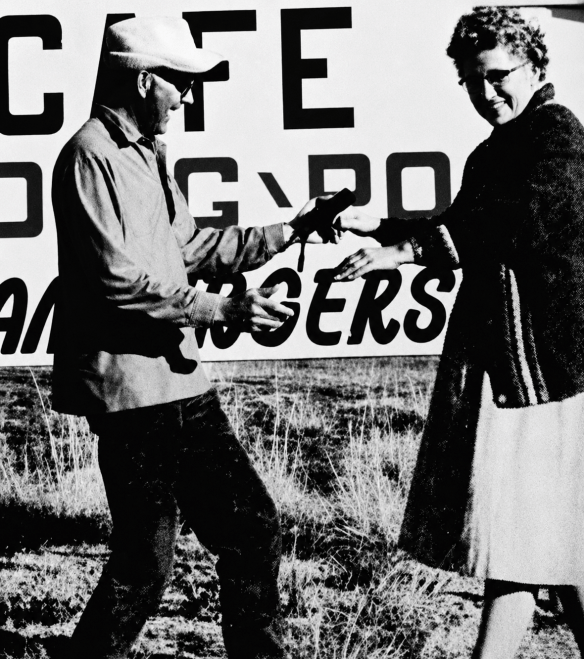
And so he danced on, through Grants and Albuquerque and across the Texas and Oklahoma Panhandles By July he was in Kansas with plans to reach New York by the fall. Did he? Alas, I can’t tell you that. I could find no further reports of the ‘Dancing Texan’ after Kansas and if he did complete the trip, then it seems to have gone unreported. However, Lewis’s mother, Lillie, died in August 1963 and it could be that that brought a premature end to the challenge, but I would like to think that Lewis did indeed dance all the way to the east coast!