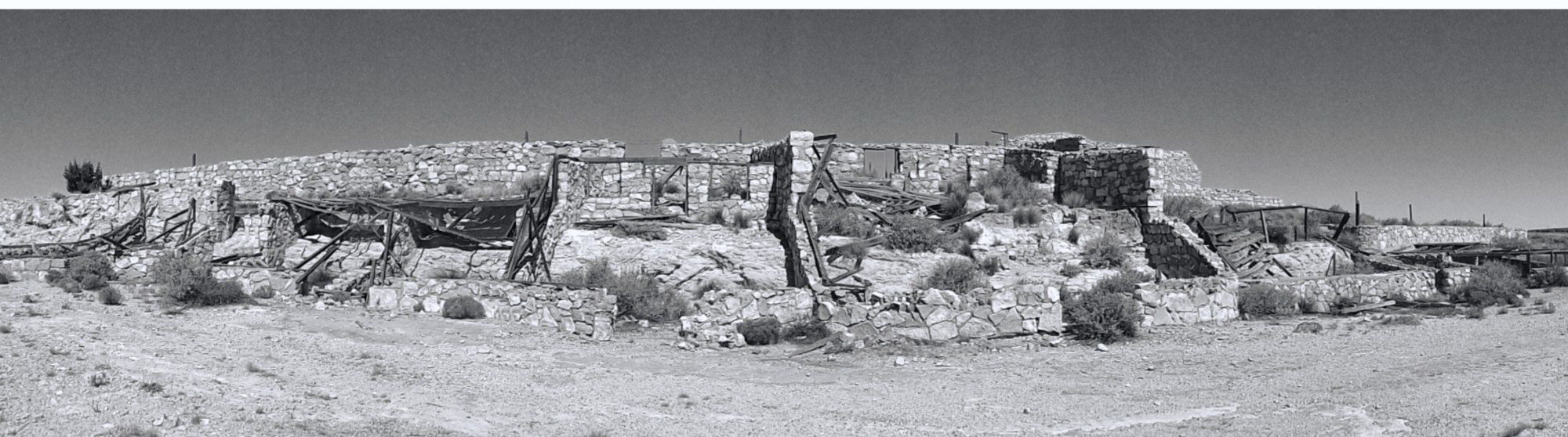

In Phoenix is a building remarkable in itself, but even more interesting is the story behind it. Mystery Castle stands in the foothills of South Mountain Park; once alone in the desert, Phoenix is now rushing up to meet it.
 It was the work of Seattle advertising man, Boyce Luther Gulley, who, in 1929, was diagnosed with tuberculosis. The best hope of a cure then relied upon being in a warm, dry climate, so he moved to Arizona. The only problem was, he didn’t tell his wife, Frances, or his 5-year-old daughter, Mary Lou, where he was going. He simply said he wanted to pursue a life as an artist and drove off in his new Stutz Bearcat. They would never see him again.
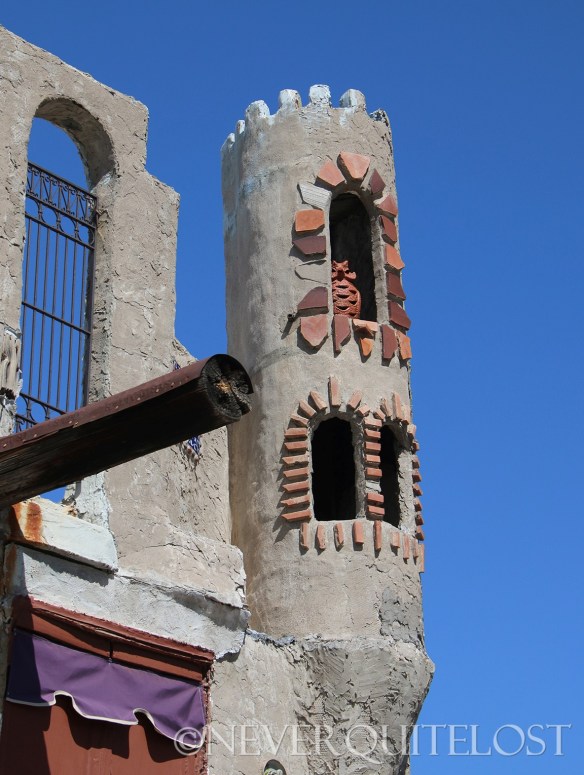
 It’s thought that Gulley did indeed believe that he had just six months to live and didn’t want to put his family though any suffering (although simply deserting them doesn’t seem to be much of an alternative). Six months passed and then another and he hadn’t died. So it was then that he started upon his life’s work; staking a claim on land close to the South Mountains, he began building what would become an incredible, meandering house with 18 rooms, 13 fireplaces, a chapel and a dungeon. It was built of all types of recycled material – adobe, stone, railroad tracks, telegraph poles, even parts of the Stutz Bearcat when it ceased to be of use – held together with cement, mortar, calcum and goat milk. Gulley, who had had basic architectural training, bartered for materials and also laboured and sold shoes when he needed cash.
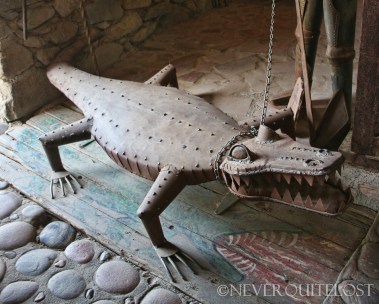 And for the next 16 years the house grew and grew. However, even with his tuberculosis cured, at no point did Gulley send for his family. Some stories say they believed he was dead, but it seems likely that he did send the occasional letter to Seattle in later years, although without saying exactly where he was (other family members, however, did visit the house, as did many of Gulley’s friends). Then, in 1945, Boyce Gulley died, not of TB but cancer. He left the house to his wife and daughter, along with a mysterious locked trap door and the stipulation that they had to live there for three years before it could be opened.
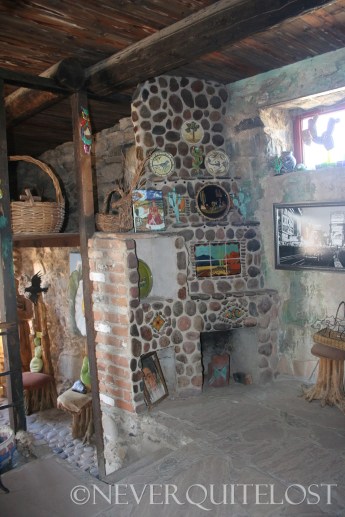 Life magazine covered the opening of the locked compartment, as well as dubbing the place Mystery Castle, although it contained just two $500 bills, some gold nuggets and a Valentine’s card Mary Lou had made for her father when she was a child. Mary Lou stayed on and in fact lived in the house until her death in 2010, although it had no plumbing or electricity until 1992. The accepted story is that this was a labour of love for her on her father’s part, to build her the castle she had always wanted as a little girl. However, I suspect much of this may have been embroidered by Mary Lou to excuse why her father had deserted her; Boyce Gulley seems to have been a selfish albeit talented man who, even after his death, continued to manipulate his family. Mystery Castle is an amazing place, but also a rather sad one; that Mary Lou continued to live in the building seems to be the act of a sad little girl clinging onto an idealised image of her father. I can’t help thinking that, rather than some fantasy building in the desert, she would have much preferred to have her father in her life.







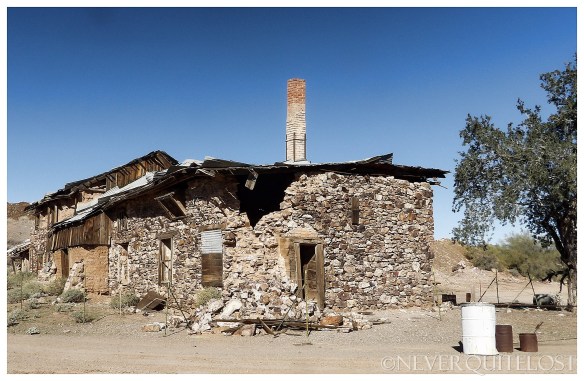
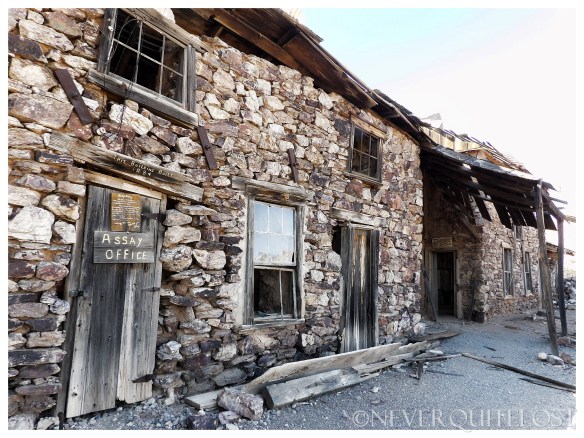
 Over the years, the Vulture Mine produced $200 million of gold, although it’s likely almost as much simply disappeared into various pockets. The assay office was particularly prone to being burgled and thousands of dollars of gold was stolen over the years. 18 men are supposed to have been hung from the Ironwood tree which still stands (next to Henry Wickenburg’s cabins), all of them guilty of stealing gold or ore, although there’s no record of any such hangings actually taking place. It’s a good story though.






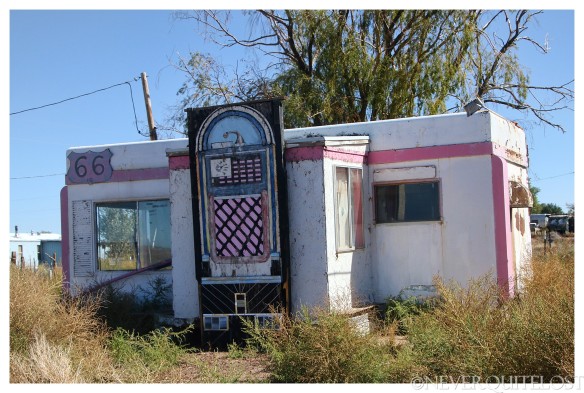 Perhaps the biggest surprise to me about the Route 66 Valentine diner in Sanders, Arizona, is that it does actually look like a Valentine diner. Shabby and sliding rapidly into decay like so many of its peers, but still clearly of its type.
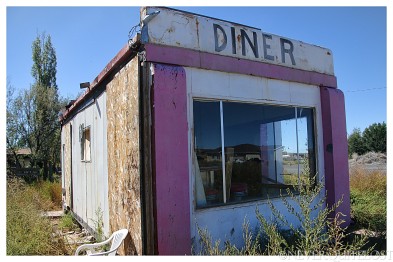 Why a surprise? Well, because, as far as I knew, the Route 66 Diner in Apache County’s Sanders had taken a Valentine diner and gradually eaten it, subsuming the original building into three containers and increasing the space so the original eight stools were replaced by seating for 60 customers. But, by the time I visited a few months ago, all those extra extensions had disappeared and the diner stood by itself, fading under the Arizona sun and having closed its doors on its final customer a few years before.
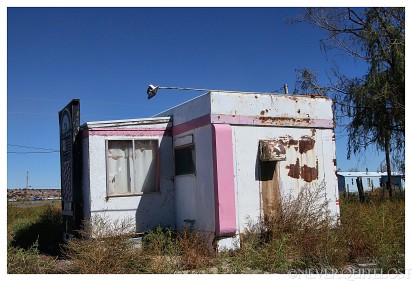 This particular Valentine prefabricated diner (it was clearly not purchased outright by its first owner as it still has the safe in which the owner would deposit a portion of his weekly takings to be collected by a Valentine agent) was first situated in Holbrook. It was then bought and moved to St John’s although, due to problems with zoning, it was never opened.
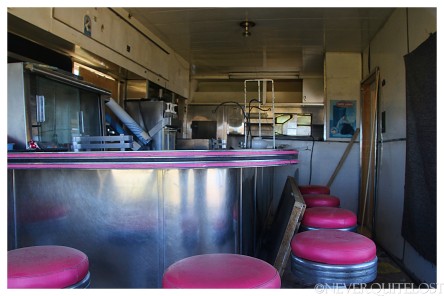 However, it was while the little diner was in St John’s that it was spotted by one Ena Middleton. Ena has true Route 66 heritage: she not only grew up on the Mother Road but is the grand-daughter of the infamous Henry Miller of Two Guns. She says that, peering through the windows, she fell in love with the napkin holders. She bought the diner with her husband, Frank, and then moved it to Sanders. It was then moved once more, still within Sanders, where it was so busy that it had to be extended – the aforementioned containers – although 99% of its trade was local and not Route 66 travellers.
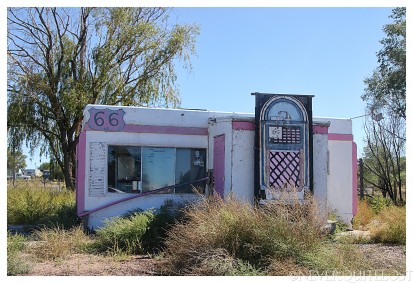 While still open, the Route 66 Diner had been up for sale, Ena and Frank wanting to retire to their land, partly due to ill-health. It seems that there have been no takers, other than for the container extensions to the little Valentine diner.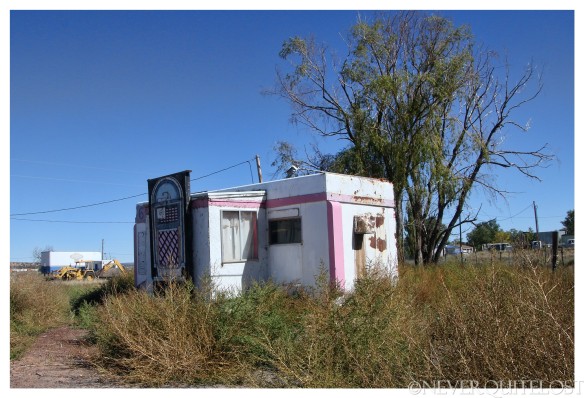




 NEVER QUITE LOST