DEATH AT A SAPULPA CAFE

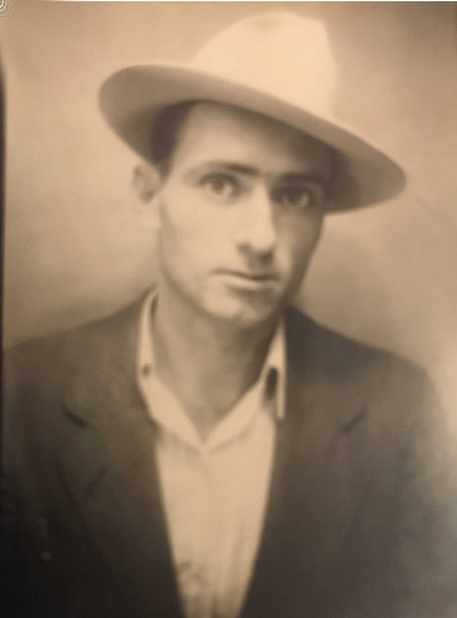
Eudell Walter Whitmire.

Many Route 66 travellers visiting Sapulpa stop at Michael Jones’ Gasoline Alley Classics, at 24 North Main, and some might even casually wonder the block on which the old Ford Model T dealership stands is book-ended at the southern end by the 1904 Young Building with nothing in between. But, until their demolition in 1981, that now empty space was home to two of the town’s oldest buildings; it was in one of those buildings that murder came to visit.

It was December 1960. The town was still recovering from an F5 tornado that had landed in May, killing three people and destroying over 100 homes and the Booker T. Washington High School, but now the town was looking forward to Christmas. Making a new start too was Eudell Walter Whitmire, a 40-year-old Oklahoman of Cherokee descent, who had just moved to Sapulpa from Angleton, Texas. The main reason for the move was the break-up of his marriage to Vivian Lee Brown who would remain in Angleton with their three children.

Eudell already had two sons who lived with their mother, Syble Ludy Stewart, in California. In around 1940, Eudell and his brother Gordon had moved from their home in Adair County, Oklahoma, to the west coast where Eudell found work as a fry cook at the Arches Café in Newport Beach while Gordon worked at White’s Coffee Shop on Balboa Island.

The Arches Cafe in Newport Beach where Eudell worked. It moved in 2007 and finally closed in 2011.

Both brothers enlisted in the military, Eudell in 1941 and Gordon the following July. Eudell served four years and was wounded in the line of duty in 1944, finally returning to Los Angeles in 1945 where Gordon joined him. But during his service Eudell had managed to meet a young waitress called Syble Ludy Stewart who he married in Yuma, Arizona, on February 15, 1943. Just over the border from California, Yuma was a popular destination for ‘quickie’ marriages as between 1926 and 1958 Arizona had no waiting period or blood test requirement for marriage licenses.

The couple had two sons, Stanley born on August 28, 1944, and Dennis, almost exactly two years later, on August 30, 1946. However, both Eudell and Gordon were, it seems fond of a drink. Eudell was arrested twice in 1947 for driving under the influence and on the first occasion his brother was also fined $25 for drunkenness. On March 1, 1949, they split up and Syble filed for divorce, stating that Eudell was “addicted to excessive use of alcohol” and had threatened to take the boys away from her. She was granted a divorce of grounds of extreme cruelty in November 1949 and given custody of Stanley and Dennis.

Eudell returned to Oklahoma, finding work as a cook at a café in Sapulpa which is where he may have met Vivian, who was then Mrs Vivian Tavel although she had been divorced from James Tavel on September 3, 1948. Clearly love blossomed quickly and she and Eudell were married in March 1950. The newly-weds managed the impressive feat of having two children born in the same year – Michael Gordon in January of 1952 and Diedra Dell in December. Randall followed in April 1954 by which time the family were settled in Angleton, south of Houston on the Gulf of Mexico.

Eudell and Vivian’s wedding.

But all was not well. Although the Whitmires were running the Taco House Café together, the marriage broke down and on February 11, 1960, Vivian was granted a divorce, custody of the children and $125 per month support. The Taco House Café was put up for sale.

When Eudell moved to Sapulpa, Vivian and the children stayed at their home in Angleton, Texas.

Eudell moved back to Sapulpa where a new venture was waiting. At the beginning of November, Ray Anderson had bought the Chieftain Café at 12 North Main, just across the road from the Sapulpa Trading Post that he had opened the previous September. Ray was married to Juanita Cates, the sister of Eudell’s mother, and so he invited Juanita’s nephew Eudell to be the chef and operator and, perhaps in memory of his last café or simply to needle Vivian, Eudell planned to call it the Villa Tacos Restaurant. Ray and Juanita Anderson shared their house in Tulsa with Juanita’s nephew – perhaps this intended as a temporary arrangement, but it turned out to be briefer than anyone had imagined.

Juanita Anderson, Eudell’s aunt and co-owner of the cafe.

Also newly arrived in Sapulpa were young couple Lawrence and Lola Aldridge who had moved to the Oklahoma town from Winfield, Kansas, in the summer. Lawrence Everett Aldridge had been born in Leon, Kansas, in 1932 and served some time in the military; the US Veterans Gravesites department lists him as serving for just two months in 1952. Why such a short period of time is a matter of conjecture. He was certainly fit enough to work in the oil fields, so perhaps the Army decided that it and Private Aldridge were just not suited?

Lawrence Aldridge photographed at his call up. He lasted just two months in the Army.


In May 1953 he married 18-year-old Lola Imagene Green and, after first living in Stroud, Oklahoma, they moved to California. But it seems Lawrence couldn’t keep a job – he was also convicted of drink driving in Orange County. Why they ended up in Sapulpa in 1960 is unknown, but what is known is the marriage was unhappy. Lola left Aldridge and moved into the Gibson Hotel (which burned down in January 1972); on December 5, 1960, she asked an attorney to prepare divorce papers. As Lawrence had also threatened her several times since the separation she also requested a restraining order. Attorney David Young would later say that he had drawn up the papers but hadn’t had time to file them before being overtaken by events.

Lola had found herself a job as a waitress as the Chieftain Café shortly after the Aldridges had landed in Sapulpa and when the previous owners John and Alice Alexander sold it to the Andersons she was kept on by the new owners and operator. She probably didn’t know many people in Sapulpa while Eudell hadn’t lived in the town for years; she was estranged from her husband and Eudell was divorced. Although 15 years her senior, the 6’2” café owner was a good-looking man and so it seemed only natural they would share the occasional beer. Although it probably went no further, this was too far for Lawrence Aldridge.

On the morning of December 6, 1960, he followed his wife to work, carrying a 16-gauge shotgun. She would say that he appeared to have been drinking and that he “seemed wild and I told him to come to his senses.” He cornered her in the café’s kitchen and threatened to shoot her when she refused to quit her job. He then walked to the front of the café where Eudell was preparing to open up for the day and shot him once. Eudell Whitmire died instantly.

Lawrence Aldridge at the time of his arrest for the murder of Eudell Whitmire.

Aldridge then returned to the kitchen and once more tried to persuade Lola to leave with him, but the terrified woman fled to a nearby bakery where the police were called. When officers arrived, Aldridge had locked himself in the café’s restroom but was persuaded to give himself up. He was charged with murder and it seemed like it would be an open and shut case.

But Aldridge entered an innocent plea and by the time the case came to trial in March he had a story that Eudell had lunged at him and he thought the café operator had a gun. This contradicted the evidence which shown Eudell had several half-dollars clutched in each hand, ready to open the café for the day, and was behind the cash register counter. Delsa Holmes Wright testified that Eudell had kept a pistol at the café (she only worked there for two weeks before being let go, so she may not have been a fan) but Juanita Anderson said she’d never seen such a gun when she had worked there. Unfortunately, the only other witness to the shooting wasn’t allowed to testify after the defence objected – because she was married to the defendant. The jury of six men and six women retired but were hopelessly deadlocked. A mistrial was declared.

In May, a second trial began. By now Aldridge added a few more details, such as Whitmire had threatened him on three previous occasions and had been drinking with his wife. He had only had the shotgun with him because he was cleaning out his apartment before moving away from Sapulpa. It was just a case of self-defence.

The second trial lasted less than two days and the jury’s deliberations were swift. They found him guilty, but only of manslaughter and recommended a sentence of just four years. Lola was granted a divorce in November 1961.

A half-smirk on his face, Lawrence goes to trial with his self-defence story.

Just a year later he applied for parole. It was denied and he served close to his full term, such as it was. By 1966 he was back in Winfield and applying for a marriage license with Donella C Carson, although the fact that Mrs Carson was already married put an end to any wedding plans. He died in Onalaska, Texas, in 1997.

After Eudell’s death the café was sold to Eldon and Eva Billey who reopened it as the Chieftain.

Despite the special dinner steak, the Chieftain never recovered.

But within a couple of months it failed and all the fixtures and fittings were auctioned off in April 1961. The building and its neighbour housed many businesses over the years but by 1980 it was in poor repair. When a section of the outside wall gave away and crashed down onto a pickup truck, the owners, the American National Bank, had the building demolished in 1981 to make way for an employees’ parking lot. And that is the space on North Main.

In April 1961, the Chieftain Cafe closed for good.

MURDER ON MAIN STREET IN ALANREED

It was a quiet night in Alanreed, Texas. Perhaps a dog or two barked at the automobile weaving its way down Main Street; cars were still a novel enough sight for the canine population to call attention to each one, but those automobiles provided a living for Tobe Clodfelter who ran a garage in town.

Tobe Clodfelter’s garage in Alanreed.

Given his trade, it was probably Tobe at the wheel that May night, accompanied by his friends, Joe Hayes, a labourer from Alanreed, and Roy Tipton, a farmer who lived a few miles outside town. The trio had been on a trip into the country for what was described as an entertainment – which could be anything from a shoot to a party and was probably both – at which, by all accounts, the three men had been heavily drinking. It would end very badly that night.

For Tobe the trip and the accompanying libations were probably a chance to let off steam, away from the pressures of running his own business and providing for his two young daughters. At 30, he was the oldest of the three men and the only one to be married, having wed his wife Vallie when she was just 14.

The very young and beautiful Vallie Agee, soon to be Mrs Clodfelter.

Vallie and Tobe had both grown up in the Chickasaw Nation of the Indian Territory (the state of Oklahoma would not become part of the Union until 1907) and, in 1900, the Clodfelter family had applied to become recognized as Missouri Choctaws. His mother Mary claimed to be 1/8th Choctaw, making her only son Tobe and his seven sisters 1/16th Choctaw. It is unlikely this had anything to do with ancestral pride and everything to do with the idea that they would be then be able to claim land or money. There were countless fraudulent claims at the time by people claiming to have ‘Indian blood’ in order to be allocated land and it’s all too likely that the Clodfelters were among those. In any event, in 1902 the claim of Mary and her children to be Choctaws was resoundingly rejected.

The Clodfelter family. Tobe is in the centre, flanked by his parents Newton and Mary and his six sisters. It’s likely this photo was taken around 1894 or ’95 when Tobe was about 9. One of the sisters, Lulu (on far left) would die in 1901 at the age of 16 while another, Mildred (‘Birdie’) was born in 1897.

Tobe and Vallie moved to Alanreed after their marriage in 1905 at a time when the town was growing. It had a hotel, a bank, Baptist and Methodist churches, two grocery stores, a hardware store, a blacksmith’s shop and, in 1912, a new two-storey school. In July 1906 their first daughter, Audrie Mae, was born, followed almost two years later by her sister Arble Faye.

26-year-old Roy Tipton was, in 1916, farming with his brother Charles in Gray County, while Joseph Hayes, the youngest of the three men at 22, got by with general labouring work. The Hayes family was still recovering from the death of Joe’s older sister, Sarah, the previous year. Her death certificate stated she had been suffering from pellagra (a nutrition-related disease which was prevalent in Oklahoma and Texas in the early years of the 20th century) for the previous three years. She had died at the age of 30, leaving three young daughters under the age of six.   

In the early hours of Friday May 12, 1916, as the men drove onto Main Street in Alanreed, an argument broke out. We will never know the cause of the altercation – and the fact the men were intoxicated no doubt exacerbated the situation – but Tobe Clodfelter brought it to a swift and savage end by drawing his gun and shooting his two companions. Roy Tipton fell dead, but Joe Hayes was still alive. With the last of his strength he fired back at Tobe Clodfelter. At 3.30am all three men lay dead in the street.

An inquest was held that morning and, at 4pm on Friday afternoon, the three men were buried in Alanreed Cemetery in a single ceremony conducted by the Methodist minister, Rev Howell.

A plain plaque marks young Joe Hayes’ grave.

It seems Joe’s younger brother Tom went off the rails after his brother’s death. Like his brother he had had little education, spending just three years in school. On May 29, 1917, despite pleading not guilty, Tom Hayes was convicted of stealing ‘one cattle’ for which he was sentenced to two years in Huntville prison where he died on November 8, 1918.

Although the gravestone reads November 11, Huntsville prison recorded his death as three days earlier.

He is buried next to his brother although, curiously, his gravestone gives his date of death as November 11. Tom’s older brother Sam also died young in 1935 of pernicious anaemia, a disease, like pellagra, brought on by vitamin deficiency. He was 46 and left two young sons.

Vallie Clodfelter in later years.

Vallie Clodfelter remarried ten months – probably a necessity for a young woman with two small children – to a man coincidentally called Sam Hays. (He was also from Alanreed and the same age as Joe Hayes’ brother but, while it might have made for a better tale, they were not the same man.) The marriage produced Bradford, a half-brother for Audrie and Arble, but ended in divorce within a few years. Vallie married again to JA Jackson on July 15, 1933, but also divorced him shortly afterwards. She moved to Pampa in 1938 where she rented out property and lived there until her death in 1976. Vallie is buried in Alanreed cemetery along with her eldest daughter Arble.

Arble and Audrie Clodfelter married brothers, Philip and Raymond Howard; Arble and Philip’s marriage lasted just a few months and they were divorced in 1922. Arble married again to Harley Hickman but that too ended swiftly in divorce with Harley dying of a coronary thrombosis in 1952, just as her sister’s husband, Raymond, would in 1958. Neither sister would remarry after that.

While Joe Hayes’ grave is marked with a simple plaque and Tobe Clodfelter’s with a simple and possible more modern stone, it is Roy Tipton’s memorial which attracts most attention and that, even almost 110 years later, resonates with the anguish of his family. A tall marble column, it is etched not only with the family name and Roy’s details, but with the stark words, ‘MURDERED IN COLD BLOOD’.

Roy Tipton’s gravestone.

the woman who loved too much

It was the perfect news story. A husband shot dead by his wife at the exclusive Casa Del Mar club as the last minutes of 1936 ticked away, but, no doubt to the joy of news reporters, this story proved to be so much more.

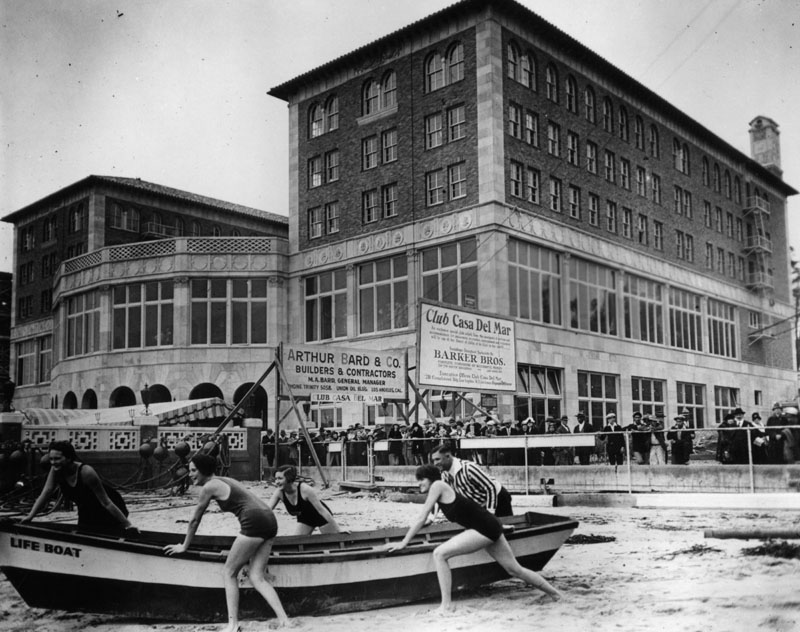
Just a story’s throw away from the modern end of Route 66 at Santa Monica Pier, the Casa Del Mar opened in 1926, the same year as the Mother Road, as one of the most exclusive beach clubs in California. It was the place to be seen and, on December 31, 1936, Harry Addison Love chose it for his last meal of the year. The problem was the lady with whom he was dining was not his wife, but his 66-year-old mother, Cora Adkins Love, a lady with whom Harry lived and who was unaware that her only son was married.

This had, as you might expect, been something of a bone of contention for Helen Wills Love, the 31-year-old woman who regarded herself as the wife of Harry Love. Despite an apparent marriage in Ensenada, Mexico, in May of 1936, Harry had neither moved in with his bride nor publicly announced the nuptials. In fact, he appears to have been at pains to keep the marriage secret, particularly from his mother and family. While he and Helen had an apartment at 3613½ 4th Street (a convenient five miles north of his mother’s home on South Harvard Boulevard), he rarely spent the night there.

Helen and Harry took an apartment here after their wedding. Helen was allowed to clear the place out in January 1937 after she was evicted while in custody.

After lunching together on that New Year’s Eve, Love and Helen drove to the Elks Club where Harry told her to wait in the car. She did indeed wait in the garage for several hours before discovering that he had left the premises by taxi in order to avoid returning for his car. It was a mistake on Harry’s part, but an even bigger error was to leave his gun in the car. Tucking the pistol into her coat pocket, Helen called a cab and directed driver Max Daniels to take her to the Del Mar club where she had expected to dine with her husband.

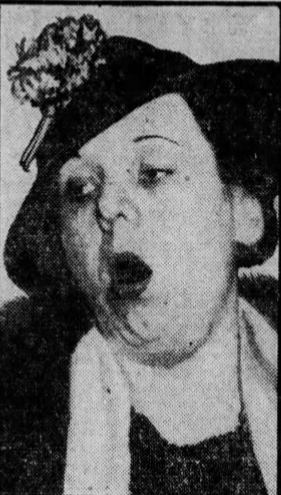
Although described variously as an attractive or statuesque brunette, this unfortunate photo was one of the first released to the press of Helen Wills Love.

At the club, she strode up to the table where Cora was sitting and a row ensued. Cora was clearly aware of who Helen was and there seems to be little love lost between them. She declared that, as his mother she had a right to all his holidays (something which, unsurprisingly, didn’t sit well with Helen) and then told her to leave. At this point Harry appeared and grabbed by Helen by the arm, propelling her into the lobby and, after paying Daniels her cab fare, telling the driver to wait for her. According to Helen’s testimony at her trial, Harry told her, “You’re no more married to me than anyone else in the world. You get this cab and I didn’t give a damn where you go!” He then struck her and struggled for the gun after which she remembered nothing.

That story might have had some credence had Max Daniels not been waiting for his fare. He watched with interest as Harry Love came running back out of the Casa Del Mar shouting, “Someone stop her, she is shooting me”. A second or so later, Helen Wills Love ran after her husband and fired at him. Daniels bravely disarmed her, and, as he waited for the police, she cradled her husband’s head as he died on a settee in the entrance to the club.

Max Daniels’ lively testimony painted a picture of the shooting.

And that might have been it, a rather sad crime of passion, but there was much more to come. Once in custody, Helen told an officer that it was only because she had loved Harry so much that she had shot him, while her justification varied between it being because he had chosen his mother over her or that she believe he was about to throw her over for another woman. Both reasons are quite likely, but interestingly, the centre figure of this story, remains a complete enigma.

Harry Addison Love was born in Trinidad, Colorado in 1890, the only son of Charles and Cora Love. He was called up for military service in 1917 and this may have been – as Helen later ascertained – the only time he did not live with his mother. His father had died suddenly of a heart attack in 1923; Charles Love had been a successful lumber merchant who had retired in this forties and this inheritance appears to be the main source of Harry’s income, although there is evidence that he may have run a short-lived company dealing in agricultural implements. While newspapers at the time of the murder claimed the 46-year-old to be a ‘retired wealthy broker’, there is little to confirm this career – indeed, just a year after his father’s death, he was at liberty to take a three month holiday in Hawaii with his mother – and it may be that he was reliant upon his mother’s money, in which case he wouldn’t want to cut off his supply of funds by admitting he had married.

Cora Adkins Love, the mother of Harry Addison Love. She would later prove her son was not married.

The Loves appear to have been a close-knit family; when a daughter, Esther, three years Harry’s junior, married in 1918, it was quite a society event in Los Angeles, but she and her husband Howard Spencer moved in with her parents and brother, a situation which continued with the addition of two granddaughters. After Esther’s death from pneumonia in 1929, her husband and children remained in the Love family home and one granddaughter was still living with Cora when the older woman died in 1950. But Harry remains a shadowy figure and the only photographs that appear to exist of him are, as we will see, less than complementary.

We know equally little of Helen’s background. Newspaper reports of the day described her variously as a women’s wear buyer, a dress designer and a secretary. Nor do we know how she met Harry Love or how long they had been courting before Harry whisked her away on a mysterious trip to Mexico in May 1936 where they were married. It may be that Helen had refused to engage in anything more than a little canoodling until that point, which inspired Harry to arrange the so-called wedding trip in order to persuade her into his bed. But if Helen thought that things would change, she was very much mistaken. Back in California he refused to announce the marriage or tell his mother and when she threatened to show Cora the marriage certificate, he took it away from her and told her he had locked it in a safety deposit box.

Taken into custody after the shooting, Helen immediately made an attempt to hang herself in her cell with what some newspapers termed a silken scarf and others, more lasciviously, her undergarments. For the next few days it was reported she was on a fast, taking only liquids, but of course that might simply have been due to the bruising of her throat following the suicide attempt.

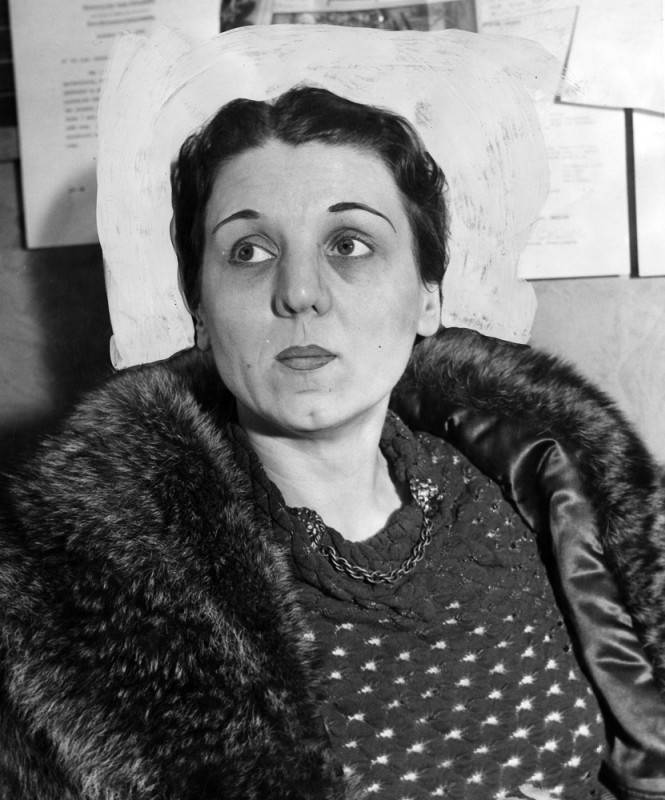
A calm Helen, still in the clothes she was wearing on the night of the shooting.

She was charged with murder on January 5, 1937, and pleaded insanity. The following day she was allowed to visit Harry’s body, laid out in an open coffin in a Venice Boulevard mortuary, where news cameras captured her kissing her dead beau and muttering, “You don’t blame me do you darling? You’re happier than I am.” She made the undertaker promise to bury Harry with a tiny wreath of red rosebuds over his hearts before leaving; whether this happened is unlikely – one can imagine that Harry’s family would have quashed such a maudlin idea.

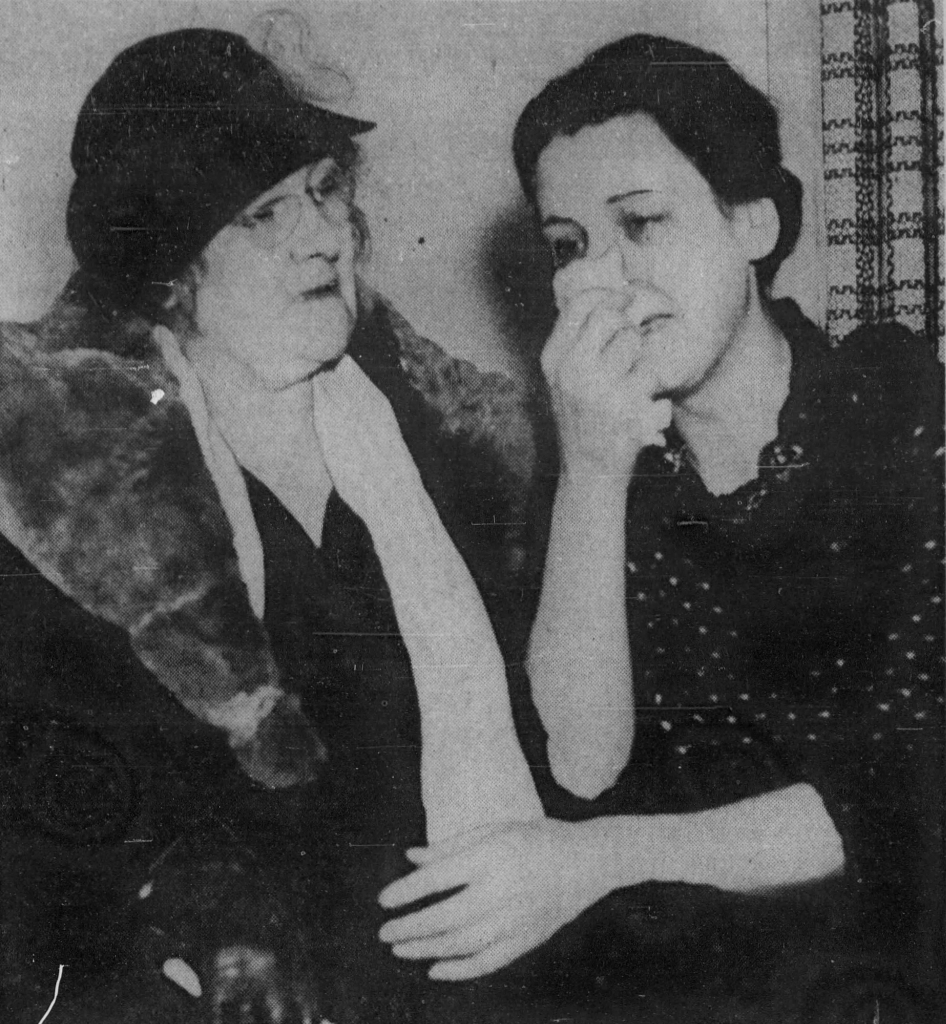
For the Love family refuted any notion that Harry had ever been married to this woman. Howard Spencer would state in court that his brother-in-law was a single man, while his mother tearfully testified that “My son was a single man. He always had lived with me and never lived anywhere else.”

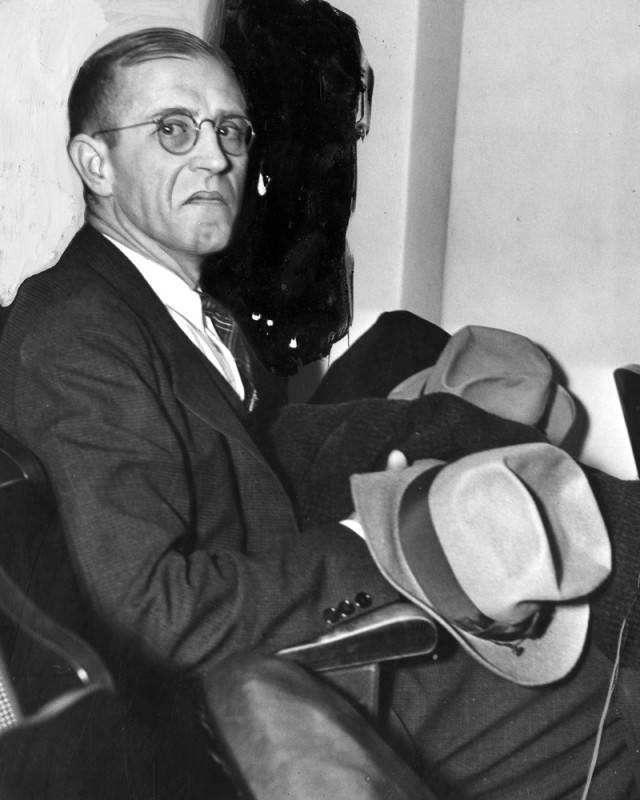
Howard Spencer, the dead man’s brother-in-law, who was adamant Harry was a single man.

Even Helen, in the cold light of day, must have had qualms about the relationship. When they took the flat on 4th Street, Harry only moved in a few changes of clothing and, when in July 1936 Helen told her husband she was pregnant, Harry’s reaction was fury. She claimed; “Harry told me that if I didn’t get rid of the child I’d be found dead on some beach like lots of other girls were.” Interestingly, this episode was mentioned only briefly in the trial and Helen certainly wasn’t with child as she waited to go to trial.

Helen being comforted by her mother, Mrs Claudia Wills.

The trial began in March 1937 and was clear cut from the start. Several witnesses had seen Helen shoot Harry, she had admitted killing him and the only question was her sanity. Three psychiatrists found her to be sane and in full comprehension of what she had done. The jury retired but, an hour and a half later, the foreman asked to see Judge Frank M Smith. It was presumed the request was to render a verdict, but no. The jury was complaining that one of their number was drunk and foreman Harry Joannes quite rightly said that this was entirely inappropriate, particularly given that the prosecution was asking for the death penalty. Dr Benjamin Black, county physician, administered a sobriety test to Mrs Mary Plettner and found that she was indeed inebriated – a pint bottle of grain alcohol was found in the ladies’ washroom with a fair amount of it gone. She was replaced by an alternate juror and deliberations continued.

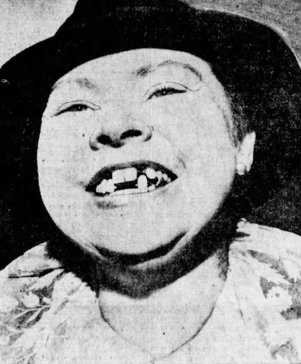
The newspapers delighted in this photo of Mrs Mary Plettner, the jurist dismissed for drunkeness.

There seems to have been a certain amount of sympathy towards Helen from the eight-woman, four-man jury, whether it was because of the way Harry had treated her or for her own gullibility, for they returned a verdict of second degree murder. This was despite the fact that Helen had gone to the Casa Del Mar with a pistol in her pocket which might be said to indicate some degree of premeditation.

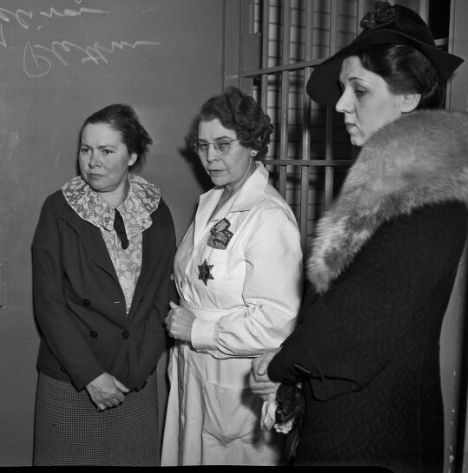
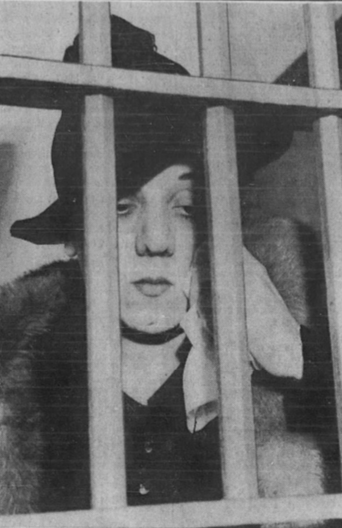
Mary Plettner (left) was sentenced to five days in custody for contempt of court which she served in the cell next to Helen (seen her on the right). Her husband, Walter, was at pains to point out she had been drinking gin, not raw grain alcohol as reported…

Before the sentence could be pronounced there was yet another twist in this story. Returning to her cell, Helen told a jail matron that she could “kill myself by strength of will power”. Laying down on the bed she appeared to lapse into a coma which defied half a dozen psychiatrists. They stuck pins in her, slapped her face and tickled her ears but she remained inert for seven days, being fed by a sugar drip, until she was awakened by Dr Samuel Marcus (unfortunately there appears to be no record of how he achieved what half a dozen of his colleagues could not). Once recovered she was sentenced to seven years to life and, although she had requested a second trial due to the episode of the drunken juror, this was denied and she was taken to the women’s correction facility at Tehachapi in California to begin her sentence.

Helen Wills Love heading for the California Institution for Women in Tehachapi.

There is no record of when she was paroled, but given that she is listed at the prison in the 1940 census and not in 1950, it seems logical to assume that she served closer to seven years than to life. In 1951 she married Edward B Gloeckner and, when that marriage failed, George McCullough in 1967. Neither husband suffered the fact of her first so-called bridegroom but then one supposes they were sensible enough to keep their mothers at arm’s length.

I say ‘so-called’ because, in December 1937, Cora Love succeeded in obtaining an injunction permanently bar Helen from using the name Love or representing herself as Harry’s widow. Her attorneys had searched the records in Mexico and could find no proof of the 1936 ‘marriage’ of Harry and Helen; thus she was ruled to have never been married to him and had no claim upon his estate. Everything went to his mother.

THE AXE MURDERER OF TUCUMCARI

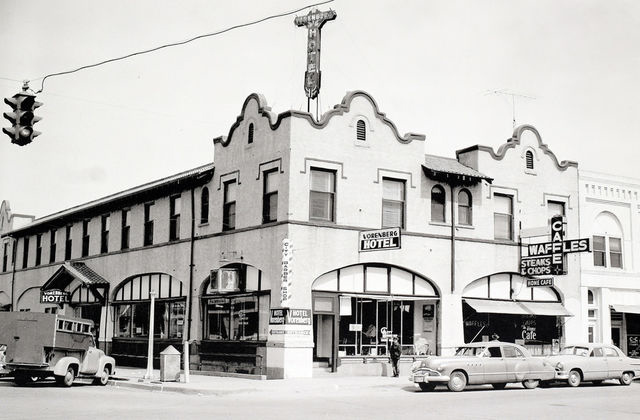
18 December 1947 was a cold winter’s morning like any other in Tucumcari. Bertha Eugene Wagnon Kappel had got up at 4.45am to prepare for her shift at the Home Café in the Vorenberg Hotel. (The Vorenberg was a grand hotel in downtown Tucumcari which boasted suites with private baths, a large lobby, dining room and barber shop as well as the Home Café. After the First World War it was owned by Floyd B Redman who built quite a property portfolio over the years. In the 1950s he bought another motel which was managed by a lady called Lillian Leigon; romance blossomed and he presented the motel to her as an engagement present. The motel was the famous Blue Swallow.)

The Vorenberg Hotel. The Home Cafe where Bertha Kappel was employed can be seen at the right.

Bertha had only been working at the Home Café for a couple of months while her husband Gus Adolph did various odd jobs. They had been married in Oklahoma in 1938 but several of the family – Bertha was one of 13 children – had moved to Tucumcari where Adolph also had links. They and their daughter were staying with Bertha’s brother, Roy, and his wife Catalina, in Roy’s home on North 1st Street, although the Kappels had purchased a lot nearby on which they intended to build a rudimentary house. To this end, Bertha had bought some lumber and, after finishing work on 17 December, she visited the lot to inspect progress. She found that the lumber was missing and this set into inexorable motion the events of the next few hours.

Bertha returned to her brother’s house and accused Adolph of selling the materials. He denied it but she discovered that he had, in fact, sold the lumber to a neighbour and, even worse, he hadn’t been paid for it. Bertha told him to get the lumber back within three days or “she would turn him in”. Now, the lumber may have been from a dubious source and Kappel did have a prior conviction for theft, so it might have been a well-aimed threat on her part. The quarrel continued into the evening although Adolph would later claim that the couple had been made up by the time they went to bed.

Even before the lumber incident it doesn’t appear to have been a happy marriage. Bertha had moved to Tucumcari some eight months before while her husband tried to find work in Oregon. When he returned to New Mexico she had sworn out a warrant on him for non-support of their 12-year-old daughter, Mary Frances.

Unsurprisingly next morning, the arguing flared up again when Adolph was slow to accompany Bertha on her walk to work. She left the house without him and when he called out to her to wait, she replied; “You dirty son-of-a-bitch, if you are going with me, come on.” It was an unfortunate choice of words and Bertha probably knew that it was a term that particularly offended her husband.

At around 6am, near an overpass, the body of Bertha Kappel was discovered just three blocks from her brother’s house. She lay in a pool of blood, her head cracked open by three blows from an axe and her left ear almost severed. When she was found, Kappel was taking a nap, having returned home, vomited and then taken two aspirins for a headache and then slept for an hour. When he woke up, he had a hearty breakfast and then went to the Home Café to say that his wife wouldn’t be coming to work that day. He was then arrested close to where Bertha’s body lay.

kappel-1

Adolph Kappel had a limited mental capacity but he knew enough to get rid of the axe, tossing it onto the roof of a neighbour’s house where it was later found. He signed a confession, saying that he had no recollection of killing his wife but remembered “I was standing over her and I struck a match and seen what I had done.” At his trial, he was charged with first degree murder and the jury took less than an hour to find him guilty. He was sentenced to be executed in New Mexico’s electric chair.

Kappel appealed and was granted a second trial on the grounds that the jury had not been given the option of convicting him of second degree murder. This jury decided that the murder had been conducted in the heat of the moment and was not planned or deliberate. He was once again found guilty but this time the sentence was 90-99 years rather than death. Kappel proved to be a model prisoner – for at least a year…

Gus Adolph Kappel

Assigned to a prison work gang at the penitentiary’s clay pits, on the last day of October 1950, Adolph Kappel made his escape aboard a black mule called Pete (one newspaper reported the beast was called Pegasus which seems a little fanciful). For five days he managed to stay ahead of police and prison guards in freezing cold weather until he was finally captured 35 miles south east of Las Vegas, New Mexico. He gave various reasons for his escape, saying that he had wanted to find out why he hadn’t heard from his daughter and believed that his brother was preventing her from writing to him. He also said he wanted to see his sister-in-law who had been involved in a road accident and then intended on going to Oklahoma to visit his mother and other relatives. But he also told reporters that “I am not the man who killed my wife” and that had he been able to get to Tucumcari he “could have cleaned up the whole mess”. Given that he had signed a confession which formed the basis of his first trial and pleaded guilty to second degree murder at the second trial it’s difficult to see how anyone else might have killed Bertha.

In 1953, Governor Edwin Mechem commuted Kappel’s sentence to a flat 70 years while the Warden commented, perhaps a little tongue in cheek, that Kappel was “now a plumber. He does not have access to a mule”.

Governor Erwin L Mechem who commuted Adolph Kappel’s 90-99 sentence to 70 years.

Adolph Kappel applied for parole at every chance and was denied for many years. When was he released? The short answer; I don’t know. He died in 1978 at the age of 63 and is buried in the Santa Fe National Cemetery. However, he was also incarcerated in the Penitentiary of New Mexico which is just 15 miles from Santa Fe but I found that he had won a newspaper competition in 1976 when living in Ojo Caliente near Taos so it appeared he stayed in the area after his release. Perhaps he just had nowhere else to go.

John Frederick Kappel whose bound body was found in a Sayre lake in an unsolved homicide.

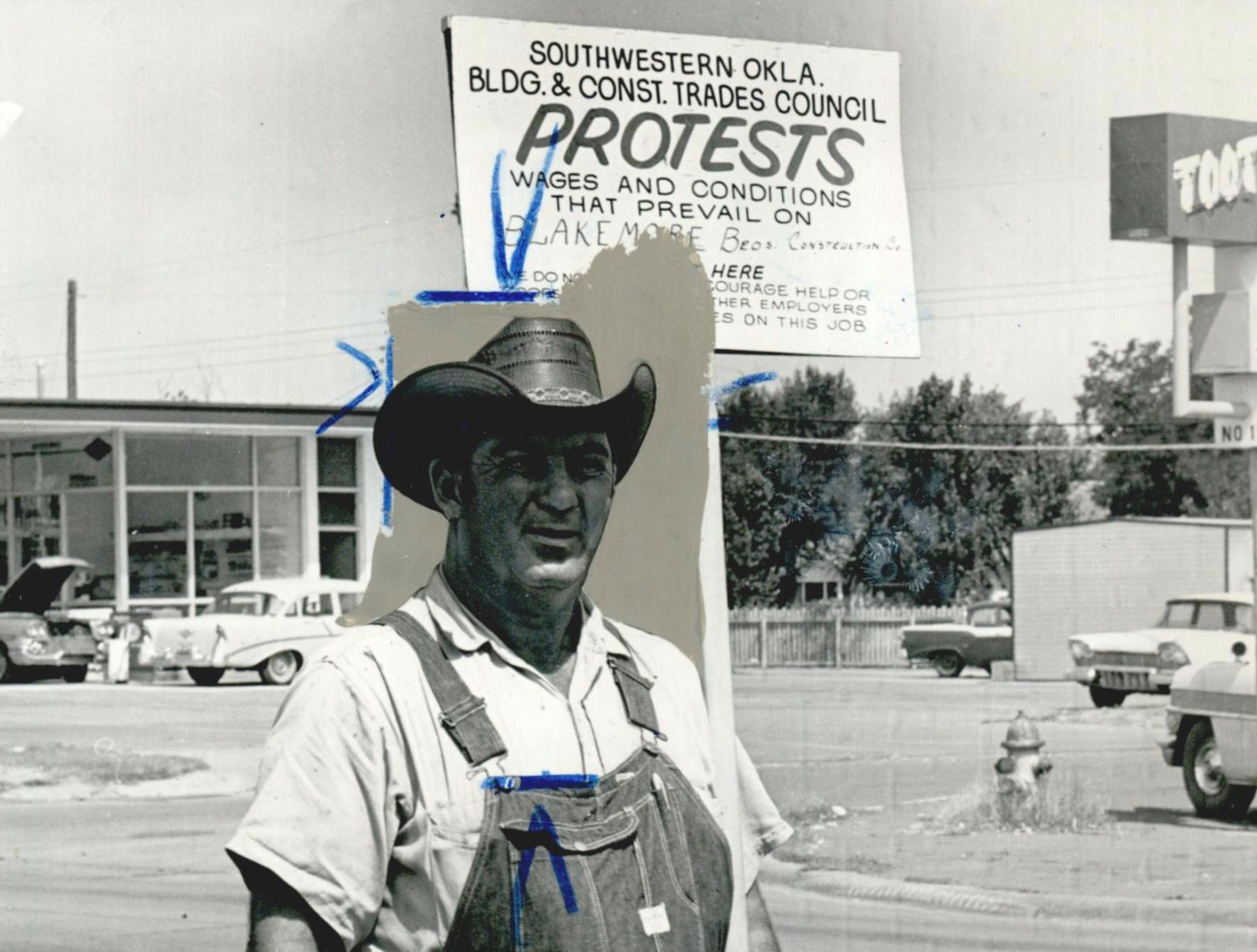
It is perhaps a little ironic that, with one brother behind bars for homicide, another brother should also meet his end by murder. In September 1963, the youngest Kappel son, John Frederick, was found floating in a pond in Sayre, Oklahoma. This was no natural drowning; John’s hands and feet were tied and he had also suffered a blow on the head before being thrown into the lake to drown. He had previously been working as a union picket for the International Hod Carriers, Building and Common Laborers Union protesting at the construction site for a grocery store in Elk City. Police stated that his job had nothing to do with his death, although they were bemused at the lack of signs of a struggle as John was a large man – 6’4” and 240lbs as well as being a karate expert – and throwing him in the pond had required lifting him over a barbed wire fence. The case was never solved.

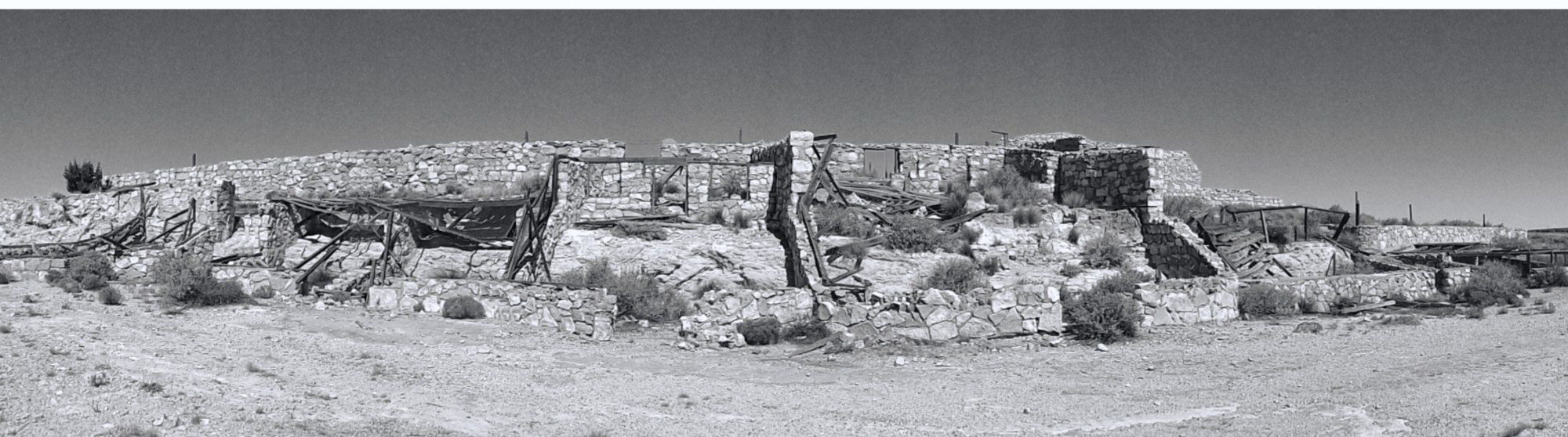
The lower walls are all that remains of the Vorenberg Hotel after a fire in the 1970s. The house where Bertha and Adolph were living with her brother is also long gone.

THE MAN WHO INVENTED THE APACHE DEATH CAVE

Gladwell Grady ‘Toney’ Richardson. Everything we know about the Apache Death Cave comes from this man.

In 1926 the tiny settlement of Two Guns, Arizona, was rocked by the killing of Earl Cundiff by Harry ‘Indian’ Miller. That episode is well documented but an enduring myth associated with Two Guns is far more nebulous and less easy to prove. That legend concerns the so-called Apache Death Cave.

As the story goes, in 1878, Apaches had raided two Navajo camps, killing everyone but three girls who were kidnapped. Other Navajo warriors attempted to follow the Apaches but were mystified when they appeared to vanish into thin air. Then, while scouting along the edge of Canyon Diablo, they noticed voices from beneath them and warm air coming up from a fissure in the ground. They quickly realised they were above a cave in which the Apaches, their horses and possibly the three Navajo girls were hidden.

Looking across to the famous cave.

They found the mouth of the cave and lit a fire intending to smoke out their enemies. Those who tried to escape were killed and when it was found that the Navajo girls were already dead, it was decided to kill all the Apaches in the cave in revenge. After those trapped in the cave had used all their water in an attempt to put out the flames, they cut the throats of their horses to use the blood to douse the fire. But, as the corpses of their horses piled up against the opening and the Navajo continued to fuel the flames with sagebrush, some forty-two Apaches are said to have died in the cave.

Harry ‘Indian’ Miller – unfairly blamed for the Apache Death Cave story?

Did it happen? At this length of time there is really no way of telling and there is considerable doubt as to how much the tale has been rewritten, exaggerated and embellished. What is clear is that Harry Indian Miller has been unfairly tarnished in many accounts and histories of Route 66 with starting and promulgating the myth of the ‘Apache Death Cave’. While it is true that Miller used the cave as a tourist attraction, he advertised it as ‘Underground Dwellings’ and probably fitted out the cave with suitable stage dressings to entertain visitors. However, there’s no evidence that the cave was ever used as a dwelling, which casts doubt on the idea of it being regular living quarters for the Apache.

A postcard of the Apache caves from the 1930s. Note no mention of death.

All photographs that exist of Two Guns during Miller’s tenure show the attraction advertised as the APACHE CAVES or the MYSTERY CAVE. Many accounts accuse Miller of clearing out the caves and selling Apache skulls but there is one fact which goes against this idea; Miller claimed to have Apache blood (whether full blood or half blood depends on which account you read) and while that claim is perhaps a little tenuous, as such he would have been unlikely to sell the bones of his ancestors. In late 1926, he and his friend and fellow trader Joe Secakuku announced a plan to build a dance floor in the cave, although this never came to pass. It would be forty feet by fifteen feet and for the use and entertainment of not only tourists but local Winslow residents. Had Miller believed – or even known – of the existence of the Death Cave story would he have turned the cave into first a tacky tourist attraction and secondly a dance hall? And even if he had been prepared to compromise his claimed heritage, would Chief Joe, a full blood Hopi, have gone along with the plan?

A later postcard, also with no mention of any death caves.

Perhaps the most compelling evidence towards the story of the Apache Death Cave being an exaggerated and embroidered (if not invented) story is that the facts emanate from one source; Gladwell Grady Richardson.

Thanks to the work of Marshall Trimble, Arizona’s state historian, one Richardson tale has already been debunked. For years, people have spoken in awe of Canyon Diablo, a town on the edge of the canyon from which it took its name and a mile or so from Two Guns.

Originally a railroad camp, Canyon Diablo had a main street called Hell Street, fourteen saloons, ten gambling houses, four brothels and two dance halls, many of which stayed open twenty-four hours a day. It was said to be a lawless and dangerous place with a Boot Hill cemetery which was filled within a year with those who had suffered a violent demise. Six town marshals died in quick succession, the first lasting just four hours, the longest serving surviving a month. It was a place that made Tombstone seem like the most sedentary of suburbs.

There’s only one problem with this picture of Canyon Diablo: It never existed.

It was virtually all the imagination of Gladwell Richardson. In a time where very few documents existed – there is, for example, no record of a Canyon Diablo newspaper in the railroad camp – Richardson somehow magically managed to not only know how many saloons and brothels there were in the town, but was able to name them, too. “Nearly everything you’ve read is fiction,” says George Shaw, an archivist at the Arizona State Railroad Museum. “Never happened.” Richardson was a prolific author of Western stories which he penned under a variety of pseudonyms and it’s all too likely that his ability for conjuring up stories spilled over into his so-called narrative of Canyon Diablo.

Richardson also had a personal connection with Two Guns. He had worked in trading posts since he was a young boy and, in 1950, when his father SI Richardson, bought Two Guns, Gladwell and his wife Millie ran the place for several years and it was while living and working at the trading post that Richardson began writing a small book called Two Guns, Arizona. Published in 1968 and long out of print, this small tome appears to be from where the legend of Canyon Diablo and the embellished story of the cave originate. In his book, Richardson writes of Canyon Diablo; ‘For the brief span of its vicious life, more famous places like Abilene, Virginia City and Tombstone could not hold a candle to the evil of this end-of-the-railroad’s depravity. Murder on the street was common. Holdups were almost hourly occurrences, newcomers being slugged on mere suspicion that they carried valuables.’

The truth was that the town, like most railroad camps, was a place where people worked hard, perhaps had a little too much to drink on a Saturday night, but were too careful of their jobs to participate in much mayhem or murder. However, that doesn’t make for quite such an exciting story! By the time that Richardson wrote his version of history, the town had been gone for almost eighty years, meaning that there would have been very few people who had experienced Canyon Diablo first-hand, and so his account became universally accepted.

Richardson’s book also appears to be the source for the much-repeated story that, during the winter of 1879, the canyon was a hideout for Billy the Kid and his gang. Once again, it’s a great tale but the likelihood of it being true is extremely low. Robert M Uttley in his definitive biography of William H Bonney has The Kid in his home territory of Fort Sumner, New Mexico, throughout the time that Richardson claimed he was hiding stolen horses in the canyon.

Two Guns, Arizona also provides an exciting and entertaining narrative of the events of the Apache Death Cave, containing facts that can be found nowhere else. Indeed, it appears to be the sole history of the events of June 1878 for every subsequent retelling has drawn upon either the facts published in this book or in a longer article which appeared in Big West Magazine in 1967. The author of this piece was Maurice Kildare – and Maurice Kildare was one of Richardson’s many pseudonyms.

Although he was regarded as an expert on Western history – a notion promulgated by his many Western novels and by Richardson himself – Two Guns, Arizona was only one of two works of non-fiction that he wrote in his lifetime. The other was a work which Richardson clearly preferred to forget.

On 23rd April 1923, special officer JS Sullivan of the Arizona Eastern railroad arrested a young man in a boxcar at the Phoenix railroad yards early in the morning. It was a common enough incident and Sullivan had no cause to suspect the man of anything other than vagrancy. But a search at the police station of the man’s meagre possessions uncovered a diary in which the vagrant, who was identified as Gladwell Grady Richardson, had written a vivid first hand narrative of how he had killed a rabbi in a San Francisco hotel and then deserted the navy.

Richardson claimed it was simply a story he had been writing to keep himself amused which might have been more believable had Phoenix officers, upon investigation, not discovered that, on 3rd April 1923, a Rabbi Alfred G Lafee had indeed been beaten to death in the Gates Hotel on Fillmore Street in San Francisco. The details of the slaying corresponded to Richardson’s account in every way.

The Gates Hotel where Richardson killed Rabbi Lafee.

Nonetheless, Phoenix officers appear to have believed Richardson’s explanation that the diary was just a story. He stuck so consistently to this that Phoenix Chief of Police, Oscar Roberts, publicly stated that he felt the diary was a figment of the nineteen-year-old deserter’s imagination and he was an unfortunate victim of circumstance. It must have been embarrassing for the police chief when, the following day after this statement, Richardson changed his tune and made a full confession, waiving his right to be extradited to California.

Two days later he told his story before a grand jury. On 3rd April, Richardson had gone ashore from the USS Vigilant to Golden Gate Park where he had met a stranger to whom he referred to his diary as “the Jew”. His diary spoke of the man as “kind of nervous for some unknown cause”; the young Richardson may have been very naïve – or wished to appear so – for he accepted the stranger’s invite to take in a show and then spend the night at a local hotel.

The Gates Hotel today, renamed as the Fusion although basically unchanged on the exterior.

Richardson wrote in his account: “After the show we went to the Gates Hotel but he registered as Mr Lane. About 3.30am I was suddenly awakened by the Jew, my hand fell off the bed coming into contact with a cuspidor. I turned it on its side and emptied it. I swung the cuspidor and struck the Jew on the head. The Jew swung with his fist and hit me on the jaw. I then swung the cuspidor twice in rapid succession. The blood on my hands was bloody. I got up and turned the lights on. As I did my left hand left a print on a wall. The Jew was unconscious. At first I thought he was dead. He was breathing heavily and his head was between the bars of the head of the bedstead. I washed the blood from my arms and hands, put on my clothes, opened the door and walked out. The clerk was there so I lit a cigarette and asked him something about the weather. My voice sounded kind of queer, that was the only emotion I had

Back on the USS Vigilant, Richardson learned two days later that not only was the man a rabbi, but he was now a dead rabbi. He told a couple of people what he had done, a friend called Frank and a woman called Alice with whom he had had dinner two nights later and then he decided to go on the run from Goat Island Naval Training Station. As his diary relates, this action caused him more angst than the murder. In the entry of April 7th, he wrote: “The rabbi is dead. So now in the eyes of the law I am a murderer. Can’t say I feel like one. I’m also a deserter from the navy, that’s what I’m worried about. Wired dad to send $75. Discarded my bright, new uniform yesterday for a pair of overalls, shirt and sweater. I look like a bum now.”

Pleading self-defence as the victim of an ‘unnatural attack’, Richardson went through his story again in front of the grand jury and, on 15th May 1923, that grand jury refused to indict him on a charge of murder, holding that he was justified in defending himself under the circumstances. This should have automatically closed the case but Richardson was referred to the Superior Court which, on 29th June 1923, confirmed the grand jury’s decision and dismissed the charge of murder on the grounds, quite amazingly, of insufficient evidence.

As a deserter, Richardson should have been placed under immediate arrest by a naval guard but, according to contemporary newspaper reports he was allowed to leave the court on his own and voluntarily surrender to a naval assembling station on Yerba Buena island. It’s to be presumed that he did this; although that naval career appears to have ended a few months later, the foreword of Navajo Trader stating that he remained on active duty until 1924 and then was recalled into military service after Pearl Harbour, serving in Arizona, Indiana and the South Pacific. Then again, that same foreword also contains no whisper of his troubles in San Francisco in 1923.

In fact, Richardson appears to have successfully expunged any mention of the murder of Rabbi Lafee from his subsequent life, going on to be an organiser of the Flagstaff Indian Pow Wow and author of almost three hundred works of fiction. The tourists that he did welcome to Two Guns were generally those who were seeking out their favourite author and he continued to run the trading post until 1962 when he sold the business to Ida Ferne Jacobs Rawlinson who, just a year later, sold up to Benjamin F Dreher. Richardson dedicated his book to Dreher; it may have been a genuine desire on Richardson’s part to record the history of the place as he saw it, or it may have been commissioned by Dreher as publicity for the redevelopment of Two Guns. The fact is that book published in 1968 and an article written under one of his many pseudonyms, are the sole source of information on the now much-repeated story. And the first time that anyone had heard of the Apache Death Cave…

Gladwell Grady ‘Toney’ Richardson. Unreliable witness?