THE LAST OF BARD

There has never been much to Bard, New Mexico, but, for decades it had a single store which was the centre of the tiny community. In his 1946 Guide, Jack Rittenhouse wrote that Bard ‘consists of a single building, but it includes a post office.’ At the time that Rittenhouse passed through on Route 66, the postmaster was Harry Elton Heckendorn, a native of Missouri who, with his wife Geneva, had moved to New Mexico. It appears that he started the Bard Trading Post just after the Great War and he was confirmed as the Postmaster in 1920.

In 1948, the Heckendorns sold the flourishing business to Harry and Vivian Whatley but they maintained their ties with Bard. Two of their children would die young; Helen who succumbed to a long illness in 1937 aged just 25 and John Melvin who died in 1953 of pancreatic cancer at 40, and they, along with their parents, are buried in the Bard cemetery. Bad luck would continue to dog the Heckendorns. After the death of their daughter, they brought up their grandson Raymond, just four when his mother died, but he was electrocuted while working in the Texas oilfields in 1972. He was 39.

The Whatleys built a new store a little way north to take advantage of traffic and ran it for ten years before selling to Clyde (seen here) and Mamie Dovie Robbins in 1959. Just as Harry Whateley had been before her, Dovie took over as Postmaster. For years they were the heart of Bard, even though Route 66 had been realigned, leaving the store isolated. But they made a living selling gas, groceries, notions, drugs, hardware and vetinerary supplies, and, when Clyde passed away in 1974, Dovie continued to run the place for a few more years with the help of her sons Carroll and Lester.

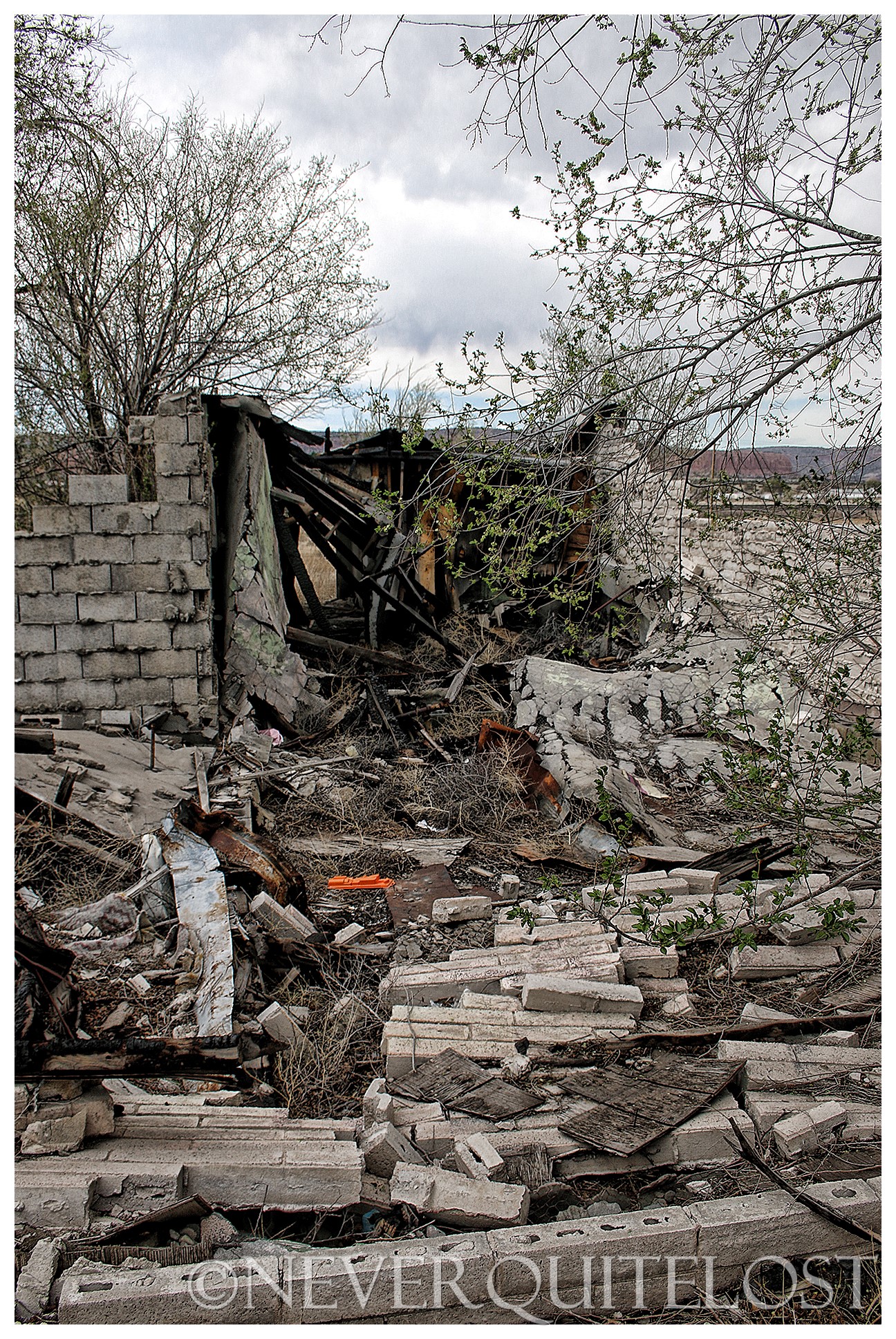
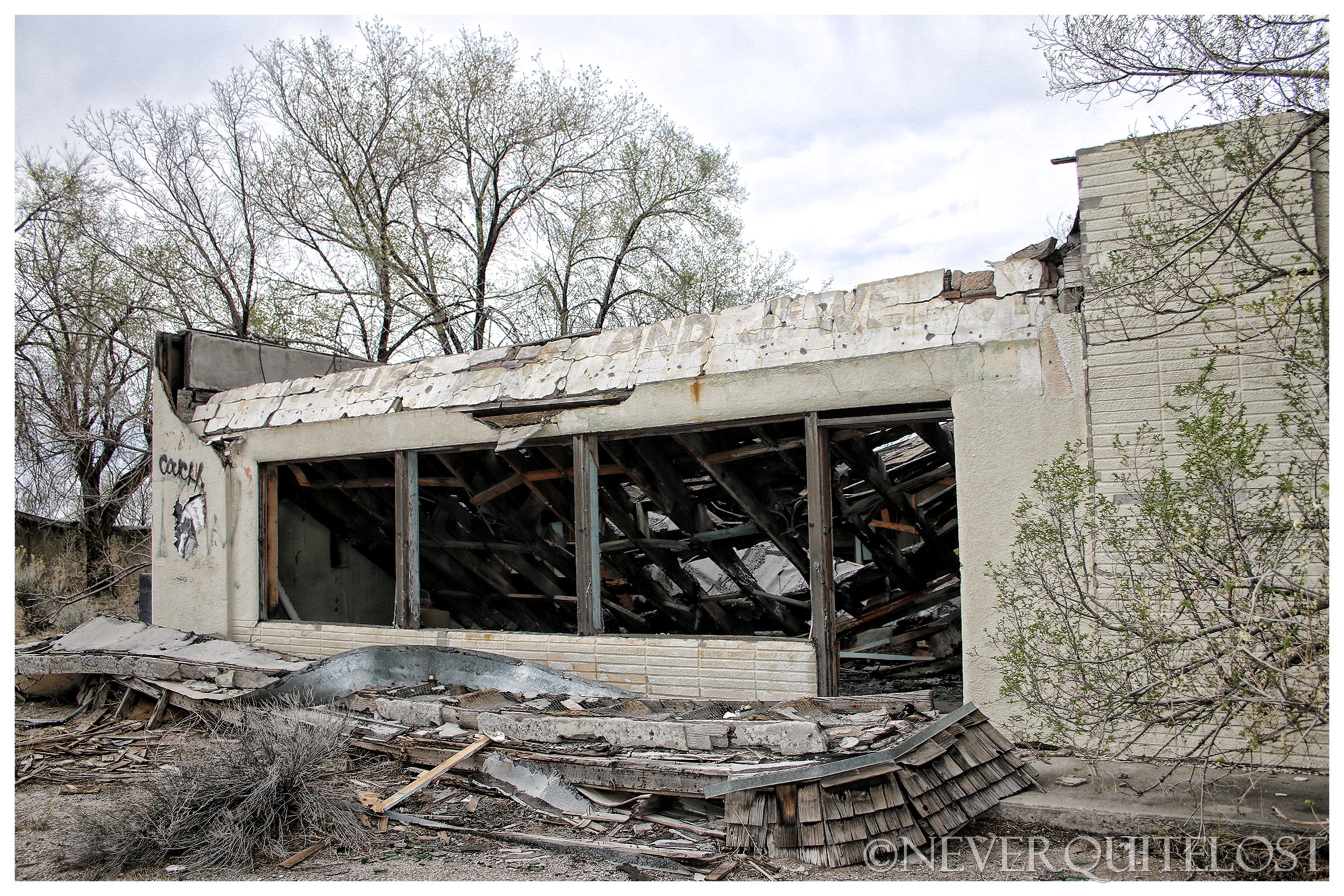
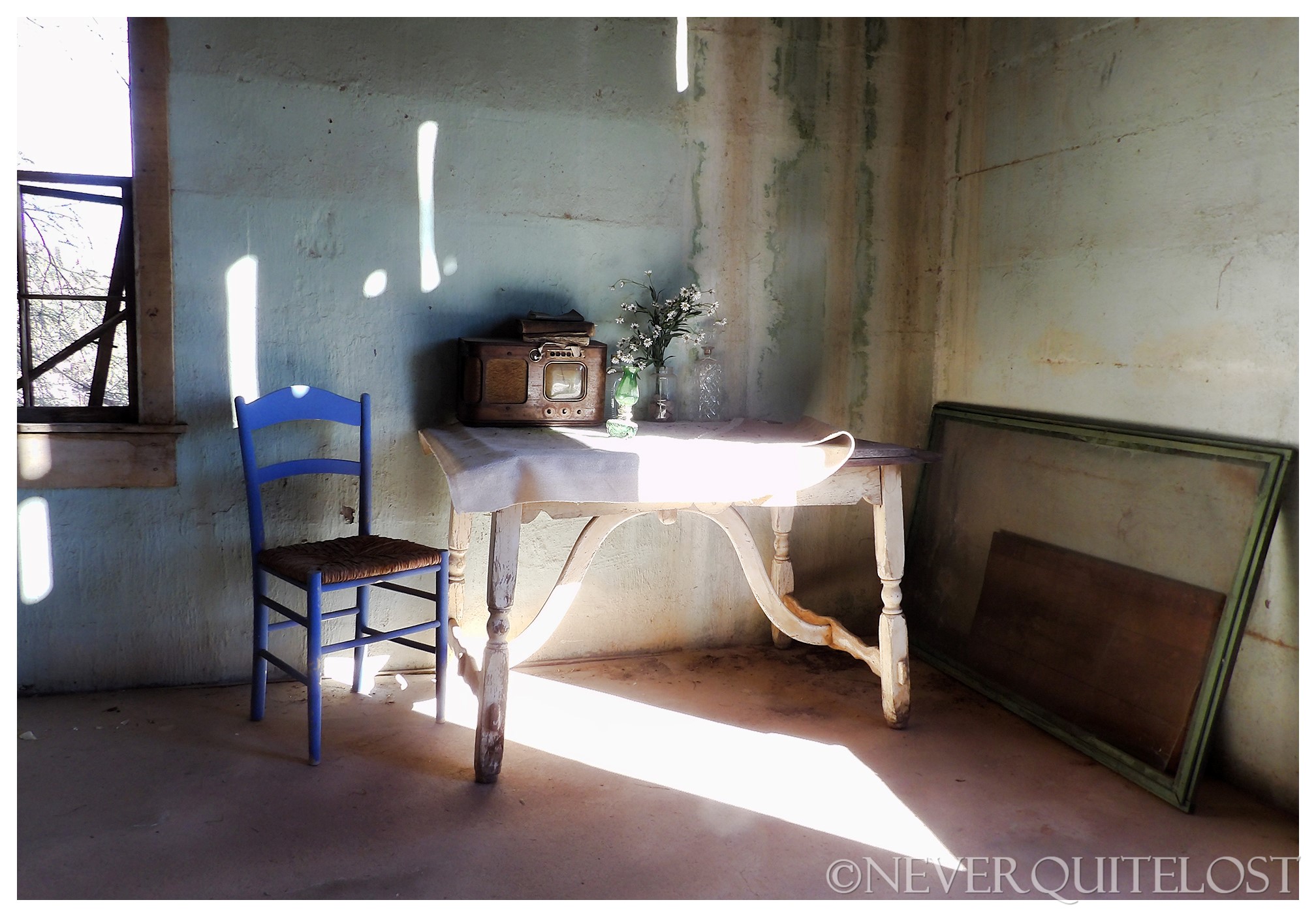
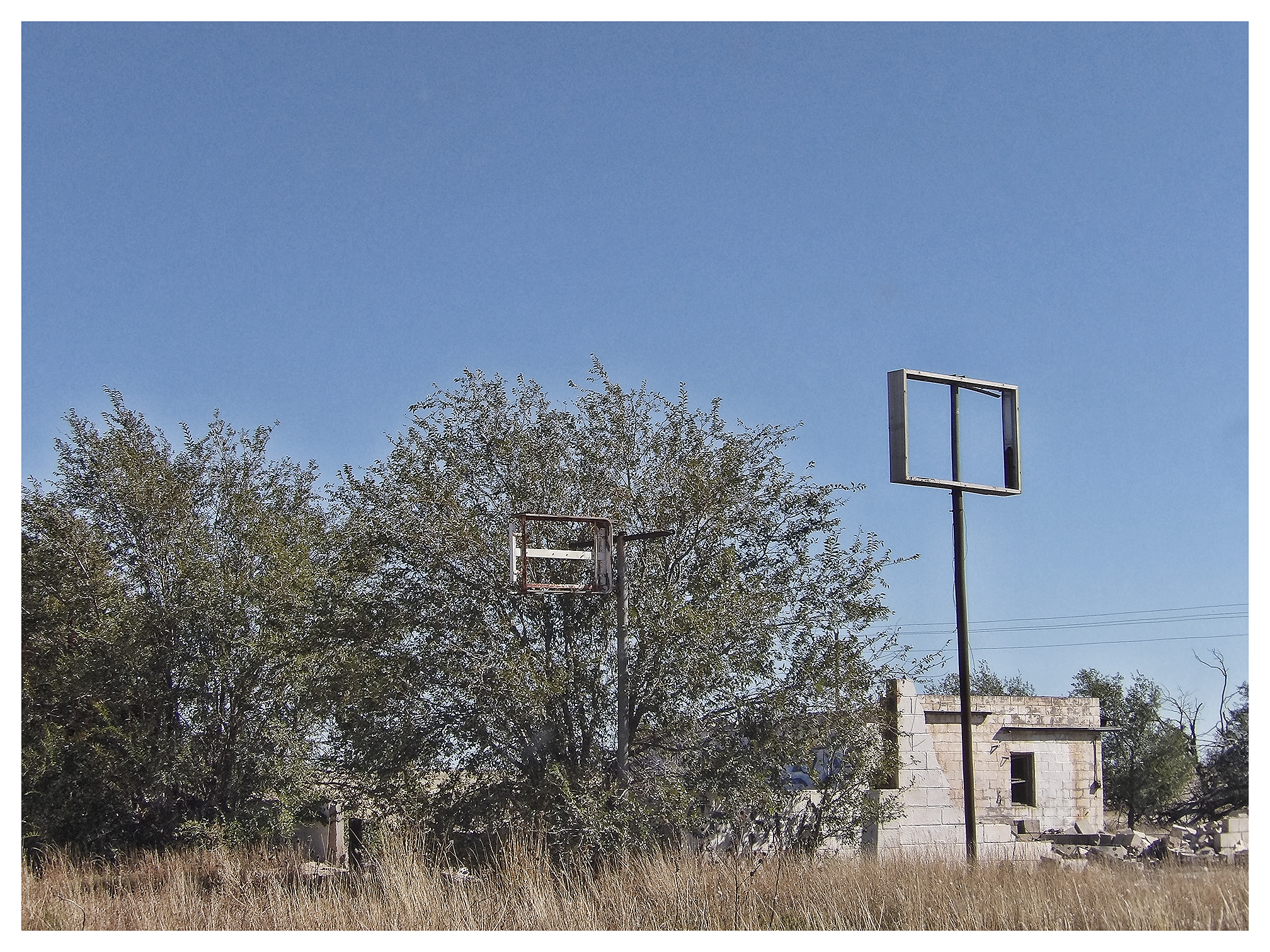
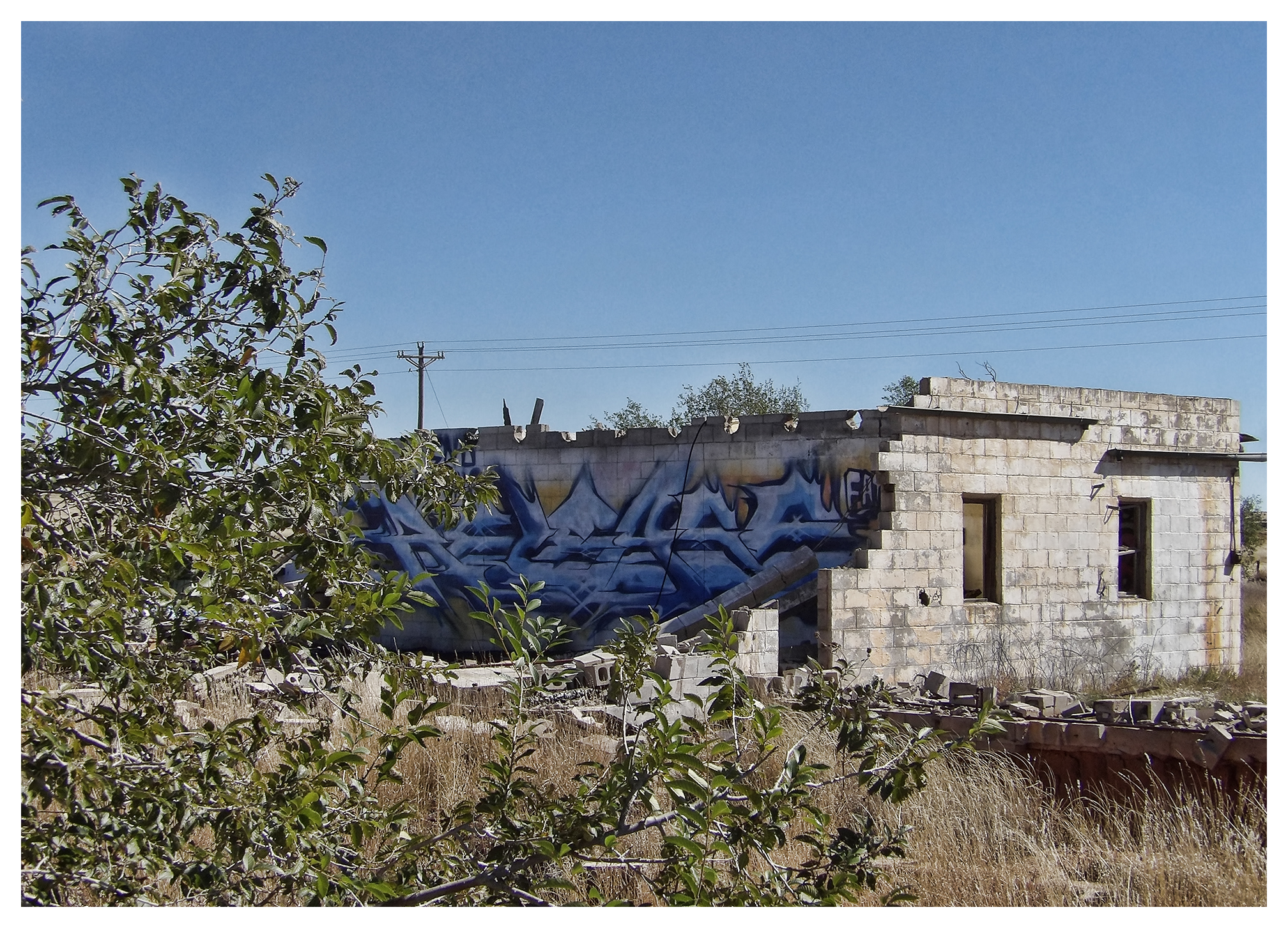
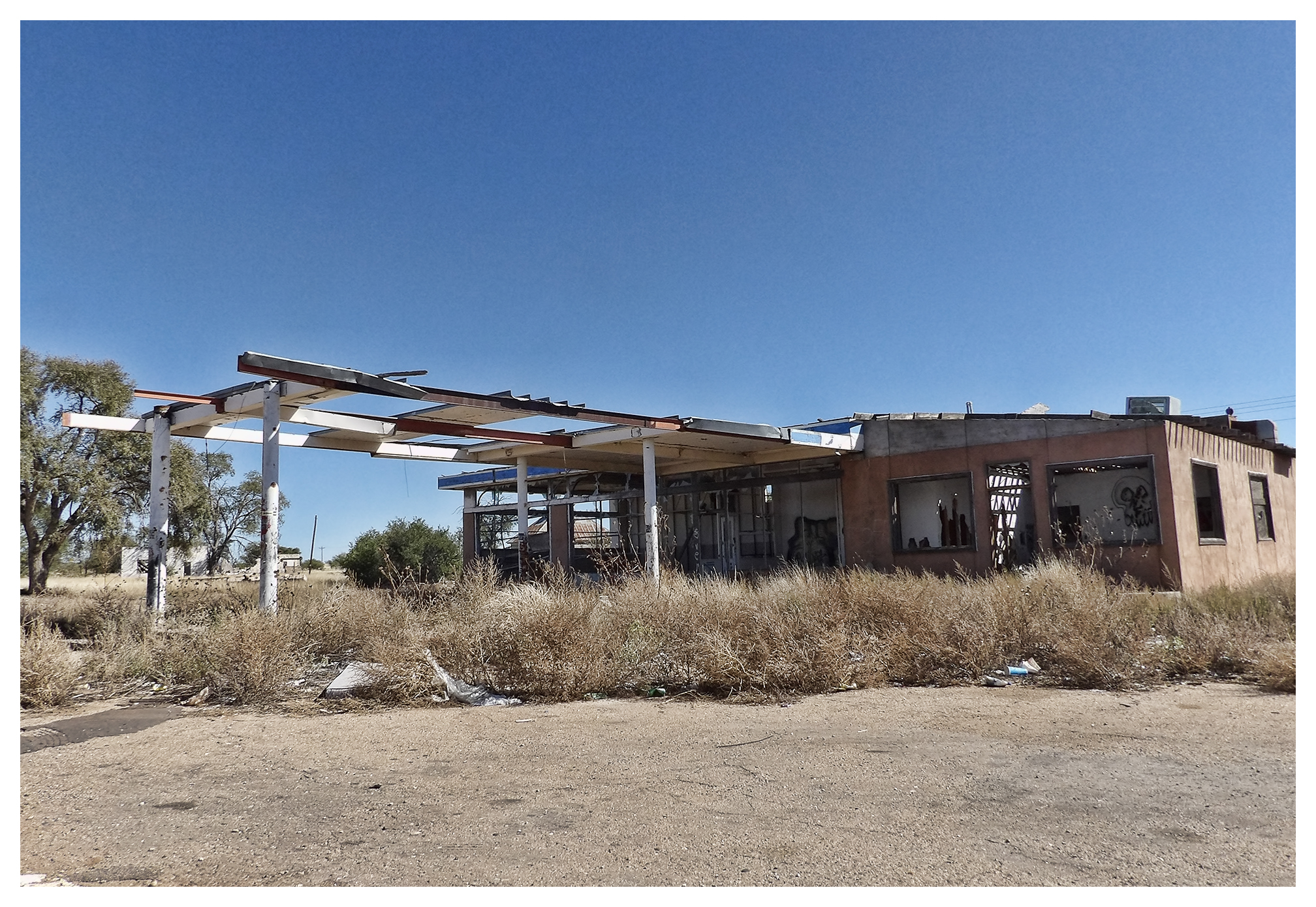
Empty since the 1980s, the Bard Store still had its shelving inside and it was possible to see what a decent-sized shop this had been. Until a few weeks ago when, like so many redundant and forgotten places, it was razed, leaving only memories.

A SMALL TRAGEDY IN TRUXTON


Boarded up and ignored by travellers.

Just this week I had a reminder of how quickly history can disappear on Route 66. On the western side of Truxton, Arizona, once a small but lively town until the interstate opened in 1978, on the opposite side of the road to the old Orlando Motel, was a boarded-up building. Few, if any, people took any notice of it and if they did it was to smile at the misspelled ‘NO TREAPASSING’ sprayed on the side. But this was once someone’s livelihood and the scene, one might argue, of a miscarriage of justice.

For sixteen years Wesley and Alice Bryant had run the grocery store in Truxton but in 1976 they had been robbed and the beating they suffered during the course of that crime put them in the hospital. They asked their grandson Guy Mefford to come from California and run the store for him, although that hadn’t been what Guy had been planning for his life. An Army vet who had served in Vietnam, he wanted to train as an auto mechanic and he was just doing just that when the call came from Truxton. The Bryants were by now in their seventies and so Guy and his wife Esther ended up staying and taking over the store.

After the interstate opened, trade fell away although Guy liked the fact it gave him time to sit with his feet up and read a book. The store didn’t make much but, as he said, they didn’t need much. Esther, on the other hand, wasn’t keen on the isolation. If Guy was on a run into town, she would lock the door if she didn’t like the look of a potential customer.

Guy and Esther in the store in 1979. [Photo by The Arizona Republic]

But over time the Meffords found what little they had was being stolen from them. By 1990, the store had been burgled some 50 times over the previous six years. The police could be of little use – the nearest officer was in Kingman, 45 minutes away, and on one occasion when Esther detained a shoplifter it took almost three hours for law enforcement to turn up. By the summer of 1990, Guy was fed up. So one night he hid in his store and waited. He didn’t have to wait too long; 34-year-old Victor Randall dropped through a hole in the roof and instantly made for the beer cooler. Guy shouted at him to stop, and when he didn’t, he shot Randall in the buttocks.

One might think this was appropriate if rough justice. Randall pleaded guilty to burglary and was sentenced to 180 days in jail, 200 hours of community service and four years of probation. That might have been the end of it, and made future burglars think twice about robbing the store. But in June 1991 Guy Mefford found himself in court, charged with aggravated assault … and convicted. The judge was harsh; not only did he sentence Guy to four years’ probation but he ordered him to pay $10,000 into a Hualapai youth programme. And then there was a final blow. Judge James Chavez ordered that Guy Mefford sell his store by 1st January 1992.

Guy had little option. The store was closed and sold. As far as I know, it never reopened. Esther, who was eleven years his senior, died in Los Angeles two years later. When Guy died in Mesa in 2008, the funeral home didn’t even know his date of birth and had to appeal for information.

All that remains is the concrete pad. The store was demolished last year.

For years the store has remained on the side of Route 66, overlooked by tourists, a little snapshot of a domestic tragedy. And then last year it was gone, demolished by the county.

THE MAN WHO INVENTED THE APACHE DEATH CAVE

Gladwell Grady ‘Toney’ Richardson. Everything we know about the Apache Death Cave comes from this man.

In 1926 the tiny settlement of Two Guns, Arizona, was rocked by the killing of Earl Cundiff by Harry ‘Indian’ Miller. That episode is well documented but an enduring myth associated with Two Guns is far more nebulous and less easy to prove. That legend concerns the so-called Apache Death Cave.

As the story goes, in 1878, Apaches had raided two Navajo camps, killing everyone but three girls who were kidnapped. Other Navajo warriors attempted to follow the Apaches but were mystified when they appeared to vanish into thin air. Then, while scouting along the edge of Canyon Diablo, they noticed voices from beneath them and warm air coming up from a fissure in the ground. They quickly realised they were above a cave in which the Apaches, their horses and possibly the three Navajo girls were hidden.

Looking across to the famous cave.

They found the mouth of the cave and lit a fire intending to smoke out their enemies. Those who tried to escape were killed and when it was found that the Navajo girls were already dead, it was decided to kill all the Apaches in the cave in revenge. After those trapped in the cave had used all their water in an attempt to put out the flames, they cut the throats of their horses to use the blood to douse the fire. But, as the corpses of their horses piled up against the opening and the Navajo continued to fuel the flames with sagebrush, some forty-two Apaches are said to have died in the cave.

Harry ‘Indian’ Miller – unfairly blamed for the Apache Death Cave story?

Did it happen? At this length of time there is really no way of telling and there is considerable doubt as to how much the tale has been rewritten, exaggerated and embellished. What is clear is that Harry Indian Miller has been unfairly tarnished in many accounts and histories of Route 66 with starting and promulgating the myth of the ‘Apache Death Cave’. While it is true that Miller used the cave as a tourist attraction, he advertised it as ‘Underground Dwellings’ and probably fitted out the cave with suitable stage dressings to entertain visitors. However, there’s no evidence that the cave was ever used as a dwelling, which casts doubt on the idea of it being regular living quarters for the Apache.

A postcard of the Apache caves from the 1930s. Note no mention of death.

All photographs that exist of Two Guns during Miller’s tenure show the attraction advertised as the APACHE CAVES or the MYSTERY CAVE. Many accounts accuse Miller of clearing out the caves and selling Apache skulls but there is one fact which goes against this idea; Miller claimed to have Apache blood (whether full blood or half blood depends on which account you read) and while that claim is perhaps a little tenuous, as such he would have been unlikely to sell the bones of his ancestors. In late 1926, he and his friend and fellow trader Joe Secakuku announced a plan to build a dance floor in the cave, although this never came to pass. It would be forty feet by fifteen feet and for the use and entertainment of not only tourists but local Winslow residents. Had Miller believed – or even known – of the existence of the Death Cave story would he have turned the cave into first a tacky tourist attraction and secondly a dance hall? And even if he had been prepared to compromise his claimed heritage, would Chief Joe, a full blood Hopi, have gone along with the plan?

A later postcard, also with no mention of any death caves.

Perhaps the most compelling evidence towards the story of the Apache Death Cave being an exaggerated and embroidered (if not invented) story is that the facts emanate from one source; Gladwell Grady Richardson.

Thanks to the work of Marshall Trimble, Arizona’s state historian, one Richardson tale has already been debunked. For years, people have spoken in awe of Canyon Diablo, a town on the edge of the canyon from which it took its name and a mile or so from Two Guns.

Originally a railroad camp, Canyon Diablo had a main street called Hell Street, fourteen saloons, ten gambling houses, four brothels and two dance halls, many of which stayed open twenty-four hours a day. It was said to be a lawless and dangerous place with a Boot Hill cemetery which was filled within a year with those who had suffered a violent demise. Six town marshals died in quick succession, the first lasting just four hours, the longest serving surviving a month. It was a place that made Tombstone seem like the most sedentary of suburbs.

There’s only one problem with this picture of Canyon Diablo: It never existed.

It was virtually all the imagination of Gladwell Richardson. In a time where very few documents existed – there is, for example, no record of a Canyon Diablo newspaper in the railroad camp – Richardson somehow magically managed to not only know how many saloons and brothels there were in the town, but was able to name them, too. “Nearly everything you’ve read is fiction,” says George Shaw, an archivist at the Arizona State Railroad Museum. “Never happened.” Richardson was a prolific author of Western stories which he penned under a variety of pseudonyms and it’s all too likely that his ability for conjuring up stories spilled over into his so-called narrative of Canyon Diablo.

Richardson also had a personal connection with Two Guns. He had worked in trading posts since he was a young boy and, in 1950, when his father SI Richardson, bought Two Guns, Gladwell and his wife Millie ran the place for several years and it was while living and working at the trading post that Richardson began writing a small book called Two Guns, Arizona. Published in 1968 and long out of print, this small tome appears to be from where the legend of Canyon Diablo and the embellished story of the cave originate. In his book, Richardson writes of Canyon Diablo; ‘For the brief span of its vicious life, more famous places like Abilene, Virginia City and Tombstone could not hold a candle to the evil of this end-of-the-railroad’s depravity. Murder on the street was common. Holdups were almost hourly occurrences, newcomers being slugged on mere suspicion that they carried valuables.’

The truth was that the town, like most railroad camps, was a place where people worked hard, perhaps had a little too much to drink on a Saturday night, but were too careful of their jobs to participate in much mayhem or murder. However, that doesn’t make for quite such an exciting story! By the time that Richardson wrote his version of history, the town had been gone for almost eighty years, meaning that there would have been very few people who had experienced Canyon Diablo first-hand, and so his account became universally accepted.

Richardson’s book also appears to be the source for the much-repeated story that, during the winter of 1879, the canyon was a hideout for Billy the Kid and his gang. Once again, it’s a great tale but the likelihood of it being true is extremely low. Robert M Uttley in his definitive biography of William H Bonney has The Kid in his home territory of Fort Sumner, New Mexico, throughout the time that Richardson claimed he was hiding stolen horses in the canyon.

Two Guns, Arizona also provides an exciting and entertaining narrative of the events of the Apache Death Cave, containing facts that can be found nowhere else. Indeed, it appears to be the sole history of the events of June 1878 for every subsequent retelling has drawn upon either the facts published in this book or in a longer article which appeared in Big West Magazine in 1967. The author of this piece was Maurice Kildare – and Maurice Kildare was one of Richardson’s many pseudonyms.

Although he was regarded as an expert on Western history – a notion promulgated by his many Western novels and by Richardson himself – Two Guns, Arizona was only one of two works of non-fiction that he wrote in his lifetime. The other was a work which Richardson clearly preferred to forget.

On 23rd April 1923, special officer JS Sullivan of the Arizona Eastern railroad arrested a young man in a boxcar at the Phoenix railroad yards early in the morning. It was a common enough incident and Sullivan had no cause to suspect the man of anything other than vagrancy. But a search at the police station of the man’s meagre possessions uncovered a diary in which the vagrant, who was identified as Gladwell Grady Richardson, had written a vivid first hand narrative of how he had killed a rabbi in a San Francisco hotel and then deserted the navy.

Richardson claimed it was simply a story he had been writing to keep himself amused which might have been more believable had Phoenix officers, upon investigation, not discovered that, on 3rd April 1923, a Rabbi Alfred G Lafee had indeed been beaten to death in the Gates Hotel on Fillmore Street in San Francisco. The details of the slaying corresponded to Richardson’s account in every way.

The Gates Hotel where Richardson killed Rabbi Lafee.

Nonetheless, Phoenix officers appear to have believed Richardson’s explanation that the diary was just a story. He stuck so consistently to this that Phoenix Chief of Police, Oscar Roberts, publicly stated that he felt the diary was a figment of the nineteen-year-old deserter’s imagination and he was an unfortunate victim of circumstance. It must have been embarrassing for the police chief when, the following day after this statement, Richardson changed his tune and made a full confession, waiving his right to be extradited to California.

Two days later he told his story before a grand jury. On 3rd April, Richardson had gone ashore from the USS Vigilant to Golden Gate Park where he had met a stranger to whom he referred to his diary as “the Jew”. His diary spoke of the man as “kind of nervous for some unknown cause”; the young Richardson may have been very naïve – or wished to appear so – for he accepted the stranger’s invite to take in a show and then spend the night at a local hotel.

The Gates Hotel today, renamed as the Fusion although basically unchanged on the exterior.

Richardson wrote in his account: “After the show we went to the Gates Hotel but he registered as Mr Lane. About 3.30am I was suddenly awakened by the Jew, my hand fell off the bed coming into contact with a cuspidor. I turned it on its side and emptied it. I swung the cuspidor and struck the Jew on the head. The Jew swung with his fist and hit me on the jaw. I then swung the cuspidor twice in rapid succession. The blood on my hands was bloody. I got up and turned the lights on. As I did my left hand left a print on a wall. The Jew was unconscious. At first I thought he was dead. He was breathing heavily and his head was between the bars of the head of the bedstead. I washed the blood from my arms and hands, put on my clothes, opened the door and walked out. The clerk was there so I lit a cigarette and asked him something about the weather. My voice sounded kind of queer, that was the only emotion I had

Back on the USS Vigilant, Richardson learned two days later that not only was the man a rabbi, but he was now a dead rabbi. He told a couple of people what he had done, a friend called Frank and a woman called Alice with whom he had had dinner two nights later and then he decided to go on the run from Goat Island Naval Training Station. As his diary relates, this action caused him more angst than the murder. In the entry of April 7th, he wrote: “The rabbi is dead. So now in the eyes of the law I am a murderer. Can’t say I feel like one. I’m also a deserter from the navy, that’s what I’m worried about. Wired dad to send $75. Discarded my bright, new uniform yesterday for a pair of overalls, shirt and sweater. I look like a bum now.”

Pleading self-defence as the victim of an ‘unnatural attack’, Richardson went through his story again in front of the grand jury and, on 15th May 1923, that grand jury refused to indict him on a charge of murder, holding that he was justified in defending himself under the circumstances. This should have automatically closed the case but Richardson was referred to the Superior Court which, on 29th June 1923, confirmed the grand jury’s decision and dismissed the charge of murder on the grounds, quite amazingly, of insufficient evidence.

As a deserter, Richardson should have been placed under immediate arrest by a naval guard but, according to contemporary newspaper reports he was allowed to leave the court on his own and voluntarily surrender to a naval assembling station on Yerba Buena island. It’s to be presumed that he did this; although that naval career appears to have ended a few months later, the foreword of Navajo Trader stating that he remained on active duty until 1924 and then was recalled into military service after Pearl Harbour, serving in Arizona, Indiana and the South Pacific. Then again, that same foreword also contains no whisper of his troubles in San Francisco in 1923.

In fact, Richardson appears to have successfully expunged any mention of the murder of Rabbi Lafee from his subsequent life, going on to be an organiser of the Flagstaff Indian Pow Wow and author of almost three hundred works of fiction. The tourists that he did welcome to Two Guns were generally those who were seeking out their favourite author and he continued to run the trading post until 1962 when he sold the business to Ida Ferne Jacobs Rawlinson who, just a year later, sold up to Benjamin F Dreher. Richardson dedicated his book to Dreher; it may have been a genuine desire on Richardson’s part to record the history of the place as he saw it, or it may have been commissioned by Dreher as publicity for the redevelopment of Two Guns. The fact is that book published in 1968 and an article written under one of his many pseudonyms, are the sole source of information on the now much-repeated story. And the first time that anyone had heard of the Apache Death Cave…

Gladwell Grady ‘Toney’ Richardson. Unreliable witness?
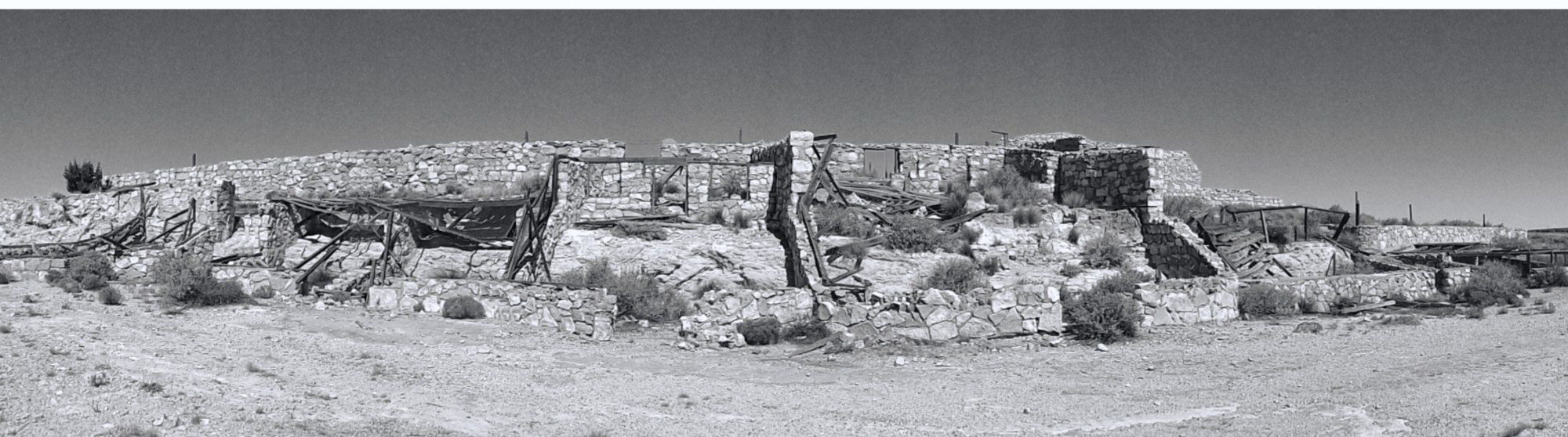
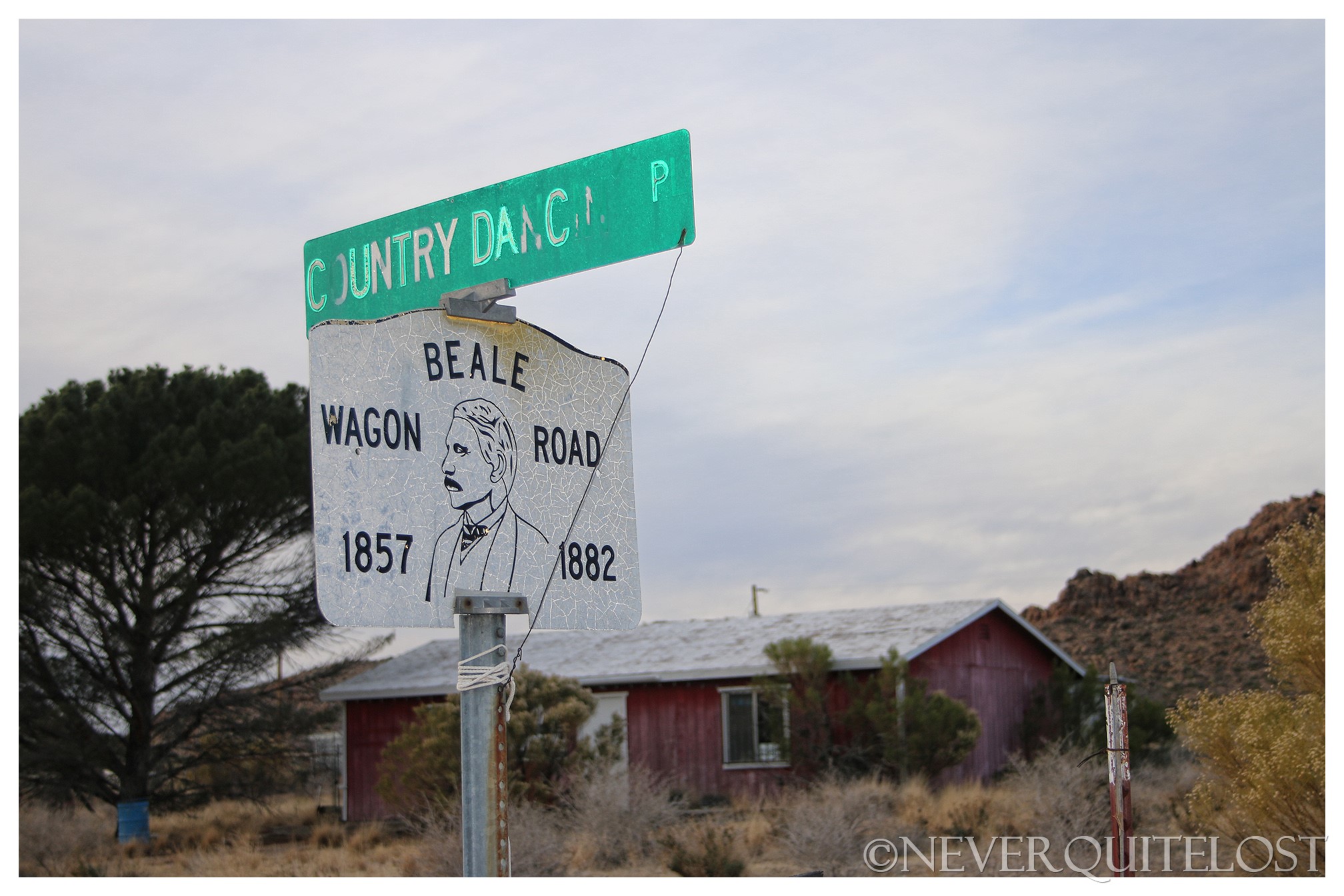
RETURN TO BERT’S COUNTRY DANCING

img_0611

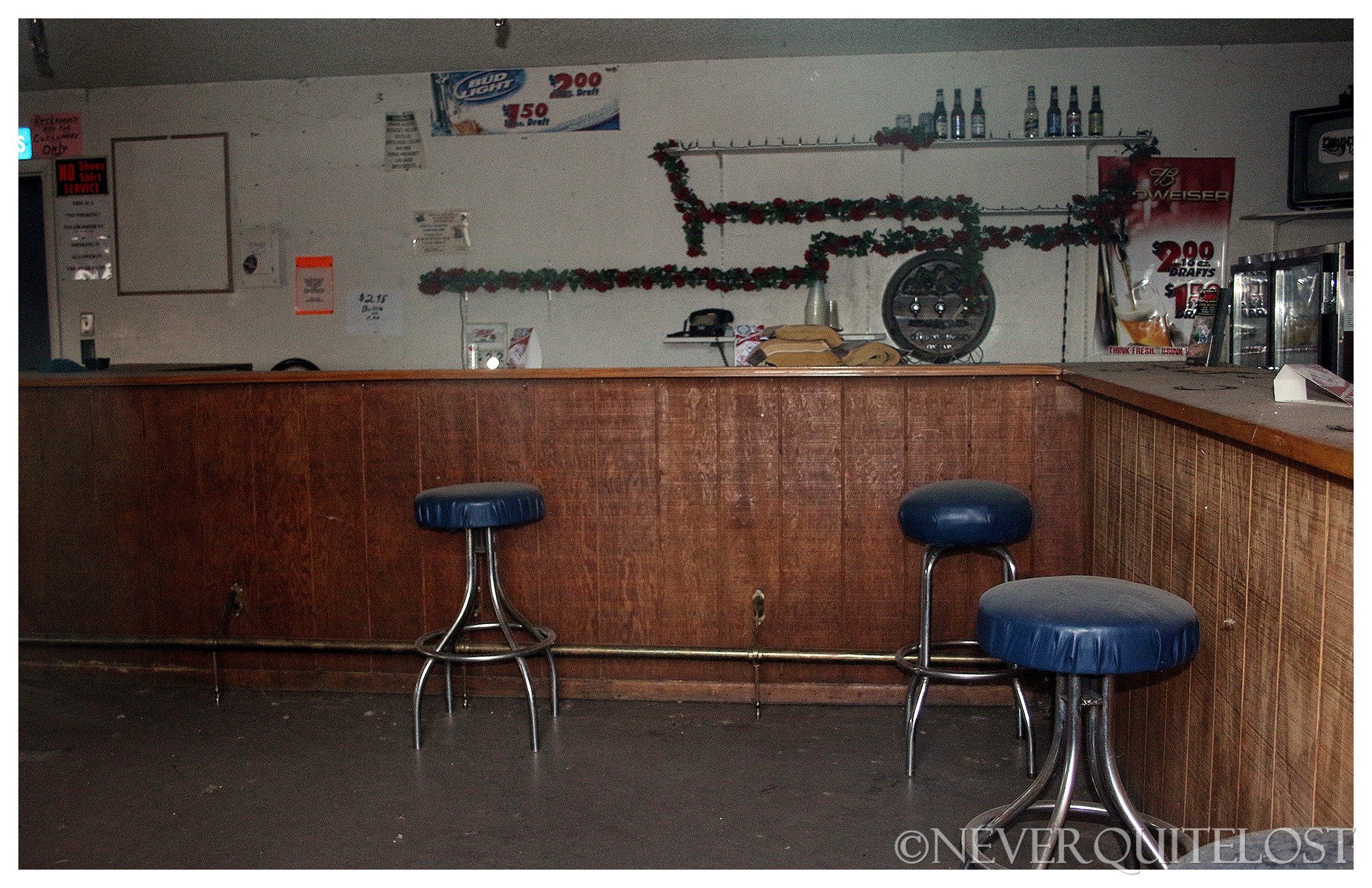
There are many places on Route 66 that are better known, more flamboyant, historically more important, but my heart has always taken by Bert’s Country Dancing in Valentine, Arizona. I’ve written about it elsewhere on this blog and I never pass up an opportunity to stop, just to reassure myself it’s still there.

I never knew Bert’s Country Dancing when it was open – Bert Denton, the eponymous owner, was gone a decade before I started travelling Route 66 and I’ve missed the very rare occasion on which the bar has re-opened briefly, although even that hasn’t been for years now. But I think Bert would still recognise it all as his place. He wouldn’t approve of the dust gathering on the bar top or the grass growing over the benches out back, but it has changed little since his death nearly a quarter of a century ago. Not much changes around these parts and when it does, it does it very slowly. Why would anyone clear out the bar? It’s not as if the space is needed out here where you never see another soul. And who knows, one day there might be a call for a bit of country dancing in Valentine again.

img_0608img_0599img_0595img_0587img_0580img_0573img_0565

THE THOREAU TRADING POST MYSTERY

a

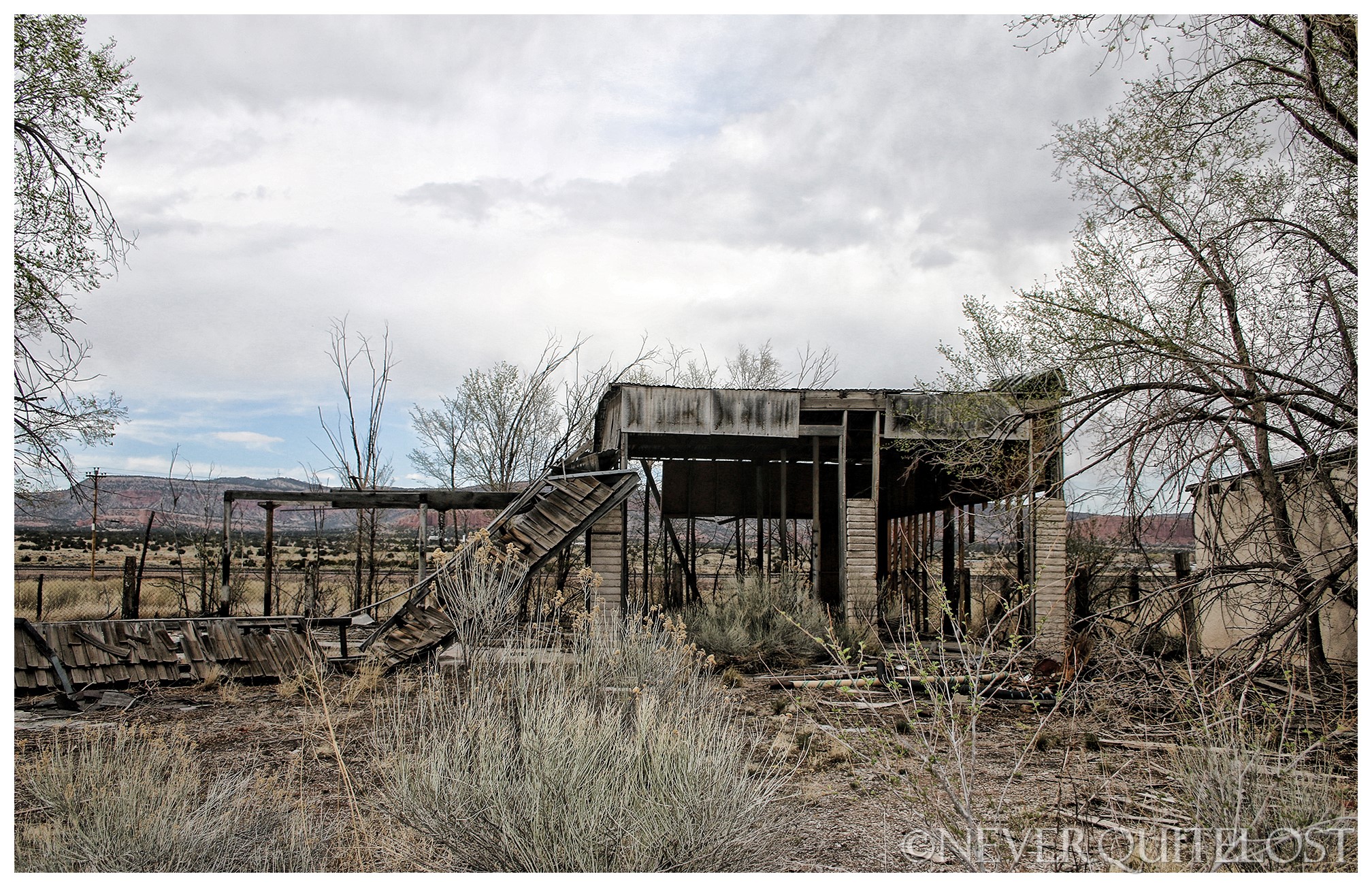
This is another example of how recent history can vanish so quickly. This trading post stands to the west of Thoreau in New Mexico and is rapidly falling apart. Yet even its name is already lost, or so it seemed.

Part of the problem with identifying the building is that Thoreau was a town which, despite its tiny size, thrived on trading posts (at least six to my knowledge). But, putting my faith in Jack Rittenhouse and his 1946 guide, I figured that this place must have been either the Thoreau Trading Post or the Beautiful Mountain Trading Post, both of which Rittenhouse mentions as being on Route 66.

To be honest, I really hoped this place would be the Beautiful Mountain Trading Post, if only because it seemed that someone had at least made an effort with the name. The Thoreau Trading Post was, well, just a little short on imagination. For a while, that seemed likely. Even the Northern Arizona University digital archive had a modern-day picture of the building which it titled ‘Beautiful Mountain Trading Post’. But it had then attached a question mark to that title which didn’t inspire confidence.

Then, tucked away on an inside page of a 1945 edition of the Gallup Independent I found a single mention of the Beautiful Mountain Trading Post in which it was described as at the intersection of Route 66 and the road into Thoreau. That, of course, is where the now closed Red Mountain Market and Deli stands … and ‘Red Mountain’ is close to the original name, if a little more economic on paint.

The reason why the place was even mentioned in the paper was because it had just been sold to Mr TM Lane by one Jake Atkinson, member of one of the two famous trading post families of this part of New Mexico. If you read the post on the Atkinsons on this blog, you’ll see that the timing matches – 1945 was the year that he and his wife Maxine bought the Brock Trading Post in Bluewater and turned it into the famous Rattlesnake Trading Post. Even more intriguing, by the mid-1950s, the Beautiful Mountain was owned by Blake Bowlin, from the other famous trading post family, and brother of the remarkable Claude Bowlin.

So, that seems to solve the mystery of the Beautiful Mountain Trading Post, but it leaves me little the wiser about the history of this sad place. As well as the Atkinsons and Bowlins, John H ‘Bill’ Bass operated a trading post in Thoreau as well as opening the Thunderbird Bar in Thoreau on 4th July 1964. Bill Bass and his wife Lorene had moved to New Mexico in the 1940s and Bass ran the Top of the World Cocktail Lounge at Continental Divide. In 1948, he was charged with ‘operating a confidence game’ at Willard Neal’s zoo, although it doesn’t seem to have hurt his future career. For many years he was either the McKinley County Sheriff or Under Sheriff (once working for his son amid calls of nepotism). Was this his business? And did it ever have a name to call its own? Given how I have watched this building deteriorate over the last few years, that may soon not even matter.

kjihcdg

THE MAN WHO WALKED TO GLENRIO

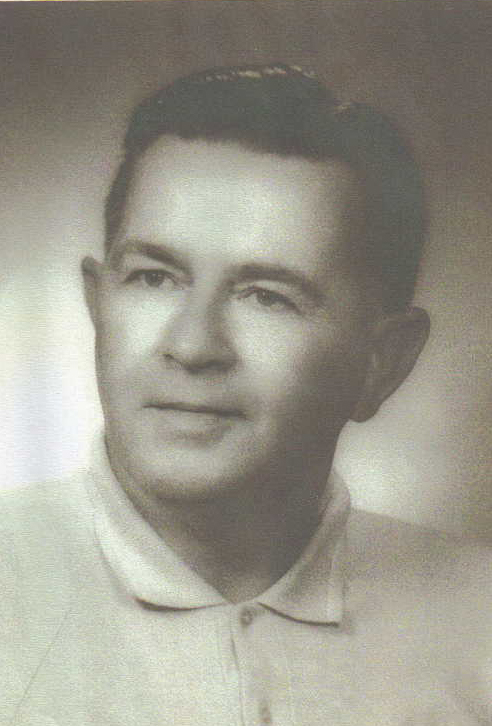
John D Hearon, a remarkable man.

The snow started falling over the Texas Panhandle on 1st February 1956. Within hours it would herald one of the worst blizzards in American history as snow fell for four straight days over Texas, Oklahoma and New Mexico; by the time it began to thaw, at least eighteen people and hundreds of cattle were dead. The little town of Vega bore the brunt of the storm, recording a staggering 61 inches of snow, but everywhere was affected. But life had to, somehow, go on and that meant Route 66 had to keep rolling.

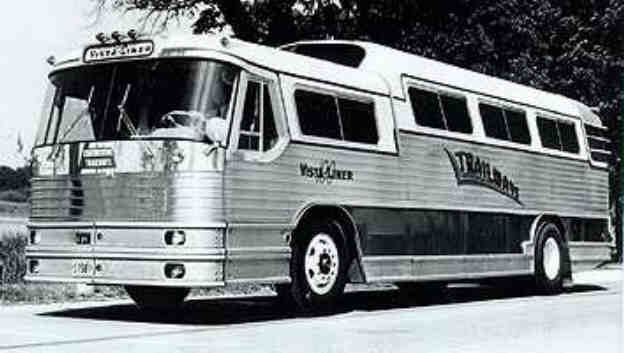
If the road was open for business, then so were the companies that used it, among them the bus line, Continental Trailways. At 5.30am, John D Hearon, 38, pulled his Vista-Liner out of Amarillo, heading to Tucumcari. He knew that the conditions were dire, having already done a run in the opposite direction, arriving in Amarillo two hours behind schedule. There are varying estimates as to how passengers he had on board for that return trip – contemporary accounts state between 14 and 35 (although the lower figure is probably the correct one) but all agree that among the passengers was 21-month-old Patricia Henderson, travelling with her mother, Ruth.

Ohio company Flxible built just 208 Vista-Liners between 1954 and 1958. Continental Trailways purchased 126 of them and it was one of these buses John Hearon was driving on the Amarillo-Tucumcari run.

All was well until around 9am when, John Hearon related; “I was going about 25 miles an hour when I hit this drift in a deep cut. Snow was about waist high and we couldn’t move the bus. No-one got excited, though. We had about a half tank of fuel, so there was no immediate worry about heat. We figured we’d just sit tight until help arrived.” But more than five hours passed with not a single vehicle in sight – the blizzard had closed down Route 66 and even snow clearing machinery couldn’t get through – and Mr Hearon started to worry that the bus was running low on fuel. Once that ran out, the bus would become a freezing metal box – and possibly a tomb. The only food on the bus was two sandwiches which the passengers gave to the little girl. Mr Hearon decided that he had to go for help. Norris Turner, a passenger from Houston, offered to go with him, but Mr Hearon urged him to stay behind and help keep up the morale of the other passengers. John Hearon opened the door and set off into the storm.

920x920

Plainview, to the south of Amarillo, at the end of the five-day storm.

Adrian was the closest town, but John Hearon realised that he would be walking uphill and into the freezing wind and blowing snow, so he headed west for Glenrio. He was wearing only his bus driver’s uniform of low cut shoes, unlined gloves, woollen trousers and a light regulation jacket and within minutes he had to return to the bus to find a piece of cloth to wind around his head to protect his ears and neck. Then he set off again, finding his way by the telephone poles along the now hidden road, often slipping and falling. He came across a couple stranded in their car who tried to persuade him to seek refuge with them, but Mr Hearon was adamant his passengers, especially the little girl, needed help and he pushed on.

The Brownlee Diner rallied around to feed the stranded bus passengers.

He would later tell John Phillips of the Reader’s Digest, “About nine o’clock my eyes felt strange. There was a beacon north of Glenrio I’d been using as a guide, but suddenly I stopped seeing it … my right eye had gone blind.” Not long after, his left eye began to cloud up as he began to succumb to snow blindness. Slapping his face to keep himself awake, he finally saw distant spots of light just after 10pm; he had been pushing himself forward for hours with thoughts of steaming hot coffee and he passed Joseph Brownlee’s gas station, stumbling towards the diner next door. But his strength finally failed him and he fell to his knees in the snow. He managed to whistle a couple of times and this saved his life. A young man in the diner heard him and found him in the dark, dragging him into the gas station. Joe Brownlee said; “He looked nearly dead. His face was blue, his eyes closed, his lips swollen. I’ve never seen anyone look like that.

The Brownlee gas station where John Heardon was taken when he reached Glenrio.

John Hearon had staggered through the storm for almost nine hours. Frostbitten and snowblind, he could barely speak, but he managed to tell his rescuers exactly where the bus was, how many passengers were on it, how long they had been without food and how much gas had been in the tank when he left. Joe Brownlee loaded up his Power Wagon with food and blankets and, putting chains on the wheels, fought his way to the bus, arriving at 2am. Thanks to John Hearon’s incredible bravery, everyone was well and in good spirits and the engine was still running, although they were no doubt pleased to see Joe Brownlee. Over several trips, all the passengers were ferried back to the diner where the town donated food for all of them.

Mr Hearon spent just four days in hospital. After six more days at home, he resumed his Tucumcari-Amarillo route. His courage was recognised with an all-expenses paid holiday to Treasure Island in Florida (Continental Trailways let him have the extra week off, which was mighty big of it) where he was feted and presented with an engraved medallion and his wife, Winnie, with an orchid and a pendant. Other gifts were a little odder; as well as money, the town of Sudan, Texas, presented him with a bale of cotton.

However, there was no long happy ending for John Hearon. On 12th March 1965 he passed away from pneumonia while suffering from lung cancer. He was just 47 years old. But to his four children, the oldest of whom was just 12 when he died, to the passengers of that bus and to the people of Glenrio he was and always will be a hero.

The diner (the place was built to resemble a Valentine Diner) and the idea of steaming hot coffee kept John Hearon going during his courageous trek.


BALLARAT AND THE MYSTERY POWER WAGON


KODAK Digital Still Camera

Ballarat, at the base of the Panamint Mountain Range in southern California, was founded in 1897 and named after a gold camp in Australia by an Australian immigrant called George Riggins. However, Ballarat wasn’t a gold strike itself; instead, it was a supply town serving the mines in the Panamints.

KODAK Digital Still CameraFor its first few years, Ballarat thrived. Some 500 people made their homes in this desolate part of California and the town had seven saloons, a post office, school, jail, morgue, three hotels and a Wells Fargo station. But, apparently, no church.
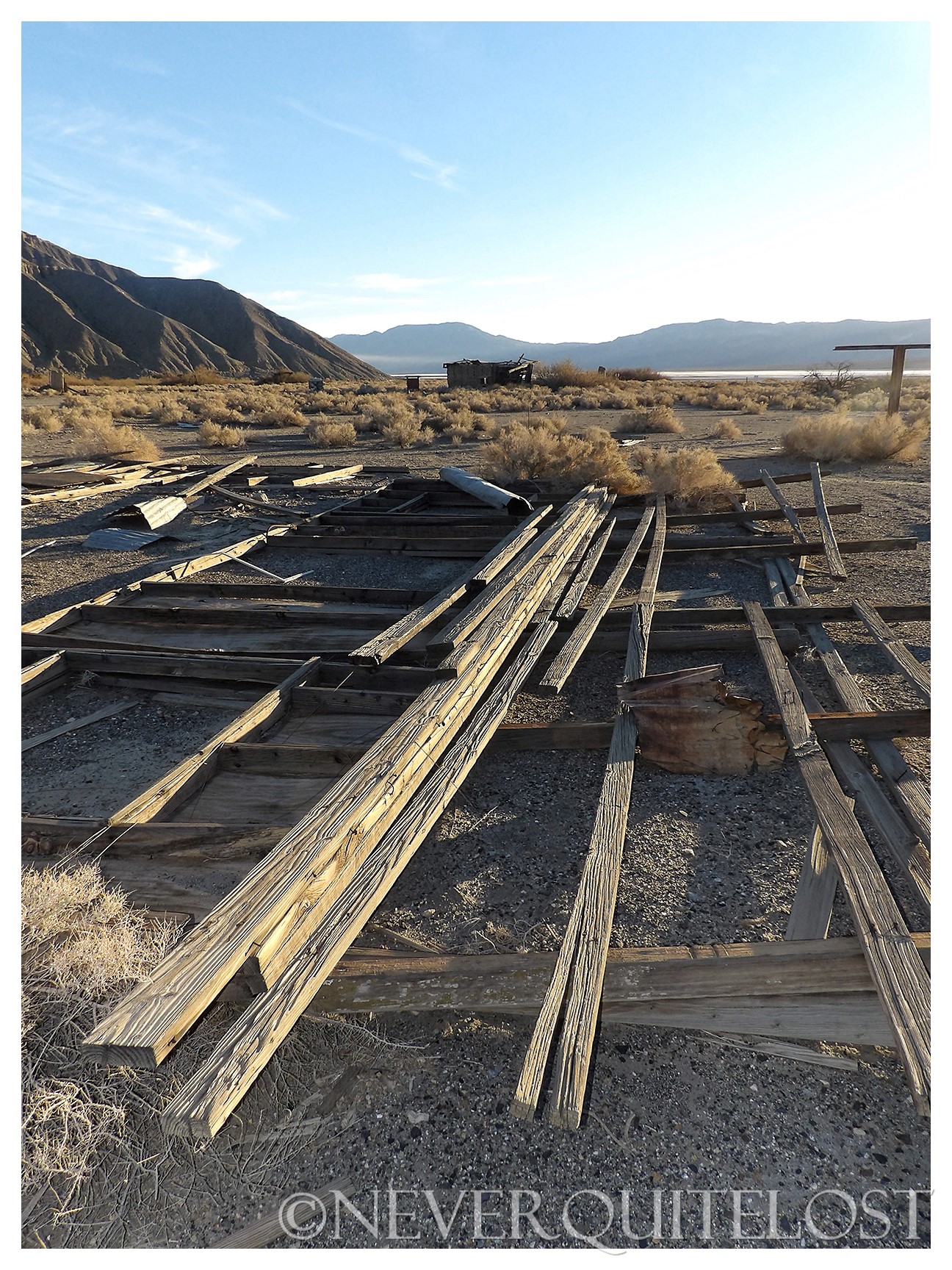
Then, towards the end of the first decade of the 20th century, mining began to decline. The Ratcliff Mine in Pleasant Canyon, which had been one of the biggest markets for Ballarat, closed in 1903 and the town was soon dying. In 1917 came that final death knell, the closure of the post office. A few hardy characters – including the famous Shorty Harris and ‘Seldom Seen’ Slim hung on, but Ballarat is today most renowned for ‘residents’ who never lived there: the Manson Family.

KODAK Digital Still CameraIn the 1960s, Charles Manson and his followers moved into the Barker Ranch south of Ballarat, travelling through what was left of the town to get there. In October 1969, he and others were arrested at the Barker Ranch, Ballarat being the last place Manson was a free man. Today Ballarat has a small store run by Rocky Novak with irregular opening hours, the remaining building are mostly in ruins (a plan in the 1960s to make an RV park here failed miserably and finally petered out in the 1990s) and the only reminder of the Manson Family connection is an old Dodge Power Wagon.

There’s argument over exactly who this belonged to – although it definitely wasn’t Manson himself. Some believe it belonged to Charles ‘Tex’ Watson who broke down in Ballarat trying to escape. While Watson did own one of the two Power Wagons the Family needed to drive up Goler Wash to the ranch (they did get a Chevy school bus up to the ranch, although no-one’s too sure how they did it), and it did indeed stay in Ballarat for a while, it was eventually traded off to Leon Griffin, caretaker at Briggs’ Redlands Camp. Leon took the Power Wagon to pieces and then died.

KODAK Digital Still CameraSo, where did the Power Wagon now in Ballarat come from? One theory is that it belonged to Bobby Beausoleil and had been left at the ranch. When the arrests and trials were over, Kirk Barker, owner of the Barker Ranch, moved that Dodge down to Ballarat as a runaround. But no-one seems to know for sure.

Ballarat does have one other claim to a place in popular culture. At the beginning of Easy Rider, when Peter Fonda throws away his Rolex, he did so in Ballarat.


KODAK Digital Still Camera

THE BIRDS HAVE FLOWN VULTURE CITY

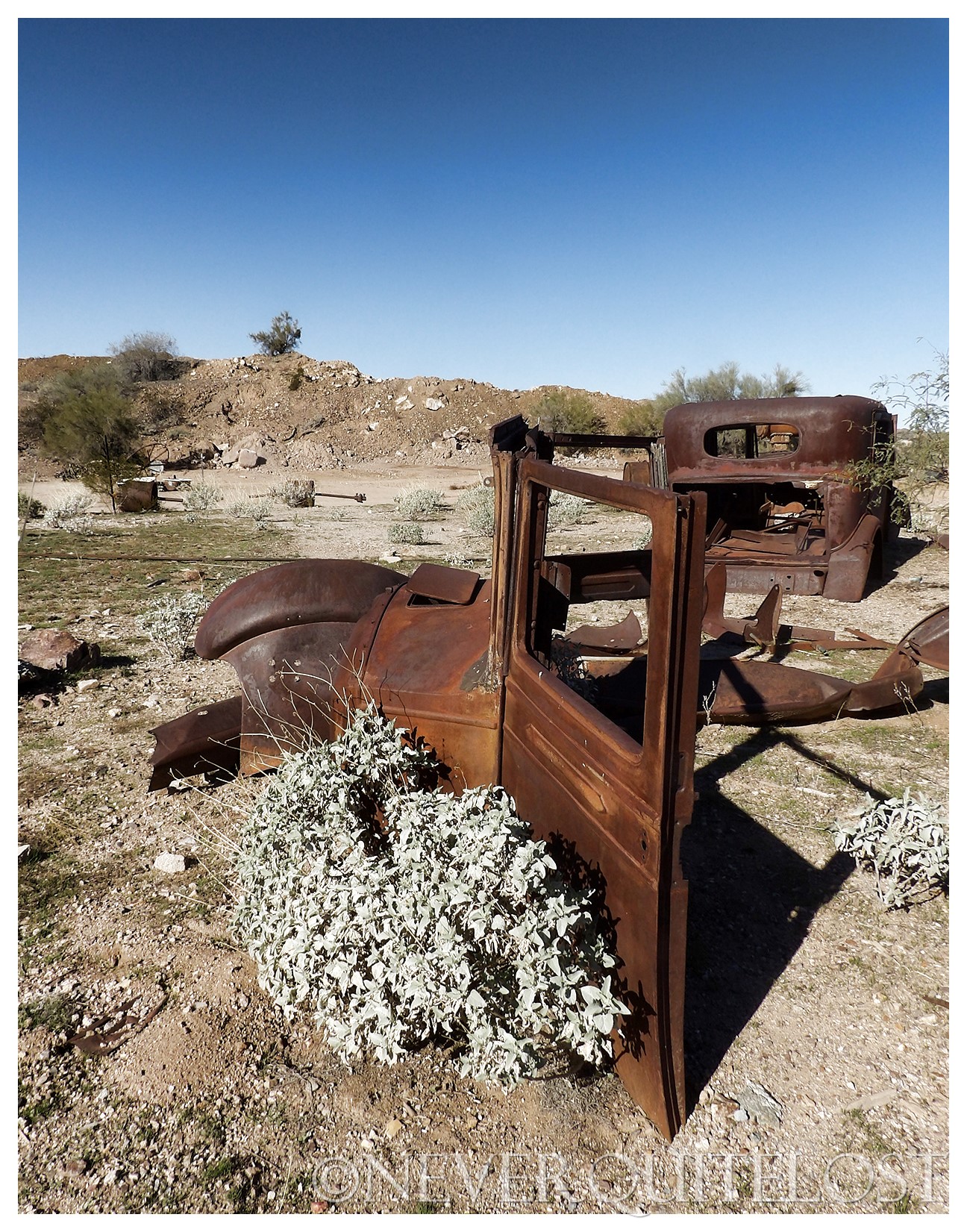
Arizona has many ghost towns, but among the finest is Vulture City near Wickenburg. It began life in 1863 after Henry Wickenburg discovered the Vulture mine (supposedly he was retrieving a vulture he’d shot when he found it). Gold fever would lead to a town of some 5000 people with a school, post office, saloon, stores, brothel, assay office (and, in later years, a gas station) becoming, at the time, one of the richest towns in Arizona. In order to feed a town of this size, Jack Swilling reopened irrigation channels in the Phoenix Valley that had been dug by Hohokam Native Americans and established a grain route; Wickenburg was directly responsible for the development and growth of Phoenix.

KODAK Digital Still CameraOver the years, the Vulture Mine produced $200 million of gold, although it’s likely almost as much simply disappeared into various pockets. The assay office was particularly prone to being burgled and thousands of dollars of gold was stolen over the years. 18 men are supposed to have been hung from the Ironwood tree which still stands (next to Henry Wickenburg’s cabins), all of them guilty of stealing gold or ore, although there’s no record of any such hangings actually taking place. It’s a good story though.

Henry Wickenburg sold the mine in 1866 for $85,000 but was swindled out of all but $20,000 after the owners claimed he didn’t have clear title to the mine. He spent years trying to sue the owners, running through every penny he had. On 14 May 1905, ill, tired and destitute, he put a gun to his head and pulled the trigger.

Vulture City lasted until 1942 when the mine was closed on order of the government. Production had slowed considerably years before and the job had become ever more dangerous. In 1923, seven men were killed when the ceiling of a large underground chamber collapsed in on them, burying them and their twelve burros in the Glory Hole. Although the mine did reopen in the 1940s, it wasn’t for long and it soon closed permanently. Today Vulture City and the Vulture mine is privately owned and private property, although it does offer tours on weekends.


WHERE THE FRONTIER ENDED

To the right, the shell of the Trading Post and behind it, the Wilson’ house.

Roadside attractions on Route 66 came and went with varying degrees of success and durability but perhaps one which has been comprehensively forgotten and about which little history survives was the Frontier Museum between Santa Rosa and Cuervo in New Mexico.

There looks to be a certain amount of artistic licence with this postcard. The Museum never advertised its herds of cattle or horses and the countryside certainly doesn’t look like this bit of New Mexico!

But, back in the 1950s, when people would stop at almost anything to break a tedious journey, the Frontier Museum, around 10 miles east of Santa Rosa, welcomed countless visitors. The kids were attracted by the exhibits, the ‘real’ cowboys and the Wild West trading post, the adults probably more so by the cafe and the chance of a cold beer.

The Frontier was a complex which included the museum, complete with not very well painted murals on the side, the Trading Post, a service station, the Old Gay 90s Frontier Bar and three residential houses, all constructed in Western style. It was run by William S and Lucy Pearl Wilson; Lucy had been born in Pratt, Kansas, but moved to her husband’s home town of Texline in Texas when she was 18. William was a car mechanic and railroad worker and they lived in Texas with their two children, Charles and Jaunita (known as Nita) until buying the Frontier.

The Frontier Museum, now mostly collapsed, but still with the skeleton work of the original signs.

The museum was, as is the case with these places, a mixture of the old and the faux. Albuquerque carpenter, Roy Mattson, spent a year building a full scale exact replica of a Concord stagecoach in which retired rodeo rider, Hondo Marchand, would give rides to tourists. (Either this wasn’t a huge success or he fell out with the Wilsons because, by 1959, he was over in Anderson, Indiana, giving rides to shoppers at the Hoosier Supermarket.) Hondo, incidentally, was, as a young man, taught rope tricks by Will Rogers at the 101 Ranch in Bliss, Oklahoma and travelled with Will Rogers’ Wild West Show. He – and the stagecoach – would later retire to Texas with his wife, Dot.

The Museum complex – along the front would have been the cafe and the Old Gay 90s Frontier Bar.

Why the Wilsons chose to move in middle age to New Mexico to run a tourist attraction and cafe is unknown, but by 1960 they had clearly had enough. The complex was advertised for sale or trade in the Clovis News-Journal of 11th December 1960 and, at the bottom of the advert, Mr Wilson plaintively wrote; ‘I would like to retire’. Eventually the Wilsons did retire – although no-one was interesting in buying the property – and then Lucy died suddenly in 1977.

The service station on the Frontier Museum’s 76 acres.

It was finally the end for the Frontier Museum which had been shut up for years. The contents were sold to an orthodontist in southern California; Dr Alan Barbakow bought everything from sets of false teeth to ten horse-drawn wagons, much of which he used to decorate his offices. There was so much stuff that he hired 10 volunteers to each rent a car and trailer and transport the artifacts from Santa Rosa to Santa Clarita where the wagons were all restored before being put on display.

SANTA CLARITA SIGNAL

Dr Alan Barbakow and some of his Frontier Museum collection. Photo by the Santa Clarita Signal.

Dr Barabakow retired around five years ago but he continues to cherish his collection of Western paraphernalia. The Frontier Museum and its buildings have not fared as well. After William Wilson’s death in 1983, the place was abandoned. Little remains of the buildings which housed the museum and cafe, while the Trading Post and service station are mere shells. Where people stopped to see cowboys and stagecoaches, the traffic thunders by on I-40 with few people even realising that was ever anything there.

The service station on the Frontier Museum’s 76 acres.

This was once the Trading Post although little now remains of its original Wild West-style wooden cladding.

The CAFE sign, gradually falling into the undergrowth.

For photos from 2003 before the place became completely derelict, I recommend http://www.lightrainproductions.com/Trip%20Reports/Frontier1.htm

The Frontier in its heyday – cowboys, Indians and beer, what more did the traveller need?


THE SLOW DEATH OF THE LUDLOW CAFE

The Ludlow cafe in the late 1940s. The freestanding lettering at the front and the LUDLOW CAFE sign survived into the 1990s.

Out in the Mojave desert, on the side of Route 66, the Ludlow Cafe was once a welcome stop to travellers across California. But, over the last ten years, I’ve watched the building that once housed the cafe become ever more dilapidated until, one day, it was gone.

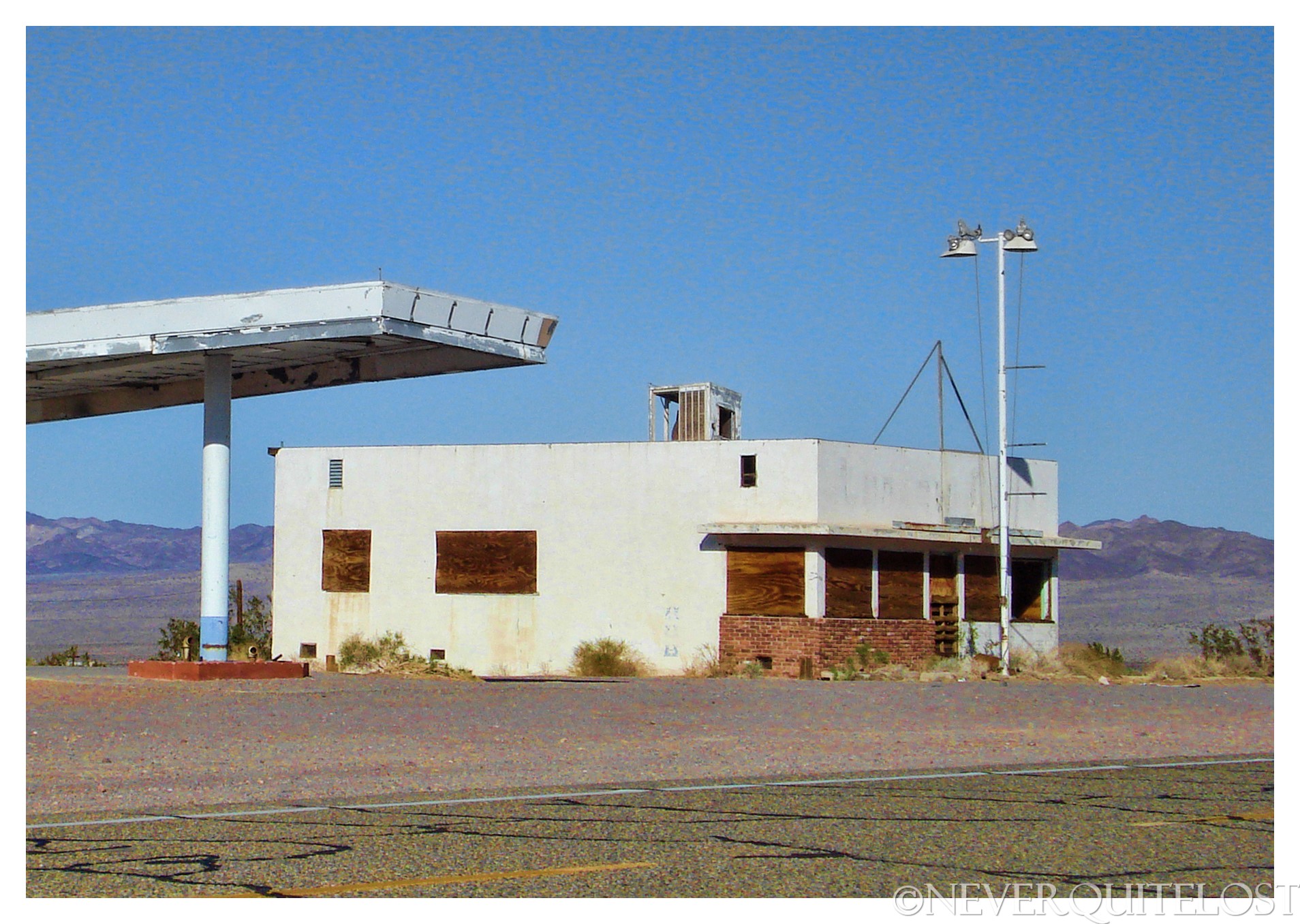
Not to be confused with the A-frame Ludlow Cafe further west and that, thanks to its position at the top of the off ramp for junction 50 of Interstate 40, still thrives, this Ludlow Cafe was a plain box-like building beside the canopied gas station and was built of lumber salvaged from the Tonopah & Tidewater Railroad (the same place from where Mother Preston ‘borrowed’ timber!). Run for over twenty years by Earl and Lillian Warnix, it was sold in the 1960s to Laurel and Cameron Friend who owned other properties on the east side of Ludlow, including the next door 76 gas station.

Versions of this wanted ad would run regularly in the San Bernardino County Sun for almost 20 years

It was clearly always difficult to get good staff – and then to get them to stay in the middle of nowhere – and, from 1948 an advertisement ran in the classifieds section of the San Bernardino County Sun asking for women staff. That ad would run several times a year for the next twenty years (although, by 1956, the cafe had apparently got a telephone – perhaps they weren’t willing to give the number out to prospective employees before, although as it was Ludlow 3, any waitress keen enough could have made an educated guess).

The Ludlow Cafe in 2007, boarded up and the signage gone, but still in reasonable shape.

The Friends moved in 1975 and it’s likely that the cafe closed then. For some years it retained its streamlined lettering and, in 1990, when Troy Paiva (a man responsible for so many of the trips I have made in the last few years) used it for one of his ‘light painting’ photographs, the cafe was still open to the elements, the glass gone from the windows, but the counter still in place. If you look at the ‘1959 Cadillac on Route 66‘ channel on Youtube, you will find (among many of Anthony Reichardt’s other wonderful films) a video from August 1992, by which time the cafe was boarded up. When  I first saw the cafe fifteen years later in 2007, the freestanding lettering and the cafe sign were long gone, but the building was still in reasonable shape.

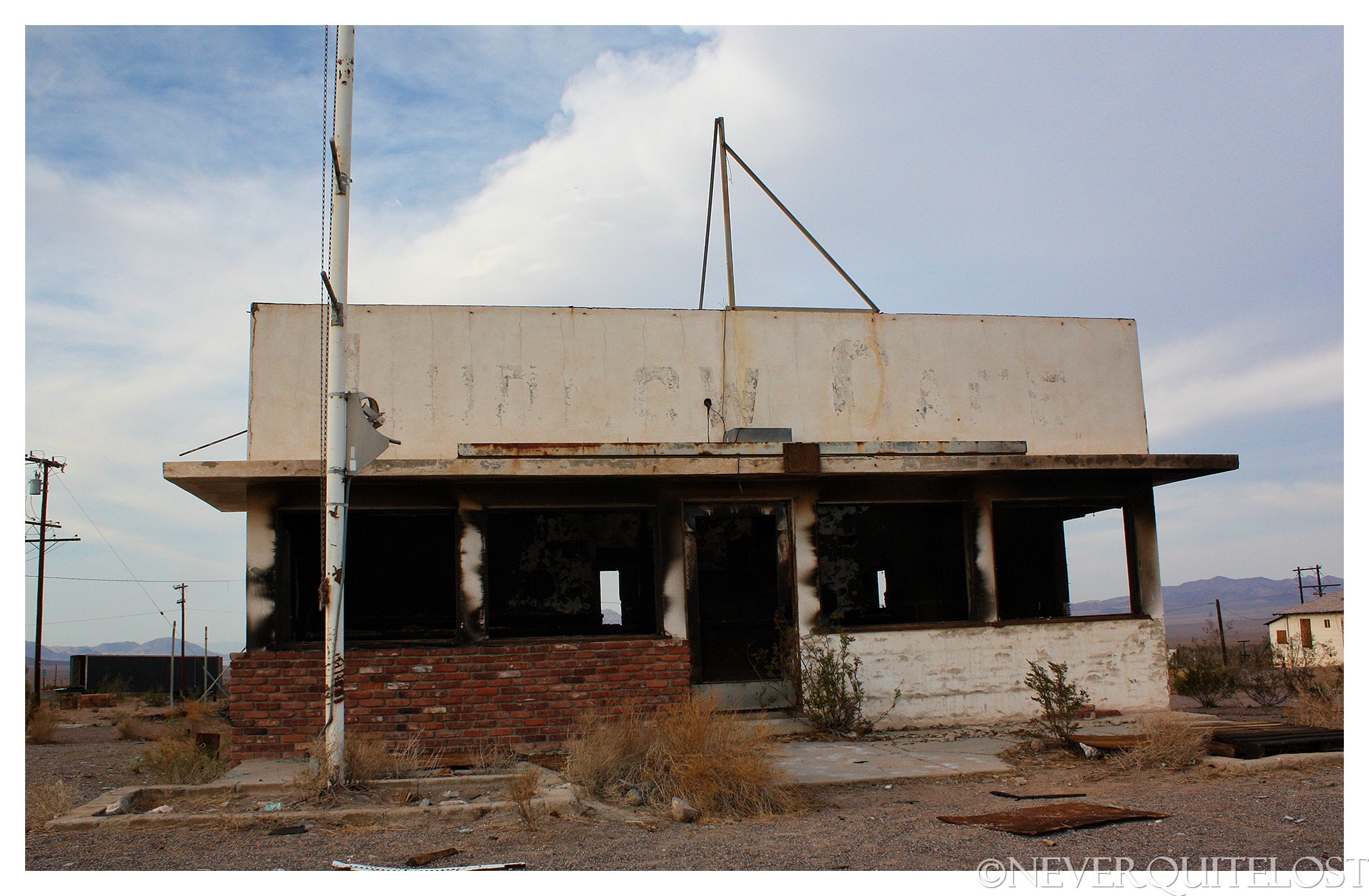
This was October 2008, probably not long after its first fire.

That all changed when I passed by a year later. Winter in the Mojave is cold at nights and apparently transients sheltering in the building had lost control of a fire. I hope that was the case. If the cafe had to burn, then better it was because it was giving shelter and comfort, if in reduced circumstances, as it had all its working life than because it was the victim of kids with too much time on their hands or a casual arsonist.

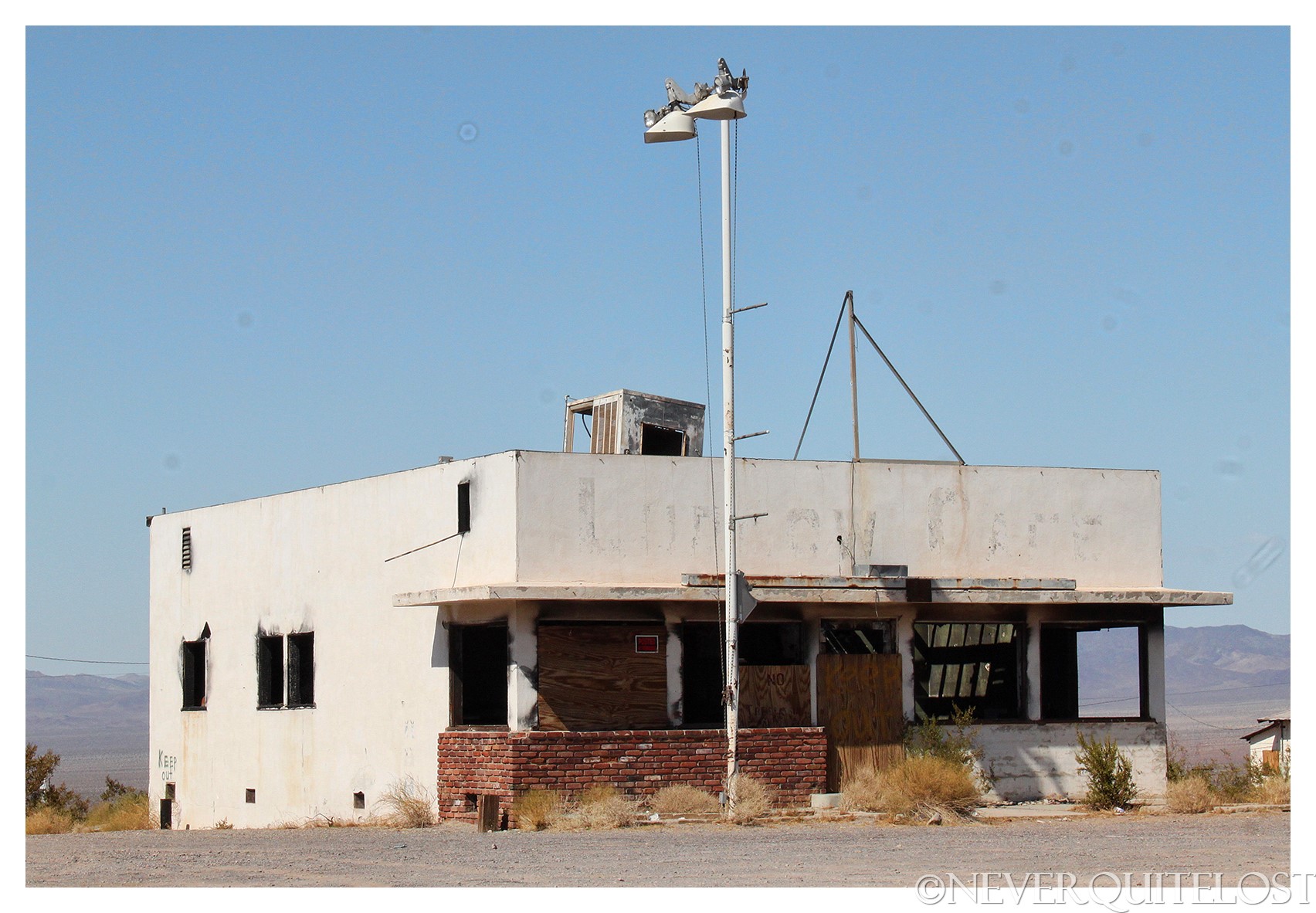
2010, the fire still evident, and the boarding falling away.

The gutted building was eventually boarded up again in a somewhat half-hearted way, but, by the last time I saw the Ludlow Cafe in 2014, the building was an open, dead-eyed shell.

And then the next year it was gone, another fire, one which, this time, had reduced it to a pile of rubble and charred wood.


Spring 2014, the last time I would see the Ludlow Cafe. It was open wide and graffiti artists had found it by now. A year later ti

That was the Ludlow Cafe. As far as I’m aware, only a handful of photos – or possibly just one – exist of it when it was a working, busy cafe. Sadly, there are many more thousands that, like mine, record its slow death in the desert.