
Larry Travis’s Pontiac Catalina.
Of the many cars along Route 66, probably one of the most photographed and instantly recognizable is the white Pontiac in Glenrio, Texas. Everyone who visits the town takes a photo of it and, while they might congratulate themselves on identifying it as a 1968 Pontiac Catalina, very few will even give a second thought to how it ended up on the forecourt of a derelict gas station. But there is a reason why the Pontiac is there.
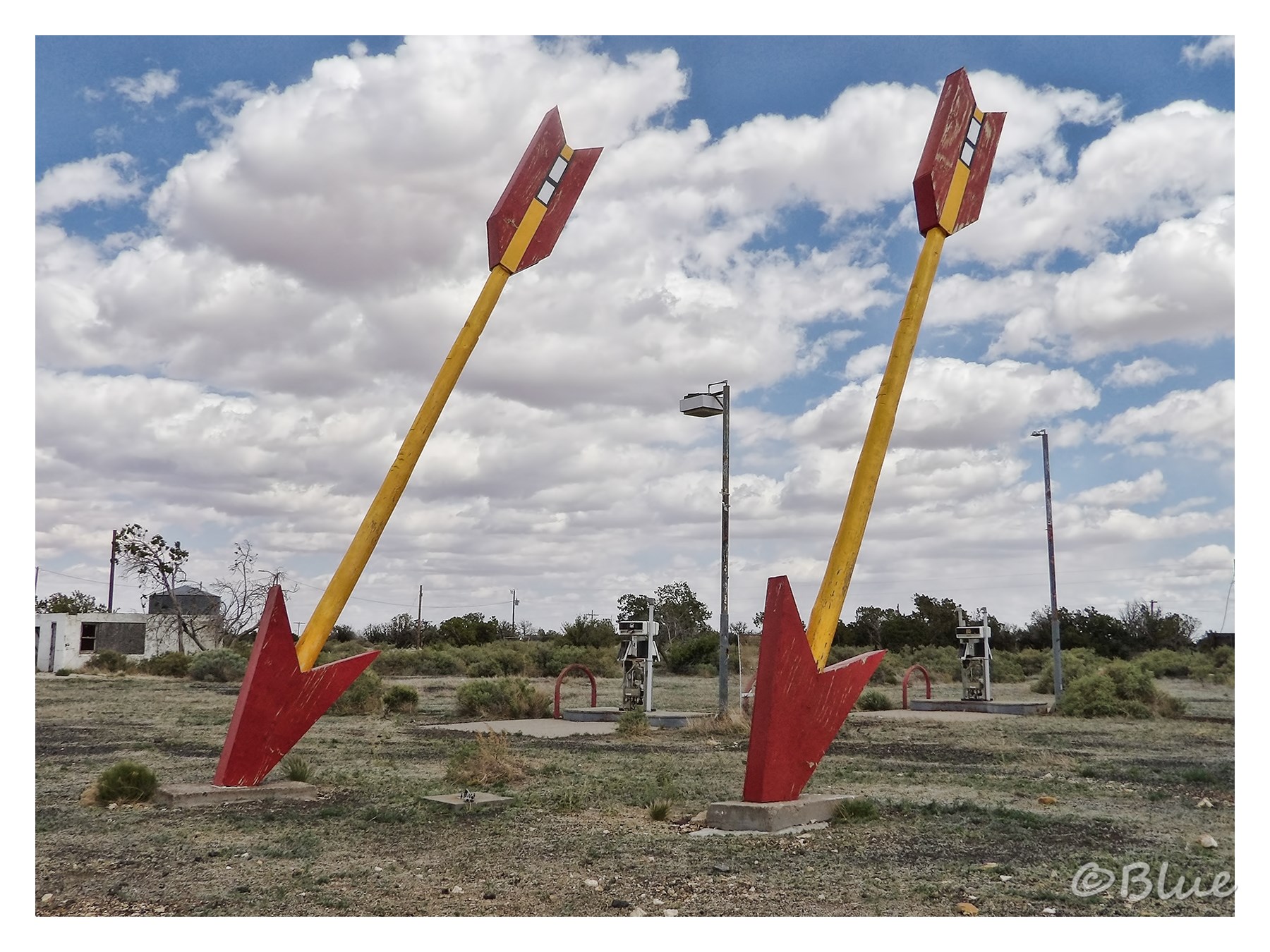
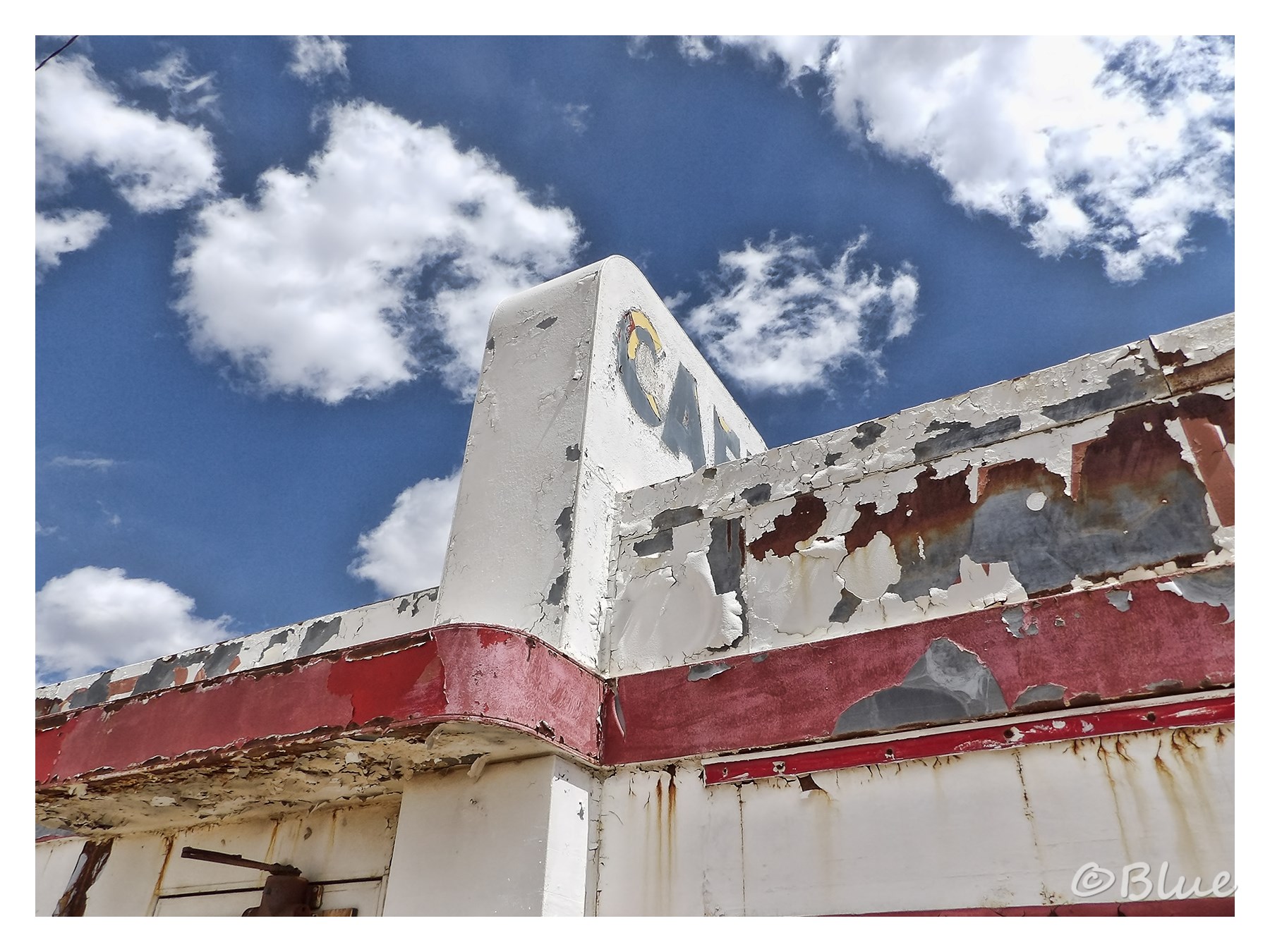
The Texaco station forecourt on which it sits was built by Joseph (Joe) Brownlee in 1950, while the diner to the side (often and erroneously known as the Little Juarez Diner – it was never called that) was originally called the Brownlee Diner and opened in 1952. Behind the gas station is the Joseph Brownlee house which was first built in 1930 in Amarillo and was then moved to Glenrio when Joe bought land there. It now houses Mrs Ruth Roxann Travis, Joe’s daughter and the one remaining resident of Glenrio; the dogs whose barking welcomes you to Glenrio belong to Roxann.
Roxann grew up in Glenrio, helping her father, along with her six brothers and sisters, at his two gas stations at a time when Route 66 was often nose-to-tail traffic. It all came to a grinding halt when Interstate 40 opened in 1973. Three years before, when she was just 19 and he three years older, Roxann had married Larry Lee Travis, a quiet young man from Darrouzzett. By 1975, however, everything was just about closed in Glenrio and Roxann and Larry now had a family, a little son called Michael Joe. So Larry approached a former employer, Don Morgan, and asked if he could rent the Standard Service Station on the east side of Adrian. Mr Morgan had closed the gas station a few months before and didn’t expect it to reopen. But he knew Larry was a hard worker and, after some persuasion, he agreed to rent the garage to him.
So, each day, Larry got in his white 1968 Pontiac Catalina and drove the 25 miles to Adrian to run the gas station. It wasn’t a job without risks – just the previous year a group of gas, shop and service station owners had banded together as a vigilante force to patrol the streets of Vega and Adrian. They never caught any criminals but nor were there any burglaries and robberies while they were on watch. By the beginning of 1976 the patrols had fizzled out and so there was no-one around but Larry when, after driving the Pontiac to work for the last time on the evening of 7th March, a 23-year-old Texan called Lewis Steven Powell entered the Standard Service Station. No-one knows what happened in those few minutes, whether Larry – proud of his hard work – refused to hand over his takings, but Powell made him kneel down and shot him in the back of the head before robbing the till.

The Pontiac Catalina in front of Joe Brownlee’s old Texaco gas station with, to the left, the Brownlee Diner, now often incorrectly called the Little Juarez Diner.
Powell was a high school graduate who had served four years in the Navy and never been arrested, received a speeding ticket or been suspected of any mental disorder. But Larry was the second man he had killed in 36 hours. The police were already hunting the killer of Clyde Franklin Helton near Dallas and just the next day Powell was apprehended after a shoot-out in Colorado. In a plea bargain, he pleaded guilty to avoid the death penalty and was sentenced to life in prison. Life, in this case, meant just seven years before he was eligible for parole, although there would be a 40-year sentence waiting for him in Colorado as a result of firing at police during his arrest. But again, 40 years was a vague figure. Powell has been a free man for some time, although I am pleased to say that, as of May 2017, he was back in custody due to parole violations.

Despite sitting for 40 years, the Pontiac still looks like the car Larry loved.
Larry never came home again, but his Pontiac Catalina did, and it keeps silent sentinel in Glenrio, perhaps looking after Roxann as much as her dogs and her son, grandchildren, nieces and nephews. Please remember, it’s not just another junk car parked for a Route 66 photo opportunity, respect the Private Property signs, it’s not for sale. It’s as much a part of Glenrio as Roxann Travis, and that is where it belongs.
 Silverado was to be a shining new community for north-west Arizona. Situated just off US-93, outside Kingman, the 5000-acre site would have homes (around 113 luxury dwellings would stand on their own two-and-a-half acre plots), parks with barbecue grills and an 18-hole golf course designed by Forrest Richardson. Neighborhood communities were planned with 12,000 homes, schools, a fire station, shops and a sewage plant. ‘The quiet beauty of the surrounding desert’ would, said the developers, ‘enhance life’s daily experiences.’


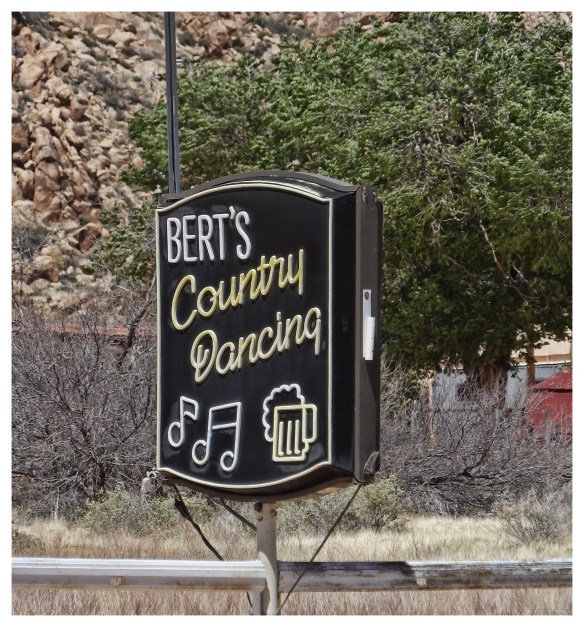 On a lonely stretch of Arizona’s Route 66, between Seligman and Kingman, where the loudest sound is the wind or a lonesome train horn or the skitter-skatter of tumbleweed across the tarmac, stands a tiny bar where once Saturday nights echoed to the sound of fiddle and guitar and boots tapping on a wooden floor.


 At the time, it was supposed to be one of the most advanced plants of its kind in the USA with houses for the workers. It would produce commercial grey cement and also a fancy high quality cement made from the crushed marble and clay from the nearby Carrara quarry.
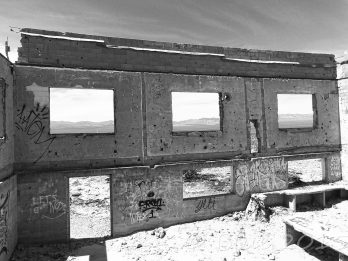 The company, however, announced its intention to continue, and then Pearl Harbor happened. Fuel rationing the following spring made it impossible for the company to transport its goods, even if it had been able to get the plant back up and running. It was abandoned, although some of the machine
 ry remained for several years.


 Clyde was two years old himself when his parents, Victor and Lydia, moved to Palmetto from Santa Rosa, California, no doubt hopeful of making that big strike and never dreaming they would lose both their sons so tragically. The marker only mentions Clyde, and people have often assumed that Kenneth was buried with him. However the little boy lies alone, his younger brother having died and been buried in Silver Peak, another town to the north west. The Blair News reported that Mrs Hart had ‘been quite ill for several days prior to starting for California, her illness being aggravated by the mental anguish of the loss of the children in so short a time.’
 After burying their children, the Harts continued back to California; Lydia gave birth to a son, Alan, almost exactly a year to the day after Clyde’s death, and a daughter, Evelyn, in 1910. Both Lydia and Victor lived into old age, Victor dying in 1958 at the age of 80 and Lydia living until she was 97 and they are buried beside each other in the Oddfellows Cemetery in Sacramento. Having lost two children so young, it must have been a consolation that their son and daughter lived long and full lives. Alan died in 1994 and Evelyn just nine years ago aged 96. Did the family ever come back to Palmetto to visit the grave or was it too painful a part of their life?
 I thought at first how odd it was that there are no other graves in the area, but because Palmetto existed for such a short time – the silver that was struck lasted barely a year – it could be that the little Hart boys were the only people to die out in this lonely place. But the toys and paraphernalia on the grave (I left a toy car) show that they are not forgotten.
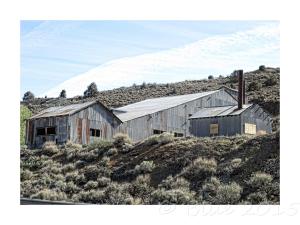 By 1861, it had a population of around 1200, with accompanying saloons, hotels and boarding houses, as well as stabling for those travelling between the Comstock Lode mines of Virginia City and processing mills. Devils Gate,
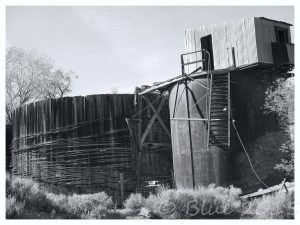 Silver City managed to thrive until the completion of the Virginia & Truckee Railroad in 1869 after which the population quickly moved away. Now about 100 or so people live there, most of whom probably knew I was there. It is a little bit The Hills Have Eyes. Apparently, the cemetery is worth a visit, but it appeared to be on the other side of the road closure.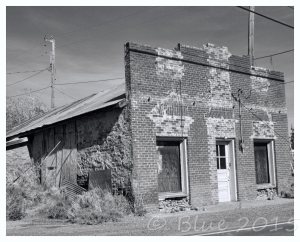
 NEVER QUITE LOST