
For years, the Coppedge Drug Store has been just a roofless shell. Just behind, on the left, can be seen Dr Coppedge’s house.
Depew in Creek County, Oklahoma, is a small town with one main claim to fame. It was, by all accounts, the first town on Route 66 to be bypassed by a later alignment. In fact, Route 66 ran through the main street of Depew for just two years; by 1928, a realignment meant that traffic now flowed three blocks north of the town’s main thoroughfare. The town’s population began to decline shortly afterwards and now stands at little more than 400 people.
The town was established in the first decade of the 20th century and almost died completely in May 1909 when a tornado wiped it off the map. However, two years later, Depew boomed after an oil field in nearby Salpulpa saw the Salpulpa & Oil Fields Railroad construct a line from Depew to Shamrock in Texas. Within ten years, Depew had three grocery stores, two barbers, three service stations, four hotels, two theatres, a Ford dealership, a funeral home, three lumberyards and as many churches. It also had the Coppedge Drug Store, one of the best drug stores in the area (and certainly in Creek County), thanks to Dr Oscar Sterling Coppedge.

In the 1920s, the large plate glass windows must have been an impressive sight on Main Street.
Dr Coppedge had moved to the area from St Louis, Missouri, as a young man; his father Benjamin Thomas Coppedge was a dentist who had opened a drug store in neighbouring Bristow in 1903. But Oscar Coppedge had bigger plans. In 1920 he started construction of a modern brick building on Main Street, Depew, to house his drug store. In May of that year, the local newspaper, the Depew Independent, proclaimed; ‘The walls are about completed on the Coppedge building. This is a dandy brick and when the Doctor gets his new $4,000 soda fountain and other new fixtures installed he will have one of the finest drug stores in this part of the country.’ By August, it was almost ready to open and the Independent gushed; ‘Dr. Coppedge has been having a tile floor put in his new building this week. It is the finest floor in town and has been the cause of much favorable comment.’
The coming of Route 66 in 1926 brought not only the first paved highway to run through Depew, but an increase in patients. Across the street from the drug store Dr Coppedge built a hospital which he ran with his older brother, Omer – also a physician – while he lived behind the drug store in a Gordon Van Tine Roberts house bought from the Sears, Roebuck & Company catalogue. (This particular model of kit home was popular in Oklahoma. In 1916, the two storey, three bedroom home could be purchased for $1260.)

Dr Coppedge’s Sears, Roebuck house which also stood in disrepair for years but has now been refurbished.
However, it’s said that, despite being a pillar of the local community, Dr Coppedge had a soft spot for outlaws and was the ‘go-to’ doctor for anyone who had sustained a gunshot wound that they couldn’t – or didn’t care to – explain. Dr Oscar was known as a medic who would treat the injury without involving the local forces of law and order. In fact, it’s said that Charles ‘Pretty’ Floyd was one of his patients. There’s no evidence one way or the other, but as Pretty Boy did live in Oklahoma and was regarded and protected by many locals as the ‘Robin Hood of Cookson Hills’, it’s quite possible.
Following the Great Depression, Depew slid into a terminal decline. By the time of the Second World War, only two grocery stores, a bank, a hardware store and two service stations survived – along with Dr Coppedge’s practice. He died in 1960 with, it seems, no children to carry on his legacy, his brother having died four years previously.

The Coppedge Hospital stood across the street and was built in the same style. It’s in better shape than the drug store, but for how long?
The Coppedge Drug Store itself has been a derelict shell for years, a few remaining letters on the front and part of ‘the finest floor in town’ the remnants of its former self. I last saw it in the second week of April 2017 when it looked the same as ever, beyond restoration but a part of Depew’s history. And then, two weeks later, it was gone. One night the old building took its last breath, perhaps remembered its past glories and then gently collapsed into a pile of rubble.

Main Street, Depew. Nowadays, 93% of the residents work in other towns. The road in front is the original surface of Route 66, it’s never been overlaid with asphalt since 66 moved almost 90 years ago.







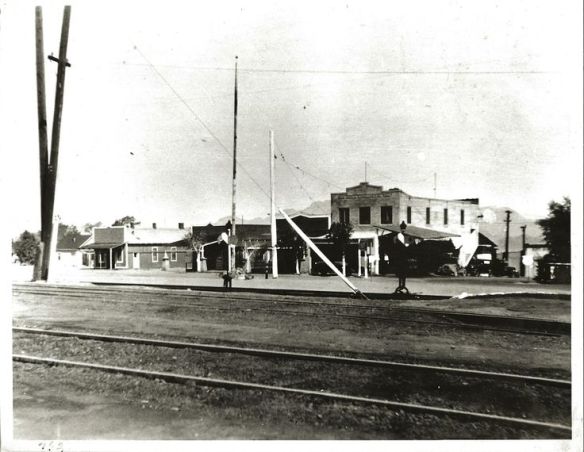

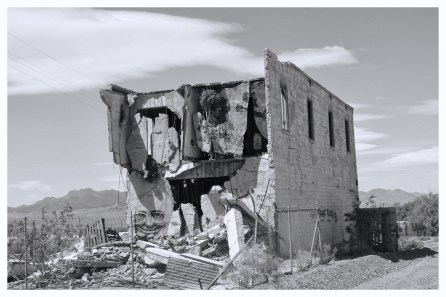





 At the time, it was supposed to be one of the most advanced plants of its kind in the USA with houses for the workers. It would produce commercial grey cement and also a fancy high quality cement made from the crushed marble and clay from the nearby Carrara quarry.
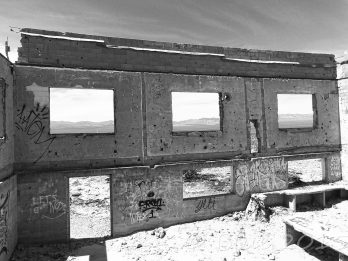 The company, however, announced its intention to continue, and then Pearl Harbor happened. Fuel rationing the following spring made it impossible for the company to transport its goods, even if it had been able to get the plant back up and running. It was abandoned, although some of the machine
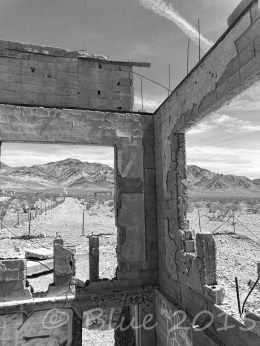 ry remained for several years.